
How to Start Custom Furniture E-Store Making $133K/Year
Most furniture retailers are stuck playing the same losing game.
They compete on price. They stock mass-produced pieces. They hope customers find something “good enough.”
Then there’s Sophie, who took a completely different approach.
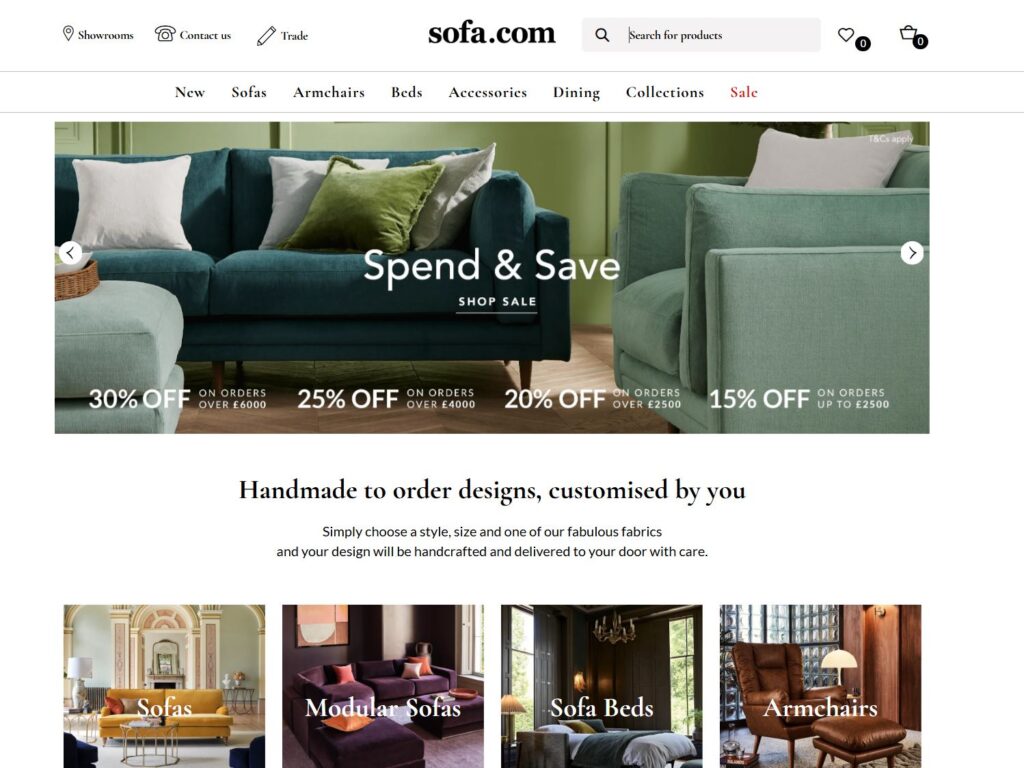
She started reupholstering furniture in her tiny London apartment, believing every piece should tell a unique story. That passion evolved into Sofa.com—a custom furniture empire now generating $133,000 annually by letting customers design their dream sofas online.
No massive showrooms. No warehouse full of inventory gathering dust. Just made-to-order furniture that customers design themselves, combining timeless craftsmanship with modern e-commerce convenience.
Here’s what makes this case study compelling…
The furniture industry is notoriously difficult to disrupt. High shipping costs, quality concerns with online purchases, and the desire to “try before you buy” create massive barriers to e-commerce success. Plus, you’re competing with established giants like Wayfair, IKEA, and West Elm.
Yet Sofa.com carved out a thriving business by focusing on what big retailers can’t easily replicate: complete customization, quality craftsmanship, and a shopping experience that makes buying furniture online feel personal rather than risky.
And the blueprint? It’s more achievable than the $133K revenue suggests.
Ad 🎯 After studying 400+ business models, here’s what actually works for beginners…
Most “make money online” advice is garbage. Complex affiliate schemes. Dropshipping nightmares. Social media “influencing.”
We found something better: lead-generation funnels for manufacturers. Simple. Profitable. Fast results.
Our Max Incubator Phase 1 students are proof—they’re going from zero to their first $1,000 in 90 days with this exact model.
→ See the business idea that’s working for beginners this year
What Sofa.com Actually Does (And Why It Works)
Sofa.com isn’t competing with IKEA on price or Wayfair on selection.
They’re playing an entirely different game centered on personalization and craftsmanship.
The company creates custom-made sofas where customers control virtually every design element. Choose from hundreds of fabric options spanning colors, patterns, and textures. Select configurations that fit specific room dimensions—corner sofas, L-shapes, sectionals. Pick leg styles ranging from modern minimalist to traditional turned wood. Add features like storage compartments or pullout beds. Even adjust cushion firmness based on personal comfort preferences.
Think of it as mass customization meets artisan craftsmanship.
But here’s the strategic genius…
While customers enjoy nearly unlimited options, the company works within a defined framework that makes manufacturing efficient. They’re not truly custom-building each piece from scratch—they’re offering smart combinations of modular components that feel custom while maintaining production scalability.
This is the sweet spot: customers perceive complete personalization while the business maintains profitable operations.
The Revenue Model: Premium Pricing Justified by Personalization
Let’s talk about how a furniture e-commerce store generates $133,000 annually without competing on price.
The key lies in positioning and value perception.
Premium Pricing Through Customization
Custom furniture commands significantly higher prices than mass-produced alternatives.
While you can buy a standard sofa at IKEA for $500-800, or a mid-range option at Ashley Furniture for $1,200-1,800, custom sofas from Sofa.com typically range from $2,000-5,000+ depending on size, fabric choices, and complexity. This premium pricing is justified because customers are getting exactly what they want, not settling for “close enough.” The piece fits their specific space perfectly. The fabric matches their existing decor precisely. Every detail reflects their personal aesthetic.
When customers feel like they’re designing something unique rather than buying off-the-shelf, they’re willing to pay substantially more.
High Average Order Values
The math of this business model is straightforward.
With average sofa prices around $3,000-4,000, Sofa.com only needs to sell 3-4 pieces per month to hit $133K annually. That’s roughly one sale per week. Compare this to mass-market furniture retailers who need to move hundreds of pieces monthly at much lower margins.
This completely changes the game—you can build a six-figure business without massive sales volume or complex operations.
Direct-to-Consumer Model Maximizes Margins
By selling online and shipping directly to customers, Sofa.com eliminates expensive middlemen.
Traditional furniture retail involves manufacturers selling to distributors who sell to retail stores who finally sell to customers. Each layer adds markup. A sofa that costs $800 to manufacture might retail for $2,400 after everyone takes their cut. With D2C, that same $800 manufacturing cost might retail for $1,800-2,000, with the company keeping much larger margins while still offering customers better value than traditional retail.
According to Shopify’s research on D2C brands, companies selling directly to consumers typically enjoy 40-60% higher profit margins than those using wholesale models.
Made-to-Order Reduces Inventory Risk
Here’s another brilliant aspect of the business model…
Sofa.com doesn’t manufacture pieces until customers order them. This eliminates the nightmare of traditional furniture retail where you’re betting on which styles will sell and which will become expensive dead inventory. No capital tied up in unsold sofas gathering dust in warehouses. No clearance sales destroying profit margins. No fashion risk if design trends shift unexpectedly.
Customers pay upfront, then the company manufactures their specific piece. This creates positive cash flow and eliminates inventory risk entirely.
The User Experience: Making Customization Effortless
The biggest challenge in custom furniture? Making the process feel easy rather than overwhelming.
Sofa.com solves this through exceptional website design and user experience.
Interactive Customization Tools
The website features visual customization tools that let customers see their choices in real-time.
Select a fabric and watch the sofa change color on screen instantly. Adjust dimensions and see exactly how different sizes look in room mockups. Change leg styles and immediately visualize the aesthetic impact. Add cushions or pillows and see them appear on the rendered sofa.
This interactive experience accomplishes two critical things. It removes uncertainty about what the final product will look like. And it makes the design process genuinely fun and engaging, transforming furniture shopping from a chore into an experience.
According to furniture industry research, interactive 3D configurators can increase conversion rates by 40% or more compared to static product photos.
Aspirational Photography
Every product page features high-quality lifestyle photography showing sofas in beautifully styled rooms.
These aren’t sterile catalog shots against white backgrounds. They’re magazine-worthy images that show the furniture in aspirational home settings. Natural lighting, carefully curated accessories, design details that inspire customers. The styling helps customers envision the piece in their own space while elevating the perceived value.
You’re not just buying furniture—you’re buying into a lifestyle aesthetic.
Comprehensive Product Information
Buying furniture online requires overcoming significant trust barriers.
Sofa.com addresses this through exhaustive product descriptions that cover dimensions and how to measure your space properly, fabric characteristics including durability ratings and care instructions, construction details explaining frame materials and cushion composition, delivery and assembly information so there are no surprises, and clear return policies that reduce purchase anxiety.
The more questions you answer proactively, the fewer objections prevent purchases.
Customer Reviews and Social Proof
Nothing builds trust like seeing real customers thrilled with their purchases.
Sofa.com showcases customer reviews prominently, including both written testimonials and user-submitted photos of sofas in actual homes (not styled professional shots). These authentic reviews address the exact concerns potential buyers have: “Is the fabric as nice in person?” “How comfortable is it really?” “Was delivery smooth?”
According to BrightLocal’s consumer review survey, 87% of consumers read online reviews for local businesses, with positive reviews making 73% of consumers trust a business more.
What Sofa.com Does Exceptionally Well
Let’s spotlight the strategic decisions that separate Sofa.com from competitors.
Balancing Choice with Simplicity
The paradox of choice is real—too many options overwhelm customers and prevent decisions.
Sofa.com navigates this brilliantly by offering extensive customization within smart guardrails. You can choose from hundreds of fabrics, but they’re organized into clear categories (cottons, linens, velvets, performance fabrics). Configurations are clearly defined rather than infinitely variable. Pre-curated “collections” help customers find starting points that match their style.
This structure provides freedom without paralysis—enough choice to feel personalized, but curated enough to make decisions manageable.
Emotional Connection Through Storytelling
Sofa.com’s marketing emphasizes the story and craft behind each piece rather than just product specifications.
Content highlights the artisans who handcraft the furniture. Behind-the-scenes videos show the manufacturing process. Marketing copy focuses on creating spaces for life’s important moments—family movie nights, Sunday afternoon naps, hosting dinner parties.
They’re not selling sofas—they’re selling comfort, memories, and the feeling of having something made just for you.
Website Performance and Mobile Optimization
Technical excellence matters enormously in e-commerce.
Sofa.com’s website loads quickly despite high-resolution imagery and interactive tools. Navigation is intuitive with clear category structures and filters. Mobile experience is flawless since many furniture shoppers browse on smartphones. Checkout is streamlined with multiple payment options and clear shipping timelines.
These details might seem boring, but they directly impact conversion rates. A slow website or frustrating mobile experience means lost sales, period.
What Sofa.com Could Improve
Despite the $133K annual success, there’s substantial room for growth.
Let’s explore untapped opportunities that could significantly multiply revenue.
Augmented Reality Visualization
The biggest barrier to buying furniture online? Uncertainty about how it’ll look in your actual space.
AR technology solves this completely. Imagine customers using their smartphone cameras to place virtual versions of customized sofas in their actual rooms. They could see exact dimensions at true scale before buying. Test different fabric colors against their existing decor. Walk around the virtual piece from every angle. Share AR views with partners or family members for feedback.
Companies like IKEA, Wayfair, and Amazon have seen AR features increase conversion rates by 30-40% and reduce returns by 20-25%. For a premium custom furniture brand, this technology could be transformative.
According to retail innovation research, 61% of shoppers say they prefer stores that offer AR experiences, and AR users are 11x more likely to purchase.
Content Marketing and Interior Design Education
Sofa.com could establish itself as an authority in interior design beyond just selling furniture.
Launch a blog covering topics like “How to Choose the Perfect Sofa Size for Your Living Room,” “Fabric Guide: Which Material Works Best for Families with Kids and Pets,” or “5 Design Mistakes That Make Small Spaces Feel Cramped.” Create video content showing before-and-after room transformations featuring their furniture. Host virtual workshops teaching interior design basics. Feature customer homes in “Room Tour” content that showcases their sofas in real settings.
This content serves triple duty: it drives SEO traffic from people researching furniture purchases, it establishes trust and expertise before the sale, and it keeps past customers engaged with the brand long-term.
Expansion Beyond Sofas
The customization model that works for sofas could work for complementary furniture pieces.
Armchairs and accent chairs using the same customization platform. Ottomans and footstools that match existing sofas. Dining chairs with custom upholstery. Custom headboards and bed frames. Even curtains and pillows in matching fabrics.
This expands average customer lifetime value dramatically. Someone who loves their custom sofa is the perfect customer for matching chairs or an ottoman. Each additional category increases revenue per customer without proportionally increasing acquisition costs.
Sustainability Messaging and Eco-Conscious Options
Modern furniture buyers, especially in Sofa.com’s premium price range, increasingly care about sustainability.
Sofa.com could emphasize sustainable materials like FSC-certified wood frames or recycled cushion fill. Highlight the environmental benefits of made-to-order (no waste from unsold inventory). Offer repair services that extend furniture lifespan rather than encouraging disposal. Create a trade-in or recycling program for old furniture.
According to IBM’s consumer sustainability research, 57% of consumers are willing to change their purchasing habits to reduce environmental impact, with millennials and Gen Z showing even stronger preferences.
Ad 🎯 Ready to put these strategies into action?
Theory is great, but execution is what drives growth. That’s where Max Business School™ comes in.
Inside, you’ll find step-by-step digital marketing courses (SEO, ads, email, social, content, and more) — taught by professionals, designed for beginners and business owners alike.
And the best part? It’s 100% free, online, and flexible.
→ Join Max Business School Today — Free
Your Blueprint for Starting a Custom Furniture E-Commerce Business
Ready to build your own customizable furniture brand?
Here’s your step-by-step roadmap based on what Sofa.com does well and how you can adapt the model.
Step 1: Choose Your Furniture Niche and Differentiation
Don’t try to be everything to everyone. Start with one specific furniture category.
Your options include custom sofas and sectionals like Sofa.com, modern minimalist bedroom furniture, luxury dining tables and chairs, office furniture for home workspaces, or outdoor furniture with weather-resistant customization.
The key is picking a category where customization adds significant value and where you can source quality manufacturing partners. “Custom furniture” is too broad. “Custom mid-century modern dining tables” gives you clear positioning.
Step 2: Find Manufacturing Partners
Unless you’re a master craftsperson, you’ll need manufacturing relationships.
Research furniture manufacturers who accept small-batch custom orders—many exist in North Carolina (US furniture manufacturing hub), Europe (particularly Eastern Europe), or Asia. Visit furniture trade shows like High Point Market to connect with manufacturers. Start with a limited collection using one reliable manufacturer before expanding. Negotiate terms that allow made-to-order production without massive minimum orders.
Initial samples and first production runs typically require $5,000-15,000 depending on complexity and manufacturer minimums.
Step 3: Define Your Customization Framework
Map out exactly what customers can customize within production constraints.
Work with your manufacturer to understand what’s realistically customizable without destroying efficiency. Create a matrix of options—fabrics, colors, dimensions, leg styles, configuration options. Develop clear limitations that maintain profitability—maybe you offer 200 fabric choices but only 5 leg styles. Design your customization platform so it feels unlimited while actually working within smart constraints.
The goal is perceived infinite choice within practical production parameters.
Step 4: Build Your E-Commerce Platform
You need a website that showcases customization beautifully and makes ordering seamless.
Use Shopify ($29-299/month) with customization apps like Bold Product Options or Infinite Options. Invest in professional product photography showing multiple angles and lifestyle settings ($2,000-5,000). Implement 3D visualization tools using services like Threekit or Zakeke if budget allows ($200-1,000/month). Ensure flawless mobile optimization since many customers browse furniture on phones. Create detailed size guides and measurement tools to reduce uncertainty.
Total website development budget: $3,000-10,000 depending on whether you DIY or hire developers.
Step 5: Price for Premium Positioning
Don’t fall into the trap of competing on price with mass-market furniture.
Calculate your true costs including materials, manufacturing, shipping, returns, and overhead. Add 50-100% markup to cover marketing, customer service, and profit margins. Position prices at the premium end of your category—you’re competing with West Elm and Crate & Barrel, not IKEA. Frame pricing around value: customization, quality, perfect fit, exactly what you want.
Custom furniture customers are buying an experience, not just an object. Price accordingly.
Step 6: Launch with Strategic Marketing
Build awareness and drive traffic to your new store.
Start with Google Shopping ads showing your products to people actively searching for furniture. Run Facebook and Instagram ads targeting home decor enthusiasts with aspirational lifestyle imagery. Partner with interior design influencers who can showcase your furniture in styled spaces. Create Pinterest content (huge for home decor discovery) with beautiful room mockups. Launch with an introductory promotion like “20% off your first custom piece” to overcome initial purchase resistance.
Expect to spend $1,000-3,000 monthly on paid advertising initially as you test what converts.
Step 7: Deliver Exceptional Customer Experience
In premium furniture, experience matters as much as the product.
Provide detailed order confirmations with realistic timelines for custom production. Send progress updates as pieces are manufactured. Package deliveries beautifully with unboxing in mind. Include care instructions and styling suggestions. Follow up post-delivery to ensure satisfaction. Make returns and exchanges hassle-free even if it hurts short-term—reputation matters enormously.
Happy customers become repeat buyers and recommend you to friends. Bad experiences get shared widely and permanently damage your brand.
Key Takeaways: What You Need to Remember
Let’s distill this case study into actionable insights.
Customization justifies premium pricing. Sofa.com proves you don’t need to compete on price when you offer something mass-market retailers can’t: furniture made exactly to customer specifications. People will pay substantially more for perfect fit, chosen fabrics, and personalized design. This completely changes business economics—you can build a six-figure business with relatively low sales volume when average order values are $3,000-4,000. Never try to out-discount giants like IKEA or Wayfair.
Made-to-order eliminates inventory risk. Traditional furniture retail requires massive capital tied up in inventory that might not sell. Made-to-order flips this completely—customers pay upfront, then you manufacture their specific piece. This creates positive cash flow and eliminates the nightmare of clearance sales destroying margins. You’re betting on your ability to deliver quality, not on your ability to predict which styles will sell.
User experience directly impacts conversion. The interactive customization tools, beautiful photography, comprehensive product information, and seamless mobile experience aren’t just nice-to-have features. They directly address the anxiety of buying expensive furniture online sight-unseen. Every element of the experience should reduce friction and build confidence. Invest heavily in UX because it’s the difference between browsers and buyers.
Emotional storytelling elevates commodities. Sofa.com doesn’t market “sofas with custom fabric options.” They market the joy of designing your perfect piece, the comfort of family moments, the pride of having something uniquely yours. This emotional connection makes the purchase about more than just furniture—it becomes an expression of identity and values. Always sell the feeling and lifestyle, not just product specifications.
Direct-to-consumer maximizes margins. By cutting out wholesale distributors and retail stores, D2C brands can offer better value to customers while keeping significantly higher profit margins. This model is particularly powerful in furniture where traditional retail markup chains are extreme. The tradeoff is you must handle marketing, customer service, and logistics yourself—but the economics favor brands willing to take this on.
Your Turn to Build
Here’s the unvarnished truth about starting a custom furniture e-commerce business.
You don’t need massive capital or your own manufacturing facility. You need a clear vision of what you’re offering, strong manufacturing partnerships, and commitment to delivering exceptional quality and customer experience.
Sofa.com generates $133,000 annually by letting customers design custom sofas online, combining personalization with craftsmanship in a way mass-market retailers can’t replicate.
That same blueprint works across furniture categories. Custom bedroom sets. Personalized dining furniture. Made-to-order office pieces. The model is proven—customization commands premium pricing while made-to-order eliminates inventory risk.
The global custom furniture market is projected to reach $37.8 billion by 2028, according to market research, driven by consumer desire for unique pieces that reflect personal style.
The question isn’t whether there’s opportunity in custom furniture e-commerce.
The question is: what will you help customers design?
Your move.