
How to Start Eyewear Ecommerce Making $20M/Year
Ever stare at a pair of frames and think, “These would look amazing on me—if only they weren’t $500”?
Or worse: you finally splurge on designer eyewear, only to realize they pinch your nose, slide down your face, or make you look like you’re auditioning for a role in a bad sci-fi film.
Here’s the thing though…
While most people curse their eyewear choices and move on, one family turned their obsession with perfect frames into a $20 million-per-year empire.
We’re talking about Moscot—a legendary eyewear brand that’s been handcrafting iconic frames since 1899. That’s right. Over a century of making glasses that celebrities, fashion editors, and everyday style enthusiasts can’t stop wearing.
And here’s what makes this case study fascinating:
Moscot didn’t build their empire with flashy Super Bowl ads or venture capital funding. They did it by obsessively serving one specific audience: people who value timeless design, superior craftsmanship, and frames that actually tell a story.
No gimmicks. No race to the bottom on price. Just an unwavering commitment to quality and a brand identity so strong that customers become lifelong devotees.
Sound too good to be true?
It’s not. And today, we’re pulling back the curtain on exactly how Moscot generates $20 million annually—and more importantly, how you can apply their strategies to build your own profitable eyewear ecommerce business.
Ad 🎯 After studying 400+ business models, here’s what actually works for beginners…
Most “make money online” advice is garbage. Complex affiliate schemes. Dropshipping nightmares. Social media “influencing.”
We found something better: lead-generation funnels for manufacturers. Simple. Profitable. Fast results.
Our Max Incubator Phase 1 students are proof—they’re going from zero to their first $1,000 in 90 days with this exact model.
→ See the business idea that’s working for beginners this year
What Moscot Actually Does (And Why People Pay Premium Prices)
Moscot isn’t trying to be Warby Parker or Zenni Optical.
They’re not racing to offer the cheapest frames or the most “disruptive” business model. Instead, they’ve carved out a completely different lane: premium, handcrafted eyewear with a story that spans five generations.
Here’s what that looks like in practice…
Every frame is meticulously designed and manufactured with attention to detail that mass-market brands simply can’t match. The designs are timeless—not chasing fleeting fashion trends but creating classic styles that look just as good today as they did decades ago.
And here’s the genius part: Moscot has turned their family history into a core part of their brand identity.
When you buy Moscot frames, you’re not just buying eyewear. You’re buying into a legacy of craftsmanship, a connection to old New York, and a piece of eyewear history that celebrities from Johnny Depp to Scarlett Johansson have proudly worn.
This emotional connection is what allows Moscot to command premium prices while their competitors fight over pennies.
Think about it this way: anyone can sell cheap glasses online. But how many brands can make you feel like you’re part of something bigger—something with heritage, authenticity, and undeniable style?
That’s the Moscot difference.
The Revenue Model: How Premium Positioning Prints Money
Let’s cut through the noise and talk numbers.
Moscot generates over $20 million annually by following a premium product model that most ecommerce businesses are too scared to attempt.
Here’s how it works…
Premium Pricing as a Moat
While budget eyewear brands fight in a race to the bottom, Moscot positions itself at the opposite end of the spectrum. Their frames typically range from $300 to $500—sometimes more for limited editions or specialty designs.
Now, you might be thinking: “Who’s going to pay that much for glasses when you can get a pair for $50 online?”
The answer: people who understand quality, people who value craftsmanship, and people who want their eyewear to be an extension of their personal style rather than a disposable commodity.
According to Vision Monday’s luxury eyewear market analysis, the premium eyewear segment has grown by 8-12% annually, significantly outpacing the budget eyewear market.
Why?
Because discerning customers are willing to invest in products that last, fit perfectly, and make them feel confident every time they put them on.
Direct-to-Consumer and Retail Hybrid
Moscot doesn’t rely solely on online sales. They’ve built a hybrid model that combines ecommerce with physical retail locations in major cities like New York, Los Angeles, and London.
This strategy serves multiple purposes. Physical stores allow customers to try frames in person, creating a tactile brand experience that pure-play online competitors can’t replicate. Retail locations build local brand awareness and serve as marketing touchpoints in key markets. And the combination of online and offline channels creates multiple revenue streams that insulate the business from platform-dependent risks.
But here’s what’s really smart…
Even their retail stores drive online sales. Someone might visit a Moscot store in Manhattan, try on frames, and then complete their purchase online days later. Or they’ll buy in-store and later purchase additional frames through the website.
This omnichannel approach compounds revenue by meeting customers wherever they prefer to shop.
Limited Editions and Exclusivity
Moscot periodically releases limited-edition frames and collaborations with designers, artists, and cultural icons.
These special releases do two critical things. They create urgency and scarcity, driving immediate sales from collectors and brand enthusiasts. And they generate press coverage and social media buzz, attracting new customers who might not have discovered Moscot otherwise.
According to research from McKinsey on luxury fashion trends, limited-edition products in the fashion accessories space can command 30-50% price premiums while selling out 3x faster than standard offerings.
It’s a masterclass in brand desirability.
Brand Building: How Moscot Created a Cult Following
Here’s where most eyewear startups completely miss the boat…
They think selling frames is about having the best price or the most “innovative” features. But Moscot understands something far more valuable: people don’t just buy products. They buy into brands that reflect their identity and values.
Heritage as a Competitive Advantage
Moscot has been family-owned and operated for five generations, dating back to 1899.
That’s not just a fun fact—it’s their entire brand foundation.
Every marketing touchpoint reinforces this heritage. The website features historical photos and stories about the family’s journey from a pushcart on Manhattan’s Lower East Side to a globally recognized brand. Product descriptions mention specific design elements that have been refined over decades. And the brand voice consistently emphasizes tradition, authenticity, and timeless style.
This isn’t nostalgia for nostalgia’s sake—it’s strategic differentiation.
In a world where most eyewear brands launched in the last decade, Moscot’s century-plus history becomes an unassailable competitive moat. You can’t fake 125 years of craftsmanship.
Celebrity Endorsements (The Organic Kind)
Moscot doesn’t need to pay celebrities millions to wear their frames.
Why?
Because Hollywood’s coolest stars—Johnny Depp, Justin Timberlake, Scarlett Johansson, and countless others—genuinely choose to wear Moscot frames.
Every time a celebrity is photographed wearing Moscot, it reinforces the brand’s status as a symbol of effortless style and cultural cachet.
The brand subtly features these organic celebrity endorsements on their website and social media, creating social proof without the heavy-handedness of traditional influencer marketing.
According to Nielsen’s trust in advertising research, organic celebrity endorsements (where the celebrity genuinely uses the product) are 4x more effective than paid sponsorships in driving purchase intent.
Moscot’s celebrity following isn’t manufactured—it’s earned.
Visual Storytelling That Captivates
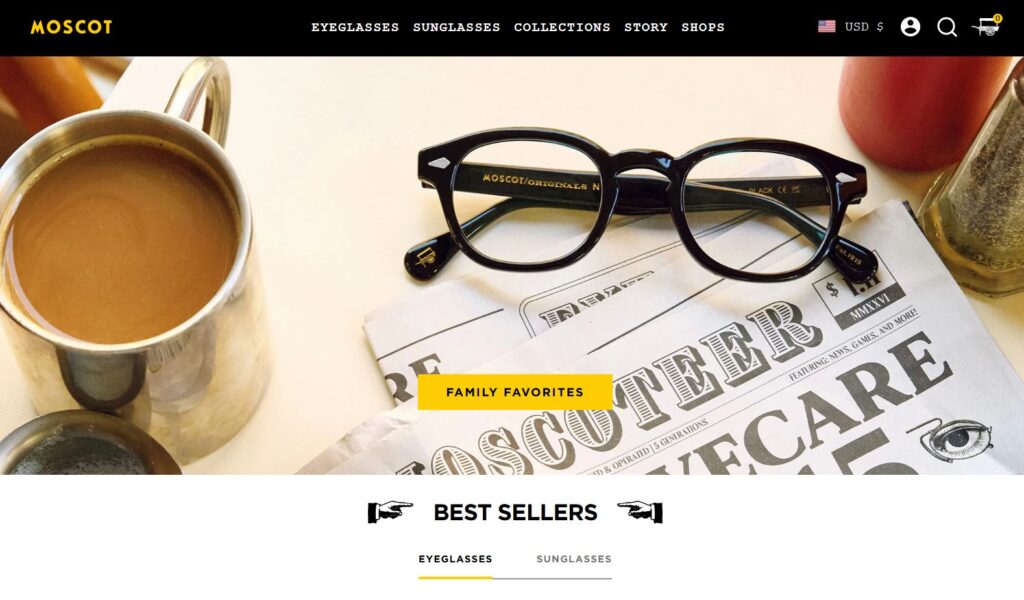
Browse the Moscot website and you’ll immediately notice something different…
The photography is stunning. Not just product shots, but lifestyle imagery that transports you to vintage New York, evokes a sense of nostalgia, and makes you feel like you’re part of something special.
They use high-quality, professionally shot images that showcase frames in context—on real faces, in beautiful lighting, with styling that emphasizes the timeless aesthetic.
This visual storytelling does something crucial: it helps customers envision themselves wearing Moscot frames, not just as glasses, but as an extension of their personal style and identity.
Ad 🎯 Ready to put these strategies into action?
Theory is great, but execution is what drives growth. That’s where Max Business School™ comes in.
Inside, you’ll find step-by-step digital marketing courses (SEO, ads, email, social, content, and more) — taught by professionals, designed for beginners and business owners alike.
And the best part? It’s 100% free, online, and flexible.
→ Join Max Business School Today — Free
What Moscot Could Improve (And How You Can Learn From It)
Despite their incredible success, even Moscot has room to grow.
Here are the strategic opportunities they’re leaving on the table—and lessons you can apply to your own eyewear business.
Personalized Recommendations Using AI
Right now, Moscot’s website is beautiful, but it doesn’t offer personalized frame recommendations based on face shape, style preferences, or previous browsing behavior.
Imagine if customers could upload a photo and receive AI-generated suggestions for frames that perfectly complement their features. Or if the site remembered their style preferences and proactively showed them new releases that matched their taste.
This kind of personalization would dramatically improve the online shopping experience and increase conversion rates.
According to Accenture’s personalization research, ecommerce sites with AI-powered personalization see 10-30% increases in conversion rates and average order values.
For a brand like Moscot, implementing this could mean millions in additional revenue.
Limited-Edition Designer Collaborations
While Moscot occasionally partners with designers, they could push this strategy much further.
What if they collaborated with emerging fashion designers, contemporary artists, or cultural icons to create ultra-limited capsule collections?
These collaborations would generate massive PR buzz, attract younger audiences who might not be familiar with Moscot’s heritage, and create collectible frames that command even higher premiums.
Think about how luxury brands like Nike or Supreme use limited drops to create hype and drive demand. Moscot could apply the same playbook to premium eyewear.
Content Marketing and SEO
Moscot’s website focuses heavily on products and brand story, but they’re missing a huge opportunity to capture organic search traffic through content marketing.
Imagine if they published articles on topics like “How to Choose Frames for Your Face Shape,” “The History of Iconic Eyewear Styles,” or “How to Care for Handcrafted Frames.”
These SEO-optimized articles would attract people in the research phase of buying eyewear, position Moscot as an authority, and drive qualified traffic that converts into sales.
Most eyewear brands completely ignore content marketing, which means this represents a massive untapped growth channel.
Your Blueprint to Build a Premium Eyewear Business
Ready to build your own successful eyewear ecommerce business?
Here’s your step-by-step blueprint based on what Moscot did right (and where they could improve).
Step 1: Define Your Unique Positioning
Don’t try to be everything to everyone.
Moscot succeeds because they’ve chosen a specific position: premium, heritage-focused, handcrafted eyewear. Your positioning could be eco-friendly materials, frames designed for specific activities like gaming or sports, vintage-inspired designs for Gen Z, or eyewear for underserved demographics like plus-size faces or specific ethnic features.
The key is specificity. “Affordable glasses” is too generic. “Sustainable bamboo frames for eco-conscious millennials” is a position you can own.
Step 2: Source Quality Manufacturing
Your frames need to actually be good.
Research eyewear manufacturers who can produce high-quality frames at reasonable minimums. Options include Alibaba suppliers with good reviews and factory certifications, domestic manufacturers if you want “Made in USA” branding, or Italian and Japanese manufacturers for premium positioning.
Start with a small production run to test designs and quality before committing to large inventory orders.
Step 3: Build a Beautiful Ecommerce Site
Your website is your primary sales tool, so it better be stunning.
Use Shopify or WooCommerce for your ecommerce platform. Choose a clean, modern theme that puts your product photography front and center. Invest in professional product photography that shows frames from multiple angles and on diverse models. Include detailed product descriptions highlighting materials, design inspiration, and sizing information. And implement a virtual try-on feature using AR technology—tools like Warby Parker’s virtual try-on significantly increase conversion rates.
Step 4: Create Compelling Brand Storytelling
People don’t just buy glasses—they buy the story behind the brand.
Develop an “About Us” page that shares your founder story, mission, and values. Explain why you started the business and what makes your frames different. Use lifestyle photography and video to bring your brand to life. And be authentic—customers can smell fake brand stories from a mile away.
Step 5: Leverage Content Marketing for Growth
Don’t rely solely on paid ads to drive traffic.
Start a blog covering eyewear style guides, face shape recommendations, and care tips. Create YouTube videos showing how to choose frames or style eyewear with different outfits. Optimize all content for SEO to capture organic search traffic. And guest post on fashion, lifestyle, and wellness blogs to build backlinks and brand awareness.
Step 6: Build Social Proof
Nobody wants to be the first customer.
Reach out to micro-influencers in fashion and lifestyle niches and offer them free frames in exchange for honest reviews. Collect and prominently display customer testimonials and photos on your site. Share user-generated content on social media to show real people wearing your frames. And consider a PR strategy to get featured in fashion publications and lifestyle blogs.
Step 7: Implement Smart Monetization
Don’t leave money on the table.
Price your frames appropriately—don’t race to the bottom. Offer bundle deals like “buy two, save 15%” to increase average order value. Introduce a subscription model for customers who want new frames regularly. And explore B2B partnerships with optometrists, fashion boutiques, or corporate wellness programs.
Key Takeaways: Building Your Eyewear Empire
Let’s distill everything down to the essentials.
If you’re serious about building a premium eyewear ecommerce business, these are the non-negotiables you can’t afford to ignore.
Premium positioning beats racing to the bottom. Moscot proves you can build a $20 million business by charging premium prices for superior quality. Don’t compete on price—compete on craftsmanship, design, and brand story.
Heritage and storytelling create emotional connections. People don’t just buy products—they buy into brands that reflect their identity. Invest time crafting a compelling brand narrative that resonates with your target audience.
Quality matters more than everything else. No amount of marketing can save a subpar product. Moscot’s frames are genuinely well-made, and that quality is what creates loyal, repeat customers.
Omnichannel strategies compound revenue. Combining online sales with physical retail touchpoints creates multiple ways to reach customers and increases overall lifetime value.
Organic celebrity endorsements are marketing gold. Focus on creating a product so good that influential people naturally want to wear it and share it. That authentic endorsement is worth more than any paid ad campaign.
The eyewear industry is massive, with the global market projected to reach $193 billion by 2027 according to Grand View Research. There’s room for new brands that offer something genuinely different.
Your Turn to Build
Here’s the beautiful truth about premium eyewear businesses:
You don’t need a century of family history to succeed. You need a clear vision, commitment to quality, and the patience to build a brand that people genuinely love.
Moscot started with a pushcart on the Lower East Side. Today, they generate $20 million annually while maintaining their family values and commitment to craftsmanship.
That same trajectory is possible for you. The formula remains constant: find an underserved audience or unique positioning, deliver exceptional quality, and build a brand people want to be associated with.
The question isn’t whether premium eyewear businesses can be profitable.
The question is: which niche will you own?
Competitors like Oliver Peoples and Warby Parker have proven there’s massive opportunity in eyewear ecommerce, each with their own unique positioning and business model.
Your move.