
How to Start a Pet Supplement Store Making $107K/Month
Your dog is family.
So when Bella starts limping after her morning walk, you don’t just shrug it off. You Google “dog joint supplements” at 11 PM while she’s sleeping, desperately hoping there’s something—anything—that’ll help.
Welcome to the $2.8 billion pet supplement industry, where anxious pet parents spend whatever it takes to keep their furry family members healthy.
And one brand is absolutely crushing it in this space.
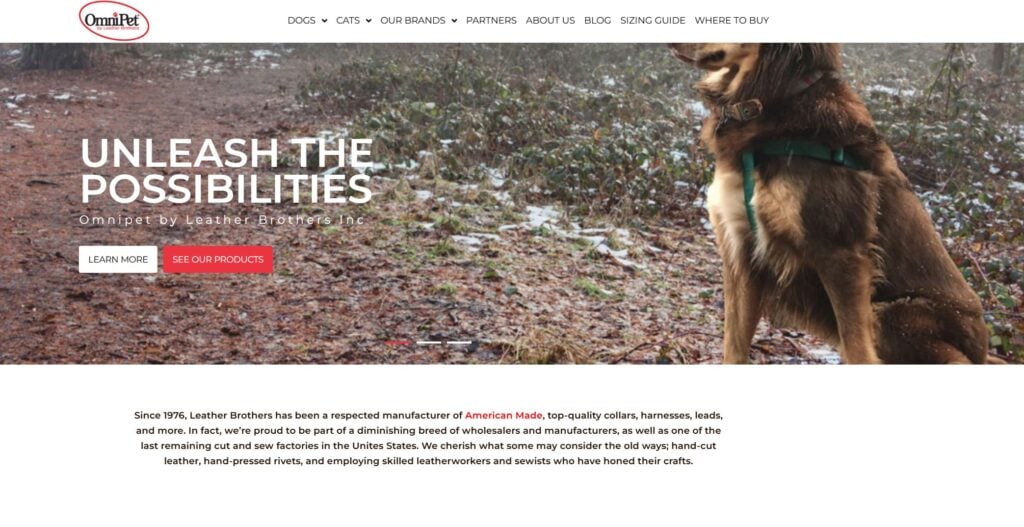
OmniPet pulls in $107,000 per month selling premium pet supplements through a straightforward e-commerce model that prioritizes trust over flashy marketing gimmicks.
No complicated subscription tricks. No aggressive upsells. Just high-quality products positioned perfectly for pet owners who refuse to compromise on their animal’s health.
Here’s exactly how they built it—and how you can too.
Why Pet Supplements Are a Goldmine Right Now
Let’s talk numbers for a second.
Americans spent over $136 billion on their pets in 2024, according to the American Pet Products Association. And that number climbs every single year.
But here’s the interesting part: pet supplements represent one of the fastest-growing segments within that massive industry.
Pet owners increasingly view their animals as family members deserving the same preventive healthcare humans receive. The same person buying probiotics for themselves is buying them for their dog. The same person taking joint supplements is searching for canine equivalents.
This creates a unique market dynamic. Pet supplement customers aren’t price-sensitive bargain hunters—they’re emotionally invested parents willing to pay premium prices for quality products that genuinely help.
You’re not competing on price. You’re competing on trust and efficacy.
And that’s exactly the game OmniPet is winning.
The OmniPet Business Model: Simple But Sophisticated
OmniPet’s revenue engine runs on two cylinders, and both are firing perfectly.
Revenue Stream One: E-Commerce Product Sales
The foundation of their business is dead simple: sell premium pet supplements through their online store.
But the devil—and the genius—lives in the details of product selection.
OmniPet doesn’t try to offer 100 different supplements. They focus on specific, high-demand health categories: joint health for aging dogs, digestive support for sensitive stomachs, anxiety relief for nervous pets, and immune system boosters for overall wellness.
Each product solves a clear, painful problem that pet owners are actively searching for solutions to. Nobody’s Googling “general pet wellness”—they’re searching “why is my dog limping” and “how to calm anxious dog naturally.”
This problem-focused product strategy makes marketing exponentially easier. You’re not creating demand—you’re capturing existing demand from desperate pet parents.
According to Grand View Research’s pet supplement market analysis, joint health supplements represent the largest product segment, driven by the aging pet population. OmniPet taps directly into this proven demand.
Revenue Stream Two: Veterinary Consultation Services
Here’s where OmniPet separates itself from every other supplement store on Shopify.
They offer online veterinary consultations directly through their website.
This is brilliant for three reasons. First, it positions OmniPet as a legitimate healthcare partner, not just another supplement seller. Second, it generates additional revenue from consultation fees. And third—this is the big one—it creates an organic pathway to product recommendations.
When pet owners consult with a veterinarian who then suggests specific OmniPet products, the conversion rate skyrockets. It’s not a pushy sales pitch—it’s a trusted medical recommendation.
This service transforms the business from transactional e-commerce into relationship-based healthcare. And relationships mean repeat customers, higher lifetime value, and powerful word-of-mouth marketing.
Product Strategy: Less is Actually More
Walk into a vitamin store and you’ll see 400 different bottles making contradictory promises.
It’s overwhelming, confusing, and honestly? It destroys trust.
OmniPet takes the opposite approach. Their product line is focused, specific, and benefit-driven. Each supplement addresses one primary health concern with crystal-clear positioning.
This strategic restraint serves multiple purposes beyond just simplifying the customer experience.
When you’re not spreading marketing resources across 50 products, you can create better content for the products you do offer. Product pages become comprehensive educational resources rather than thin sales copy. You can afford to invest in better packaging that communicates quality at first glance. And inventory management becomes exponentially simpler, reducing overhead and cash flow nightmares.
Shopify’s product catalog research indicates that stores with 10-25 well-optimized products often outperform stores with hundreds of poorly differentiated items. Focus beats variety in e-commerce.
The psychological impact on buyers is equally important. When you offer three carefully curated joint supplements instead of twenty generic options, you remove decision paralysis. The customer thinks “which of these is best for my dog?” not “oh god, where do I even start?”
Building Trust in a Skeptical Market
Here’s the uncomfortable truth about supplements: most customers are inherently skeptical.
They’ve been burned before by overpriced placebos that did absolutely nothing. The supplement industry—both human and pet—has a well-earned reputation for making bold claims backed by zero evidence.
So how does OmniPet overcome this trust barrier?
Clinical, Professional Branding
Everything about OmniPet’s presentation screams “legitimate healthcare.”
Their website design is clean, uncluttered, and medical-feeling. No cartoon mascots. No cheesy stock photos of impossibly happy pets. Just professional product photography, clear ingredient lists, and scientific explanations.
The packaging follows the same philosophy. It looks like something you’d find at a veterinary clinic, not a gas station impulse display.
This clinical aesthetic immediately separates OmniPet from sketchy competitors and aligns them with trusted healthcare providers.
Science-Backed Product Claims
OmniPet doesn’t just say their supplements work—they explain exactly how they work.
Product pages include ingredient breakdowns with scientific names and functions, dosage information based on pet weight and condition, expected timelines for seeing results, and citations to veterinary studies when available.
This level of transparency builds massive credibility. Customers think: “if they’re this detailed and specific, they must know what they’re doing.”
Compare this to competitors who just slap “vet recommended!” on their label with zero supporting evidence. The difference is night and day.
The Veterinary Consultation Advantage
This cannot be overstated: offering professional veterinary consultations completely transforms the customer relationship.
When a pet owner can speak with an actual veterinarian before purchasing, every objection melts away. “Will this work for my dog’s specific condition?” Ask the vet. “Is this safe with my dog’s current medications?” Ask the vet. “Which product should I choose?” Ask the vet.
The consultation service isn’t just a revenue stream—it’s a trust-building machine that turns skeptical browsers into confident buyers.
What OmniPet Could Be Doing Better
Every business has blind spots, and OmniPet has two massive missed opportunities.
The Content Marketing Gap
Pet health is one of the most Google-friendly niches imaginable.
Millions of pet owners search for answers every single month: “why is my dog scratching constantly,” “natural remedies for dog anxiety,” “best supplements for senior dogs.”
OmniPet could own these searches with comprehensive, genuinely helpful blog content. Not thin, keyword-stuffed garbage—real educational articles written with veterinary expertise.
Each article becomes a permanent asset generating free organic traffic. And every visitor is a potential customer already researching the exact problems OmniPet’s products solve.
According to HubSpot’s state of marketing report, companies that blog consistently generate 67% more leads than those that don’t. In the pet supplement space, content marketing is leaving money on the table.
Missing the Subscription Opportunity
Pet supplements are the perfect subscription product.
Dogs take joint supplements every single day. You don’t buy one bottle and stop—you need constant refills. Yet OmniPet hasn’t built a subscribe-and-save model into their business.
This is baffling because subscriptions solve problems for both sides. Customers love the convenience of automatic refills and appreciate the subscription discount. The business loves predictable recurring revenue and increased customer lifetime value.
The pet subscription box market is exploding for good reason—pet owners happily embrace auto-ship models when the products provide genuine value. McKinsey’s subscription economy research shows that subscribers have 2-3x higher lifetime value than one-time purchasers.
Implementing subscriptions could realistically double OmniPet’s revenue with minimal additional work.
Your Blueprint for Building a Pet Supplement Business
Alright, let’s get practical. How do you actually build this?
Step One: Choose Your Product Focus
Don’t try to be everything to everyone from day one.
Pick one specific pet health category and dominate it. Your options include joint health for aging pets, digestive/gut health support, calming supplements for anxiety, skin and coat health, or immune system boosters.
Do keyword research to validate demand. Tools like Google Keyword Planner or Ahrefs will show you exactly what pet owners are searching for. You want topics with substantial monthly searches and clear purchase intent.
Step Two: Source Quality Products
You have two paths here: private label existing supplements or formulate custom products.
Private labeling is faster and cheaper. You find a reputable manufacturer (often through Alibaba or domestic suppliers), they produce the supplements, and you slap your brand on the packaging. Initial investment: $2,000-$5,000 depending on order quantities.
Custom formulation gives you complete control over ingredients but requires more investment and expertise. You’ll need to work with veterinary nutritionists and supplement manufacturers to develop proprietary formulas. Initial investment: $10,000+.
Either way, prioritize quality and transparency. Your reputation lives and dies on whether your products actually work.
Step Three: Build Your E-Commerce Store
WordPress with WooCommerce remains the most flexible, cost-effective solution for supplement stores.
Your annual costs break down to roughly $24 for hosting and domain through services like Bluehost, $0 for WordPress and WooCommerce (both free), payment processing fees of around 2.9% + $0.30 per transaction through Stripe, and email marketing starting at $9/month through platforms like Brevo.
Total year-one investment: under $1,000 before inventory.
Your website must accomplish four things: clearly communicate what each product does and why, provide detailed ingredient information and dosing guidelines, showcase customer testimonials and results, and make purchasing brain-dead simple with fast checkout.
Step Four: Master Product Page Optimization
Your product pages do the heavy lifting in e-commerce.
Each page needs a benefit-focused headline that speaks to the specific problem, professional product photography from multiple angles, comprehensive ingredient breakdown with purposes, clear dosing instructions based on pet weight, expected results timeline, customer reviews with photos when possible, and a prominent guarantee or return policy.
The Baymard Institute’s product page research indicates that 20% of purchases fail due to inadequate product information. Over-communicate rather than under-communicate.
Step Five: Launch with Search Engine Marketing
SEO takes time. While building organic traffic, launch with Google Ads targeting high-intent search terms.
Start with exact match keywords like “best joint supplement for dogs,” “dog anxiety supplement,” and “[specific brand name] alternative.” These searches indicate someone ready to buy.
Budget $20-30 per day initially, carefully tracking which keywords convert. Kill underperforming campaigns ruthlessly and scale winners.
WordStream’s Google Ads benchmarks show average conversion rates of 3-4% for health and wellness products. Track everything and optimize based on data, not hunches.
Step Six: Build Email Sequences That Nurture
Email marketing generates the highest ROI of any digital channel—$36 for every $1 spent according to Litmus research.
Create automated sequences for new subscribers offering a “Pet Wellness Guide” as a lead magnet, abandoned cart reminders with product benefits reinforcement, post-purchase education on how to maximize supplement effectiveness, and review requests with incentives for photo testimonials.
Treat your email list like gold. These are your most valuable customers.
The Veterinary Consultation Competitive Advantage
Let’s revisit this because it’s OmniPet’s secret weapon.
Adding professional veterinary consultations requires minimal investment but creates massive differentiation. Use Calendly for booking (starts at $10/month), partner with licensed veterinarians willing to do virtual consultations, and charge $30-50 per 15-minute consultation.
Even if consultations only break even financially, they’re worth it for the conversion rate improvement. A customer who speaks with a vet before purchasing is 3-5x more likely to buy and becomes a long-term repeat customer.
This transforms your business from “just another supplement store” into a comprehensive pet healthcare resource. That’s a positioning most competitors can’t match.
The Path to $107K Monthly
OmniPet didn’t hit $107,000 in month one. They built systematically.
Months 1-3 focus on launch: getting products, building the website, and starting paid traffic. Months 4-6 focus on optimization: improving product pages, testing ad copy, and building email sequences. Months 7-12 focus on content: adding blog articles to capture organic traffic and build authority. Year two focuses on scaling: increasing ad spend on proven campaigns, expanding product line strategically, and implementing subscriptions.
The pet supplement market shows no signs of slowing. Fortune Business Insights projects the market will reach $4.2 billion by 2030, growing at nearly 8% annually.
There’s room for new players who understand how to build trust and deliver genuine value.
Your Next Move
The framework is proven. The market is growing. The opportunity is real.
You can start with a focused product line targeting one specific pet health need, build an e-commerce store for under $1,000, partner with veterinarians to add consultation services, and scale through a mix of paid ads and organic content.
Or you can wait and watch while others capitalize on this growing market.
The pet parents are out there right now, searching for solutions to help their suffering animals. They’re ready to buy from businesses they trust.
Will yours be one of them?
Related Resources:
American Pet Products Association: Industry Trends
Grand View Research: Pet Supplement Market Analysis
Shopify: Optimizing Product Catalogs
OmniPet Website