
How to Start a Visual Assets Business Making $75K/Month
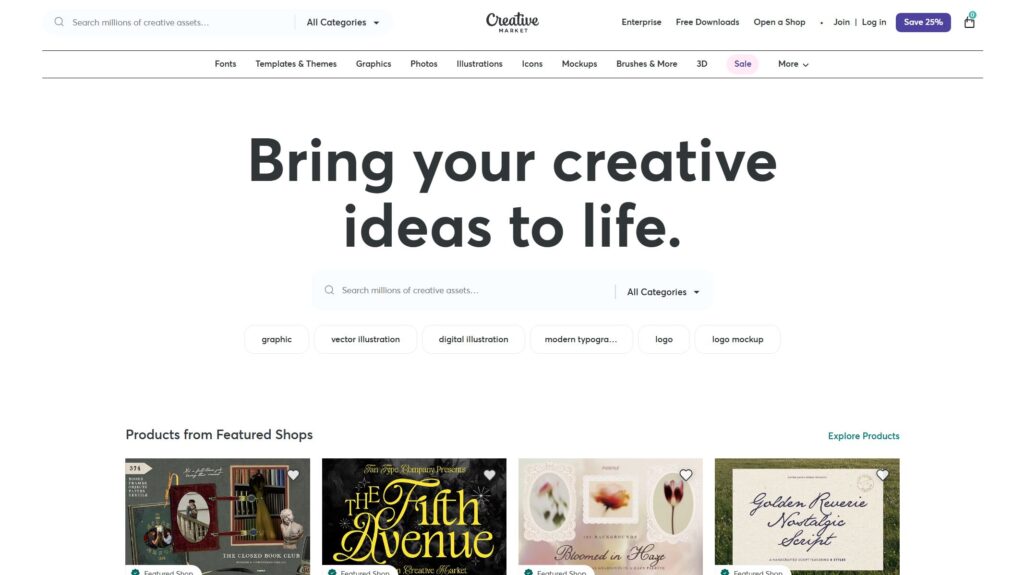
You need a professional photo for your healthcare brochure.
So you head to the usual stock photo sites and scroll through page after page of impossibly attractive doctors giving thumbs up, nurses smiling at clipboards, and patients who look like they’re auditioning for toothpaste commercials.
None of it feels real. All of it screams “stock photo.”
This is the exact problem FotoFinder solved—and turned into a $75,000 monthly business.
They built a specialized visual assets platform focused exclusively on industries like healthcare and marketing, offering high-quality, legally compliant imagery that doesn’t look like generic corporate cheese.
And here’s what makes this business model brilliant: they’re not competing with Shutterstock or Getty Images for everything. They’re dominating narrow, underserved niches where generic stock photos don’t cut it.
Today we’re breaking down how FotoFinder built this business, why specialized stock photo platforms print money, and how you can launch your own niche visual assets business in months.
Why Generic Stock Photos Are Dying
Let’s address the elephant in the photographer’s studio: isn’t the stock photo market completely saturated?
Yes and no.
The generic stock photo market is oversaturated. Millions of photos of business handshakes, women laughing at salads, and diverse teams pointing at whiteboards flood sites like Unsplash and Pexels.
But specialized, industry-specific visual assets? That market is wide open.
Healthcare marketing teams need authentic medical imagery that complies with HIPAA regulations. Legal firms need courtroom and office photos that don’t look staged. Construction companies need job site imagery that shows real work environments.
These industries can’t use generic stock photos because they need specific contexts, authentic scenarios, and legal compliance that mass-market platforms don’t provide.
According to Grand View Research’s stock image market analysis, the specialized B2B stock imagery segment is growing at 8.3% annually, driven by increasing demand for authentic, niche-specific visual content.
FotoFinder recognized this gap and built an entire business filling it.
The FotoFinder Business Model
Let’s break down how this works financially.
FotoFinder operates on a subscription-based model serving professional markets that desperately need specialized visual assets.
Subscription Revenue: Predictable and Scalable
Instead of selling individual images à la carte (which creates lumpy, unpredictable revenue), FotoFinder uses monthly or annual subscriptions.
Professionals pay a flat monthly fee for access to the entire library plus a certain number of downloads. Typical pricing tiers might look like: Starter at $29/month for 10 downloads, Professional at $79/month for 50 downloads, or Agency at $199/month for unlimited downloads.
This subscription model creates beautiful economics. Once someone subscribes, they rarely cancel—visual assets are an ongoing need, not a one-time purchase. Monthly recurring revenue compounds as you add subscribers. And customer lifetime value is high because subscriptions continue for years.
At $75,000 monthly revenue with an average subscription of $79/month, FotoFinder likely has around 950 active subscribers. That’s achievable within 12-18 months for a focused niche platform.
According to ProfitWell’s subscription pricing research, B2B subscription businesses with clear value propositions see average customer retention rates above 90%, making this model incredibly stable.
Niche Specialization: The Real Competitive Advantage
Here’s what most people miss about FotoFinder’s success: they’re not trying to be everything to everyone.
They laser-focus on specific industries with unique visual content needs—healthcare facilities that need compliant medical imagery, pharmaceutical companies requiring clinical photography, marketing agencies serving healthcare clients, and medical device manufacturers needing product context shots.
This specialization creates three massive advantages. You can charge premium prices because you’re solving a specific problem. Your marketing becomes easier because you know exactly who to target. And competitors can’t easily replicate your library because building niche-specific assets takes time and expertise.
Generic stock photo sites offer millions of images. FotoFinder offers thousands of highly specific, legally compliant, industry-relevant images. For their target customers, quality and specificity trump quantity every time.
What Makes FotoFinder’s Platform Work
Building a stock photo site is easy. Building one that professionals actually pay for requires understanding what your market truly needs.
Legal Compliance and Model Releases
This is absolutely critical in healthcare and professional services.
Every image on FotoFinder comes with proper model releases, HIPAA compliance documentation, and usage rights clearly defined. Healthcare marketers can’t risk using images without proper releases—one lawsuit destroys any cost savings.
This legal protection is a massive selling point that generic stock sites don’t emphasize. When you’re billing $75K monthly, investing in proper legal documentation for every image is worth it.
High-Quality, Authentic Imagery
The photos on FotoFinder don’t look like stock photos—they look like real healthcare environments, actual medical procedures, and genuine patient interactions.
This authenticity comes from working with professional photographers who understand the industries they’re shooting. Not just any photographer can capture compelling medical imagery—you need someone who understands the context and can make clinical environments look both professional and approachable.
The investment in quality photography pays for itself many times over. Professionals will pay premium subscriptions for authentic, usable imagery that makes their marketing materials look credible.
Smart Search and Filtering
Professional users don’t have time to scroll through thousands of irrelevant images.
FotoFinder’s platform includes advanced filtering by medical specialty, patient demographics, healthcare setting, procedure types, and usage scenarios.
A pharmaceutical marketer searching for “female doctor consulting elderly patient in clinic” should find exactly that in under 30 seconds. The easier you make discovery, the higher your retention and satisfaction.
According to Nielsen Norman Group’s UX research, effective search functionality can increase conversion rates by 43% and dramatically improve user satisfaction in content-heavy platforms.
The Massive Growth Opportunities
Despite solid revenue, FotoFinder has room to 10x their business. Here’s where.
AI-Powered Image Recognition and Search
Implementing AI-driven visual search would transform the user experience.
Imagine uploading an image and having the platform find visually similar photos in the library. Or using natural language search: “doctor talking to worried mother about child’s diagnosis” returns exactly the emotional context you need.
Companies like Clarifai and Google Cloud Vision offer affordable AI image recognition APIs. Integration costs $5,000-10,000 but dramatically improves the platform’s value proposition.
Better search means users find images faster, which means higher satisfaction, which means lower churn and better word-of-mouth referrals.
Custom Content Creation Services
Some clients need specific shots that don’t exist in any library.
FotoFinder could offer custom photography services at premium rates. A healthcare system launching a new campaign needs specific imagery showing their actual facility, actual staff, actual patients.
Charge $2,000-5,000 for a half-day shoot producing 50-100 custom images with full usage rights. Do five custom shoots monthly and you’ve added $10,000-25,000 in revenue.
These custom shoots also expand your stock library—many images can be anonymized and added to the platform after the client campaign runs.
Partnerships with Design Tools
Integration with Canva, Adobe Creative Cloud, or Microsoft Office would exponentially increase usage.
Imagine healthcare marketers accessing FotoFinder images directly within Canva while designing a brochure. No downloading, uploading, or leaving their workflow—just instant access to compliant imagery.
These integrations create stickiness. Once your images are embedded in someone’s design workflow, they’ll never cancel their subscription.
Educational Content and Webinars
Position FotoFinder as the authority on healthcare visual marketing.
Monthly webinars on topics like “Choosing Effective Patient Imagery for Hospital Marketing,” “Legal Compliance in Healthcare Photography,” or “Visual Trends in Pharmaceutical Advertising” would attract potential customers while building authority.
Charge $49-99 per webinar or offer them free to build your email list. Either way, you’re establishing expertise that justifies premium pricing.
Your Blueprint for a Niche Visual Assets Platform
Ready to build your own specialized stock photo business? Here’s your roadmap.
Step One: Choose Your Niche
Don’t compete with Shutterstock. Pick a specific industry or use case with unique visual needs.
Options include legal industry imagery (courtrooms, offices, documents), construction and industrial photography (job sites, equipment, safety), food service and restaurant visuals (authentic kitchen, dining, preparation shots), education and classroom photography (real students, teachers, learning environments), or fitness and wellness imagery (genuine workouts, not fitness models posing).
Validate demand by researching what professionals in these industries search for. Use Google Keyword Planner to see monthly search volumes for “[industry] stock photos” or “[industry] marketing images.”
Step Two: Build Your Initial Library
You need 500-1,000 high-quality images minimum before launching.
Three ways to source content: hire professional photographers who specialize in your niche ($50-150 per hour), buy exclusive rights to existing photographer portfolios (one-time payment plus revenue share), or create your own by shooting in authentic environments with proper releases.
Budget $10,000-20,000 for initial content acquisition. This is your biggest startup cost but also your most valuable asset.
Make sure every single image includes proper model releases, property releases where needed, usage rights documentation, and metadata with relevant keywords and descriptions.
Step Three: Build Your Platform
You don’t need custom development to launch.
Use WordPress with a membership plugin like MemberPress ($179/year), add an image gallery plugin like Envira Gallery, set up Stripe for subscription payments (no upfront cost, just transaction fees), and use a CDN like Cloudinary ($99/month) for fast image delivery.
Total year-one platform cost: under $2,000 before content acquisition.
Your platform must accomplish these things: allow users to search and filter images effectively, provide instant downloads in multiple sizes and formats, clearly display usage rights and licensing, and handle subscription management and renewals automatically.
Step Four: Nail Your SEO Strategy
Organic search is the cheapest customer acquisition channel for stock photo platforms.
Optimize your image pages with descriptive filenames using keywords (healthcare-doctor-patient-consultation.jpg not IMG_2847.jpg), detailed alt text for accessibility and SEO, comprehensive metadata and tags, and keyword-rich titles and descriptions.
Create supporting blog content targeting searches like “best [industry] stock photos,” “how to choose [use case] imagery,” or “[industry] visual marketing guide.”
According to Ahrefs’ image SEO research, properly optimized image galleries can drive 30-40% of a stock photo site’s organic traffic.
Step Five: Target Your Ideal Customers
You know exactly who needs your images—now reach them directly.
LinkedIn Ads targeting job titles like “Healthcare Marketing Manager” or “Hospital Communications Director,” Google Ads for high-intent searches like “[industry] stock photos,” content marketing with guest posts on industry blogs, and partnerships with industry associations and conferences.
Start with a $20-30 daily ad budget testing which messages resonate. Scale the winners, kill the losers.
Step Six: Build Subscription Tiers Strategically
Pricing psychology matters in subscription businesses.
Offer three tiers, with the middle tier designed as your target: Basic at $29/month (10 downloads, attracts price-sensitive individuals), Professional at $79/month (50 downloads, your target tier for most customers), Agency/Enterprise at $199/month (unlimited downloads, high-volume users).
The basic tier anchors the value perception. The agency tier makes the professional tier look like a smart deal. Most customers will choose professional.
Consider offering annual subscriptions at a discount (pay for 10 months, get 12). This improves cash flow and increases customer lifetime value.
The Economics of Scale
Here’s what makes this business model beautiful: it scales incredibly well.
Your marginal cost per additional subscriber is nearly zero. Once you’ve created your image library and platform, serving subscriber 10 costs almost the same as serving subscriber 1,000.
Your only significant ongoing costs are hosting/bandwidth, content acquisition to keep library fresh, customer support, and marketing to acquire new subscribers.
As subscriber count grows, profit margins expand dramatically. At 100 subscribers generating $7,900 monthly, you’re probably barely profitable after costs. At 1,000 subscribers generating $79,000 monthly, you’re potentially keeping 60-70% as profit.
This is why FotoFinder at $75K monthly revenue is likely generating $35,000-45,000 in monthly profit with a lean team.
The Path to $75K Monthly
Let’s be realistic about timeline and effort.
Months 1-3 focus on content acquisition: building your initial 500-1,000 image library, platform setup and testing, and SEO optimization.
Months 4-6 focus on launch and first subscribers: aggressive outreach to target customers, content marketing and SEO beginning to generate organic traffic, and getting to 50-100 paying subscribers.
Months 7-12 focus on scaling: adding 50-75 new subscribers monthly, continuously expanding image library, and implementing automation for customer onboarding and support.
Year 2 focuses on acceleration: achieving 500+ active subscribers, adding premium services like custom shoots, and exploring partnerships and integration opportunities.
This isn’t a get-rich-quick scheme. But it’s a legitimate path to a high-margin, defensible business serving a clear market need.
According to SaaS Capital’s subscription business benchmarks, well-executed B2B subscription platforms in specialized niches typically reach $50-100K monthly recurring revenue within 18-24 months.
Your Move: Build or Watch
The opportunity is staring you in the face.
Every industry needs specialized, authentic visual content. Generic stock photo sites don’t serve niche markets well. Professionals will pay premium subscriptions for imagery that actually fits their needs.
You can identify an underserved industry with specific visual needs, build an initial library of 500-1,000 high-quality images, launch a subscription platform for under $2,000, and scale to $75K monthly revenue within two years.
Or you can bookmark this article and watch someone else build exactly what we just described.
The healthcare industry alone will continue growing. Legal services aren’t disappearing. Construction companies will always need marketing materials.
The demand is real, proven, and growing.
The only question: will you be the one capturing it?
Related Resources:
– Grand View Research: Stock Image Market Analysis