
How to Build a $40K/Month Food Blog: Complete Case Study
Ever wonder if you could actually make real money writing about what you eat?
Not pocket change. Not “beer money.” But enough to quit your day job and work in yoga pants kind of money?
Here’s the thing most people get wrong about food blogs:
They think it’s all about pretty photos and perfect recipes. That helps, sure. But the real secret sauce? It’s in the business model hidden behind those gorgeous flatlay shots.
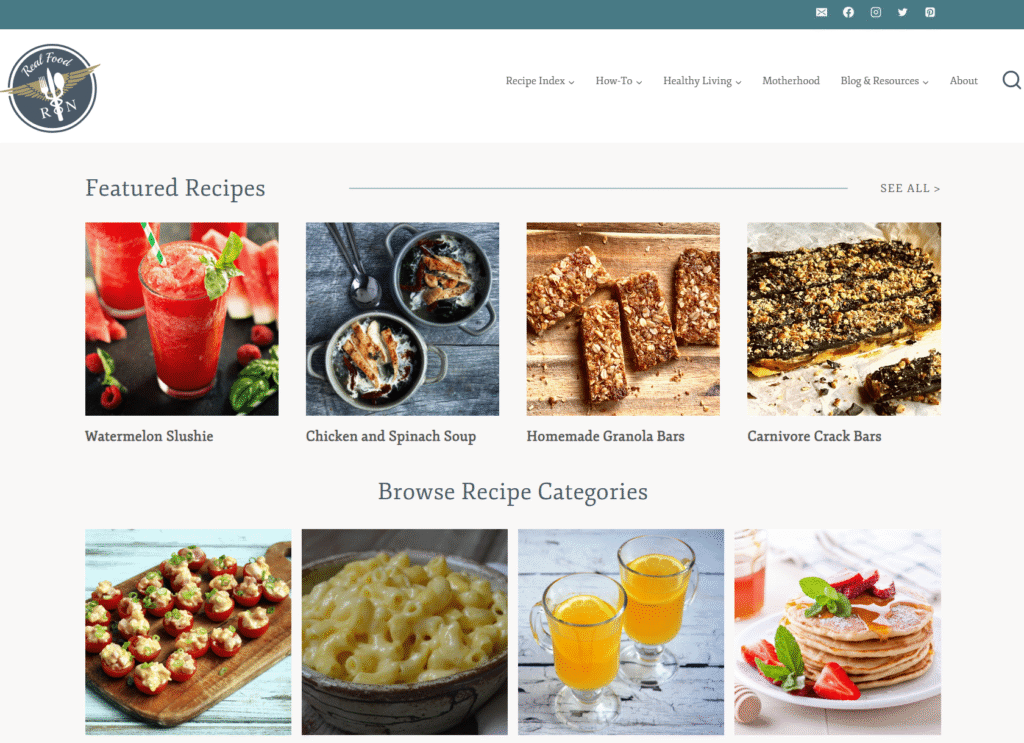
Let me introduce you to Kate Doubler, a burned-out nurse who turned her side hustle into a $40,000-per-month food and health blog called RealFoodRN. No massive team. No Silicon Valley funding. Just strategic content creation and smart monetization.
And I’m about to show you exactly how she did it.
The Burned-Out Nurse Who Found Her Recipe for Success
Kate spent years in the medical field watching the same cycle repeat itself.
Patient comes in with preventable health issues. Gets medication. Symptoms temporarily managed. Root cause? Never addressed.
She was tired of putting band-aids on bullet wounds.
So she went back to school for nutrition, became a health coach, and started documenting her journey toward real food and natural remedies. The blog began as a side project—a place to share what she was learning with her coaching clients.
Then something unexpected happened.
The blog started making more money than her nursing job. And her health coaching practice combined.
Today, RealFoodRN pulls in over $40,000 monthly through multiple revenue streams. Kate works from home, sets her own schedule, and actually helps people prevent health problems instead of just treating symptoms.
Not a bad trade-off for someone who was ready to leave healthcare entirely.
Ad 🎯 After studying 400+ business models, here’s what actually works for beginners…
Most “make money online” advice is garbage. Complex affiliate schemes. Dropshipping nightmares. Social media “influencing.”
We found something better: lead-generation funnels for manufacturers. Simple. Profitable. Fast results.
Our Max Incubator Phase 1 students are proof—they’re going from zero to their first $1,000 in 90 days with this exact model.
→ See the business idea that’s working for beginners this year
How RealFoodRN Actually Makes $40K Per Month
Let’s cut through the Instagram highlight reel and talk numbers.
Here’s where the money actually comes from:
Affiliate Marketing forms the backbone of revenue. Kate recommends kitchen gadgets, supplements, and health products she genuinely uses. When readers purchase through her links, she earns a commission. The beauty? She’s helping people find quality products while earning passive income. One well-placed affiliate link in a popular recipe post can generate income for years.
Display Advertising provides consistent baseline revenue. Every time someone visits the site, ad networks like Mediavine or AdThrive serve relevant ads. High traffic equals higher earnings. With over 5,000 organic visitors monthly, those pennies per click add up fast.
Digital Products including e-books create another income stream. Kate packages her expertise into downloadable guides—meal plans, natural remedy handbooks, nutrition primers. Once created, they sell indefinitely with zero inventory costs. Pure profit after the initial time investment.
Podcasting opens additional monetization doors. Kate produces regular audio content, attracting sponsors and advertisers eager to reach her health-conscious audience. Podcast listeners tend to be highly engaged, making them valuable to brands.
The real genius? These income streams work together. A reader finds a recipe through Google search (SEO), clicks an affiliate link for a recommended ingredient (affiliate income), signs up for the email list (lead generation), then eventually purchases an e-book (digital product). Each piece reinforces the others.
The Five Strategies That Fuel This $40K Empire
Revenue doesn’t appear by magic. Kate implemented specific tactics that transformed casual readers into a thriving community:
Email marketing became the secret weapon. While social media platforms change algorithms overnight, email provides direct access to her audience. Kate strategically places opt-in forms throughout her site, offering free meal plans or nutrition guides in exchange for email addresses. Then she nurtures those relationships with valuable content, exclusive recipes, and personalized recommendations. This builds trust that eventually converts to sales.
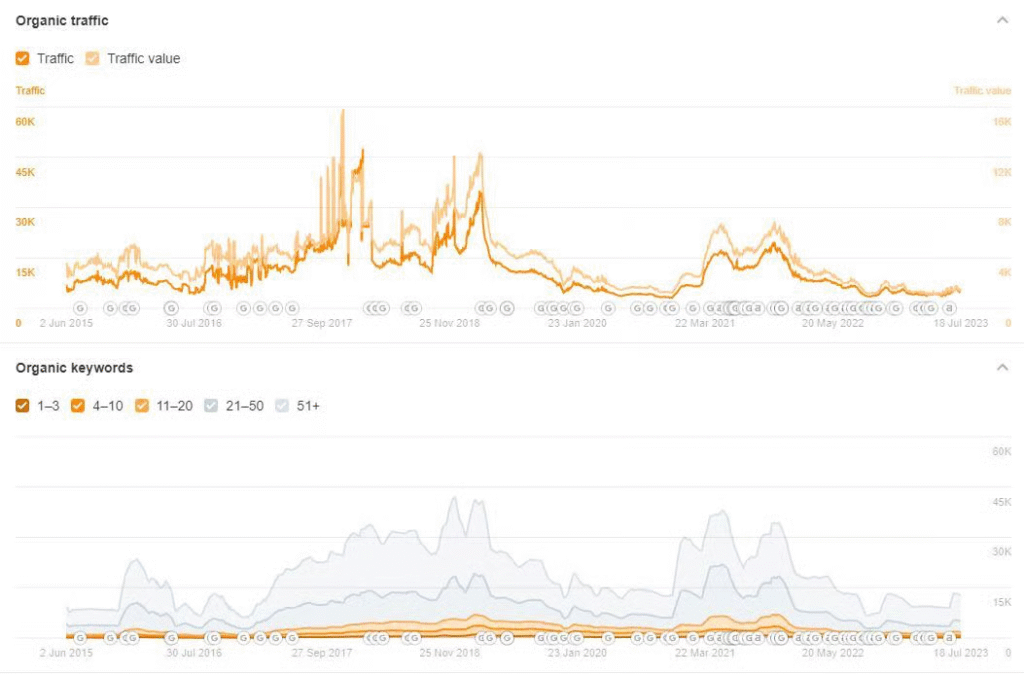
SEO mastery drives consistent traffic. Targeting nearly 12,000 keywords means RealFoodRN appears in search results constantly. Someone Googling “gluten-free bread recipe” or “natural remedies for inflammation” finds Kate’s content. That organic traffic costs nothing and compounds over time—unlike paid advertising that stops the moment you stop spending.
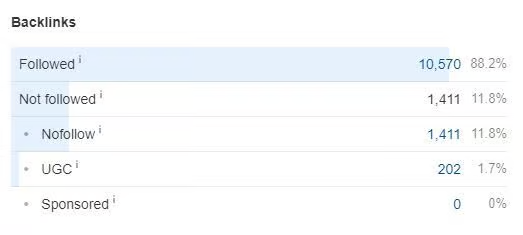
Backlink authority establishes credibility. Other reputable health sites link to RealFoodRN content, signaling to Google that this source deserves higher rankings. Kate earns these backlinks by creating genuinely helpful content that other creators want to reference. It’s digital word-of-mouth that boosts visibility.
Social media presence extends reach. With nearly 30,000 Instagram followers, over 80,000 on Pinterest, and 54,000 on Facebook, Kate meets her audience where they already spend time. She shares snippets that drive traffic back to the blog, where monetization happens. Pinterest especially works beautifully for food content—users actively search for recipes and save posts for later.
Strategic call-to-action buttons guide behavior. Kate designs CTA buttons that pop against her site theme. Bright colors, clear text, compelling offers. These buttons guide visitors toward email signup, affiliate products, or digital purchases. Without obvious CTAs, readers browse and leave. With them, casual visitors become customers.
The pattern becomes clear: attract visitors through SEO and social media, capture emails, build relationships, monetize through multiple channels. Rinse and repeat.
Where RealFoodRN Could Grow Even Bigger
No business is perfect. Even at $40K monthly, opportunities exist to scale further:
The user experience needs polish. Page load times could improve. Mobile responsiveness isn’t quite seamless. Navigation feels slightly cluttered. Small friction points that send visitors elsewhere. Fixing these technical issues would boost engagement and conversions immediately.

Customer reviews and testimonials hide in plain sight. The review system faces technical glitches that prevent testimonials from displaying properly. Social proof drives purchasing decisions—seeing others succeed with Kate’s recipes or advice would convert more fence-sitters into buyers. This represents low-hanging fruit.
Video platforms remain untapped. Kate already creates video content for her blog and social media. But she’s missing YouTube and TikTok entirely. YouTube offers massive discovery potential—people searching “how to make sourdough starter” could find Kate’s videos instead of just her blog posts. TikTok’s short-form content could introduce her brand to younger audiences interested in wellness.

These aren’t critical failures. They’re growth opportunities that could push revenue from $40K to $60K or beyond.
Ad 🎯 Ready to put these strategies into action?
Theory is great, but execution is what drives growth. That’s where Max Business School™ comes in.
Inside, you’ll find step-by-step digital marketing courses (SEO, ads, email, social, content, and more) — taught by professionals, designed for beginners and business owners alike.
And the best part? It’s 100% free, online, and flexible.
→ Join Max Business School Today — Free
The Learning Moment: Multiple Income Streams Beat Single Revenue Source
Here’s what separates hobbyist bloggers from six-figure earners:
Diversification.
If Kate relied solely on affiliate marketing, algorithm changes or program shutdowns could devastate income overnight. If display ads provided all revenue, a traffic dip would create instant financial stress.
Instead, she built four distinct income streams that support each other. When one dips, others compensate. This creates financial stability while maximizing earning potential.
Think about it this way: Would you rather have one customer who pays you $40,000 annually, or forty customers who each pay $1,000? The second option survives losing customers much better.
The same principle applies to blog monetization. Your traffic becomes more valuable when you monetize it multiple ways simultaneously.
Your Roadmap: Building Your Own Food and Health Blog
Ready to start your own version? Here’s the realistic path:
Before you write a single word, validate your commitment. Can you work on this consistently for three to five years? Food blogging isn’t a get-rich-quick scheme. It’s a legitimate business that requires patience and persistence. If you’re already building something else, don’t split focus. Take the lessons here and apply them to your current project instead.
Choose a specific niche within food and health. “Healthy eating” is too broad. “Paleo recipes for busy parents” or “anti-inflammatory cooking for autoimmune conditions” gives you focused direction. Use tools like Ahrefs to research what people actually search for. Find the intersection of your expertise, your passion, and market demand.
Set up the technical foundation with reliable hosting and a clean website design. Your site doesn’t need fancy bells and whistles initially—it needs fast loading times, mobile optimization, and easy navigation. Choose a theme that showcases food photography well while keeping text readable.
Create consistently valuable content that solves specific problems. Someone searching “easy weeknight dinners” wants quick recipes with common ingredients, not elaborate weekend projects. Someone looking for “natural remedies for migraines” needs science-backed information, not pseudoscience. Match your content to searcher intent.
Build your email list from day one. Every visitor who leaves without subscribing is a lost opportunity. Offer something genuinely valuable—a free meal plan, a pantry staples checklist, a beginner’s guide to your niche. Then nurture those subscribers with regular, helpful emails that build relationships.
Monetize strategically once you have traffic. Don’t plaster your brand-new blog with ads—focus on content creation first. Once you’re getting consistent visitors (aim for 10,000+ monthly sessions), add affiliate links naturally within content. When you hit 25,000+ sessions, apply for premium ad networks like Mediavine. Create digital products when your audience repeatedly asks the same questions.
Skills you’ll need? Basic WordPress management, content writing, SEO fundamentals, email marketing, and social media strategy. All learnable. None requiring a computer science degree.
The timeline? Expect 12-18 months before seeing meaningful income. Another 12-24 months to reach full-time income replacement. Kate didn’t build $40K monthly overnight. She compounded small wins over years.
The Bottom Line
Kate Doubler proved that niche blogs can generate serious income when you combine valuable content with smart business strategy.
She didn’t need millions of followers or viral fame. She needed:
- Consistent, helpful content focused on a specific audience
- Multiple revenue streams working in harmony
- Strategic SEO and email marketing
- Patience to build something sustainable
The opportunity exists in nearly every niche. Food and health blogging works. So does personal finance, sustainable living, minimalism, pet care, gardening, and dozens of others.
The question isn’t whether it’s possible. It’s whether you’re willing to show up consistently, learn the business side of blogging, and treat it like the real business it can become.
Because here’s the truth most people miss:
Food blogging isn’t about food. It’s about building a media business that serves a specific audience so well they trust your recommendations, value your expertise, and gladly exchange money for the solutions you provide.
That’s the recipe Kate followed.
And it’s available to anyone willing to follow it themselves.