
How to Build a Personal Finance Blog That Makes $70K Per Month
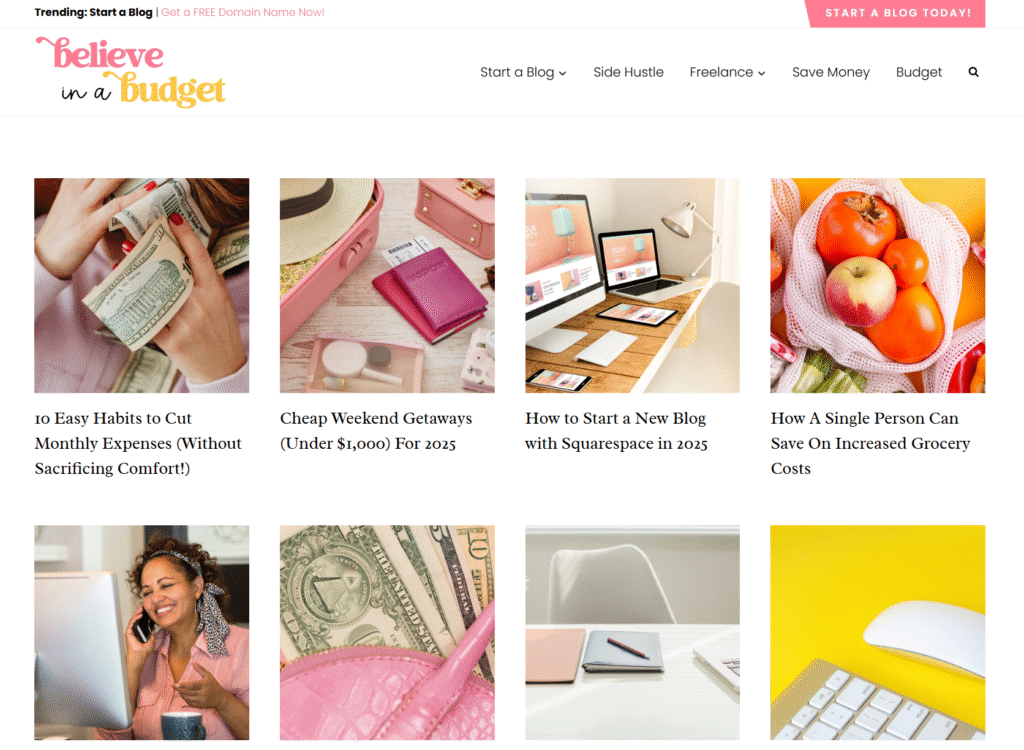
Want to know what $840,000 a year looks like in the blogging world?
It looks like helping people budget better while building multiple income streams that work together like a well-oiled machine.
Here’s the thing about personal finance blogs…
Most people think they’re all the same. Same boring advice about cutting your daily coffee. Same generic budgeting tips you’ve heard a thousand times.
But the ones that actually make serious money? They’ve cracked a code that has nothing to do with telling people to stop enjoying life.
Let me show you exactly how one personal finance blog turned budgeting advice into a $70,000-per-month empire—and more importantly, how you could potentially do something similar.
Ad 🎯 After studying 400+ business models, here’s what actually works for beginners…
Most “make money online” advice is garbage. Complex affiliate schemes. Dropshipping nightmares. Social media “influencing.”
We found something better: lead-generation funnels for manufacturers. Simple. Profitable. Fast results.
Our Max Incubator Phase 1 students are proof—they’re going from zero to their first $1,000 in 90 days with this exact model.
→ See the business idea that’s working for beginners this year
The Reality Check: This Isn’t Overnight Success
Before we dive into the money-making strategies, let’s get something straight.
Believe In A Budget didn’t explode overnight. Founder Kristin Larsen started in 2015, sharing her own debt payoff journey and side hustle experiments. That’s nearly a decade of consistent effort, learning, and adapting.
(If you’re looking for a get-rich-quick scheme, you’re in the wrong place. But if you want a realistic blueprint for building sustainable income? Keep reading.)
The blog now generates $70,000 monthly through seven distinct revenue streams. Not just one golden goose—seven different income sources that create stability and resilience.
That diversification? It’s not accidental.
Follow the Money: Seven Income Streams Explained
Here’s where things get interesting.
Most bloggers fixate on one income source and wonder why they’re struggling. Believe In A Budget took a completely different approach.
Digital Products and Courses: The Heavy Hitters
The biggest slice of the revenue pie comes from selling digital products and online courses.
We’re talking courses on starting an online business, becoming a Pinterest Virtual Assistant, and mastering personal finance. The blog also runs a Shopify store, which creates an additional sales channel beyond the main website.
Why does this work so well?
Because courses solve specific problems for specific people willing to pay for solutions. Someone desperately trying to figure out Pinterest marketing or launch a virtual assistant business doesn’t want generic free advice—they want a proven system.
Affiliate Marketing: Commissions on Autopilot
The blog’s affiliate strategy is beautifully simple.
One example: The “Start a Blog” page shares Kristin’s personal blogging journey, then naturally recommends Bluehost for web hosting. That’s it. No aggressive sales tactics. Just authentic recommendations embedded in valuable content.
Other blog posts about budgeting tools, side hustles, and business growth also include relevant affiliate links. Each one creates passive income potential that compounds over time.
Think about it this way: Every helpful blog post is a 24/7 salesperson that never takes a vacation.
The Supporting Cast
Rounding out the income portfolio:
Ad revenue generates consistent passive income from site traffic. A membership community creates recurring monthly revenue from devoted followers. One-on-one coaching commands premium rates for personalized guidance. And sponsorships bring in lump sums from aligned brands.
Each stream might seem small individually, but together? They create the $70K monthly total.
The Pinterest Goldmine (This Is Where It Gets Really Good)
Here’s what most finance bloggers completely miss…
Pinterest isn’t just a platform for recipes and home décor. It’s a traffic-generating machine that actually works for evergreen content.

Believe In A Budget proved this with hard numbers.
At the beginning of one year, they averaged around 5,000 monthly page views. After strategically investing time and money into Pinterest (including running Pinterest ads), they hit 40,000 monthly page views.
That’s an 8x increase.
The blog documented this entire journey in a detailed Pinterest case study that became content gold. They didn’t just succeed with Pinterest—they then taught others how to do it through blog posts and courses.
(Talk about turning one success into multiple revenue streams.)
According to data from Hootsuite, Pinterest has over 450 million monthly active users, with 85% of users saying they use Pinterest to plan new projects. For bloggers in niches like personal finance, home improvement, or lifestyle, Pinterest represents an untapped traffic source compared to the oversaturated world of SEO and social media.
The Content Strategy That Actually Works
You can’t build a $70K/month blog with mediocre content.
Believe In A Budget understands this deeply.
Their blog posts aren’t just “10 budgeting tips” listicles thrown together in 20 minutes. They’re comprehensive guides packed with actionable advice, personal stories, and practical tools people can actually use.
But here’s the SEO secret sauce…
The blog strategically uses long-tail keywords as blog post titles. These longer, more specific phrases (like “How to sell eBooks on Amazon and make up to $2,000 a month”) are easier to rank for because they’re less competitive than short, generic keywords.
One particular post about selling eBooks on Amazon ranks 3rd for its primary keyword and hits the 4th position on Google’s search results. That single piece of content drives consistent traffic month after month.
According to research from Ahrefs, long-tail keywords account for roughly 92% of all keywords searched on the internet, yet many bloggers ignore them in favor of high-competition short keywords.
The Team Behind the Empire
Here’s something nobody talks about enough…
You can’t scale to $70K/month working alone.
Believe In A Budget built a team of focused individuals handling specific aspects of the business: affiliate relationship management, email management, program coordination, membership community engagement, and social media marketing.
This isn’t about hiring people for the sake of it. It’s about recognizing that your time is best spent on high-value activities—creating courses, developing strategy, producing core content—while others handle the essential but time-consuming operational tasks.
(Even if you’re just starting out, keeping this principle in mind will help you avoid the solopreneur burnout trap.)
What They Could Be Doing Better
Even a $70K/month blog has room for improvement.
Missed Opportunity #1: Underutilizing Top-Performing Content
That eBook selling guide I mentioned earlier? It’s crushing it in search results and driving significant traffic. Yet the blog hasn’t capitalized on this success.

This post should be:
- Featured prominently in email newsletters
- Shared repeatedly on social media
- Potentially expanded into its own mini-course
- Used as a lead magnet to capture email subscribers
When you have content that performs this well, you milk it for everything it’s worth.
Missed Opportunity #2: Competitive Differentiation
Using tools like Ahrefs, you can analyze how Believe In A Budget stacks up against competitors through metrics like Ahrefs Rank (AR). While the blog delivers excellent customer service and valuable content, there’s always room to sharpen the competitive edge.

This might mean developing more unique features, creating proprietary tools or calculators, or carving out a more specific sub-niche within personal finance.
According to data from Similar Web, the personal finance niche is highly competitive with major players like NerdWallet and The Penny Hoarder dominating traffic. Smaller blogs need clear differentiation strategies to compete effectively.
Ad 🎯 Ready to put these strategies into action?
Theory is great, but execution is what drives growth. That’s where Max Business School™ comes in.
Inside, you’ll find step-by-step digital marketing courses (SEO, ads, email, social, content, and more) — taught by professionals, designed for beginners and business owners alike.
And the best part? It’s 100% free, online, and flexible.
→ Join Max Business School Today — Free
Your Step-by-Step Roadmap
Alright, enough analysis. Let’s talk about how you’d actually build something similar.
Before You Start: The Reality Questions
Don’t skip this part. Seriously.
Can you commit to this for 3-5 years? Building a profitable blog isn’t a six-month sprint. It’s a marathon that requires consistent effort over years.
Are you genuinely interested in your chosen topic? Passion is overrated, but sustained interest is essential. You’ll be writing about this subject hundreds of times. Make sure you won’t hate it after month six.
Will this distract you from something else you’re building? If you already have a business or project gaining momentum, adding a blog might dilute your focus. Choose wisely.
Phase 1: Foundation (Week 1)
Pick your specific angle within personal finance. Don’t just start “another personal finance blog.” Maybe you focus on budgeting for freelancers, debt payoff for young families, or financial independence for digital nomads. Specificity attracts the right audience.
Set up the technical infrastructure. Register your domain (use a service like Namecheap), choose reliable hosting (options like DreamHost or SiteGround are popular), and install WordPress. If you’re new to this, there are countless YouTube tutorials that walk through every step.
Create social media profiles on platforms where your target audience actually hangs out. For personal finance, that definitely includes Pinterest, but might also include Instagram, Twitter, or TikTok depending on your specific angle.
Phase 2: Content Creation (Weeks 2-12)
Research what your audience is actually searching for. Use free tools like Google Keyword Planner or paid options like Ahrefs to identify topics with search demand but manageable competition.
Develop a content calendar covering at least your first 20-30 blog posts. Mix different content types: beginner guides, advanced strategies, personal stories, tool reviews, and comparison posts.
Create comprehensive, genuinely helpful content. This isn’t about gaming the algorithm—it’s about providing real value. Your first blog posts should be so good that you’d actually recommend them to a friend struggling with that topic.
Aim for at least 1,500-2,000 words per post initially. Not because length matters for SEO (it doesn’t, really), but because thoroughly addressing a topic usually requires that much space.
Phase 3: Traffic and Growth (Month 4 Onward)
Master Pinterest marketing. Create vertical pins for every blog post (the ideal ratio is 2:3, or 1000×1500 pixels). Join relevant Pinterest group boards. Post consistently—Pinterest rewards regular activity.
According to Tailwind’s research, posting 5-30 pins per day yields the best results for growing Pinterest accounts.
Build your email list from day one. Create a compelling lead magnet (a free budgeting template, debt payoff calculator, or mini-course) and offer it in exchange for email addresses. Your email list is the one audience you truly own—social media platforms can disappear or change their algorithms overnight.
Start monetizing once you hit 5,000-10,000 monthly page views. Apply to affiliate programs relevant to your niche. Consider joining ad networks like Mediavine (requires 50,000 sessions) or AdThrive (requires 100,000 page views) when you qualify.
Phase 4: Diversification (Month 12+)
Create your first digital product. This could be an in-depth course, a premium template pack, or a comprehensive eBook. Price it between $27-97 initially—enough to feel valuable but accessible to your audience.
Develop a membership or community. Platforms like Skool, Circle, or Mighty Networks make this easier than ever. Charge $10-50/month for exclusive content, community access, and direct support.
Consider coaching or consulting. Once you’ve established expertise, offer one-on-one or group coaching sessions. Even at just $100-200/hour, a few coaching clients per week adds substantial income.
The One Thing You Absolutely Must Remember
Building a $70K/month blog isn’t about finding one perfect strategy or secret hack.
It’s about doing a lot of things reasonably well, consistently, over a long period of time.
Believe In A Budget succeeded because they:
- Created genuinely valuable content
- Diversified income streams
- Discovered and doubled down on Pinterest traffic
- Built a team to scale operations
- Stayed consistent for years
Your blog won’t look exactly like theirs. You’ll find your own traffic sources, your own products, your own voice.
But the fundamental principles? Those remain the same.
Start creating helpful content. Build your audience. Test different monetization methods. Invest in what works. Keep going when it gets hard.
The internet is full of people searching for help with personal finance, budgeting, debt payoff, and building wealth. If you can provide that help better than the next blogger, there’s real money to be made.
The question is: Are you willing to put in the years of work to get there?