
How to Build a $14K/Month Career Coaching Business (Even in a Hyper-Specific Niche)

Most people think you need a massive audience to make serious money online.
They’re wrong.
And I’m about to show you exactly how one entrepreneur proved it—by targeting a niche so specific that most business advisors would’ve laughed him out of the room.
We’re talking about Army Non-Commissioned Officers. That’s it. That’s the entire market.
Yet this business pulls in $14,000 every single month.
Here’s the crazy part: the strategy works for almost any expertise-based business. Whether you’re a financial planner, yoga instructor, or software developer, the same principles apply.
Let me break down exactly how this works.
Ad 🎯 After studying 400+ business models, here’s what actually works for beginners…
Most “make money online” advice is garbage. Complex affiliate schemes. Dropshipping nightmares. Social media “influencing.”
We found something better: lead-generation funnels for manufacturers. Simple. Profitable. Fast results.
Our Max Incubator Phase 1 students are proof—they’re going from zero to their first $1,000 in 90 days with this exact model.
→ See the business idea that’s working for beginners this year
The Business Model That Turns Expertise Into Cash
Picture this: You’ve spent years mastering something. Maybe it’s leadership in the military. Maybe it’s graphic design. Maybe it’s competitive chess.
Most people let that expertise gather dust.
Smart entrepreneurs? They package it.
This particular business operates through two primary revenue streams that work together like a one-two punch.
First, there’s the digital product bundle—templates, training materials, and practical tools that solve specific problems. The price point? $199. Not cheap enough to seem worthless, not expensive enough to require a mortgage.
Second, there’s the membership academy with three tiers ranging from monthly subscriptions to lifetime access. Members get unlimited digital products, one-on-one mentorship, monthly workshops, and a community of peers facing similar challenges.
Oh, and there’s a third stream that most people overlook: display advertising through networks like Mediavine. It’s not the main event, but it’s reliable passive income that adds up.
The real genius isn’t in what they sell—it’s in who they sell to.
Why Niche Expertise Beats General Knowledge Every Single Time
Here’s something nobody tells you about online business: being specific is your superpower.
The founder is a retired NCO. He doesn’t just understand Army regulations—he’s lived them, struggled with them, and eventually mastered them. That credibility is worth more than any marketing budget.
When someone visits the site, they immediately think: “This person gets it. They’ve been exactly where I am.”
That’s not marketing. That’s trust. And trust converts.
The narrower your focus, the deeper your expertise appears. A “leadership coach” sounds generic. A “leadership coach for Army NCOs navigating promotion requirements” sounds like the person who wrote the playbook.
The positioning strategy here creates customer loyalty that broad-market competitors can’t touch. When you solve ultra-specific problems better than anyone else, you become irreplaceable.
The Lead Magnet Strategy That Builds Your Email Empire
Want to know the secret to converting website visitors into paying customers?
Give them something valuable before you ask for anything.
This business offers a free Promotion Point Worksheet—a resource that Army NCOs actually need in their day-to-day work. Not some generic PDF that sits in a downloads folder forever. An actual tool that solves an actual problem.
Here’s what happens next:
Someone downloads the worksheet. They use it. It works. Now they’re thinking: “If the free stuff is this good, imagine what the paid stuff must be like.”
That’s when the email sequence begins. Not aggressive sales pitches. Helpful content that gradually introduces paid offerings when the timing makes sense.
The free resources—templates, podcast episodes, training materials—demonstrate value before asking for commitment. It’s the “try before you buy” model that online retailers have used forever, adapted for digital education.
Think about it: Would you rather cold-pitch someone on a $199 product, or nurture them with helpful content until they’re practically begging to give you money?
The second option takes longer. It also works way better.
Clear Messaging: The Difference Between Confusion and Conversion
Ever land on a website and have no idea what they actually do?
That’s what NOT to do.
This business nails its messaging immediately. Visitors understand within seconds what problems get solved and how. The value proposition is crystal clear, and the calls-to-action are impossible to miss.
There’s no jargon jungle to hack through. No “synergizing strategic paradigms” or “leveraging holistic solutions.” Just straightforward language that speaks directly to the target audience’s pain points.
The websites feature prominent CTAs that guide visitors toward specific actions—whether that’s downloading a free resource, scheduling a consultation, or joining the membership program. Every page has a purpose, and that purpose is obvious.
When someone has to work to understand what you offer, they leave. When your messaging is clear, they convert.
The SEO Strategy That Doesn’t Require a Blog
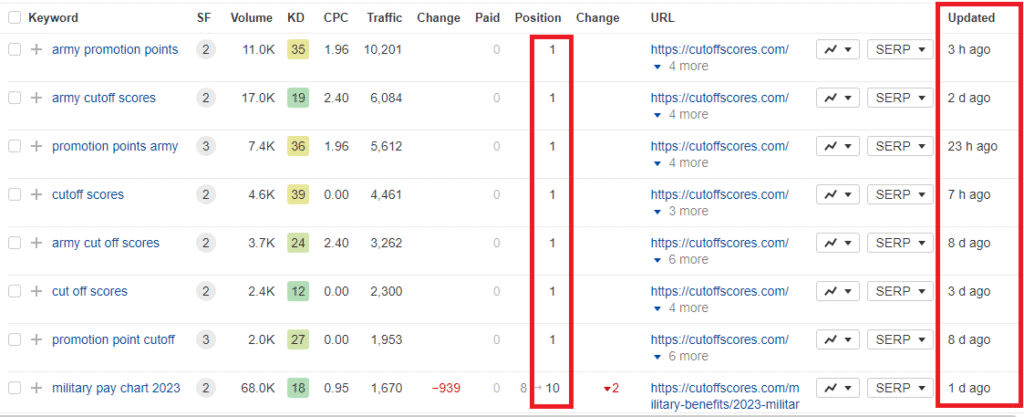
Here’s something that surprised me: this business generates decent traffic without publishing blog posts or articles.
How?
Strategic keyword usage throughout the site. Meta tags, title tags, headers, and image alt tags all include relevant search terms that potential customers actually use.
The approach focuses on long-tail keywords with medium to low competition. Instead of trying to rank for “leadership training” (impossible), they target phrases like “Army NCO promotion point worksheet” or “Army counseling templates.”
These searches have clear intent. Someone searching for these specific terms is actively looking for solutions, not just browsing. That means higher conversion rates from lower traffic volumes.
The sites get regular updates to incorporate new relevant keywords and maintain search engine visibility. It’s not flashy, but it works.
And here’s the kicker: this strategy would work even better with a content marketing plan, which we’ll get to.
Social Proof: The Psychological Trigger You Can’t Ignore
Testimonials aren’t just nice to have. They’re conversion accelerators.
This business prominently displays customer reviews throughout the site, showing real people who achieved real results. Not vague praise like “This changed my life!” but specific outcomes: promotions earned, counseling statements completed, leadership challenges overcome.
Social proof taps into a fundamental human behavior: we look to others when making decisions, especially when we’re uncertain. Seeing others succeed with a product or service reduces perceived risk and builds confidence.
The testimonials serve multiple purposes simultaneously:
They demonstrate that the products actually work. They show that real people (not just the founder) benefit from the offerings. They address common objections before prospects even raise them. They create a sense of community and shared experience.
When potential customers see themselves reflected in testimonial stories, conversion becomes inevitable.
The Opportunities They’re Missing (And You Shouldn’t)
Despite pulling in five figures monthly, this business leaves money on the table in two critical areas.
Social media presence is basically nonexistent. Beyond a private Facebook community, there’s no content strategy on platforms where their target audience already spends time. Instagram Stories showing daily leadership tips. LinkedIn posts about career advancement. YouTube tutorials demonstrating template usage. All untapped.

Research from platforms like Hootsuite shows that social media content drives significant website traffic and can boost organic reach substantially. For a business built on expertise-sharing, social platforms are natural fit.
There’s no blog section. Zero. None. This matters because blog content serves multiple purposes: it improves SEO through fresh content, establishes thought leadership, provides shareable material for social media, generates backlinks from other sites, and creates multiple entry points for potential customers to discover the business.

Studies from HubSpot reveal that companies with active blogs generate significantly more leads and traffic than those without. Blog posts become evergreen assets that continue attracting visitors and converting customers long after publication.
Imagine if this business published two articles weekly about Army career advancement, leadership challenges, and promotion strategies. Each post would be a potential lead magnet, ranking for additional keywords and attracting new audience members.
The missing opportunities represent low-hanging fruit. The business already succeeds despite ignoring these channels. Adding them would be like switching from a four-cylinder engine to a V8.
Ad 🎯 Ready to put these strategies into action?
Theory is great, but execution is what drives growth. That’s where Max Business School™ comes in.
Inside, you’ll find step-by-step digital marketing courses (SEO, ads, email, social, content, and more) — taught by professionals, designed for beginners and business owners alike.
And the best part? It’s 100% free, online, and flexible.
→ Join Max Business School Today — Free
The Real Success Story Behind the Numbers
The business we’ve been dissecting is NCO Success Academy, founded by Steven Foust—a retired NCO who climbed the ranks through strategic excellence.
His journey started with a published guide called “Powerpoints” that covered everything soldiers needed for faster promotion. He ran it as a side hustle while still serving.
Then he went all-in.
He acquired two websites—Cutoffscores.com and Ncoonfire.com—as the foundation for his Success Academy. The decision to buy established domains with existing traffic gave him a head start that building from scratch couldn’t match.
Foust’s firsthand experience creates authenticity that competitors can’t fake. He’s not teaching theory learned from books. He’s sharing strategies he personally used to advance his own career and then watched others successfully implement.
That insider credibility is the secret sauce. Anyone can learn to create digital products or build membership sites. Not everyone can claim genuine expertise that their audience immediately recognizes and respects.
What You Can Learn From This Case Study
Let’s distill this down to the principles you can apply regardless of your niche:
Niche expertise beats general knowledge. The more specific your focus, the more you can charge and the less competition you face. Don’t be a “business coach”—be a “business coach for boutique fitness studio owners in mid-sized cities.”
Free value builds trust faster than sales pitches. Give away genuinely useful resources that solve real problems. The goodwill converts to sales when you’ve earned it.
Clear messaging matters more than clever messaging. If visitors can’t immediately understand what you offer and why it matters to them, you’ve already lost. Confusion is the enemy of conversion.
SEO doesn’t require blogging, but blogging supercharges SEO. You can generate traffic through strategic keyword usage alone, but adding content marketing multiplies your results exponentially.
Social proof removes purchasing friction. Display specific testimonials that address common objections and demonstrate real outcomes. Vague praise is worthless. Specific results are gold.
Multiple income streams create stability. Digital products, membership programs, and advertising revenue each fluctuate independently. Diversification protects against market changes.
The Army NCO niche might seem impossibly specific, but that specificity is precisely why it works. Whatever expertise you possess, there’s an audience willing to pay for packaged solutions to their problems.
The question isn’t whether you have valuable knowledge. The question is whether you’ll package it.
Getting Started: Your First Steps
If you’re sitting on expertise that could become a profitable online business, here’s your roadmap:
Identify your true niche. Not just “marketing” but “email marketing for e-commerce brands selling to millennials.” Get uncomfortably specific.
Research your market. What problems keep your target audience up at night? What solutions already exist? What gaps can you fill better than anyone else? Use tools like Ahrefs to spy on competitors and identify keyword opportunities.
Create your lead magnet. Develop one free resource so valuable that people would pay for it. Make it solve a specific problem immediately.
Build your website. WordPress hosting through providers like DreamHost makes this accessible even for non-technical founders. Your site needs clear messaging, prominent CTAs, and a way to collect email addresses.
Develop your core offer. Start with one digital product or course that solves your audience’s biggest problem. Price it based on value delivered, not hours invested in creating it.
Set up email marketing. This is how you nurture leads into customers. Plan a sequence that provides value first, then introduces paid offerings naturally.
Optimize for search engines. Research keywords your audience actually uses. Incorporate them naturally into your site’s meta tags, headers, and content. Focus on long-tail phrases with clear intent.
Launch and iterate. Your first version won’t be perfect. That’s fine. Get it live, gather feedback, and improve continuously.
The $14,000-per-month career coaching business we examined didn’t start at five figures. It started with one guide, one website, and one person willing to share expertise that could help others.
Your expertise is probably more valuable than you think. The real question is whether you’re willing to package it, market it, and bet on yourself.
Because here’s the truth: someone will build a successful business in your area of expertise. It might as well be you.