
How to Launch a $20K/Month Email Marketing Business (With Zero Tech Background)
Most email marketing experts are boring.
They talk about open rates and click-through percentages and A/B testing until your eyes glaze over like a donut in a Krispy Kreme factory.
Then there’s Liz Wilcox.
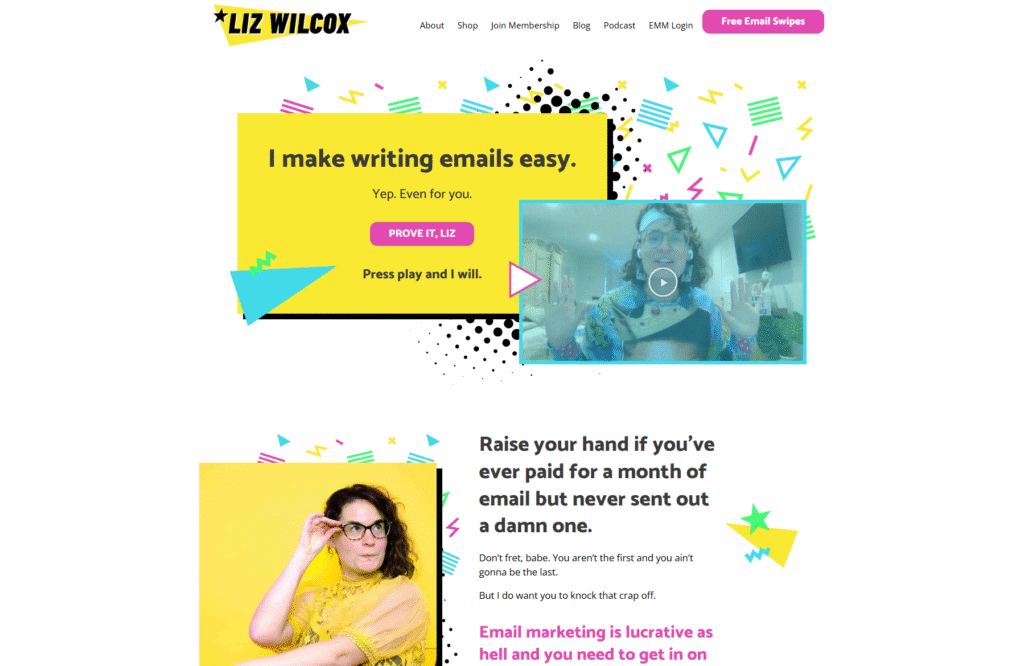
She built a $20,000-per-month business by doing something radical: making email marketing actually fun. Her website looks like it time-traveled from 1999, complete with nostalgic song lyrics and neon colors that would make a rave promoter jealous.
And it works.
Not despite the unconventional approach—because of it.
Here’s what makes this business fascinating: it’s completely replicable. You don’t need Liz’s personality. You don’t need her specific niche. You just need to understand the underlying principles that transformed her expertise into consistent five-figure monthly revenue.
Let me walk you through exactly how she did it, and more importantly, how you can apply the same strategies to your own business.
Ad 🎯 After studying 400+ business models, here’s what actually works for beginners…
Most “make money online” advice is garbage. Complex affiliate schemes. Dropshipping nightmares. Social media “influencing.”
We found something better: lead-generation funnels for manufacturers. Simple. Profitable. Fast results.
Our Max Incubator Phase 1 students are proof—they’re going from zero to their first $1,000 in 90 days with this exact model.
→ See the business idea that’s working for beginners this year
The Three Revenue Streams That Hit $240K Annually
The email marketing space is crowded. Like, elbow-to-elbow, standing-room-only crowded.
So how does one entrepreneur stand out enough to generate $20,000 monthly?
Multiple income streams working together like a well-rehearsed band.
First up: email templates. These aren’t your corporate “Dear Valued Customer” templates. They’re personality-driven, engagement-focused templates designed to build actual relationships with subscribers. The kind of emails people want to open, not the kind that get deleted without a second glance.
Businesses buy these templates because they save time and money. Writing compelling email copy from scratch is hard. Using proven templates that already convert? Much easier. This product line provides immediate value that customers can implement the same day they purchase.
Second: training programs. Liz offers courses and workshops that teach email marketing fundamentals to advanced strategies. These programs go beyond basic tactics into psychology, storytelling, and relationship-building through email.
The training angle serves dual purposes: it generates revenue directly while also establishing authority. People who complete the courses often return for templates, consulting, or other services. Education becomes both a profit center and a marketing funnel.
Third: one-on-one consulting. This is where the real money multiplier kicks in. Businesses pay premium rates for personalized guidance tailored to their specific challenges and goals.
The consulting tier creates a natural escalation ladder. Someone might start with a $37 template pack, take a $297 course, then eventually hire Liz for $2,000+ consulting packages. Each product qualifies prospects for the next level.
Here’s the brilliant part: these revenue streams reinforce each other. Templates showcase expertise that sells courses. Courses create demand for consulting. Consulting generates case studies that sell more templates. It’s a self-perpetuating system.
Why Distinctive Branding Beats “Professional” Design Every Time
Quick test: close your eyes and picture a typical business website.
Got it? Gray background, blue hyperlinks, stock photos of people in suits shaking hands or pointing at laptops while smiling unnaturally?
Now forget everything you just imagined.
Liz Wilcox’s website looks like the internet threw a 90s-themed birthday party. Bright colors. Playful fonts. Song lyrics from the Backstreet Boys and Britney Spears era. Design elements that most web developers would call “outdated” or “unprofessional.”
And visitors absolutely love it.
The unconventional branding accomplishes something that sleek, modern templates can’t: it’s memorable. People remember the 90s nostalgia website. They tell their friends about it. They come back to it.
Generic professional design? That gets forgotten three seconds after someone closes the tab.
The branding strategy also acts as a filter. People who hate the aesthetic self-select out. People who enjoy it become instant fans. This creates a audience that’s already pre-qualified and aligned with the brand’s personality.
Think about the businesses you remember most vividly. Are they the ones that look like every other company in their industry? Or are they the ones that dared to be different?
Distinctive branding doesn’t mean copying Liz’s 90s throwback aesthetic. It means being brave enough to stand out instead of blending in. Maybe your thing is mid-century modern minimalism. Maybe it’s maximalist pattern-on-pattern design. Maybe it’s something nobody’s tried yet.
Whatever it is, own it completely. Half-committed branding is worse than generic branding. At least generic is safe. Half-committed is just confusing.
The Free Value Strategy That Converts Like Crazy
Here’s a question: What would you rather have?
A thousand strangers who visited your website once and left forever, or a hundred people who downloaded your free resource, joined your email list, and keep coming back for more?
Liz chose door number two, and it’s the decision that built her business.
The site offers multiple free downloadable resources—templates, guides, tools—that provide genuine value without requiring payment. Not watered-down “lite” versions designed to tease the paid products. Actual useful resources that solve real problems.
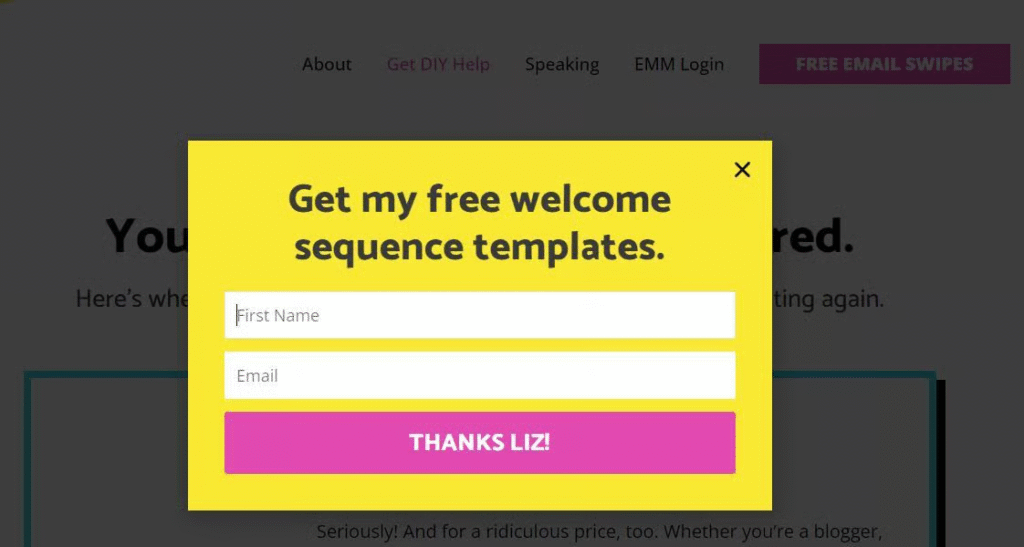
This strategy accomplishes three critical objectives simultaneously:
It demonstrates expertise. Anyone can claim to be an email marketing expert. Actually helping people with free resources proves it. Show, don’t tell, as the writing teachers say.
It builds trust. When you give valuable stuff away, people think: “Wow, if this is what they give for free, the paid stuff must be incredible.” That’s not manipulation. That’s honest value creation.
It captures email addresses. This is the leverage point that turns casual visitors into potential customers. Once someone’s on your email list, you can nurture that relationship over time until they’re ready to buy.
The economics of this approach make perfect sense. Imagine you spend $500 driving traffic to your website through ads or content marketing. If visitors come and leave, that $500 is gone. If visitors download free resources and join your email list, that $500 becomes an investment that keeps paying dividends every time you send an email.
The lifetime value of an email subscriber far exceeds the upfront cost of creating free resources. You build the resource once, and it generates leads forever.
But here’s the catch—and it’s important: the free stuff has to actually be good. Not “good for free” but legitimately valuable. If your lead magnets are disappointing, people unsubscribe before you ever get a chance to sell them anything.
Give away your second-best ideas for free. Keep your very best for paid products. That balance creates trust while still incentivizing purchases.
Social Media Presence Done Right (Without Being Everywhere)
Most business advice about social media goes like this: “You need to be on every platform! TikTok! Instagram! LinkedIn! Twitter! Facebook! Pinterest! Snapchat! Whatever Gen Z is using next week!”
Exhausting, right?
Here’s what actually works: a well-designed landing page linked from social profiles that clearly communicates what you do and why it matters.
Liz’s social media strategy is deceptively simple. Her profiles link to a landing page that immediately answers three questions every visitor has:
- What do you offer?
- How will it help me?
- What should I do next?
The landing page includes an FAQ section addressing common questions before people even think to ask them. This reduces friction in the customer journey and demonstrates thoughtfulness about user experience.
Too many entrepreneurs spread themselves thin trying to maintain presence on every platform. They post inconsistently, engage half-heartedly, and wonder why social media “doesn’t work” for them.
The alternative? Choose one or two platforms where your ideal customers actually spend time. Show up there consistently with valuable content. Link to a landing page that converts. Ignore everything else.
Quality beats quantity. One excellent Instagram account beats seven mediocre social profiles.
Testimonials: The Social Proof That Sells For You
Imagine you’re considering hiring an email marketing consultant. You find two options:
Option A has a slick website with lots of promises about results they can deliver. No testimonials, no case studies, just claims.
Option B has a less polished website but features a dozen specific testimonials from clients who achieved measurable results. Real names, real companies, real outcomes.
Which one are you calling?
Social proof isn’t just nice to have—it’s the difference between skepticism and confidence. When potential customers see that others succeeded with your services, it reduces perceived risk dramatically.
Liz’s website prominently displays customer testimonials and success stories. Not vague praise like “Great service!” but specific outcomes: “Increased my email open rate from 18% to 34%,” or “Generated $15,000 in revenue from a single email campaign.”
Specificity matters enormously. Generic testimonials feel fake even when they’re real. Detailed testimonials with specific results feel real even when readers are naturally skeptical.
The psychology here is straightforward: humans are social creatures who look to others when making decisions. If we see people like us succeeding with a product or service, we assume we’ll succeed too. If we see no evidence that anyone benefited, we assume it probably doesn’t work.
Here’s how to collect testimonials that actually convert:
Ask for them immediately after delivering results. People are most excited about outcomes right when they achieve them. Waiting weeks or months means capturing less enthusiastic responses.
Request specific details. Don’t ask “Did you like my service?” Ask “What specific result did you achieve, and how has it impacted your business?”
Display them prominently. Testimonials buried on a separate “Reviews” page nobody visits are worthless. Put them on your homepage, your sales pages, and your product pages.
Use photos and real names when possible. “Sarah from Ohio” is somewhat credible. “Sarah Johnson, CEO of TechStart Solutions” with a photo is much more credible.
Conversion Rate Optimization: The Invisible Revenue Multiplier
You know what’s better than doubling your website traffic?
Doubling your conversion rate.
Same number of visitors, twice as many customers. No additional advertising spend required.
Liz’s website demonstrates textbook conversion rate optimization through several key elements:
Compelling calls-to-action appear throughout the site. Not just at the bottom of pages where half of visitors never scroll, but integrated naturally into the content. Each CTA clearly states what happens next: “Download the free guide,” “Book a consultation,” “Enroll in the course.”
The purchase process is streamlined. No twelve-step checkout process requiring blood type and your grandmother’s maiden name. Click, pay, access. Done.
Cross-selling is built into the experience. When someone buys templates, they’re offered relevant courses. When they complete a course, consulting becomes the logical next step. This increases average transaction value without feeling pushy.
The site loads quickly and looks good on mobile devices. Technical performance matters more than most entrepreneurs realize. A three-second delay in page load time can reduce conversions by up to 50%. If your site is slow or broken on smartphones, you’re throwing money away.
Small optimization improvements compound over time. Increasing conversion rate from 2% to 3% means 50% more customers from the same traffic. Raising it to 4% doubles your customer acquisition. These changes don’t require more content marketing or advertising spend—just better optimization of what you already have.
The Missing Opportunities (And How You Can Avoid Them)
Despite generating $20,000 monthly, there’s room for growth. Understanding what’s missing helps you build a more complete business from the start.
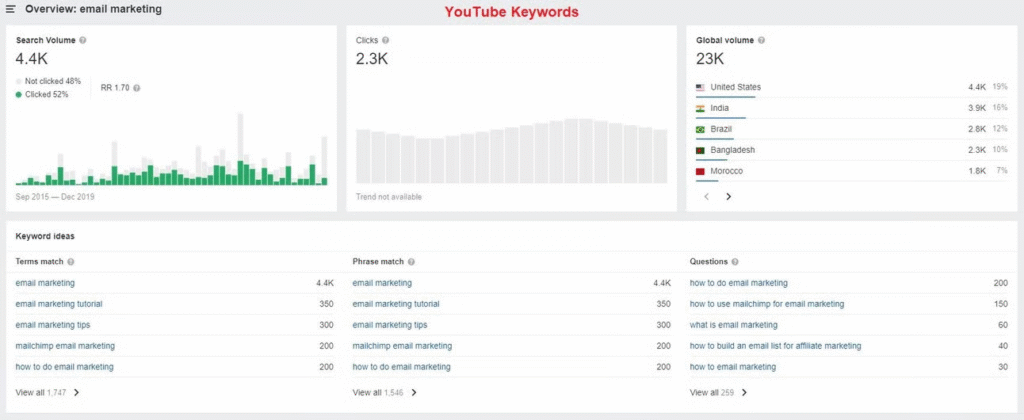
SEO remains largely untapped. The website could benefit from comprehensive keyword research and strategic content creation targeting high-value search terms. Organic search traffic is essentially free customer acquisition that scales without proportional cost increases.

Tools like Ahrefs or SEMrush reveal exactly what potential customers search for related to email marketing. Creating content around those queries brings qualified traffic without ongoing ad spend.
Affiliate marketing represents unrealized revenue. As someone who uses various email marketing tools, software platforms, and business services, promoting these through affiliate partnerships makes perfect sense. When you’re already recommending products to your audience, you might as well earn commissions.
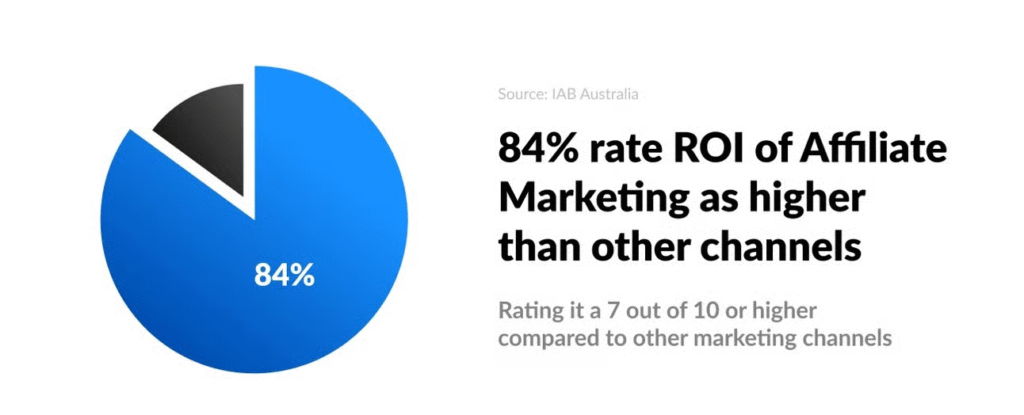
The key is authenticity—only promoting tools you genuinely use and believe in. Audiences detect inauthentic recommendations instantly, and nothing destroys trust faster than shilling for products you don’t actually use.
A customer referral program could accelerate growth. Word-of-mouth marketing is powerful, and a structured referral program makes it systematic rather than random. Offering discounts, free months, or cash bonuses for successful referrals turns satisfied customers into active salespeople.
Referral programs work because people trust recommendations from friends and colleagues more than any advertising. A referred customer is pre-sold before they ever visit your website.
Podcasts and YouTube present content opportunities. With strong communication skills and engaging teaching style, expanding into audio and video content would open new audience channels. These formats allow for longer-form content that builds deeper connections than written content alone.
The beautiful part about these opportunities? They’re low-hanging fruit. Implementing even one could meaningfully increase revenue within months.
Ad 🎯 Ready to put these strategies into action?
Theory is great, but execution is what drives growth. That’s where Max Business School™ comes in.
Inside, you’ll find step-by-step digital marketing courses (SEO, ads, email, social, content, and more) — taught by professionals, designed for beginners and business owners alike.
And the best part? It’s 100% free, online, and flexible.
→ Join Max Business School Today — Free
The Woman Behind the Business
Liz Wilcox didn’t start as a marketing guru. She started as someone who figured things out through trial and error, then realized others would pay to learn from her experience.
Over five years, she grew and sold a blog, started and exited a second company, then launched her third venture—the email marketing business generating multiple six figures annually.
Her journey demonstrates something crucial: you don’t need decades of corporate experience or advanced degrees. You need expertise that solves problems, the willingness to package that expertise, and the determination to keep improving.
The email marketing space was already crowded when Liz entered it. The difference wasn’t better strategies—plenty of experts offer solid email marketing advice. The difference was packaging those strategies with personality and distinctive branding that made her memorable.
She teaches email marketing by focusing on simplicity and authenticity rather than complex automation sequences and technical tactics. That approach resonates with small business owners who want effective email marketing without becoming full-time email marketers.
Your Roadmap to Replicating This Success
If you possess expertise that could become a profitable online business, here’s your action plan:
Identify your distinctive angle. What makes your approach different from every other expert in your space? It might be personality, methodology, target audience, or delivery format. Find the thing that only you can do the way you do it.
Develop your signature system. Package your knowledge into a repeatable process that gets results. Give it a memorable name. Make it teachable. This becomes the foundation for all your products and services.
Create your core offer. Start with one digital product that solves your audience’s biggest problem. It could be templates, a course, a toolkit, or consulting services. Don’t try to build everything at once—nail one thing first.
Build brand assets that reflect your personality. Your website, your social media, your email style—they should all feel authentically you. Don’t try to look like everyone else. Stand out by being genuine.
Launch with free value. Create lead magnets that showcase your expertise and build your email list. These resources should be good enough that people would pay for them.
Systematize your marketing. Set up email sequences that nurture leads automatically. Create social media templates that make consistent posting easier. Build systems that work while you sleep.
Add revenue streams strategically. Start with one income source, perfect it, then add others. Templates, then courses, then consulting. Each layer builds on the previous one.
Gather and display social proof. Ask for testimonials immediately after delivering results. Display them prominently everywhere potential customers might see them.
Optimize continuously. Track what works and what doesn’t. Test different CTAs, pricing strategies, and product bundles. Small improvements compound into significant revenue increases.
The email marketing business we examined didn’t happen overnight. It’s the result of consistent effort, strategic positioning, and staying true to a distinctive brand identity.
Your expertise is different from Liz’s. Your personality is different. Your audience is different. That’s perfect—because what worked for her provides the blueprint, but your unique angle provides the differentiation.
Someone will build a successful business teaching what you know. It might as well be you.