
How to Build a $50K/Month Business Teaching Blogging (Without Being a Celebrity)
There’s a weird paradox in the blogging world.
Everyone wants to learn how to blog successfully. Yet most blogging courses are taught by people who’ve never actually made money blogging.
They made money teaching blogging. See the difference?
It’s like learning to swim from someone who only teaches swimming but has never actually swum across a pool.
Then there are the rare unicorns—bloggers who built successful blogs first, then turned around and taught others their actual methods. Not theory. Not stuff they read in someone else’s course. Real, battle-tested strategies that generated real revenue.
One such business pulls in $50,000 monthly doing exactly this. And the fascinating part? It wasn’t overnight success. It was systematic growth over years, building multiple revenue streams that work together like a well-oiled machine.
Let me show you how this works, because the model is completely replicable for anyone with genuine expertise to share.
Ad 🎯 After studying 400+ business models, here’s what actually works for beginners…
Most “make money online” advice is garbage. Complex affiliate schemes. Dropshipping nightmares. Social media “influencing.”
We found something better: lead-generation funnels for manufacturers. Simple. Profitable. Fast results.
Our Max Incubator Phase 1 students are proof—they’re going from zero to their first $1,000 in 90 days with this exact model.
→ See the business idea that’s working for beginners this year
The Revenue Breakdown That Reaches Six Figures Annually
Here’s what most people get wrong about successful online education businesses:
They think it’s about one big product that prints money. One course. One book. One thing.
Wrong.
Sustainable online income comes from diversification. Multiple streams that protect you when one inevitably slows down or dries up completely.
This blogging education business operates four distinct revenue channels that combine for impressive monthly totals.
Display advertising through networks like Ezoic and Google AdSense provides baseline income. It’s not huge—around $400 monthly—but it’s completely passive. Content published years ago still generates ad revenue today. That’s the beauty of display ads: they work while you sleep, eat, vacation, or build other parts of your business.
The trick with display ads is volume. You need substantial traffic before ad networks accept you, and you need even more traffic before the income becomes meaningful. This business has cracked that code through consistent SEO-optimized content production.
YouTube monetization adds another passive stream. With 244 videos and shorts designed for beginner bloggers, the channel generates revenue through ads displayed before, during, and after videos. YouTube’s algorithm favors consistency and watch time, both of which this channel delivers reliably.
Video content serves triple duty: it generates ad revenue directly, it drives traffic back to the blog, and it establishes authority in ways written content alone can’t match. Seeing someone explain concepts on camera builds trust faster than reading their articles.
Digital products—specifically eBooks about blogging and Google AdSense monetization—sell through multiple channels: Amazon Kindle, Instamojo, and the blog’s own store page. Each platform reaches different audiences with different buying preferences.
The beauty of digital products is the margin. Create once, sell infinitely. No inventory. No shipping. No production costs after the initial creation. Pure profit after platform fees.
But here’s where it gets really interesting: 78% of total monthly income comes from affiliate marketing. Not original products. Not ads. Commissions from recommending other companies’ tools, courses, and services.
Think about what that means. The business generates $39,000 of its $50,000 monthly revenue simply by recommending solutions that its audience already needs and would buy anyway.
The affiliate approach works because trust is already established through helpful free content. When recommendations come from a trusted source that’s already provided value, conversion rates skyrocket.
And there’s one more revenue stream most people overlook: direct advertising partnerships with brands. Companies pay to advertise directly on the blog’s posts, with rates averaging $5,000 monthly.
This differs from display ad networks. These are negotiated partnerships where brands sponsor specific content or placement, typically paying premium rates because they’re targeting engaged audiences in specific niches.
The five streams reinforce each other. Free content builds traffic that generates ad revenue. Ad revenue funds content creation. Content establishes authority that drives affiliate sales. Affiliate success attracts direct advertising partnerships. Partnerships provide case studies for more content. It’s a flywheel.
The Authority Play That Commands Premium Advertising Rates
Want to know the real secret to charging $5,000+ monthly for advertising placement?
Prove you can deliver results.
This business showcases its traffic statistics publicly to potential advertising partners. No mystery. No vague promises. Just hard data showing monthly visitors, page views, and audience demographics.
The transparency accomplishes something crucial: it removes uncertainty. Brands aren’t gambling on whether the partnership will reach their target audience. They can see exactly who visits, how often, and from where.
Current stats show impressive numbers that justify premium rates. When you’re delivering targeted traffic at scale, brands will pay for access to that audience.
The advertising model works because of niche focus. This isn’t a general lifestyle blog trying to be everything to everyone. It’s laser-focused on blogging education, SEO, and online monetization. Brands serving that audience—web hosts, SEO tools, email marketing platforms, theme developers—know exactly what they’re getting.
Geographic targeting adds another layer of value. The blog specifically targets American audiences, which commands higher advertising rates than international traffic. US-based advertisers pay premium rates for US traffic because that’s where their customers are.
The equation is straightforward: focused niche + substantial traffic + desirable demographics = premium advertising opportunities.
The Mobile App Strategy That Extends Reach
Here’s a move most bloggers never consider:
Creating a dedicated mobile app.
This business built an Android application that allows users to access blogging education content directly from their phones. No browser required. Just download, open, and learn.
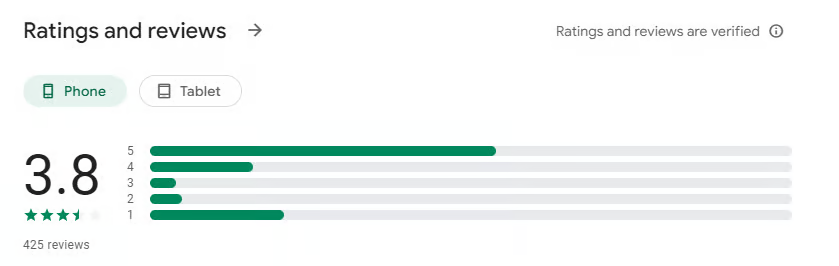
The app has surpassed 10,000 installs and 400 reviews. Not viral sensation numbers, but steady growth that demonstrates genuine user interest.
Mobile apps provide several strategic advantages beyond just convenience. They establish stronger brand presence through a dedicated icon on users’ home screens. They enable push notifications for new content. They work offline. They create a more immersive experience than mobile browsers.
For educational content specifically, apps make sense because learning happens in scattered moments throughout the day. Waiting for appointments. Commuting on public transit. Coffee breaks at work. Having content accessible through a one-tap app reduces friction between impulse and action.
The app also serves as another discovery channel. People browsing app stores for blogging education find this app alongside competitors. It’s additional visibility that wouldn’t exist without the app.
Now, the execution isn’t perfect—more on that shortly—but the strategic thinking behind creating an app demonstrates forward-thinking that most content creators lack.
SEO Mastery That Drives 78% Organic Traffic
Here’s a stat that should make you sit up straight:
78% of this blog’s traffic comes from organic search. Not social media. Not paid ads. Not email. Search engines.
That’s not luck. That’s strategic SEO execution over years.
The approach focuses on practical keyword targeting combined with genuinely helpful content. They’re not gaming the system with tricks. They’re creating content that actually answers questions people are searching for, then optimizing that content so search engines can find and rank it.
The numbers tell the story: average monthly traffic of 162,000 visitors targeting over 94,000 keywords. That keyword diversity means the blog ranks for everything from broad head terms to ultra-specific long-tail phrases.
Broad terms bring awareness. Long-tail phrases bring buyers. You need both.
The SEO strategy clearly prioritizes long-form, comprehensive content that thoroughly addresses topics. Search engines reward depth and thoroughness. Surface-level articles that barely scratch the surface don’t rank. Comprehensive guides that leave readers fully educated do rank.
Backlinks and referring domains are strong for a blog in this niche, indicating that other sites find the content valuable enough to reference. Each backlink is a vote of confidence that tells search engines “this content is worth reading.”
The organic traffic dominance means this business isn’t dependent on expensive paid advertising or fickle social media algorithms. Search traffic is more stable, more targeted, and higher-intent than traffic from most other sources.
Someone searching “how to monetize a blog with affiliate marketing” is actively seeking solutions. Someone scrolling Instagram and seeing a random post might click, but they’re not in solution-seeking mode. That difference in intent translates directly to conversion rates.
The Identity Strategy That Cuts Through Noise
In a crowded niche like blogging education, differentiation is survival.
This business established a crystal-clear identity: teaching bloggers how to use Google AdSense for passive income. Not just general blogging advice. Not vague tips about “building your brand.” Specific, actionable strategies for one particular monetization method.
That focus creates immediate clarity for visitors. Within seconds of landing on the site, they understand exactly what problem gets solved and whether this resource is for them.
The targeting is smart too. The content is designed specifically for practical, results-oriented bloggers who want to make money, not hobbyists who blog for fun. That self-selection means the audience arrives pre-qualified.
Lead capture reinforces the identity. Pop-ups offering free training about AdSense monetization appear at strategic moments. These aren’t annoying interruptions—they’re value propositions that align perfectly with why visitors came to the site in the first place.
Someone researching blog monetization sees an offer for free AdSense training. That’s not interruption marketing. That’s giving people what they want at exactly the moment they want it.
The identity extends through all content, product offerings, and marketing. Everything reinforces the same core message: we help bloggers make money through AdSense and related strategies. No confusion. No mixed messages. Just consistent positioning that makes the brand memorable.
The Opportunities They’re Missing (That You Shouldn’t)
Despite $50,000 monthly revenue, several obvious opportunities remain untapped.
The Amazon eBook sales are declining. Recent income reports show a downward trend in Kindle revenue. The culprit? Insufficient keyword optimization.
Amazon is a search engine disguised as a store. Products don’t sell because they’re great. They sell because people find them when searching. Keywords determine findability.
Tools like Sellerapp, AMZScout, and Jungle Scout help identify high-volume, low-competition keywords that increase visibility in Amazon search results. Each book should be optimized for dozens of relevant keywords that potential buyers actually search for.
This isn’t complicated. It’s research and optimization. But it’s research and optimization that directly impacts revenue.
The Android app needs serious work. Despite 10,000+ installs, reviews are mixed and criticism is common. The main complaints? The app is outdated and content is just copy-pasted from the website.

Here’s the thing: if your app doesn’t provide unique value beyond your website, why would anyone keep it installed?
The app could offer features that the website can’t: offline access to saved articles, push notifications about new content, progress tracking through courses, exclusive app-only content, or a simplified learning path that guides users through material sequentially.
Right now, the app is a missed opportunity. With updates and unique features, it could become a powerful engagement tool that increases lifetime value per user. Instead, it’s generating negative reviews that harm the brand.
Social media presence could be significantly stronger. While the blog has profiles, engagement and posting frequency could improve substantially. Regular, valuable posts on Instagram, Facebook, and YouTube would drive additional traffic while building community.
Social platforms also provide customer research opportunities. Comments and messages reveal exactly what audiences struggle with, which informs content creation and product development.
Ad 🎯 Ready to put these strategies into action?
Theory is great, but execution is what drives growth. That’s where Max Business School™ comes in.
Inside, you’ll find step-by-step digital marketing courses (SEO, ads, email, social, content, and more) — taught by professionals, designed for beginners and business owners alike.
And the best part? It’s 100% free, online, and flexible.
→ Join Max Business School Today — Free
The Founder’s Journey From Engineer to Blogging Educator
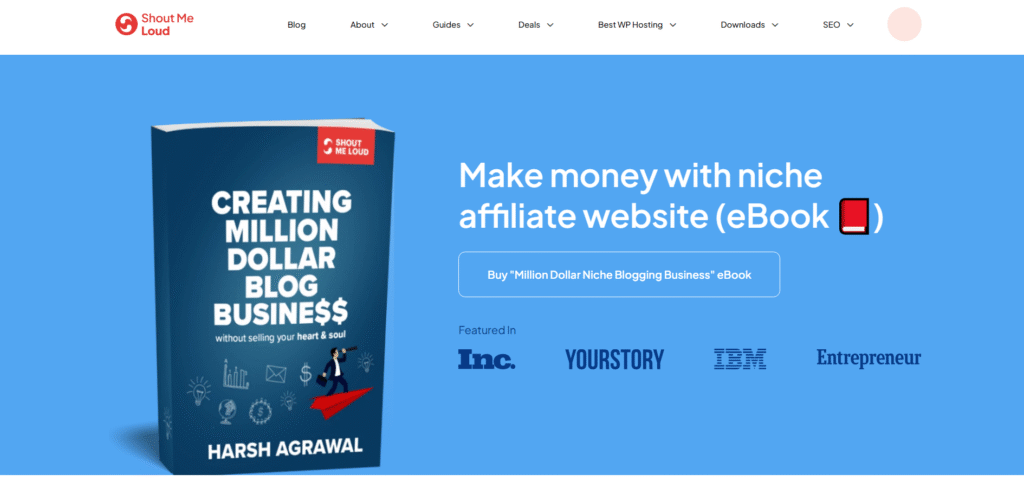
The business is Shout Me Loud, founded in 2008 by Harsh Agrawal.
His background? Engineering. Not marketing. Not writing. Not media. Engineering.
The blog started as a side project sharing technology hacks. Over time, it evolved toward marketing education as Harsh discovered his real passion: teaching others how to build profitable online businesses.
That evolution is important because it demonstrates something crucial: you don’t need to start with perfect clarity about your niche. Harsh didn’t launch day one saying “I will teach blog monetization.” He started sharing knowledge, paid attention to what resonated, then pivoted toward the topics that generated the most interest and results.
The journey from technology blog to marketing education platform took years. Growth was systematic, not explosive. Each year built on the previous year. Each piece of content attracted a few more visitors. Each product launch taught lessons that improved the next launch.
By 2025, Shout Me Loud has published over 2,500 articles. That’s not overnight success. That’s consistent execution over seventeen years.
The awards and recognition followed the results. You don’t get featured as an “award-winning internet marketing blog” by accident. You earn it through sustained excellence and proven results.
Harsh’s engineering background likely contributed to his analytical approach to blogging. He treats content creation and SEO as systems to optimize rather than creative pursuits to feel inspired about. That mindset—treating blogging as a business rather than a hobby—is exactly what separates six-figure blogs from struggling ones.
What You Actually Learn From This Case Study
Strip away the specific niche and revenue numbers, and here’s what this business teaches:
Diversification protects against disruption. No single income stream generates the majority of revenue—well, except affiliates, but even that is diversified across many programs. When one channel struggles, others compensate. That’s financial stability in an unpredictable online world.
Authority enables premium pricing. The ability to charge $5,000 monthly for advertising stems directly from demonstrated results and transparent metrics. Build authority, and pricing power follows.
Mobile presence matters increasingly. More people consume content on phones than computers. Having a mobile app extends reach and engagement. The execution needs improvement, but the strategic thinking is sound.
SEO compounds over time. Content published years ago still drives traffic today. That’s the magic of search-optimized content—it becomes an asset that appreciates. Social media posts disappear within hours. Search-optimized articles generate traffic indefinitely.
Clear positioning cuts through noise. In crowded markets, specificity wins. Being “a blogging expert” is generic. Being “the AdSense monetization specialist” is memorable. Narrow focus paradoxically expands opportunity because it makes you the obvious choice for a specific audience.
Affiliate marketing scales beautifully. Once systems are in place for recommending products authentically, affiliate revenue grows with traffic. No additional inventory. No customer service burden. Just recommendations that generate commissions.
Optimization never ends. Even at $50,000 monthly, opportunities for improvement exist. Amazon listings need better keywords. The app needs updates. Social presence needs strengthening. Growth-oriented businesses continuously optimize rather than resting on current success.
Your Roadmap to Replicating This Success
If you possess expertise that could become a thriving online education business, here’s your action plan:
Choose a specific focus within your broader expertise. Don’t try to teach everything about your field. Pick the aspect you understand best and that audiences most need help with. Specificity creates memorability and positions you as the definitive expert in that particular area.
Build traffic through consistent, SEO-optimized content. Research keywords your target audience searches for. Create comprehensive content that thoroughly addresses those topics. Publish consistently. The traffic won’t come immediately, but it will come systematically if you execute well.
Diversify revenue streams strategically. Start with one—probably affiliate marketing because it’s lowest barrier to entry. Once that’s working, add display advertising. Then create digital products. Then explore direct partnerships. Layer revenue streams sequentially rather than launching everything simultaneously.
Establish authority through transparency. Share your results. Show your methods. Prove your expertise through demonstration rather than claims. When you can point to real results you’ve achieved, selling becomes natural because you’re not asking people to take a leap of faith.
Explore platform extensions. Once your core website is successful, consider how content could reach audiences through other platforms. Mobile apps, YouTube channels, podcasts, or social media presence—each expands your reach to people who prefer consuming content through those mediums.
Optimize continuously. Track what works and what doesn’t. Double down on successful channels. Fix or eliminate underperforming ones. Test new approaches. Successful online businesses are never finished—they’re continuously evolving.
Invest in SEO like your business depends on it. Because it does. Organic search traffic is the most sustainable, scalable, and profitable traffic source for content-based businesses. Master keyword research, on-page optimization, and link building. The investment pays dividends forever.
The $50,000 monthly blogging education business we examined didn’t start at five figures. It started with one article about technology hacks written by an engineer who enjoyed sharing knowledge.
Seventeen years and 2,500 articles later, it’s a multi-stream revenue machine that generates serious income through proven systems.
Your expertise is different. Your timeline might be faster or slower. But the principles remain constant: focused positioning, consistent content creation, strategic SEO, and diversified monetization.
Someone will build a successful business teaching what you know. It might as well be you.