
How This Form Builder SaaS Reached $33K Annual Revenue
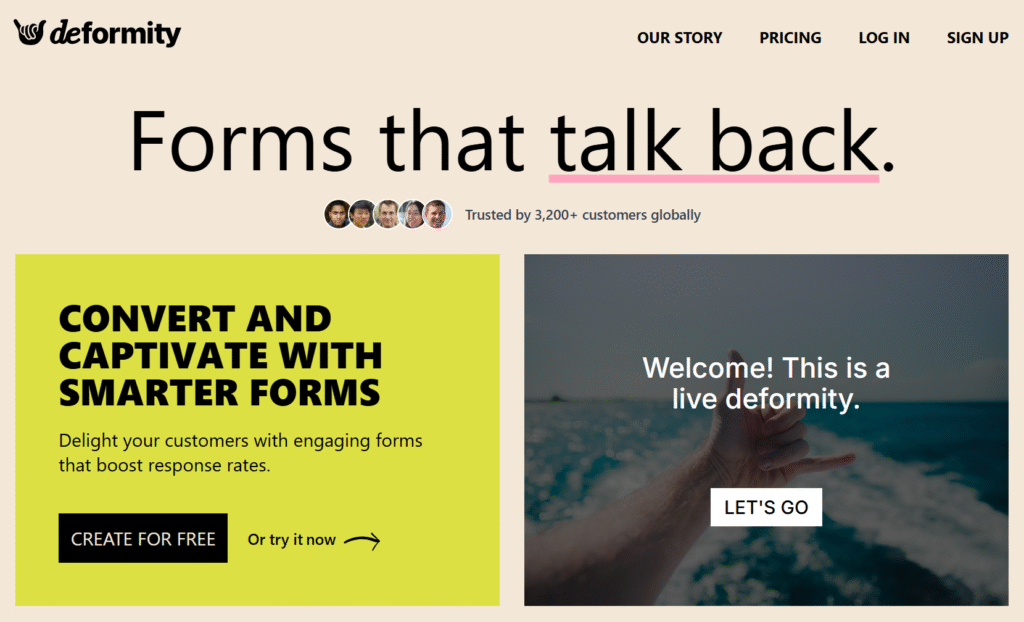
Ever wondered how a simple form builder could carve out a profitable niche in one of the most saturated software markets?
Meet Deformity – a conversational form builder that’s doing something most of its competitors aren’t. While everyone else is racing to add more features, Deformity focused on making forms feel… well, human.
The result? Over 3,000 satisfied users and a sustainable $33K annual revenue stream.
But here’s what’s really interesting about their story…
Ad 🎯 After studying 400+ business models, here’s what actually works for beginners…
Most “make money online” advice is garbage. Complex affiliate schemes. Dropshipping nightmares. Social media “influencing.”
We found something better: lead-generation funnels for manufacturers. Simple. Profitable. Fast results.
Our Max Incubator Phase 1 students are proof—they’re going from zero to their first $1,000 in 90 days with this exact model.
→ See the business idea that’s working for beginners this year
The Problem That Started Everything
Let’s be honest – filling out forms online is about as exciting as watching paint dry.
Most forms feel like digital interrogations. Cold, robotic, and designed by someone who clearly never had to fill one out themselves.
Deformity’s founders saw this universal frustration and asked a simple question: “What if forms could feel like conversations instead?”
That simple shift in perspective became their entire business model.
How Deformity Makes Money (It’s Smarter Than You Think)
Deformity operates on a freemium subscription model, but with a twist that keeps customers happy and reduces churn.
Here’s their revenue structure:
The Free Tier gives users a taste of what’s possible with limited features. Think of it as the “try before you buy” approach that hooks users without overwhelming them.
The Pro Plan offers flexibility most SaaS companies miss. Instead of forcing everyone into the same box, they provide five payment options ranging from $25 to $300 annually. Users only pay for features they actually need.
But here’s the genius move…
Buy for Life Option – For customers who hate recurring subscriptions (and there are millions of them), Deformity offers a one-time payment for permanent access to all Pro features.
This single pricing option probably converted hundreds of customers who would have walked away from a subscription-only model.
Five Strategies That Drove Their Success
1. Website Conversion Optimization That Actually Works
Most SaaS websites look like they were designed by engineers for other engineers.
Deformity’s site tells a story instead. They show exactly how their tool works through visuals, making the value proposition crystal clear within seconds.
No confusing jargon. No feature laundry lists. Just “here’s your problem, here’s our solution, here’s what it looks like.”
2. User Experience Over Feature Bloat
While competitors were adding bells and whistles, Deformity doubled down on simplicity.

Their interface requires zero coding skills. Anyone can create engaging forms quickly, regardless of technical background.
This isn’t just good design – it’s smart business. Happy users become repeat customers and word-of-mouth advocates.
3. Global Reach Through Language Support
Here’s a growth hack most startups overlook: Deformity supports over 120 languages.
Think about that for a moment. While their English-speaking competitors fight over the same market, Deformity quietly captures users worldwide.
It’s like having 120 different markets while everyone else fights over one.
4. Integration Strategy That Creates Stickiness
Deformity connects with over 7,000 apps through platforms like Zapier and Google Sheets.
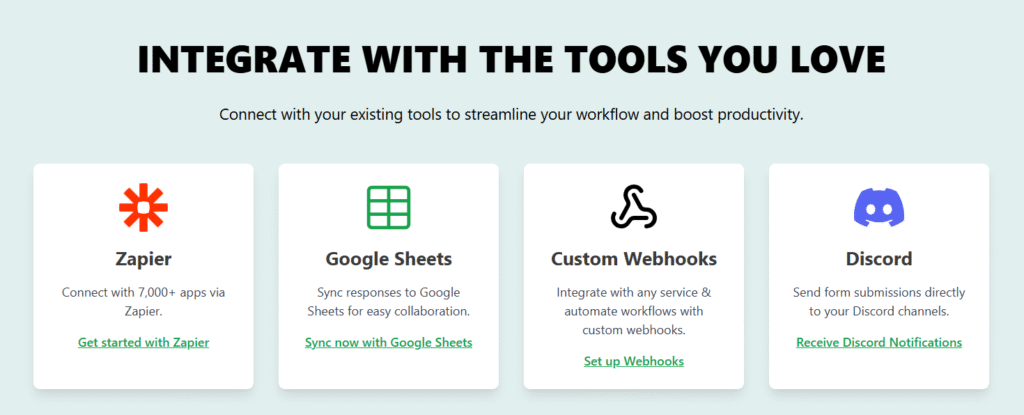
This isn’t just about convenience – it’s about customer retention. The more integrated their tool becomes with a user’s workflow, the harder it is to switch to a competitor.
5. Positioning That Cuts Through Noise
Instead of calling themselves “another form builder,” Deformity positioned as “conversational form creators.”
This subtle shift in language completely changed how potential customers perceived them. They weren’t competing with dozens of form builders – they were creating a new category.
The Growth Opportunities They’re Missing
Even successful businesses leave money on the table. Here are two areas where Deformity could accelerate their growth:
Search Engine Optimization Blind Spot
Despite having a great product, Deformity isn’t capturing enough organic traffic.

A focused SEO strategy could easily double their user acquisition:
- Target keywords like “conversational forms” and “engaging form builder”
- Create educational content about form optimization
- Optimize for mobile (forms are increasingly filled on phones)
Social Proof Gap
For a tool with 3,000+ users, their website surprisingly lacks visible testimonials and case studies.
Adding social proof elements could significantly boost conversion rates from their existing traffic.
Ad 🎯 Ready to put these strategies into action?
Theory is great, but execution is what drives growth. That’s where Max Business School™ comes in.
Inside, you’ll find step-by-step digital marketing courses (SEO, ads, email, social, content, and more) — taught by professionals, designed for beginners and business owners alike.
And the best part? It’s 100% free, online, and flexible.
→ Join Max Business School Today — Free
Key Takeaways for Your Own Business
Deformity’s success offers lessons for any entrepreneur:
Simplicity Wins Over Complexity – Users don’t want more features; they want better experiences.
Positioning Beats Features – How you frame your product matters more than what it does.
Global Thinking From Day One – Supporting multiple languages opened massive markets for minimal additional cost.
Pricing Flexibility Reduces Friction – Offering alternatives to subscriptions captured customers who would have otherwise walked away.
Integration Creates Moats – The more embedded your tool becomes, the stickier your customers.
The Bottom Line
Deformity proves that even in saturated markets, there’s room for businesses that focus on solving real problems in better ways.
They didn’t win by building the most advanced form builder. They won by building the most human one.
Sometimes the best business strategy isn’t about doing more – it’s about doing what matters, better than anyone else.