
How to Build a Vegan Recipe Blog Earning $27K Monthly
Imagine making $324,000 per year by sharing recipes.
No restaurant. No food truck. No commercial kitchen.
Just a website, a camera, and plant-based recipes that people can’t stop searching for.
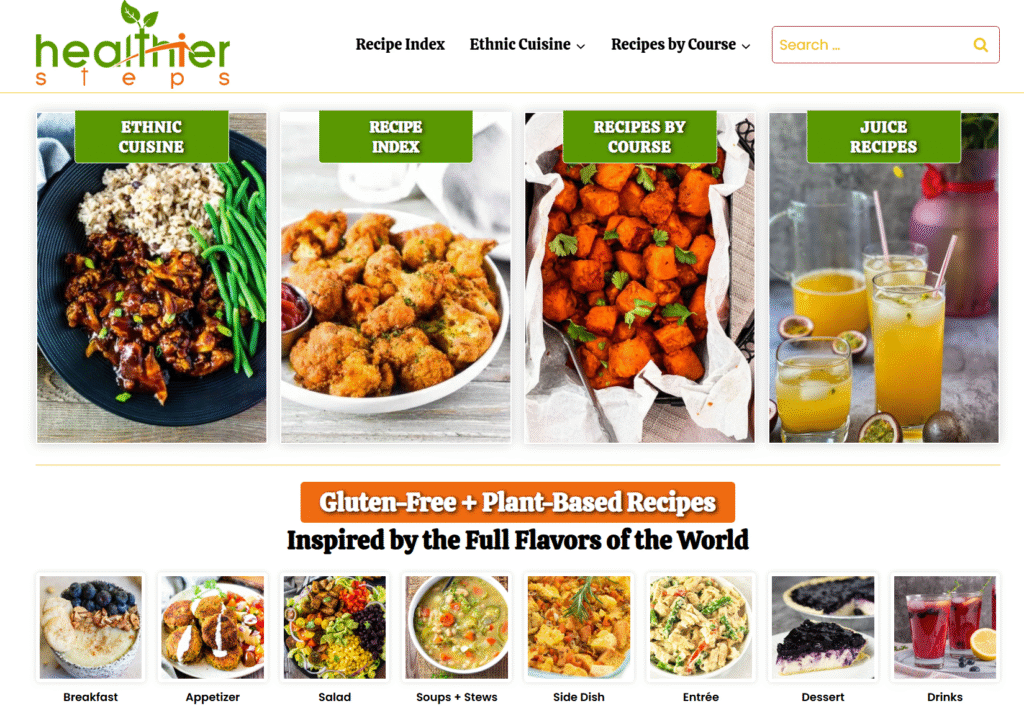
That’s exactly what Healthier Steps accomplished—and they did it without spending a dime on paid advertising.
Ad 🎯 After studying 400+ business models, here’s what actually works for beginners…
Most “make money online” advice is garbage. Complex affiliate schemes. Dropshipping nightmares. Social media “influencing.”
We found something better: lead-generation funnels for manufacturers. Simple. Profitable. Fast results.
Our Max Incubator Phase 1 students are proof—they’re going from zero to their first $1,000 in 90 days with this exact model.
→ See the business idea that’s working for beginners this year
The 500K Visitors Who Found Them Through Google
Here’s what separates successful food blogs from the millions gathering digital dust:
Traffic strategy.
Healthier Steps attracts half a million monthly visitors purely through organic search. People typing “vegan gluten-free pancakes” or “healthy meal prep ideas” into Google are landing directly on this blog.
This isn’t accidental. It’s the result of obsessive SEO optimization.
Every recipe targets specific keywords people are actually searching for. Long-tail phrases like “easy weeknight vegan dinners” or “gluten-free breakfast ideas for kids” have less competition than generic terms, making it easier to rank on page one.
The blog publishes content consistently, keeps recipes updated, and builds authority in the plant-based niche. Google rewards this consistency with higher rankings, which drives more traffic, which generates more revenue.
It’s a beautiful cycle when you get it right.
Display Ads: The Set-It-And-Forget-It Income Stream
Let’s address the elephant in the room—or rather, the ads scattered throughout the page.
Healthier Steps partners with Mediavine, a premium ad network that manages all advertising on the site. Every time someone visits a recipe, ads appear strategically throughout the content.
These aren’t intrusive pop-ups that destroy user experience. They’re carefully placed display ads that generate income without annoying readers.
Here’s the math: With 500,000 monthly pageviews and Mediavine’s typical RPM (revenue per thousand impressions) for food content, this blog is likely earning $15,000-$20,000 monthly from ads alone.
No selling required. No customer service headaches. Just publish great recipes, drive traffic, and watch the ad revenue roll in.
That said, smart bloggers don’t rely on ads as their only income source. Which brings us to…
Digital Products That Multiply Revenue Streams
Cookbooks used to require publishers, printing presses, and distribution deals.
Not anymore.
Healthier Steps sells both physical hardcover cookbooks and digital eBooks directly through their website and Amazon. When someone buys from the blog’s store, the founder keeps 100% of the profit. Amazon sales generate royalties while tapping into a massive existing audience.
Then there’s the video course—a “training suite” teaching students about nutrition, transitioning to healthier eating, and creating delicious plant-based meals.
Courses offer incredible profit margins. Create once, sell forever. No inventory, no shipping, no production costs beyond the initial creation.
For a blog already educating thousands weekly through free content, packaging that knowledge into a premium course is a natural evolution. Some students want more than recipes—they want transformation, accountability, and step-by-step guidance.
That’s worth paying for.
Sponsored Content: When Brands Come Knocking
Once you’ve built significant authority and traffic, something magical happens.
Brands start reaching out to YOU.
Healthier Steps collaborates with companies in the health and wellness space to create sponsored content. A plant-based protein powder company might pay $2,000-$5,000 for a dedicated blog post featuring their product in several recipes.
A meal delivery service could sponsor a weekly meal prep series. Kitchen equipment brands want reviews and recipe features.
This revenue stream requires zero product creation on your part. Brands are essentially paying for access to your audience and your credibility.
The key is maintaining authenticity. Only partner with brands you’d genuinely recommend. Your audience trusts your judgment—lose that trust, and you lose everything.
The SEO Strategy That Changed Everything
Want to know the real secret behind those 500,000 monthly visitors?
Keyword research obsession.
Healthier Steps targets thousands of keywords—both short-tail phrases like “vegan recipes” and long-tail searches like “gluten-free vegan birthday cake with chocolate frosting.”
They analyze keyword difficulty, search volume, and user intent before creating any recipe. Low competition keywords with decent search volume? Perfect targets for new content.
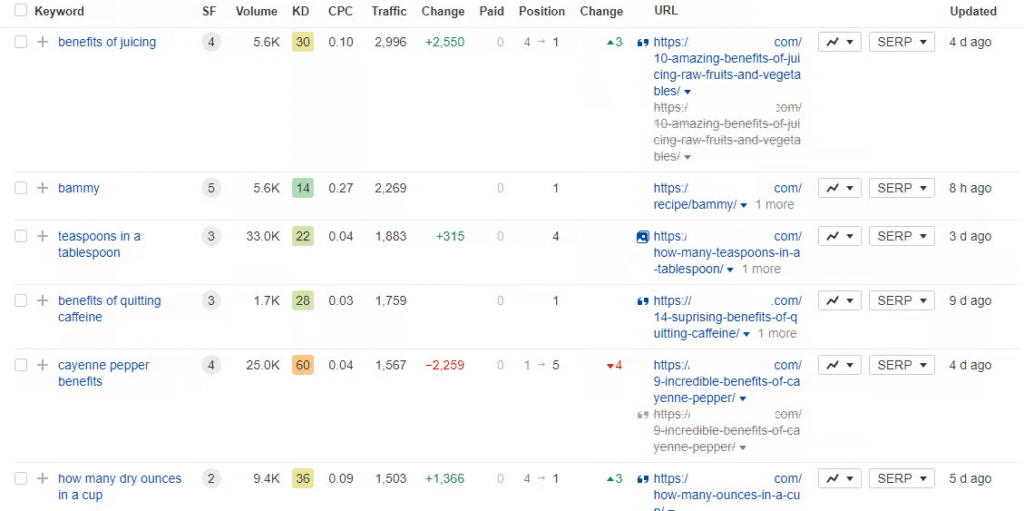
The blog also earns backlinks from authoritative websites in the food and health niches. When reputable sites link to your recipes, Google interprets this as a vote of confidence in your content quality.
Strong backlink profiles boost domain authority, which helps EVERY page on your site rank higher. It’s compound growth for organic traffic.
Content Quality That Keeps People Coming Back
Here’s something most food bloggers miss:
Great recipes aren’t enough.
Healthier Steps provides genuinely valuable resources—skincare tips, lifestyle advice, nutrition education, meal planning guides. The blog positions itself as a comprehensive wellness destination, not just a recipe database.
Every piece of content is well-written, informative, and engaging. High-quality photos showcase finished dishes beautifully. Recipe instructions are clear and tested thoroughly.
This quality keeps bounce rates low and session duration high—two ranking factors Google absolutely loves.
When readers stay engaged with your content, search engines notice. When they bookmark recipes and return repeatedly, algorithms take note. When they share your content on social media, your reach expands exponentially.
Quality compounds over time.
Email Marketing That Converts Visitors Into Loyal Fans
Picture this: someone finds your recipe for vegan mac and cheese through Google, loves it, then disappears forever.
That’s a wasted opportunity.
Healthier Steps captures email addresses by offering valuable freebies—meal planning templates, starter guides, exclusive recipes. The opt-in offer appears prominently when readers visit the site, with compelling calls-to-action throughout.
Once someone joins the email list, regular newsletters keep the blog top-of-mind. New recipe announcements, exclusive cooking tips, product recommendations, special discounts—all delivered directly to subscribers’ inboxes.
Email generates significantly higher conversion rates than social media. You own your email list. Instagram could ban your account tomorrow, but your email subscribers stay with you.
This asset becomes more valuable with every new subscriber.
Social Media Presence That Amplifies Reach
Facebook, Instagram, Pinterest—Healthier Steps maintains an active presence on platforms where food content thrives.

But here’s the critical distinction: social media supports the blog, not replaces it.
Every social post drives traffic back to the website, where ads generate revenue and email opt-ins capture leads. The blog is the asset; social platforms are traffic channels.
Posting consistently builds a loyal following that engages with content, shares recipes, and becomes brand advocates. These platforms also provide valuable feedback about what content resonates most with audiences.
What Could Push This Blog Even Further
Even at $27K monthly, growth opportunities exist.
Short-form video content on TikTok and YouTube Shorts could dramatically expand reach. Food content dominates these platforms, with recipe videos regularly going viral and attracting millions of views.

Collaborating with other vegan bloggers creates win-win partnerships—joint recipe collaborations, cross-promotion, shared giveaways that expose each blog to new audiences.
There’s also potential for premium courses teaching aspiring food bloggers the exact strategies Healthier Steps used to build their business. Food photography courses, SEO for recipe blogs, monetization strategies—these topics have proven demand.

Membership programs offering exclusive recipes, meal plans, and community support could generate substantial recurring revenue. Even 1,000 members at $20 monthly adds another $20K monthly.
Ad 🎯 Ready to put these strategies into action?
Theory is great, but execution is what drives growth. That’s where Max Business School™ comes in.
Inside, you’ll find step-by-step digital marketing courses (SEO, ads, email, social, content, and more) — taught by professionals, designed for beginners and business owners alike.
And the best part? It’s 100% free, online, and flexible.
→ Join Max Business School Today — Free
The Founder’s Journey: From Nurse to Full-Time Blogger
Michelle Blackwood didn’t start as a professional chef or food blogger.
She’s a registered nurse who discovered the benefits of vegan, gluten-free eating through personal experience. Living in a missionary college exposed her to international cuisines, which she learned to recreate in plant-based versions.
Students constantly requested her recipes, which sparked the idea for Healthier Steps.
She credits consistent content creation, SEO best practices, strategic outsourcing, and patience for the blog’s success. Not overnight virality or lucky breaks—steady, focused effort over time.
If a nurse with cooking curiosity can build a $300K+ annual business, what’s stopping you?
Your Action Plan for Building This Business
Ready to create your own food blog empire? Here’s the roadmap:
Phase One: Foundation Choose your specific niche (vegan, keto, budget-friendly, allergen-free), set up WordPress hosting and theme, and start publishing high-quality recipes consistently.
Phase Two: Traffic Generation Master SEO basics and target long-tail keywords, create stunning food photography, build backlinks through guest posting and collaborations, and establish social media presence on 2-3 key platforms.
Phase Three: Monetization Apply to display ad networks once you hit minimum traffic requirements (usually 50K monthly sessions for premium networks), create your first digital product (eBook or mini-course), build email list with valuable lead magnets, and explore brand partnerships.
Phase Four: Scaling Expand digital product offerings, launch premium courses or memberships, hire help for recipe testing and content creation, and explore video content on YouTube and TikTok.
The Non-Negotiable Skills You Need
Building a successful food blog requires specific capabilities.
You’ll need basic photography skills (or willingness to learn), recipe development and testing abilities, SEO and keyword research knowledge, content writing proficiency, and social media marketing fundamentals.
The good news? Every single one of these skills is learnable. Michelle studied business and finance in university—food blogging wasn’t her background. She learned, adapted, and built something remarkable.
Why the Vegan Food Niche Still Has Massive Potential
Despite thousands of existing food blogs, opportunity remains enormous.
Plant-based eating continues growing rapidly, driven by health concerns, environmental awareness, and ethical considerations. New people search for vegan recipes daily.
The key is differentiation. Maybe you specialize in vegan soul food, or budget-friendly plant-based eating, or vegan recipes for picky kids, or high-protein vegan meal prep.
Find your unique angle, serve your specific audience exceptionally well, and build from there.
The Real Talk About Building This Business
Let’s be honest: this isn’t passive income initially.
Creating quality recipes takes time. Food photography requires practice. Writing engaging content demands skill. Building traffic needs consistency.
But here’s what makes it worthwhile—once you’ve published 200 optimized recipes, they work for you continuously. Old posts keep generating traffic. Display ads run automatically. Digital products sell while you sleep.
The work compounds. Every recipe you publish adds to your traffic potential. Every email subscriber increases your audience. Every backlink boosts your authority.
Month 12 requires less effort than month 1, while generating significantly more income.
That’s the power of content-based businesses.
Your Next Step
The vegan food blog opportunity isn’t going anywhere.
More people than ever are searching for plant-based recipes, seeking healthier eating habits, and looking for guidance from someone who’s successfully made the transition.
Healthier Steps proves you don’t need culinary school credentials or venture capital funding. You need valuable recipes, solid SEO strategy, and persistence to build something meaningful.
The question isn’t whether this business model works—Michelle’s $27K monthly income proves it does.
The question is whether you’ll take action.