
How to Build a Music Marketplace Generating 7-Figure Revenue
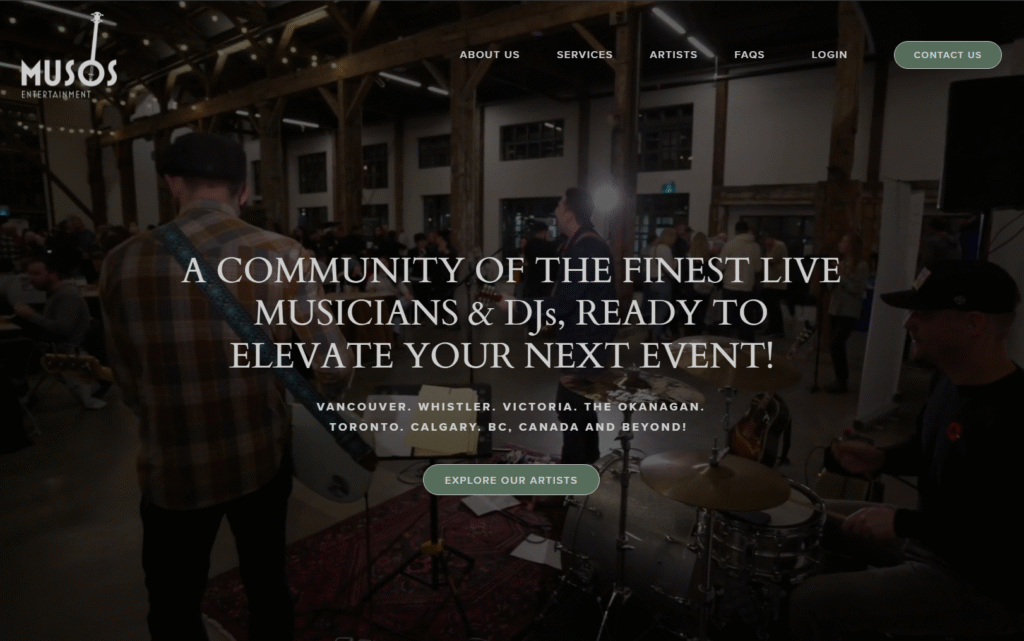
What if connecting musicians with people who need live entertainment could generate $1.6 million yearly?
It can. And it does.
Meet Musos Entertainment—a music booking marketplace built by husband-and-wife team Nadia and Colin Bullock that proves the connector model works spectacularly well when executed with customer obsession and quality standards.
They don’t manufacture anything. They don’t perform at every event. They simply match talented musicians with clients who need unforgettable live entertainment, taking a percentage of each booking for the service.
It’s Airbnb for live music. And it’s wildly profitable.
Let me break down exactly how they built it.
Ad 🎯 After studying 400+ business models, here’s what actually works for beginners…
Most “make money online” advice is garbage. Complex affiliate schemes. Dropshipping nightmares. Social media “influencing.”
We found something better: lead-generation funnels for manufacturers. Simple. Profitable. Fast results.
Our Max Incubator Phase 1 students are proof—they’re going from zero to their first $1,000 in 90 days with this exact model.
→ See the business idea that’s working for beginners this year
From Wedding Musicians to 7-Figure Marketplace
Nadia and Colin’s origin story reveals a classic entrepreneurial pattern: they spotted opportunity while solving their own problem.
Colin is a professional singer and songwriter who performed across Canada and internationally. Nadia brought creative talent and hospitality background as an award-winning entrepreneur and certified hair stylist.
Initially, they offered combined music and hair services for wedding clients—a unique package that differentiated them in the wedding market.
But demand quickly outpaced their personal capacity. When you can only perform at one event per day, revenue hits a hard ceiling.
So they pivoted brilliantly: instead of personally fulfilling every gig, they started outsourcing to other talented musicians. That transition from service provider to marketplace operator unlocked exponential growth potential.
According to IBISWorld’s Event Planning Industry Report, the event planning market generates over $5 billion annually with steady growth. The live music segment within that market remains highly fragmented, creating perfect conditions for marketplace consolidation.
Musos Entertainment became the curated marketplace connecting vetted, professional musicians with clients who valued quality and reliability.
The Three-Stream Revenue Model
Musos Entertainment generates seven-figure revenue through three complementary income sources.
Booking Fees form the primary revenue stream. When clients book musicians or DJs through the marketplace, Musos charges a service fee—typically a percentage of the total booking cost.
This commission-based model aligns incentives perfectly. Musos succeeds when artists succeed and clients get great experiences. Unlike flat-fee models, commission structures scale automatically as booking volume and average booking values increase.
The marketplace handles the entire booking process: client consultation, artist recommendations, contract negotiation, payment processing, and coordination. Clients pay for convenience and peace of mind knowing professionals manage every detail.
Artist Representation Agreements provide the second income stream. Musos negotiates contracts and exclusive agreements with the musicians and DJs it represents. When these artists book gigs—whether through the marketplace or independently—Musos receives a percentage.
This creates recurring revenue from successful artist relationships. As represented artists build their careers and book higher-value gigs, Musos benefits proportionally without additional acquisition costs.
The representation model also ensures quality control. Musos selectively partners with professional, reliable artists who consistently deliver exceptional performances. This curation protects brand reputation and client satisfaction.
The Muse Academy adds a third revenue pillar through education. This training program helps musicians enhance their careers and succeed specifically in the wedding music segment.
Academy enrollment and membership fees provide predictable recurring revenue while simultaneously improving the quality of artists in the marketplace ecosystem. Better-trained musicians deliver better performances, which leads to happier clients and more bookings.
According to Music Industry Research, professional development and training represents a growing revenue opportunity as musicians seek business skills beyond their artistic talents.
This academy model creates a virtuous cycle: it generates direct revenue, improves marketplace quality, and attracts more artists to the platform.
What Musos Entertainment Gets Right
Their seven-figure success isn’t accidental. Several strategic decisions separate Musos from failed marketplaces.
Artfully Curated Talent Pool ensures quality over quantity. Musos doesn’t accept every musician who applies. They maintain high standards for talent, professionalism, and diversity across musical genres and performance styles.
This curation solves the fundamental marketplace problem: how do you ensure transactions create value for both sides? By being selective about which artists join the platform, Musos protects client satisfaction and marketplace reputation.
Clients trust that any artist recommended through Musos will deliver professionally. That trust eliminates the research burden and decision anxiety that typically slows booking decisions.
Comprehensive Service Range meets diverse client needs. Whether you need a classical quartet for a corporate event, a DJ for a wedding reception, or a jazz band for venue entertainment, Musos has vetted options.
This breadth creates marketplace network effects. More artist variety attracts more clients. More clients attract more artists. The marketplace becomes increasingly valuable to both sides as it grows.
Personalized Recommendation Approach differentiates Musos from algorithmic matching platforms. They work closely with clients to understand event details, musical preferences, audience demographics, and budget constraints. Then they hand-select artists that perfectly fit the specific situation.
This high-touch service justifies premium pricing. Clients aren’t just accessing a database—they’re getting expert curation and guidance from people who understand both the music industry and event success factors.
Customer Satisfaction Obsession built their positive reputation. Testimonials throughout the site highlight Musos’ ability to accommodate last-minute changes, fine-tune event details, and consistently exceed expectations.
They feature reviews from major clients like Google, which demonstrates trustworthiness and credibility at scale. When Fortune 500 companies trust your marketplace, smaller clients feel safe following suit.

According to BrightLocal’s Consumer Review Survey, 87% of consumers read online reviews for local businesses, and positive reviews significantly influence purchasing decisions.
The Glaring Missed Opportunities
Despite impressive revenue, Musos leaves money on the table in several key areas.
Website Performance Needs Optimization. Analysis from GTMetrix reveals the site could use significant speed improvements. Website loading speed directly impacts conversion rates and search rankings.
According to Google’s Mobile Speed Research, 53% of mobile users abandon sites that take longer than 3 seconds to load. Every second of delay can reduce conversions by 7%.

While the site appears user-friendly and well-structured, performance optimization through image compression, browser caching, and code minification would immediately improve user experience and conversion rates.
Mobile Optimization is Critical. The site must be fully responsive with seamless mobile navigation. Event planners increasingly book services from smartphones and tablets. A clunky mobile experience directly translates to lost revenue.
SEO Traffic Remains Disappointingly Low. Ahrefs data shows minimal organic traffic despite operating in a lucrative market. Implementing comprehensive SEO strategies could dramatically increase visibility and reduce customer acquisition costs.
Specific tactics include keyword research targeting event-related queries, on-page optimization for service pages, link building from event planning resources, and local SEO optimization for target geographic markets.
Competitors like GigSalad and The Bash dominate search results for music booking queries through strong SEO foundations. Musos has the quality advantage but loses the visibility battle.
Content Marketing is Virtually Nonexistent. The low organic traffic stems partly from lack of blog content. Creating high-quality content addressing client questions and concerns would attract organic traffic while building authority.

Blog topics could include wedding music selection guides, corporate event entertainment trends, how to choose the right musical style for your event, budget planning for event entertainment, and behind-the-scenes stories from successful events.
This content marketing approach costs primarily time and effort but generates compounding returns as content ranks and attracts visitors indefinitely.
Social Media Engagement Needs Dramatic Improvement. While Musos maintains an Instagram presence, engagement and visibility remain limited. The music industry is inherently visual and shareable—perfect for social platforms.
Regular posting of performance videos, client testimonials, behind-the-scenes content, and interactive posts would dramatically increase reach. Music challenges, polls about favorite genres, and showcase content encourages audience participation and sharing.
According to Hootsuite’s Social Media Trends Report, video content generates 1200% more shares than text and images combined. For a music marketplace, video should dominate the content strategy.
YouTube and TikTok represent particularly valuable platforms for showcasing artist talent through short performance clips. These platforms’ algorithmic discovery could attract both clients and artists organically.
Ad 🎯 Ready to put these strategies into action?
Theory is great, but execution is what drives growth. That’s where Max Business School™ comes in.
Inside, you’ll find step-by-step digital marketing courses (SEO, ads, email, social, content, and more) — taught by professionals, designed for beginners and business owners alike.
And the best part? It’s 100% free, online, and flexible.
→ Join Max Business School Today — Free
The Skills Required to Build This
Let’s talk about what actually building a seven-figure music marketplace requires.
Industry Knowledge and Relationships form the foundation. Nadia and Colin succeeded partly because Colin already worked as a professional musician with deep industry connections. Those relationships provided initial artist inventory for the marketplace.
You can’t build a credible marketplace without access to quality suppliers (in this case, talented musicians). Their industry credibility and network made artist recruitment possible.
Quality Curation Ability separates successful marketplaces from failed ones. You need judgment to assess which suppliers meet quality standards and which don’t. Musos’ curation expertise ensures every recommended artist delivers professionally.
This skill comes from experience. You need enough domain knowledge to recognize excellence, professionalism, and reliability. Without this competence, you’ll accept mediocre suppliers and damage marketplace reputation.
Customer Service Excellence drives retention and referrals. Marketplace businesses live or die on customer satisfaction. Musos clearly invested heavily in white-glove service that exceeds expectations.
This requires systems for handling inquiries quickly, managing bookings smoothly, solving problems proactively, and following up to ensure satisfaction. These operational competencies don’t happen accidentally—they require intentional process design and team training.
Sales and Relationship Management skills drive revenue. Someone needs to consult with clients, understand their needs, recommend appropriate solutions, and close bookings. This requires genuine sales ability combined with consultative problem-solving.
Basic Digital Marketing enables growth. Understanding website optimization, SEO fundamentals, social media marketing, and online advertising determines how effectively you attract clients and artists to the marketplace.
According to McKinsey’s Marketplace Research, successful marketplaces invest 15-20% of revenue in marketing during growth phases.
What Starting Actually Looks Like
Here’s the reality of launching a marketplace business:
Start With Manual Curation. Nadia and Colin didn’t build a sophisticated platform immediately. They started by personally connecting musicians they knew with clients who needed entertainment. This manual approach validated demand before investing in technology.
You can launch a marketplace business with simple tools: a basic website, email communication, and personal coordination. The sophisticated platform comes later as revenue justifies investment.
Focus on Supply Side First. Marketplaces fail when one side dramatically outnumbers the other. If you have clients but no quality suppliers, you can’t fulfill demand. If you have suppliers but no clients, nobody makes money.
Musos had advantage because Colin’s music network provided initial supply. You need to solve the supply side before aggressively pursuing demand side.
Build Quality Standards Early. Define clear criteria for which suppliers join your marketplace. Musos maintained high standards from the beginning, which protected reputation and enabled premium pricing.
Trying to retrofit quality standards after accepting mediocre suppliers is exponentially harder than starting selective.
Create Case Studies Through Early Clients. Your first successful bookings become marketing ammunition. Testimonials from satisfied clients attract the next wave of customers. Document and showcase early wins prominently.
Invest in Customer Experience. In competitive markets, experience differentiation matters more than price. Musos charges premium rates but justifies them through exceptional service. Clients pay for peace of mind and consistently great experiences.
According to PwC’s Customer Experience Research, 86% of buyers will pay more for a great customer experience.
The Timeline Reality
Building to seven-figure revenue takes longer than most people expect.
Musos Entertainment likely required 3-5 years of steady growth to reach $1.6 million annual revenue. The first year probably generated modest income while they built artist relationships and established reputation.
Marketplace businesses scale slowly initially because both sides must grow simultaneously. You can’t just focus on client acquisition or artist recruitment—you need balanced growth.
But here’s what makes the wait worthwhile: marketplace businesses become increasingly valuable over time. Network effects compound. Each new artist makes the marketplace more attractive to clients. Each new client makes the marketplace more attractive to artists.
Once you achieve critical mass, growth accelerates exponentially. Early years feel like pushing a boulder uphill. Later years feel like riding a rocket.
The commission-based model also means revenue scales automatically with volume. Unlike service businesses where you trade hours for dollars, marketplaces generate revenue from every transaction without proportional effort increases.
The Bottom Line
Musos Entertainment proves the connector model works brilliantly when executed with quality obsession and customer focus.
Nadia and Colin Bullock didn’t need to become the best musicians in Canada. They needed to become the best connectors between great musicians and clients who value quality entertainment.
The live entertainment market generates billions annually but remains highly fragmented. That fragmentation creates opportunity for curated marketplaces that simplify decision-making and guarantee quality.
The same dynamic exists in countless industries. Wherever fragmented suppliers serve demanding customers, marketplace opportunities exist for entrepreneurs willing to provide curation and trust.
According to CB Insights’ Marketplace Analysis, successful marketplaces solve real pain points on both supply and demand sides while maintaining quality standards that justify their position in the middle.
The question isn’t whether the marketplace model works—Musos’ seven-figure revenue proves it does. The question is whether you have access to quality suppliers, understanding of customer needs, and commitment to build the trust infrastructure that makes marketplaces valuable.
If you do, you just saw exactly how a husband-and-wife team turned those advantages into a million-dollar business.