
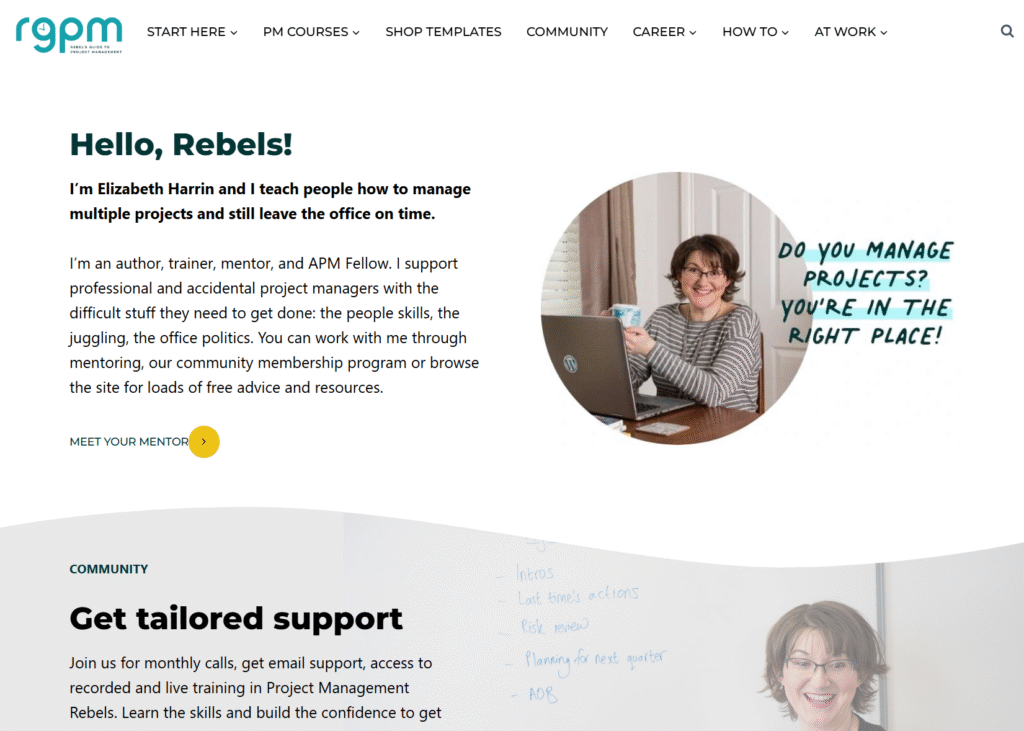
How to Build a Project Management Blog to $100K+ Annual Revenue (Real Case Study)
Let’s be honest about something nobody mentions at career day:
Project management is boring.
There. I said it.
It’s not sexy. Nobody’s making Netflix documentaries about Gantt charts. There are no project management influencers with millions of TikTok followers demonstrating stakeholder communication techniques while lip-syncing to trending audio.
When you tell someone at a party that you’re a project manager, you can literally watch their eyes glaze over as they scan the room for someone—anyone—with a more interesting job title.
But here’s the beautiful irony that Elizabeth Harris discovered:
Boring niches make ridiculous money.
Elizabeth spent 20 years in the project management trenches. Twenty years of scope creep, budget constraints, impossible deadlines, and stakeholders who fundamentally misunderstand how time works.
Then she started a blog about it.
Today, that blog—Rebels Guide to Project Management—generates six figures annually. Not through consulting gigs or contract work. Through digital products, online courses, mentoring, and content monetization.
She didn’t have some revolutionary insight about project management. She just understood something most professionals miss entirely: people will pay handsomely for expertise that makes their jobs easier.
Let me show you exactly how she built this machine, where the real money comes from, what she did brilliantly, and most importantly—how you can replicate this in your own “boring” niche.
Because spoiler alert: boring niches are where the money hides.
Ad 🎯 After studying 400+ business models, here’s what actually works for beginners…
Most “make money online” advice is garbage. Complex affiliate schemes. Dropshipping nightmares. Social media “influencing.”
We found something better: lead-generation funnels for manufacturers. Simple. Profitable. Fast results.
Our Max Incubator Phase 1 students are proof—they’re going from zero to their first $1,000 in 90 days with this exact model.
→ See the business idea that’s working for beginners this year
The Revenue Architecture: How Six Figures Actually Happens
Most blogs trying to hit six figures annually are doing content marketing theater—posting consistently, hoping something monetizes eventually.
Elizabeth built a revenue fortress with intentional, diversified income streams that work together like a well-managed project (she’d appreciate that metaphor).
Digital Products: The Foundation Layer
Her website offers project management templates, ebooks, guides, and checklists for purchase.
This isn’t fluffy content thrown together in an afternoon. These are practical tools that solve specific problems project managers face daily:
- Stakeholder communication templates
- Risk assessment frameworks
- Project charter templates
- Budget tracking spreadsheets
- Team meeting agendas
- Status report templates
Each product ranges from $7 for single templates to $97 for comprehensive bundles.
Here’s the business genius: these are one-time creation efforts with infinite selling potential.
Spend eight hours creating a comprehensive project charter template. Sell it for $19. If 500 people buy it over the next three years, that’s $9,500 from eight hours of work. That’s $1,187 per hour.
And unlike physical products or services, there’s:
- No inventory management
- No shipping logistics
- No customer service beyond occasional email questions
- No manufacturing costs
- No fulfillment complexity
Pure profit margins that would make any CFO weep with joy.
The global project management software market is expected to reach $15.08 billion by 2030. Elizabeth carved out her portion by providing the bridge content—templates and frameworks that help people use these tools effectively.
Online Courses: The Primary Revenue Driver
Elizabeth offers self-paced training courses delivered entirely online, typically including:
- Video lessons breaking down complex concepts
- Downloadable resources and templates
- Quizzes validating understanding
- Assignments providing hands-on practice
- Community access for peer support
Her pricing strategy shows sophistication most course creators miss.
Multiple courses at different price points ($297, $497, $997) create a natural ascension ladder. Someone nervous about investing heavily can start with the introductory course. Someone ready to go all-in can grab the comprehensive program.
Each price tier is psychologically positioned to reduce objections while maximizing revenue potential.
The online learning market is projected to reach $840 billion by 2030. Project management training is a significant subset—companies spend billions annually on professional development.
Elizabeth positioned herself to capture individual learners and small organizations who can’t justify $15,000 per employee for traditional training programs but desperately need their teams to improve.
One-on-One Mentoring: The Premium Tier
Beyond courses, Elizabeth offers personalized mentoring sessions bookable directly through her website.

This isn’t scalable like digital products. You can’t mentor 10,000 people simultaneously. But it’s incredibly profitable and builds deep client relationships.
Mentoring sessions typically run $200-500 per hour for someone with Elizabeth’s 20 years of experience. Book eight sessions monthly, and that’s $1,600-4,000 in high-margin revenue from a few hours of time.
But the real value isn’t just the session revenue. It’s:
Market research: Direct insight into what problems your audience faces, informing future products and content.
Testimonial generation: Successful mentoring clients become case studies and social proof for other offerings.
Product feedback: Beta test course materials and get real-time reactions to what works and what doesn’t.
Relationship capital: These clients become evangelists, referring others and leaving glowing reviews.
Display Advertising and Affiliate Revenue: The Passive Layer
As her content ranks in search engines and attracts 18,000+ monthly organic visitors, display ads generate consistent background revenue.
She’s also embedded affiliate links throughout blog posts—recommending project management software, productivity tools, and professional resources.
When someone reads her article comparing project management platforms and clicks her Asana affiliate link, she earns commission on the subscription.
These aren’t massive revenue drivers compared to courses and digital products. But they require zero additional effort beyond initial content creation. It’s the financial equivalent of interest on a savings account—modest but reliable.
Combined, these revenue streams create a resilient business model. If course sales slow one quarter, mentoring and digital products maintain cash flow. If a recession hits and budgets tighten, lower-priced templates still sell.
Diversification isn’t just smart finance theory. It’s survival strategy.
The Traffic Engine: How 18K Monthly Visitors Became Customers
Let’s talk about the real magic: converting strangers into paying customers.

Content-Led SEO: The Organic Traffic Machine
Elizabeth publishes high-quality, informative, valuable content targeting specific problems project managers search for:
- “How to manage scope creep”
- “Project charter template free download”
- “Stakeholder communication best practices”
- “Budget tracking for construction projects”
- “Agile vs waterfall methodology”
Each piece is optimized for search engines while genuinely helping readers.
This isn’t keyword stuffing or gaming the system. This is understanding that Google’s algorithm rewards content that satisfies search intent and provides comprehensive answers.
Her content strategy follows a proven framework:
1. Keyword research: Identify what project managers actually search for using tools like Ahrefs or Semrush.
2. Content creation: Write comprehensive guides (1,500-2,500 words) that thoroughly answer questions and solve problems.
3. Technical optimization: Proper header hierarchy, meta descriptions, internal linking, image optimization, and mobile responsiveness.
4. Regular publishing: Consistent content creation signals to Google that the site is active and authoritative.
5. Strategic updating: Refresh old posts with new information, maintaining rankings and improving conversions.
The result? 18,000 monthly visitors arriving through search engines, actively seeking project management help.
This traffic is:
- Free (no ongoing ad costs)
- Targeted (searching for specific solutions)
- Qualified (in research mode, ready to buy)
- Scalable (grows with content library)
- Sustainable (continues even if you stop publishing temporarily)
Every blog post becomes a 24/7 lead generation asset, working while Elizabeth sleeps, travels, or focuses on other parts of the business.
Expertise-Driven Credibility: The Trust Multiplier
Elizabeth’s 20 years of project management experience isn’t just background. It’s her primary competitive advantage.
In a field filled with surface-level content from people who read a few blog posts and declared themselves experts, genuine experience cuts through noise like a chainsaw through butter.
She leverages this through:
Testimonials and endorsements: Industry experts validate her expertise, providing social proof that she’s legitimate.
Detailed case studies: Real project examples showing how she solved specific problems, demonstrating practical knowledge.
Community engagement: Active participation in project management forums, LinkedIn groups, and professional organizations.
Thought leadership content: Publishing original insights, not just regurgitating existing information.
This positions her as an authoritative source, not another wannabe blogger hoping to make quick money.
When someone with 20 years of experience tells you how to manage a complex project, you listen. When someone with 20 days of experience does the same, you scroll past.
That’s the difference between browsers and buyers.
Email Marketing: The Conversion Machine
Elizabeth uses smart lead magnets to capture email addresses—offering genuinely valuable freebies in exchange for contact information.
Her approach: high-value, free resources that demonstrate expertise while solving immediate problems.
Someone visits looking for help managing stakeholder expectations. They find a comprehensive blog post that actually helps. At strategic points in the content, there are offers:
“Want my complete stakeholder communication template pack? Enter your email and I’ll send it immediately.”
The value exchange is clear and fair. They get something useful. She gets a qualified lead.
Once on the email list, subscribers enter a nurture sequence that:
- Continues providing valuable free content
- Shares success stories and case studies
- Introduces paid offerings at strategic intervals
- Builds relationship and trust over time
The average ROI for email marketing is $36 for every dollar spent. Miss this channel, and you’re leaving absurd amounts of money on the table.
Email converts blog visitors into customers more effectively than any other channel because it allows ongoing relationship building beyond a single page visit.
What She’s Doing Brilliantly (Learn From This)
Let’s extract the specific tactics worth replicating.
The Multi-Tiered Product Ecosystem
Elizabeth doesn’t just sell one thing.
She created an ascension ladder:
Entry level: $7-27 templates and checklists Mid-tier: $97-297 comprehensive guide bundles Higher tier: $297-997 online courses Premium: $200-500 personalized mentoring sessions
This accomplishes several goals:
Eliminates price objections: There’s an entry point for every budget, removing “it’s too expensive” as a roadblock.
Increases customer lifetime value: Someone buying a $19 template might later invest in a $497 course.
Segments audience naturally: Budget-conscious buyers stick with templates. Serious professionals invest in courses and mentoring.
Maximizes revenue per visitor: Instead of all-or-nothing conversion, there are multiple opportunities to monetize each website visitor.
This is how six-figure blogs actually hit six figures—not through massive traffic, but through strategic monetization of modest traffic.
The Niche Authority Play
Elizabeth didn’t try to be a general business or career coach.
She went deep in one specific area: project management.
More specifically: project management for professionals who feel overwhelmed, stressed, and unsupported in their roles.
Even more specifically: providing practical tools and frameworks that work in real-world situations, not ivory tower theory.
This laser focus allows her to:
- Create more relevant content
- Build stronger authority faster
- Face less competition
- Command higher prices
- Attract more qualified leads
The riches in niches concept isn’t just marketing cliché. It’s legitimate business strategy.
The Transparent Credibility Building
Elizabeth prominently displays her credentials, experience, partnerships, and testimonials.
This isn’t ego. This is strategic trust-building.
Her website shows:
- 20 years of project management experience
- Author of published books on project management
- Partnerships with major industry organizations
- Client testimonials with specific results
- Media features and interviews
Every element answers the subconscious question every visitor has: “Why should I listen to you?”
Most bloggers hide their credentials, assuming people don’t care. Wrong. Especially in professional niches, credibility directly correlates with conversion rates.
The Glaring Weaknesses (And Your Competitive Advantage)
Even six-figure blogs have blind spots.
The Online Store Experience Is Terrible
Elizabeth’s digital product shop looks like a library catalog from 1987.
Products are listed with minimal descriptions. No compelling imagery. No customer reviews prominently displayed. No strategic upsells or bundles.
This is leaving money on the table.
E-commerce conversion rates average 2-3% for most industries. Small improvements in product page optimization can double conversion rates.
Fixes that could easily add 30-50% more revenue:
Better product descriptions: Focus on benefits and transformations, not just features.
Customer testimonials: Display social proof directly on product pages.
High-quality images: Show what’s inside, make it look professional and valuable.
Strategic bundling: Offer template packs at discount versus individual purchases.
Scarcity elements: Limited-time discounts or bonuses for immediate purchase.
Trust signals: Money-back guarantees, secure payment badges, professional presentation.
Platforms like Shopify or WooCommerce provide professional e-commerce experiences out of the box. The investment pays for itself through improved conversions.
Social Media Strategy Is Basically Non-Existent
Elizabeth has YouTube, Instagram, and Facebook presence.

But the metrics tell the truth: nobody’s really engaging.
This represents massive missed opportunity.
LinkedIn alone has over 900 million users, with project managers being a core demographic. A strategic LinkedIn presence with:
- Regular posting schedule
- Engagement with industry discussions
- Thought leadership articles
- Video content showing personality
- Strategic networking with influencers
…could easily add 5,000-10,000 monthly website visitors and hundreds of qualified leads.
YouTube is the second-largest search engine. Project management tutorials, case studies, and tips could rank for searches and drive traffic for years.
Instagram might seem less relevant for B2B, but showing the human side—work-life balance, behind-scenes content, quick tips—builds connection and trust.
The fix? Develop an actual content strategy:
Content calendar: Plan topics aligned with audience pain points.
Platform-specific optimization: Vertical video for Instagram, professional articles for LinkedIn, tutorials for YouTube.
Engagement strategy: Actively respond to comments, participate in relevant conversations, build community.
Cross-promotion: Use each platform to drive traffic to others and to the main website.
Consistency: Regular posting schedule builds algorithm favor and audience expectations.
This isn’t optional anymore. Social media is where audiences spend time. If you’re not there strategically, you’re invisible.
Ad 🎯 Ready to put these strategies into action?
Theory is great, but execution is what drives growth. That’s where Max Business School™ comes in.
Inside, you’ll find step-by-step digital marketing courses (SEO, ads, email, social, content, and more) — taught by professionals, designed for beginners and business owners alike.
And the best part? It’s 100% free, online, and flexible.
→ Join Max Business School Today — Free
The Skills You Actually Need to Build This
Let’s cut through the motivational fluff and talk about real requirements.
Deep Niche Expertise (Can’t Be Faked)
You need legitimate knowledge in your chosen field.
Elizabeth’s 20 years of project management experience creates content that resonates because it’s authentic. She’s not regurgitating theory from textbooks. She’s sharing battle-tested wisdom from actual project trenches.
You can’t fake this. Well, you can try, but your audience will detect it immediately and your blog will go nowhere.
Find a niche where you have:
- Professional experience (5+ years minimum)
- Specialized knowledge others lack
- Proven results you can demonstrate
- Passion to create content long-term
Or commit to developing that expertise systematically over time.
Content Creation That Doesn’t Suck
You need to communicate complex ideas clearly and engagingly.
This means:
- Breaking down complicated concepts into understandable pieces
- Using examples and analogies that resonate
- Organizing information logically
- Writing with personality (not corporate robot speak)
- Editing ruthlessly for clarity
The average reading level in the U.S. is 7th-8th grade. If you’re writing at graduate school level, you’re losing 50% of your potential audience.
Write clearly. Write helpfully. Write authentically.
WordPress and Basic Technical Competence
You need a professional website that functions reliably.
This requires understanding:
- Domain and hosting setup
- WordPress installation and configuration
- Theme selection and customization
- Plugin management without breaking things
- Basic troubleshooting when something goes wrong
- Site security and backup systems
WordPress powers 43% of all websites. Learn it. It’s not optional for serious bloggers.
You don’t need to become a developer. But you need competence to maintain your site without paying someone $150 every time you need a button moved.
Digital Product Creation
You need to package knowledge into products people will buy.
This means:
- Identifying specific problems worth solving
- Creating solutions in digestible formats
- Designing professional-looking resources
- Writing sales copy that converts
- Setting up secure payment processing
- Delivering products reliably
The technical parts are learnable. The hard part is creating genuinely valuable products instead of slapping together junk and hoping someone buys it.
Email Marketing Fundamentals
Building and nurturing an email list transforms one-time visitors into repeat customers.
You need to understand:
- Lead magnet creation that provides real value
- Signup form optimization for maximum conversions
- Welcome sequence development
- Regular newsletter content strategy
- Segmentation for targeted messaging
- Conversion funnel design
Email is how you build relationships and generate consistent revenue. Skip it, and you’re building on rented land where algorithms control your reach.
Why Boring Niches Are Actually Perfect
Here’s what nobody tells you: sexy niches are competitive nightmares.
Everyone wants to blog about travel, lifestyle, personal development. The competition is crushing. The monetization is difficult. The path to serious revenue is steep.
Elizabeth chose project management—a field that makes most people yawn—and built a thriving business specifically because it’s underserved.
The advantages of “boring” niches:
Less competition: Fewer people willing to create content about obscure topics.
Higher desperation: Professionals stuck solving specific problems will pay premium prices for solutions.
B2B monetization: Companies have bigger budgets than individual consumers.
Longer customer lifetime: Professional relationships last years versus one-time consumer purchases.
Clearer pain points: Business problems are specific and measurable, making content easier to target.
The project management profession employs millions of people globally. They all face similar challenges. Most lack good resources.
That’s opportunity hiding in plain sight.
Your boring niche might be:
- Compliance regulations for healthcare facilities
- Accounting software for small manufacturing businesses
- HR processes for remote teams
- Supply chain optimization for e-commerce
- Safety training for construction companies
The less glamorous, the better the opportunity.
The Bottom Line
Elizabeth Harris turned 20 years of project management experience into a six-figure blog by understanding that professional expertise is monetizable.
She didn’t need revolutionary insights or secret strategies. She needed:
- Genuine expertise in a specific niche
- Content that solves real problems
- Strategic monetization through multiple products
- Traffic generation through SEO
- Email marketing to build relationships
- Conversion optimization to turn visitors into customers
Your path won’t look identical. Your niche will be different. Your products will vary.
But the framework works across industries.
Find your boring niche. Build genuine expertise. Create helpful content. Monetize strategically. Scale systematically.
The Rebels Guide to Project Management proves that you don’t need a sexy niche to build serious revenue.
You just need to solve real problems for people willing to pay for solutions.
The opportunity is there. The question is whether you’re ready to claim it.