
How to Build a Caravan Travel Blog Generating $5K Monthly
Picture this: You’re sitting in a cramped office cubicle, fluorescent lights humming overhead, while your inbox screams at you with 47 unread messages.
Meanwhile, someone named Emma is parked by a pristine Australian beach, laptop open, kids playing in the sand, pulling in $5,000 a month from a blog about… caravans.
Yeah, I had the same reaction.
But here’s the thing that makes Emma Todd’s MyRigAdventures story so compelling—it’s not some fairy tale about quitting your job and magically striking it rich. It’s a case study in persistence, strategic pivoting, and understanding exactly what your audience needs when they’re planning their own mobile adventure.
And unlike most “quit your job and travel the world” stories that conveniently skip the part about going broke, Emma’s journey includes real setbacks, actual numbers, and a blueprint you could actually follow.
Let’s unpack how she went from making $1,250 monthly to over $5,000 by treating her blog like an actual business.
Ad 🎯 After studying 400+ business models, here’s what actually works for beginners…
Most “make money online” advice is garbage. Complex affiliate schemes. Dropshipping nightmares. Social media “influencing.”
We found something better: lead-generation funnels for manufacturers. Simple. Profitable. Fast results.
Our Max Incubator Phase 1 students are proof—they’re going from zero to their first $1,000 in 90 days with this exact model.
→ See the business idea that’s working for beginners this year
The Origin Story (And Why It Matters)
Emma didn’t start MyRigAdventures as a business move.
She started it as a creative outlet while living on the road with her kids. Think digital scrapbook meets parenting survival guide. The blog documented their nomadic adventures across Australia, sharing tips on everything from choosing the right caravan to managing budget constraints while traveling full-time.
Then 2020 happened. Lockdowns hit. Personal upheaval followed. The perfect storm of chaos that would make most people abandon their side projects.
Emma went home. Took a break. Healed.
But here’s where the story gets interesting—while Emma was on hiatus, the caravan trend in Australia absolutely exploded. People stuck at home suddenly wanted nothing more than to hit the road. Caravan sales surged 25% during the pandemic, creating a massive wave of new travelers desperate for guidance.
Emma faced a choice in 2021: Return to a traditional job with its predictable paycheck and soul-crushing commute, or bet on herself and commit fully to blogging.
She chose freedom. Smart woman.
The Revenue Stack That Actually Works
Let’s cut through the mystique and talk about how MyRigAdventures actually makes money.
The primary income source is display advertising through ad networks. When visitors land on the blog to read about “best budget caravans for families” or “essential caravan maintenance checklist,” they see ads. Those ads generate revenue based on impressions and clicks. It’s passive income in the truest sense—once the content exists and ranks in search results, it works 24/7.
Affiliate marketing forms the second pillar. Emma recommends camping gear, caravan accessories, and travel products she actually uses. When readers click through her affiliate links and purchase, she earns a commission. The conversion rate is strong because she’s built trust with her 23,000+ Facebook community members who know she’s actually lived this lifestyle.
Then come the digital products. MyRigAdventures sells specialized guides like “The ULTIMATE Caravan Buyers Guide” and “Caravan Maintenance & Service Log.” These solve specific, painful problems for new caravan owners. The beauty of digital products is the economics—create once, sell infinitely. No printing costs, no shipping logistics, just pure margin.
This diversified approach protects against the volatility of any single revenue source. Ad rates fluctuate. Affiliate programs change terms. But together? They create stability.
The travel blogging industry continues growing even as it evolves, with smart bloggers adapting their monetization strategies to match changing platforms and consumer behaviors.
The Community Strategy That Changed Everything
Now here’s where Emma did something brilliant.
She didn’t just publish content and hope people found it. She built a community. A real, engaged, active community of over 23,000 caravan enthusiasts in her Facebook group.
Think about the power of that for a second.
When you have 23,000 people who’ve actively joined a group about caravanning, you have direct access to your ideal audience. You can ask questions. Test ideas. Get instant feedback on content topics. And most importantly, you’ve created a space where trust builds naturally through peer interactions.
The Facebook group serves multiple strategic purposes beyond community building. It drives consistent traffic back to the blog where monetization happens. It provides social proof—new visitors see this thriving community and think “these people know what they’re talking about.” And it creates network effects where members share Emma’s content, organically expanding reach.
This isn’t just engagement for engagement’s sake. It’s strategic business development that costs nothing but time and genuine care for helping people.
The Design Philosophy Behind the Revenue
You know what’s underrated in the blogging world?
Actually making your website pleasant to use.
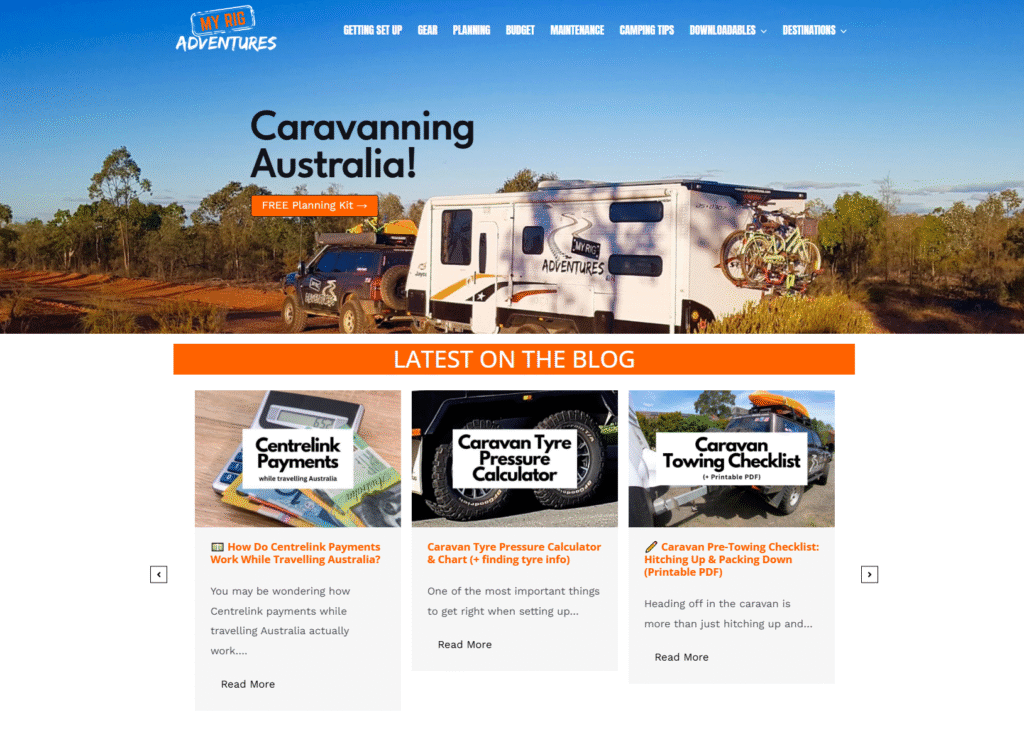
MyRigAdventures sports a vibrant design with strategic calls-to-action that don’t feel pushy. The site uses organized sections that make finding information intuitive. Sidebar widgets highlight popular posts and guide visitors toward monetized content. The whole experience feels helpful rather than salesy.
Color psychology plays a subtle role here. The strategic use of contrasting colors for CTAs (calls-to-action) draws the eye without overwhelming. When Emma wants you to download a guide or check out a recommended product, you notice—but it doesn’t feel like you’re being beaten over the head with marketing.
Website performance matters more than most bloggers realize. Studies show that a one-second delay in page load time can decrease conversions by 7%. Emma’s site, while beautiful, could use some speed optimization. It’s one of those areas where small technical improvements yield disproportionate results.
The navigation structure follows the principle of progressive disclosure—giving visitors exactly what they need when they need it. Looking for budget tips? There’s a clear path. Want caravan reviews? Easy to find. This organization reduces friction and keeps people engaged longer.
The SEO Goldmine Waiting to Be Tapped
Here’s where things get really interesting.
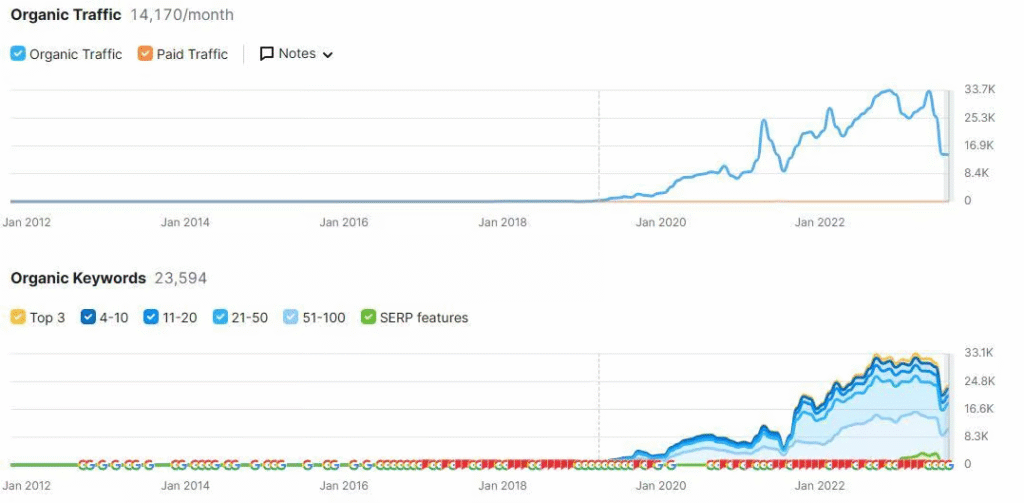
MyRigAdventures currently pulls about 14,000 monthly visitors, with the vast majority coming from Australia. That’s solid. But it also represents massive untapped potential.
The caravan and RV market in the United States dwarfs Australia’s. The UK has a thriving motorhome culture. Canada’s outdoor recreation market continues expanding. Yet Emma’s content primarily targets Australian searchers. Why? Because that’s where she started and what she knows.
Expanding international SEO doesn’t mean abandoning her Australian audience. It means creating additional content or adapting existing content to rank in other English-speaking markets. A post about “best caravan parks in Queensland” could have a companion piece on “top RV destinations in California.”
The global RV market is projected to reach $79.55 billion by 2030. Emma’s capturing a tiny slice of one region. The opportunity for geographic expansion is enormous.
SEO isn’t just about keywords—it’s about understanding search intent and delivering exactly what someone needs when they type a question into Google. Emma already does this well for her Australian audience. Scaling that expertise to other markets is the natural next move.
The Social Media Opportunity Nobody’s Exploiting
MyRigAdventures has a presence on Pinterest (2,700 followers) and YouTube (1,800 subscribers).
But here’s the thing—those numbers should be way higher given the visual nature of travel content and the blog’s existing traffic.
Pinterest is an absolute goldmine for travel bloggers. Unlike Instagram where posts disappear into the algorithm abyss after 48 hours, Pinterest pins have an incredible shelf life. A well-designed pin can drive traffic for months or even years. The platform’s users actively search for inspiration and planning resources, making them perfect prospects for a caravan blog.
Pinterest drives more referral traffic to blogs than Twitter, LinkedIn, and Reddit combined. Yet most bloggers treat it as an afterthought.
YouTube presents an even bigger opportunity. Travel content performs exceptionally well in video format. People want to see the caravans, watch the setup process, tour the campgrounds. Video builds trust faster than text and creates a more personal connection with the audience.
Emma’s already creating content—converting some of it to video format and optimizing for YouTube search could unlock an entirely new revenue stream through ad revenue. Plus, YouTube videos rank in Google search results, creating multiple pathways for discovery.
The Transformation That Proves It’s Possible
Let’s talk about the elephant in the room.
Going from $1,250 to over $5,000 monthly didn’t happen by accident. It happened because Emma made a conscious decision to treat her blog like a business rather than a hobby.
The turning point came when she dove deep into SEO. Not surface-level keyword stuffing or dubious “hacks,” but actual strategic optimization. She updated old content to improve rankings. Created new content targeting high-value keywords. Built backlinks from reputable sources. The unglamorous work that most people skip because it’s not as sexy as posting a sunset photo on Instagram.
She also developed information products based on actual audience needs. The Ultimate Caravan Buyers Guide exists because Emma watched hundreds of people in her Facebook group ask the same questions about choosing a caravan. Rather than answering individually forever, she created a comprehensive resource and monetized it.
This is the pattern successful bloggers follow: identify a recurring problem, create a thorough solution, package it professionally, and charge appropriately for the value provided.
Emma’s journey from law degree to nomadic lifestyle to profitable blogger isn’t a straight line. It’s messy and non-linear, with setbacks and pivots. But that’s exactly why it’s believable and replicable.
Ad 🎯 Ready to put these strategies into action?
Theory is great, but execution is what drives growth. That’s where Max Business School™ comes in.
Inside, you’ll find step-by-step digital marketing courses (SEO, ads, email, social, content, and more) — taught by professionals, designed for beginners and business owners alike.
And the best part? It’s 100% free, online, and flexible.
→ Join Max Business School Today — Free
The Growth Strategy Nobody Mentions
Want to know the real secret to scaling a travel blog?
Consistency beats intensity every single time.
Emma didn’t post 30 articles in January and then disappear for three months. She showed up regularly, published quality content on a schedule, engaged with her community, and refined her approach based on what actually worked. Boring? Maybe. Effective? Absolutely.
Strategic partnerships represent untapped potential for MyRigAdventures. Collaborating with caravan manufacturers, campground networks, and outdoor gear companies could unlock sponsored content opportunities and affiliate relationships. These partnerships provide value to readers while generating revenue—the ideal win-win scenario.
Email marketing deserves more attention than most travel bloggers give it. Building an email list creates a direct line to your audience that you own and control. Social media algorithms change. Google updates rankings. But your email list? That’s yours. Emma could leverage email to promote new content, digital products, and affiliate offers without relying on platform whims.
The average ROI for email marketing is $42 for every $1 spent. It’s not sexy, but the numbers don’t lie.
The Improvement Roadmap
Let’s get tactical about what MyRigAdventures could do next.
International SEO expansion should be priority one. Creating content that targets UK, US, and Canadian searchers could potentially triple traffic. This doesn’t require starting from scratch—adapting existing content with regional variations is often sufficient.
Website performance optimization would improve user experience and search rankings. Faster load times, better mobile responsiveness, and streamlined code all contribute to keeping visitors engaged and signaling quality to search engines.
Developing additional digital products based on community needs represents relatively low-hanging fruit. Emma’s Facebook group probably contains hundreds of product ideas if she pays attention to repeated questions and pain points. Each product doesn’t need to be a massive undertaking—even a simple checklist or template can provide value and generate sales.
Video content creation, particularly for YouTube, could diversify traffic sources and create new revenue opportunities. Travel content performs exceptionally well in video format, and Emma’s existing expertise and footage make this a natural extension.
The Reality Check You Need
Building a profitable travel blog requires more than wanderlust and a camera.
It demands business skills, consistent effort, and patience through the inevitable slow growth phase. Emma’s success came from treating blogging as a business, learning marketing and SEO, and staying committed when progress felt glacial.
The lifestyle looks glamorous from the outside. But behind every beautiful sunset photo is someone optimizing meta descriptions at 11 PM, troubleshooting website issues, and creating content while managing the chaos of daily life.
That said, the potential is real. Emma transformed her income from barely covering expenses to generating $5,000 monthly. The caravan and RV market continues growing as more people prioritize experiences over possessions and remote work enables location independence.
If you have expertise in travel, outdoor recreation, or mobile living, and you’re willing to learn the business side of blogging, this model absolutely works. Not as a get-rich-quick scheme, but as a sustainable income source built on genuine value.
Your First Steps Forward
Ready to start your own travel blog journey?
Begin by choosing your specific niche within travel. “Travel blog” is too broad. “Budget caravan travel for Australian families” or “solo female RV adventures in North America”? Much better. Specificity attracts a more engaged audience and makes marketing easier.
Your first three months should focus on creating a content foundation. Aim for 2-3 comprehensive posts weekly based on your actual experiences and expertise. Don’t worry about perfection—worry about providing genuine value and showing up consistently.
Build community from day one. Create a Facebook group or other community space where your audience can connect. This becomes your focus group, support system, and primary traffic source as you grow.
Learn SEO fundamentals using free resources. Understanding how to research keywords, optimize content, and build authority will determine whether you get traffic or shout into the void.
The choice Emma faced in 2021—commit fully or walk away—is the same choice you’ll face. Most people dabble. A few commit. Those few build businesses that fund their freedom.
Your move, traveler.