
How to Launch a Bilingual Food Blog Earning $13K Monthly
Most food bloggers speak one language fluently: English.
Denise Browning speaks two. And that second language is generating roughly half of her $13,000 monthly revenue.
No, I’m not suggesting you frantically download Duolingo and start conjugating Portuguese verbs (though you could). I’m telling you about a strategy so obvious that most bloggers completely miss it—and the ones who catch on unlock an entirely different tier of income.
Easy and Delish didn’t become a five-figure-monthly blog by accident.
It happened because Denise, a Brazilian-born lawyer turned culinary expert, recognized something crucial: millions of people search for recipes in languages other than English. And when she started serving them, her traffic didn’t just increase—it exploded.
Let me show you how she built this multilingual empire and why the strategy works even if you only speak one language.
Ad 🎯 After studying 400+ business models, here’s what actually works for beginners…
Most “make money online” advice is garbage. Complex affiliate schemes. Dropshipping nightmares. Social media “influencing.”
We found something better: lead-generation funnels for manufacturers. Simple. Profitable. Fast results.
Our Max Incubator Phase 1 students are proof—they’re going from zero to their first $1,000 in 90 days with this exact model.
→ See the business idea that’s working for beginners this year
The Plot Twist That Changed Everything
Denise started her first blog, FromBrazilToYou.org, back in 2012.
It focused exclusively on Brazilian cuisine, published in English, and made decent money through sponsored posts. A respectable side hustle for a culinary instructor and mom of three. But something was missing.
Here’s what nobody tells you about niche blogs…
Going hyper-specific can actually limit your growth. Brazilian cuisine is wonderful, but the search volume is finite. Only so many people search for “traditional feijoada recipe” each month. Denise hit a ceiling.
So in 2016, she made a bold move. She launched Easy and Delish with a completely different strategy: global cuisines in both English and Portuguese. Not just translating existing content—creating native content for both audiences from the ground up.

The results? Traffic surged. Revenue multiplied. The blog transformed from a supplementary income source to a full-fledged business generating over $150,000 annually.
The lesson here isn’t “learn Portuguese immediately.” It’s about understanding that language barriers create untapped markets with less competition and hungry audiences desperately searching for quality content.
The Revenue Model That Scales
Let’s break down how Easy and Delish actually makes $13,000 monthly.
Display advertising through Mediavine forms the foundation. Once you hit their traffic requirements (currently 50,000 sessions per month), Mediavine places optimized ads on your site and shares the revenue. The more traffic you drive, the more you earn. It’s beautifully passive—create content once, and it generates ad revenue indefinitely as people discover it through search.
Mediavine bloggers report average RPMs (revenue per thousand visitors) ranging from $15 to $30 depending on niche and seasonality. Food content typically performs well because advertisers love the engaged, decision-ready audience.
Affiliate marketing provides the second revenue pillar. Denise recommends kitchen equipment, specialty ingredients, and cooking tools through affiliate partnerships. When readers purchase through her links, she earns a commission. The conversion rate is strong because she’s established herself as an authority—people trust her recommendations.
Then comes YouTube. While not the primary income source, the channel with 4,800+ subscribers and nearly a million views generates additional ad revenue and serves as a traffic driver back to the blog. Video content has staying power—a popular recipe video can generate views and revenue for years.
The food and beverage blogging sector continues growing as more people seek recipe inspiration online rather than flipping through cookbooks. Smart bloggers position themselves to capture this expanding market.
The Bilingual Strategy That Unlocked Growth
Now here’s where things get interesting.
When Denise added Portuguese to Easy and Delish, she didn’t just translate her existing English content word-for-word. She created authentic content in both languages, understanding that Portuguese-speaking audiences have different search behaviors, preferences, and cultural contexts.
The traffic data tells the story. According to Ahrefs, the blog’s organic traffic increased significantly after implementing the bilingual approach. Why? Because she went from competing in the overcrowded English food blogging space to also dominating a market with far fewer quality competitors.
Think about the math. The United States has about 330 million people. Brazil has 215 million. Portugal adds another 10 million. Then you have Portuguese-speaking communities across dozens of other countries. That’s a massive potential audience that most English-only food bloggers completely ignore.
The competition factor matters even more. Search for “easy chicken recipes” in English and you’re battling millions of results. Search for the Portuguese equivalent and the playing field looks dramatically different. Less competition means easier rankings. Easier rankings mean more traffic. More traffic means more revenue.
Other successful bloggers have proven this model works. Salt Money increased their visibility using translation plugins. Stazione Luce discovered that adding more languages directly correlated with increased revenue. The pattern is clear—multilingual content creates multiple pathways to growth.
The Social Media Symphony
Denise doesn’t just publish blog posts and call it a day.
She orchestrates a multi-platform presence that funnels traffic, builds community, and reinforces her brand. Instagram boasts nearly 16,000 followers with 1,467 posts—a visual feast that showcases finished dishes and behind-the-scenes cooking moments. The platform serves as a discovery tool where food enthusiasts find her content and migrate to the blog.
Pinterest delivers the real traffic power. With 37,300 followers and 1.5 million monthly views, it functions as a search engine specifically for the kind of visual, aspirational content that food blogs produce. Unlike Instagram where posts disappear into the algorithmic void after a day, Pinterest pins continue driving traffic for months or years.
Pinterest users actively plan and shop, making them ideal prospects for food content. They’re not just mindlessly scrolling—they’re searching for “quick weeknight dinners” or “healthy dessert recipes” with genuine intent to cook something.
YouTube provides both supplementary revenue and content longevity. A well-optimized recipe video ranks in both YouTube and Google search results, creating multiple discovery pathways. The production doesn’t need to be Hollywood-level—authenticity and clear instructions trump perfect lighting.
The strategy here is platform-appropriate content that all points back to the blog where the real monetization happens. Each platform serves a specific purpose in the ecosystem.
The Website Design That Converts
You know what’s criminally underrated in blogging?
Actually making your website fast and pleasant to use.
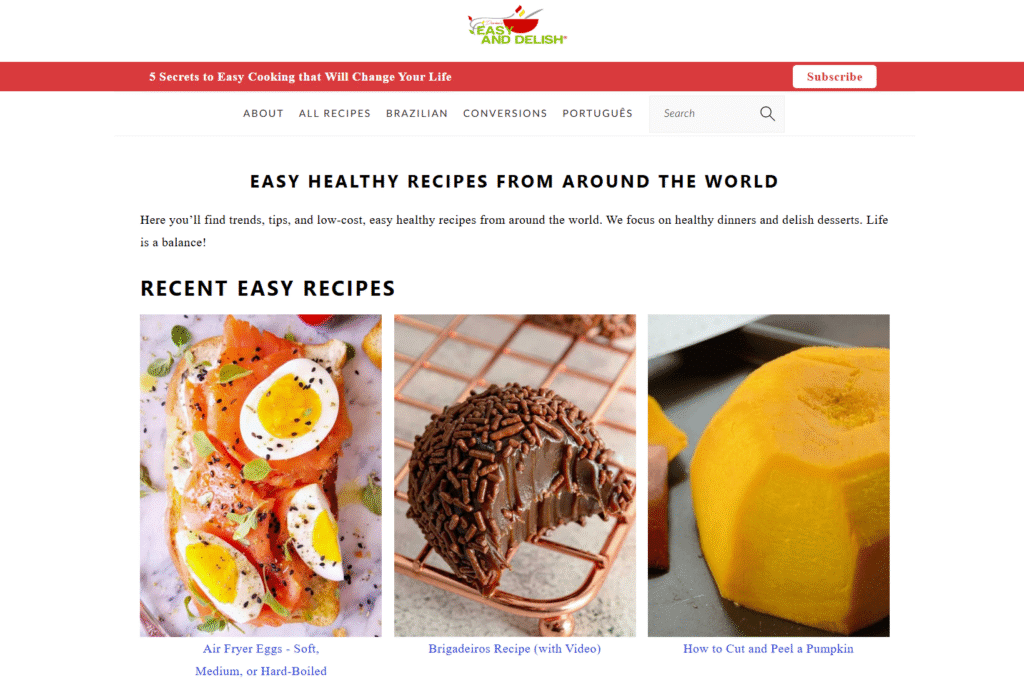
Easy and Delish sports a clean, functional design with strategic calls-to-action that guide visitors without overwhelming them. The site scored an ‘A’ in GTmetrix speed tests, which matters more than most bloggers realize. Google explicitly uses page speed as a ranking factor, and users abandon slow sites within seconds.
The design employs colored CTAs that stand out without feeling aggressive. When Denise wants you to sign up for her newsletter or check out a recipe ebook, you notice—but it feels natural rather than pushy. This balance is harder to achieve than it looks.
Navigation is intuitive with clear categories, a functional search feature, and related recipe suggestions. The goal is keeping visitors engaged and clicking through to multiple recipes per visit. More page views mean more ad impressions and more opportunities for affiliate conversions.
One particularly smart feature is the conversions page—a dedicated space for standard cooking measurements and equivalents. It solves a common pain point (quickly converting cups to grams or Celsius to Fahrenheit) while keeping users on-site longer. Small details like this separate good blogs from great ones.

Website speed impacts everything from search rankings to user satisfaction to conversion rates. Every second delay can cost you 7% of conversions. Easy and Delish clearly understands this.
The Journey From Law to Culinary Success
Denise’s path to blogging success wasn’t linear or predictable.
She started as a Brazilian-born lawyer who moved to the United States in 2002. After attending Le Cordon Bleu and working as a culinary instructor, she launched her first blog while transitioning from full-time motherhood. That initial blog, FromBrazilToYou.org, relied heavily on sponsored posts—a decent model but limited in scale.
The creation of Easy and Delish in 2016 represented a strategic evolution. Rather than niching down further, she expanded. Rather than sticking with English only, she went bilingual. Rather than accepting moderate income, she optimized for growth.
Eleven years of blogging taught her what works and what doesn’t. The early struggles, the slow growth periods, the algorithm changes that tanked traffic overnight—she experienced all of it and kept adapting.
This resilience matters. Most bloggers quit within the first year when growth feels painfully slow. Denise pushed through multiple years before reaching the income level that made blogging a full-time venture. Her success isn’t luck—it’s persistence plus strategy.
The Untapped Opportunities Still Waiting
Even at $13,000 monthly, Easy and Delish leaves money on the table.
The newsletter strategy could be more aggressive. Currently, the blog offers standard newsletter subscriptions. But what if subscribers received a free ebook featuring the 50 most popular recipes, beautifully formatted for offline use? The opt-in rate would likely spike, building the email list faster and creating more opportunities for product launches and affiliate promotions.
Recipe subscription boxes represent an entirely unexplored revenue stream. Imagine subscribers receiving curated ingredients and exclusive recipes monthly. HelloFresh proves the model works—their Q3 2024 financial reports included a €150 million share buy-back program, demonstrating the profitability of subscription-based food businesses.
E-commerce opportunities exist in transforming popular recipes into premium downloadable products. Beautifully designed recipe cards, themed meal plans, or cooking guides could provide high-margin revenue with minimal ongoing effort. Digital products scale infinitely without inventory or shipping concerns.
Sponsored content from food brands likely represents untapped potential. With established traffic and audience trust, Easy and Delish could command premium rates from brands wanting to reach an engaged, recipe-focused audience.
Ad 🎯 Ready to put these strategies into action?
Theory is great, but execution is what drives growth. That’s where Max Business School™ comes in.
Inside, you’ll find step-by-step digital marketing courses (SEO, ads, email, social, content, and more) — taught by professionals, designed for beginners and business owners alike.
And the best part? It’s 100% free, online, and flexible.
→ Join Max Business School Today — Free
What You Actually Need to Start
Let’s get brutally practical about building a bilingual food blog.
You don’t need to be fluent in multiple languages on day one. Start with your native language and expand once you’ve built traction. The initial focus should be creating quality content, understanding SEO, and building an audience in one language. Language expansion comes later.
If you do speak multiple languages, you’ve got a built-in competitive advantage. Start bilingual from day one, creating native content for both audiences. Don’t just run English content through Google Translate—that produces awkward, unnatural results that tank credibility.
The technical requirements are manageable. WordPress offers multilingual plugins like WPML or Polylang that handle language switching and separate SEO for each language. Hosting costs start around $5-15 monthly. A decent camera—even a modern smartphone—works fine for food photography initially.
Your most valuable investment is time. Creating quality recipes, photographing them, writing optimized posts, and promoting content requires consistent effort.
The skill set includes basic cooking knowledge (obviously), food photography, SEO understanding, and content marketing. None of these require formal training—countless free resources exist for learning each skill.
The Learning Moments That Matter Most
Here’s what Denise’s success teaches us…
Quality content still wins. Recipes with detailed nutrition information, clear instructions, and beautiful photography perform better than hastily written posts. The extra effort shows in search rankings and reader engagement.
Smart SEO isn’t optional. Understanding keyword research, optimizing titles and meta descriptions, and building topical authority determines whether you get traffic or shout into the void. Ahrefs and Yoast offer comprehensive guides for bloggers.
Platform diversification reduces risk. Relying solely on Google traffic is dangerous—algorithm updates can devastate rankings overnight. Building presence on Pinterest, YouTube, Instagram, and email creates multiple traffic sources and revenue streams.
The multilingual approach creates exponential opportunities. Adding one language doesn’t just double your potential audience—it opens markets with different competitive landscapes, search behaviors, and monetization potential.
Patience and persistence beat talent and luck. Denise spent 11 years building her blogging expertise. Most overnight successes are actually years in the making, hidden behind the eventual breakthrough.
The Strategic Roadmap Forward
If you’re serious about building a profitable food blog, here’s your action plan.
Month one through three: Create your content foundation. Choose your specific niche (low-carb Brazilian cuisine, budget-friendly global recipes, etc.). Publish 2-3 comprehensive recipe posts weekly. Focus on solving actual problems people search for, not just sharing recipes you like.
Month four through six: Implement basic monetization. Apply for ad networks once you hit traffic requirements. Join relevant affiliate programs. Start building an email list from day one. Create your first digital product—even a simple PDF recipe collection works.
Month seven through twelve: Optimize and scale. Double down on content that performs well. Improve older posts with better photography and SEO. Expand to Pinterest and YouTube if you haven’t already. Consider adding a second language if applicable.
Year two: Diversify and systematize. Launch additional digital products. Seek sponsored content opportunities. Build systems for efficient content creation. Consider outsourcing tasks that don’t require your specific expertise.
The Uncomfortable Truth
Building a $13,000 monthly food blog requires more than loving to cook.
It demands learning business skills, mastering marketing, optimizing for search engines, and showing up consistently when growth feels glacial. Denise succeeded because she treated blogging as a business, not a hobby.
The lifestyle looks glamorous from the outside—cooking beautiful meals, taking pretty photos, working from home. Behind every gorgeous food photo is someone editing images at midnight, troubleshooting website issues, and creating content while managing family responsibilities.
But the potential is real and proven. Denise transformed her passion into a sustainable six-figure annual income. The global food blogging market continues expanding as more people seek cooking inspiration online.
If you have cooking skills, cultural perspective (especially multilingual capability), and willingness to learn the business side, this model absolutely works. Not as a get-rich-quick scheme, but as a legitimate business built on providing genuine value.
Your First Move
The gap between reading about successful bloggers and becoming one is action.
Start by choosing your specific niche within food blogging. “Food blog” is too broad. “Budget-friendly Mediterranean recipes for families” or “authentic Brazilian desserts with health-conscious twists”? Much better. Specificity attracts engaged audiences and makes SEO easier.
Create your first ten recipes based on what you already cook well. Don’t wait for perfection—publish good content and improve as you go. Every successful blogger started with mediocre first posts. The key is starting.
Learn SEO fundamentals using free resources. Understanding keyword research and optimization determines whether anyone actually finds your content. Traffic is oxygen for online businesses.
If you speak multiple languages, use that advantage from day one. Create native content for both audiences. If you only speak one language, focus on building in that language first. Language expansion can come later.
The choice Denise made in 2016—to go bigger, multilingual, and strategic—is the same choice facing you. Most people stick with comfortable, small niches. A few think bigger and build businesses that fund their freedom.
Your move, chef.