
How One Blogger Earns $250K Monthly Teaching Blogging (No BS Guide)

Here’s the thing about blogging in 2025:
Most people think it’s dead.
They’re wrong. Dead wrong.
While everyone’s chasing the next shiny TikTok trend, a guy named Adam Enfroy is quietly pulling in $250,000 every single month by teaching people how to blog.
Not $250K a year. A month.
And before you roll your eyes and mutter “guru,” let me stop you right there. This isn’t some course-selling charlatan promising laptop lifestyle nonsense. This is a legitimate, transparent, traffic-generating machine that makes money in multiple streams while actually helping people build real businesses.
Want to know how he does it?
Buckle up, because we’re about to dissect a blogging empire.
Ad 🎯 After studying 400+ business models, here’s what actually works for beginners…
Most “make money online” advice is garbage. Complex affiliate schemes. Dropshipping nightmares. Social media “influencing.”
We found something better: lead-generation funnels for manufacturers. Simple. Profitable. Fast results.
Our Max Incubator Phase 1 students are proof—they’re going from zero to their first $1,000 in 90 days with this exact model.
→ See the business idea that’s working for beginners this year
The Blogging Business That Broke the Mold
Adam Enfroy’s blog isn’t your grandmother’s online diary (sorry, Grandma). It’s a full-fledged business that treats content like a product and readers like customers.
Here’s what makes this fascinating:
The blog operates in the digital marketing and blogging education niche, reaching over 500,000 website viewers. But the magic isn’t just in the traffic—it’s in how that traffic converts into cold, hard cash.
Most bloggers slap up some ads and hope for pennies. Adam built a diversified income machine that would make a financial advisor proud.
The Money: Three Rivers Flowing Into One Bank Account
Let’s talk numbers, because that’s why you’re here.
Revenue Stream #1: Affiliate Marketing ($150K+ Monthly)
Here’s where things get spicy.
The blog promotes 200 different brands and companies through affiliate marketing, with revenue increasing 84% year-over-year. Think about that for a second. While most bloggers are fighting over scraps from Amazon Associates, Adam’s built partnerships with software companies, hosting providers, and marketing tools that pay actual money.
The secret sauce? Strategic placement.
Every course, every tutorial, every piece of content is saturated with helpful (keyword: helpful) affiliate links to tools that bloggers actually need. Not random kitchen gadgets. Not drop-shipped garbage. Real software that solves real problems.
Companies like Ahrefs and Mediavine pay recurring commissions because their customers stick around. That’s the difference between beer money and “quit your job” money.
Revenue Stream #2: Display Ads ($13K Monthly)
Now, I know what you’re thinking: “Thirteen thousand dollars sounds adorable compared to $250K.”
Sure. But here’s the beautiful part:
The blog partners with Mediavine to generate a steady $13,000 monthly from ad revenue, and this income requires exactly zero active effort once the traffic is flowing. It’s the definition of passive income—the kind that pays your mortgage while you sleep.
High traffic equals high ad revenue. Simple math that compounds beautifully.
Revenue Stream #3: Services, Courses & Digital Products
This is where the real sophistication shows up.
Additional revenue comes from course programs, SEO consulting, YouTube content, and digital product sales. Each of these income streams serves a different segment of the audience:
- Beginners buy courses
- Intermediate bloggers need SEO consulting
- Advanced users purchase specialized digital products
- Everyone benefits from free YouTube content (which drives more traffic back to the blog)
It’s a self-perpetuating ecosystem. Like a really profitable hamster wheel, except nobody’s tired and everyone’s making money.
Why This Blog Dominates While Others Disappear
Success leaves clues. Sometimes those clues are wearing neon signs and doing backflips.
Laser-Focused Niche Content
Generic doesn’t win anymore. “Make money online” is too broad. “Blogging for entrepreneurs” is too vague.
The blog creates well-organized, practical, niche-specific information with relevant keywords on every page. Each piece of content targets specific search queries that people are actively looking for. Not “blogging tips.” More like “best CRM for affiliate marketing in 2025.”
See the difference? One is a college essay topic. The other is a buyer actively searching for a solution.
Email Marketing That Actually Works
Here’s a stat that’ll make most marketers weep:
The blog has built an email list of 46,856 subscribers through strategic email marketing. That’s not just a number—it’s 46,856 people who said “yes, I want to hear from you.”

The strategy? Provide insane value upfront.
Free masterclasses. Blogging templates. Actual helpful resources instead of “7 blogging tips” garbage that could’ve been written by a hungover intern in 2009.
When you give people what they need before asking for anything in return, they remember. And they buy.
Traffic That Would Make Google Jealous
Let’s geek out on traffic for a moment.
The blog experiences steady high traffic volumes, with prominent posts ranking in the top 8 of search engine results pages. Organic search traffic—the kind you don’t pay for—drives the majority of visitors.
How? Medium-difficulty keywords with high search volume.
Not the impossible-to-rank keywords that big corporations dominate. Not the zero-traffic long-tail phrases that nobody searches for. The Goldilocks zone of keywords that are just right—competitive enough to matter, winnable enough to rank for.
Tools like Ahrefs make finding these keywords possible. The blog’s authority score reflects years of consistent, quality content that Google trusts.
Social Media Presence That Converts
Social media isn’t just for selfies and breakfast photos (though Adam’s breakfast game is probably strong).
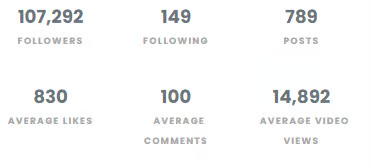
The blog maintains an impressive social media following with straightforward content and eye-catching profiles. Platforms like Instagram and Pinterest drive traffic back to the blog, where the real monetization happens.
According to data from Not Just Analytics, the Instagram account maintains steady growth despite occasional unfollows. That’s the reality of social media—you win some, you lose some, but the trend line should point up and to the right.
KEY LEARNING MOMENT: The Traffic-to-Revenue Multiplication Formula
Here’s what most bloggers miss:
Traffic alone is worthless. Revenue per visitor is what matters.
Adam’s blog doesn’t just attract visitors—it monetizes them through multiple touchpoints:
- First visit: Display ads generate passive income
- Content consumption: Affiliate links offer relevant solutions
- Email signup: Relationship building begins
- Course purchase: High-ticket conversion
- Consulting inquiry: Premium service offering
Each visitor has five opportunities to generate revenue. Most blogs have one (ads) or maybe two (ads + one affiliate link).
That’s the difference between $3,000/month and $250,000/month.
Where There’s Room to Grow (Yes, Even at $250K/Month)
No business is perfect. Not even quarter-million-dollar-a-month blogging empires.
Email Marketing Could Be Even Better
While the blog offers a free masterclass, there’s opportunity to provide more services and interaction through email campaigns. Think about personal finance blogs like Believe in a Budget that consistently deliver valuable resources—budgeting spreadsheets, side hustle ideas, actionable money-making information.
The key is grabbing attention and maintaining engagement. More free resources means more list growth. More list growth means more revenue opportunities.
Video Content Expansion
YouTube is the second-largest search engine on the planet. The blog already produces YouTube content, but there’s room to expand. Video tutorials, case studies, and behind-the-scenes content can capture audiences that prefer visual learning.
Plus, YouTube ad revenue adds another income stream. Because why have three income streams when you could have four?
Ad 🎯 Ready to put these strategies into action?
Theory is great, but execution is what drives growth. That’s where Max Business School™ comes in.
Inside, you’ll find step-by-step digital marketing courses (SEO, ads, email, social, content, and more) — taught by professionals, designed for beginners and business owners alike.
And the best part? It’s 100% free, online, and flexible.
→ Join Max Business School Today — Free
How to Build Your Own $250K/Month Blogging Business
Let’s get practical. You’re not reading this for entertainment—you want to know how to replicate this success.
Here’s the roadmap.
Phase 1: Foundation (Days 0-1)
Choose your niche with ruthless honesty.
Ask yourself three questions:
- Can I commit to this for 3-5 years without losing my mind?
- Do I genuinely care about helping this audience?
- Is there actual money being spent in this niche?
If you answered “no” to any of these, pick a different niche. Passion fades. Profit motivates. You need both.
Conduct serious market research.
Use Ahrefs to analyze competitors. Look at their traffic, their keywords, their content gaps. Find the white space—the topics they’re not covering well.
Set up your digital home.
Register a domain name (memorable, short, relevant). Choose hosting that won’t crash when you get traffic. Get a clean, professional WordPress theme optimized for speed and conversions.
Looking for hosting? Check out providers like DreamHost or Bluehost that offer blogger-friendly features.
Phase 2: Content & Monetization (Days 2-30)
Create your social media presence.
Set up Instagram, Pinterest, Twitter, and LinkedIn. Yes, all of them. Different audiences live on different platforms. Be where your readers are.
Join affiliate programs immediately.
Don’t wait until you have traffic. Join programs for tools you’ll actually recommend. ShareASale, CJ Affiliate, and individual company programs are good starting points.
For marketing-related affiliate programs, explore resources about the best CRM for affiliate marketing to understand what converts.
Set up your monetization infrastructure.
Apply to Mediavine (requires 50K sessions) or AdThrive (requires 100K pageviews). Start with Google AdSense if you’re not there yet.
Create a content calendar.
Plan 90 days of content. Mix keyword-targeted SEO posts with helpful tutorials and case studies. Consistency beats perfection.
Phase 3: Growth & Optimization (Days 31 to ∞)
Track everything religiously.
Use Google Analytics, Ahrefs, and Search Console to understand what’s working. Double down on successful content. Abandon what isn’t performing.
Build your email list aggressively.
Create lead magnets—checklists, templates, mini-courses—that solve specific problems. Make your opt-in offer so valuable that not signing up feels stupid.
Engage with your niche community.
Join relevant Facebook groups, Reddit communities, and industry forums. Provide genuine value without spamming links. Build relationships with industry experts and influencers who can amplify your reach.
Stay current with industry trends.
Blogging strategies evolve. SEO algorithms change. Social platforms rise and fall. Read industry blogs, attend virtual conferences, and network with other successful bloggers to stay ahead of the curve.
The Brutal Truth About Building a $250K/Month Blog
Let’s be real for a moment.
Adam Enfroy didn’t build this empire in six months. The blog has been educating viewers for 4.5 years. That’s consistent effort, strategic planning, and probably some late nights staring at analytics wondering if any of this would work.
Most people quit after three months. They publish ten posts, get 47 visitors, and declare blogging dead.
Those people are right—for them, blogging is dead. Because they treated it like a hobby instead of a business.
But if you approach blogging with the same seriousness you’d bring to opening a physical store—with business plans, market research, monetization strategies, and unwavering commitment—the results can be life-changing.
Your Next Move
You’ve got the blueprint. You’ve seen the numbers. You understand the strategies.
Now comes the hard part: actually doing it.
The blog demonstrates that treating your blog like a business rather than a diary enables monetization of services, products, and knowledge. Social media marketing, YouTube content, authentic voice, and strategic email marketing all contribute to building sustainable income.
The question isn’t whether blogging works. Clearly it does—to the tune of $250,000 per month.
The question is whether you’re willing to commit to the process long enough to see results.
Because here’s what nobody tells you about building online businesses:
The first year is planting seeds. The second year is watering them. The third year is when you finally start harvesting. And the fourth year? That’s when people start calling you an “overnight success.”
Adam Enfroy’s story isn’t about getting rich quick. It’s about getting rich consistently through proven strategies executed relentlessly over time.
So what’s it going to be?
Are you going to bookmark this post, tell yourself “someday,” and go back to scrolling?
Or are you going to choose your niche today, register that domain, and start building your own $250K/month blogging empire?
The strategies are here. The roadmap is clear. The proof is undeniable.
The only thing missing is you actually starting.