
How Two Guys Built a $50K/Month Link Building Agency (HARO Strategy)
Picture this:
A fish and chips shop owner and his business partner turn free journalist queries into a $50,000-per-month agency.
No VC funding. No massive team. No fancy office in Silicon Valley.
Just two guys, a laptop, and a platform called HARO that most business owners have never even heard of.
Sounds too simple, right?
That’s what makes this story so damn interesting. While most digital marketing agencies are fighting bloody battles over Google Ads management and social media posting, Chris Panteli and Nick Biggs found a goldmine hiding in plain sight.
They’re getting their clients featured in Forbes, HuffPost, and The New York Times.
And they’re charging premium prices to do it.
Want to know their secret? Spoiler alert: it’s not actually a secret. HARO (Help A Reporter Out) is a free platform that connects journalists with expert sources. Chris and Nick just figured out how to turn it into a money-printing machine.
Let me show you exactly how they did it.
Ad 🎯 After studying 400+ business models, here’s what actually works for beginners…
Most “make money online” advice is garbage. Complex affiliate schemes. Dropshipping nightmares. Social media “influencing.”
We found something better: lead-generation funnels for manufacturers. Simple. Profitable. Fast results.
Our Max Incubator Phase 1 students are proof—they’re going from zero to their first $1,000 in 90 days with this exact model.
→ See the business idea that’s working for beginners this year
The Link Building Business Everyone Overlooks
Here’s what most people don’t understand about SEO:
Backlinks are the currency of the internet.
Google looks at backlinks like social proof. When The New York Times links to your website, Google essentially says, “Okay, these people must know their stuff.” Your rankings improve. Your traffic increases. Your business grows.
But getting those high-authority backlinks? That’s where things get complicated.
Most businesses try one of three approaches:
- Guest posting (time-consuming, often ignored)
- Buying links (expensive, potentially penalized by Google)
- Hoping someone discovers them (optimistic, rarely works)
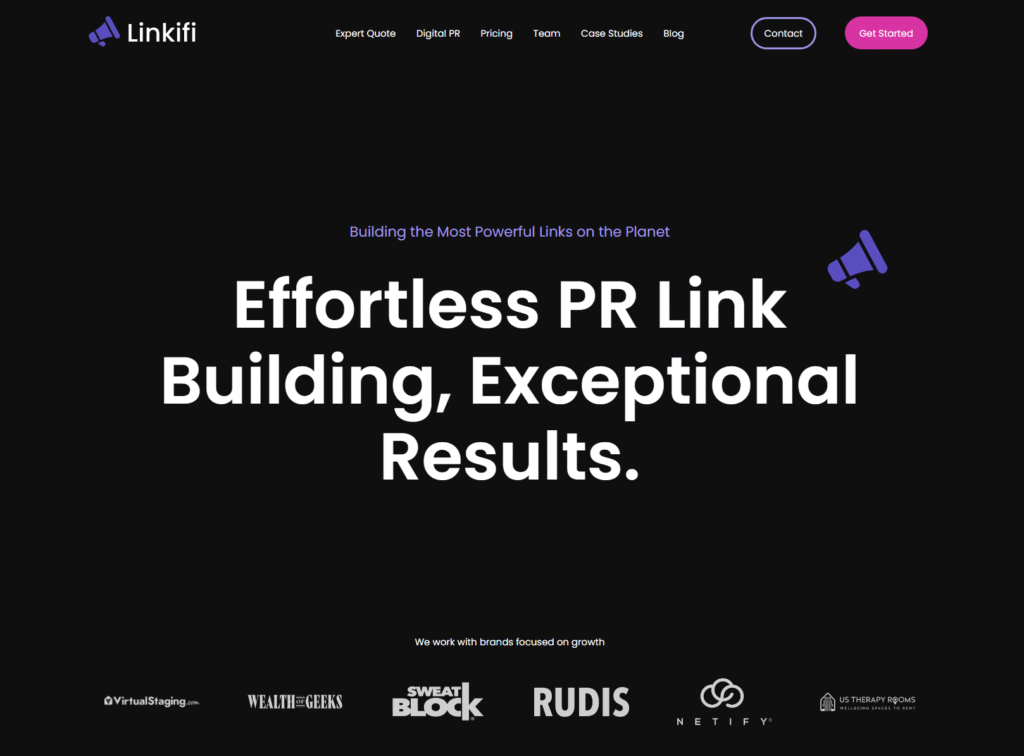
Linkifi operates as an agency in the SEO niche, offering link-building services to websites looking for authentic backlinks from high-authority websites by pitching relevant reporters and journalists on HARO.
They’ve essentially productized the HARO process. Instead of businesses fumbling through journalist queries themselves, Linkifi handles everything—from finding relevant opportunities to crafting pitches to securing the backlinks.
And journalists love it because they get expert quotes. Clients love it because they get powerful backlinks. Google loves it because the links are editorial and natural.
It’s the rare business model where everybody wins.
The Money: Three Revenue Streams Feeding One Agency
Let’s talk about how $50,000 per month actually breaks down.
Because here’s the thing: successful agencies don’t rely on one income source. They build multiple revenue streams that work together like a well-oiled machine.
Revenue Stream #1: Link Building Packages (The Core Offer)
This is where the bulk of revenue comes from.
The agency offers pricing plans for link-building services based on the number of links delivered, typically between 5 to 20 links. Clients select a package, complete a survey about their niche and expertise, and then Linkifi goes to work.
The process is straightforward:
The agency searches HARO daily for queries matching the client’s expertise. They craft personalized pitches. They follow up with journalists. They secure the mentions and backlinks.
What makes this brilliant? It’s a recurring service. Clients don’t want five backlinks and then disappear. They want continuous link building, month after month, as part of their ongoing SEO strategy.
That means predictable monthly recurring revenue—the holy grail of online businesses.
Revenue Stream #2: The Haro’fi Content Optimization Service ($2,000 Per Client)
Now this is where things get sophisticated.
The Haro’fi service includes website content creation and optimization, sourcing expert authorship, publishing newly created content, and pitching journalists on HARO for $2,000.
Think about this strategically: many businesses don’t have the content foundation needed to pitch journalists effectively. Their websites lack credibility. Their “about” pages read like they were written by a robot having an existential crisis.
Linkifi recognized this gap and built a service around it.
For two grand, clients get a completely overhauled web presence that meets HARO’s standards. New profile page. New about page. Expert-level content. Everything positioned to make journalists actually want to quote them.
It’s the perfect upsell. Clients who need link building usually also need better content. Bundle them together, and suddenly you’re not just an agency—you’re a comprehensive SEO solution.
Revenue Stream #3: The HARO Masterclass ($180 One-Time Fee)
Here’s where the business model gets really clever.
The HARO Masterclass is available for a one-time fee of $180 and contains an introduction to HARO, how the platform works, how to pitch journalists, auto-loaded pitching templates, and how to execute organized pitching as an agency.
Wait, you might be thinking. Why would they teach people to do what they charge for?
Because most people won’t actually do it themselves. They’ll take the course, realize how time-consuming HARO pitching is, and then hire Linkifi to handle it.
It’s lead generation disguised as education.
Plus, the masterclass establishes authority. When you’re teaching others how to master HARO, you’re positioning yourself as the definitive expert. That makes selling the done-for-you service infinitely easier.
And for those rare overachievers who actually implement everything themselves? They might eventually start their own agencies and become competitors—but more likely, they’ll become affiliates or partners who refer business back to Linkifi.
Why Linkifi Dominates While Other Agencies Struggle
Success in the agency world isn’t random. There are specific strategies that separate the $50K/month winners from the struggling solopreneurs.
Let’s break down what Linkifi does right.
Diversified Service Offerings That Actually Make Sense
By offering a range of services, the agency can meet diverse client needs—some want link-building services, while others need content optimization or HARO training.
But here’s the key: these aren’t random services thrown together. They all support the same core mission—helping businesses build authority through high-quality backlinks.
When a client comes in for link building, they might discover they need content optimization first. When someone takes the masterclass, they might realize they’d rather outsource the work. Each service naturally leads to the next.
That’s strategic product design, not just “throwing stuff at the wall.”
Influencer Marketing That Compounds Over Time
Here’s how Linkifi got their initial traction:
By offering link-building services to well-established business websites, the agency built credibility and positive word-of-mouth referrals, with testimonials from influencers featured on the website.

They started by working with big names—for free.
I know, I know. “Work for free” makes most business consultants break out in hives. But this was strategic free work. They targeted influencers with large audiences, delivered exceptional results, and then leveraged those relationships into testimonials, referrals, and social proof.
According to research from HubSpot, 88% of consumers trust user reviews as much as personal recommendations. Linkifi weaponized this insight by prominently featuring client testimonials throughout their website.
When your testimonials come from recognized industry names, you’re not just another agency. You’re the agency that works with the people your ideal clients already follow and respect.
Website Design That Actually Converts
Let’s talk about something most agencies completely botch: their own websites.
The website features a consistent design aesthetic with pleasant visual appearance, is intuitive with logical flow and clear labeling, and includes an explainer video at the top of the homepage.
The explainer video is particularly smart. Instead of making visitors read through walls of text to understand what Linkifi does, they can watch a quick video that breaks everything down. This reduces friction and increases the likelihood that visitors will actually take action.
The site also uses clear calls-to-action throughout. No confusing navigation. No vague “Contact Us” buttons. Every CTA tells visitors exactly what happens next.
Strategic Use of Bonuses and Lead Magnets
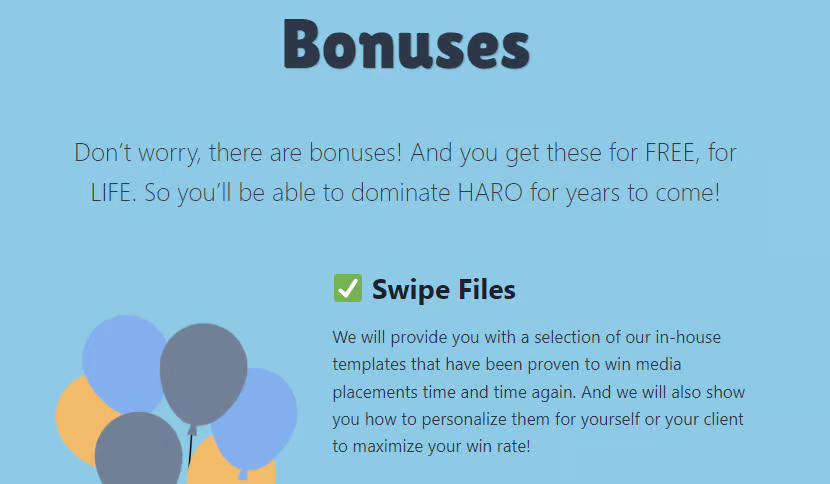
The agency attracts email signups through exclusive offers displayed in a pop-up less than a minute after visitors arrive, and the masterclass includes bonuses like free swipe files, pitching templates, a database of HARO websites, and a discount on link-building services.
This is Psychology 101 in action.
By offering immediate value (the pop-up lead magnet) and stacking bonuses with the masterclass, Linkifi creates a perception of overwhelming value. The masterclass isn’t just $180 worth of training—it’s training PLUS templates PLUS a database PLUS a service discount.
Suddenly, $180 feels like a steal.
This strategy also encourages repeat customers. Someone who buys the masterclass gets a discount on the link-building service, making the transition from DIYer to paying client feel like a natural progression rather than an upsell.
KEY LEARNING MOMENT: The Service Productization Formula
Here’s what separates successful service businesses from struggling freelancers:
Productization.
Instead of offering nebulous “SEO services” or “digital marketing consulting,” Linkifi created clearly defined packages with specific deliverables and transparent pricing.
This matters for three reasons:
- Easier to sell: Clients know exactly what they’re getting before they buy
- Simpler to deliver: Your team can follow a repeatable process instead of reinventing the wheel for each client
- More scalable: You can hire specialists to handle specific parts of the productized service without training them on your entire business
Most service providers think they need to customize everything for each client. But the most profitable agencies? They find the 80/20—the core service that works for most clients—productize it, and then offer customization as an add-on.
That’s how you scale from $5K/month to $50K/month without working twice as hard.
Where Linkifi Could Grow Even Bigger
Even at $50K monthly, there’s massive room for improvement.
Let’s talk about the opportunities they’re leaving on the table.
The SEO Blind Spot (Yes, Really)
Here’s the irony that’ll make you laugh:
Even though this agency helps other websites gain backlinks and build better authority, its own website receives less than 100 monthly visits and its top pages drive very little traffic.

A link-building agency with weak SEO. It’s like a personal trainer who’s out of shape, or a financial advisor who’s broke.
The good news? This means there’s enormous growth potential through organic search traffic. With proper keyword research, on-page optimization, and yes—their own backlink building strategy—Linkifi could easily 10x their organic traffic.
More traffic means more leads. More leads mean more clients. More clients mean more revenue.
Social Media: The Neglected Channel
The agency has social media profiles on LinkedIn, Twitter, Facebook, and a YouTube channel, but activity across these platforms is sporadic with minimal engagement and no recent posts.
This is a massive missed opportunity.
LinkedIn alone could be a client acquisition goldmine. Business owners and marketing managers are actively hanging out there, looking for solutions to their SEO problems. A consistent content strategy—case studies, quick tips, behind-the-scenes looks at successful HARO pitches—could generate a steady stream of qualified leads.
YouTube is even more interesting. Video content about link building strategies and HARO tactics could rank for valuable search terms, build trust with potential clients, and establish Linkifi as the go-to authority in their niche.
The platforms are there. The audience is there. The content opportunities are endless. It just needs consistent execution.
Content Marketing: The Compounding Asset
Right now, Linkifi is leaving money on the table by not having a robust content marketing strategy.
Imagine a blog publishing weekly articles about topics like:
- “How to Get Featured in Forbes Without Paying a Cent”
- “The Ultimate Guide to HARO Link Building”
- “Case Study: How We Got a Client 15 High-Authority Backlinks in 30 Days”
Each piece of content becomes an asset that works 24/7 to attract potential clients. Over time, these articles rank in search engines, get shared on social media, and establish Linkifi as a thought leader.
Content marketing also creates opportunities for email list growth, which leads to more masterclass sales, which leads to more service clients. It’s a flywheel that compounds over time.
Paid Advertising: The Accelerant
Paid advertising platforms like Google AdWords, YouTube Ads, and Facebook Ads could help target the audience and promote services, with the agency’s freebies and bonuses serving as great lead magnets for ads.
The lead magnet strategy is already in place. The service is proven. The pricing is established. All the hard work is done.
Now it’s just a matter of putting ad dollars behind it to scale faster. Instead of waiting for organic traffic to build, paid ads could generate immediate leads and clients.
For an agency already doing $50K monthly, investing $5K-$10K in ads could potentially double revenue. That’s the kind of ROI that turns good businesses into great ones.
Ad 🎯 Ready to put these strategies into action?
Theory is great, but execution is what drives growth. That’s where Max Business School™ comes in.
Inside, you’ll find step-by-step digital marketing courses (SEO, ads, email, social, content, and more) — taught by professionals, designed for beginners and business owners alike.
And the best part? It’s 100% free, online, and flexible.
→ Join Max Business School Today — Free
The Origin Story You Need to Hear
Let me tell you how this whole thing started, because it’s the kind of story that’ll make you rethink your own business ideas.
Chris Panteli obtained a degree in Economics and took over his family’s fish and chips business, running it for over 13 years while starting a personal finance blog to understand SEO, using HARO to gain backlinks for his own site.
Think about that for a second.
He wasn’t a digital marketing hotshot fresh out of Silicon Valley. He was running a fish and chips shop in the UK while teaching himself SEO on the side.
Then the pandemic hit. When the pandemic slowed down Chris’s fish and chips business, Nick Biggs offered him work pitching answers on HARO on behalf of Nick’s clients.
Instead of panicking, Chris saw an opportunity.
Seeing the service’s potential, Chris and Nick teamed up to provide link-building services to top influencers for free, keeping them as loyal returning customers once they proved the value.
They started with free work for influencers. Built a reputation. Collected testimonials. Then turned that credibility into a full-fledged agency.
No massive investment. No fancy business plan. Just two guys who understood a problem (businesses need quality backlinks), found a solution (HARO), and built a system to deliver it consistently.
If that doesn’t inspire you to start your own service business, I don’t know what will.
Your Blueprint for Building a $50K/Month Link Building Agency
Alright, enough analysis. Let’s get tactical.
Here’s exactly how you can build your own link building agency from scratch.
Phase 1: Foundation and Positioning (Day 1)
Get brutally honest about your expertise.
You don’t need to be an SEO wizard, but you need to understand the fundamentals. If you’re shaky on concepts like domain authority, anchor text, or nofollow vs. dofollow links, invest time learning before you start selling services.
Consider taking courses or working with a mentor. The investment now prevents embarrassing mistakes later.
Identify your ideal client.
Don’t target “businesses that need SEO.” That’s too broad. Get specific: Are you targeting SaaS companies? E-commerce brands? Local service businesses? B2B agencies?
Use tools like Ahrefs to analyze search volume and competition in your chosen niche. Look at what keywords your potential clients are searching for. Study your competitors to understand how they’re attracting clients.
Create your business plan.
Write out your mission statement, financial projections, and marketing strategy. Yes, this sounds boring. Do it anyway. A solid plan keeps you focused when things get tough (and they will get tough).
Choose your business name and secure your digital real estate.
Pick something memorable and relevant. Make sure the domain is available. Check social media handles. You want consistency across all platforms.
For hosting, go with reliable providers like DreamHost or Bluehost that offer business-friendly features and solid uptime.
Build your website.
This doesn’t need to be fancy, but it needs to be professional. Use WordPress with a clean theme. Focus on clearly communicating what you do, who you serve, and why clients should choose you.
Looking for inspiration? Study Linkifi‘s website structure. Notice how they use explainer videos, testimonials, and clear CTAs.
Establish your social media presence.
Set up LinkedIn, Twitter, and Facebook accounts. LinkedIn should be your priority—that’s where your B2B clients are actively looking for solutions.
Consider using tools like Agorapulse to manage multiple social platforms efficiently.
Phase 2: Service Development and Pricing (Day 2)
Define your link-building services.
Will you focus exclusively on HARO? Or will you also offer guest posting, broken link building, or resource page outreach?
Start with one primary service (HARO is ideal for beginners because it’s free and effective), then expand once you’ve mastered it.
Create your pricing structure.
Look at what competitors charge. Consider whether you’ll price by the number of links delivered, by monthly retainer, or by project.
Linkifi’s model—packages based on link quantity—is brilliant because it sets clear expectations and makes the service easy to understand.
Develop your unique value proposition.
What makes you different from the dozens of other link-building agencies? Maybe you specialize in a specific industry. Maybe you offer faster turnaround times. Maybe you include content creation as part of your service.
Study your competitors using SEMrush or Ahrefs. Identify gaps in their offerings. That’s where your opportunity lives.
Conduct keyword research.
Use tools like Frase to identify relevant keywords for your content strategy. Understanding what your potential clients are searching for helps you create content that actually gets found.
Build your content and marketing strategy.
Plan your blog topics, social media posts, and email campaigns. Focus on addressing pain points your ideal clients actually have.
Create high-quality content that demonstrates your expertise. Write about case studies, tactical guides, and industry insights. Make your content so valuable that people want to share it.
Optimize your website for search engines.
Implement technical SEO best practices: fast loading speeds, mobile responsiveness, clean URL structure. Use on-page optimization techniques like strategic keyword placement, internal linking, and descriptive headings.
Yes, it’s ironic to optimize your own site while selling SEO services. It’s also necessary if you want organic traffic.
Phase 3: Client Acquisition and Growth (Day 3 to ∞)
Create a systematic sales process.
Map out your client journey from first contact to signed contract. Use CRM tools like Monday.com to track leads, manage follow-ups, and streamline your sales pipeline.
Deliver exceptional service.
This should be obvious, but I’ll say it anyway: do great work. Return client emails quickly. Exceed expectations when possible. Under-promise and over-deliver.
Your reputation is everything in the service business. One happy client refers two more. One unhappy client tells ten people to stay away.
Build your email list aggressively.
Create lead magnets like “The Ultimate HARO Pitching Template” or “30 High-Authority Websites That Accept Contributions.” Use these to grow your email list, then nurture those subscribers with valuable content until they’re ready to become clients.
Develop your varied offerings strategy.
Once your core link-building service is running smoothly, add complementary offerings. Content optimization. SEO audits. HARO training courses.
Each new service creates additional revenue streams and serves different client needs.
Monitor performance obsessively.
Use analytics tools like DeepCrawl to track website performance. Measure conversion rates. Understand which marketing channels drive the best clients. Double down on what works. Cut what doesn’t.
Build your community.
Engage in SEO forums, Facebook groups, and LinkedIn communities. Provide genuine value without spamming your services. Build relationships with other professionals who could become referral partners.
Collaborate strategically.
Partner with complementary service providers—web designers, content writers, PPC specialists. Create co-branded content. Cross-promote each other’s services. A rising tide lifts all boats.
Stay current with SEO trends by following industry leaders on platforms like Search Engine Journal and Moz. The SEO landscape changes constantly. Your knowledge needs to evolve with it.
The Brutal Reality Check You Need
Let me be straight with you about something:
Building a $50K/month agency won’t happen in three months.
Chris and Nick didn’t wake up one day and have clients throwing money at them. They started by working for free. They built their reputation methodically. They refined their processes over time.
Most people quit after the first month when they land zero clients. Or after three months when they’ve only signed two small contracts. They declare the business model broken and move on to the next shiny opportunity.
But here’s what they don’t understand: agency businesses are built on reputation, and reputation takes time.
The first year? You’re building credibility and refining your service delivery.
The second year? You’re optimizing processes and increasing profit margins.
The third year? You’re scaling through systems and potentially hiring team members.
The fourth year? That’s when you’re actually making the money everyone dreams about.
Offering excellent services helps build a strong reputation, improves client retention, and encourages positive reviews and referrals. But all of that takes consistent effort over an extended period.
There’s no hack. No shortcut. No secret technique that lets you skip the hard work.
The question isn’t whether this business model works—clearly it does. The question is whether you’re willing to commit to the process long enough to see results.
Your Next Move Starts Now
You’ve got the blueprint. You’ve seen the proof. You understand the strategies.
Now comes the hard part: actually starting.
Most people will bookmark this article, tell themselves they’ll “get to it eventually,” and then never think about it again. Don’t be most people.
The opportunity in link building is real. HARO connects journalists with expert sources, and businesses desperately need those high-authority backlinks. The demand exists. The platform is free. The barrier to entry is low.
What’s missing is someone willing to do the work consistently and professionally.
Could that be you?
Here’s what I want you to do today—not tomorrow, not next week, but today:
- Go to HARO and sign up as a source
- Spend 30 minutes reading through journalist queries in various categories
- Identify three queries you could answer based on your expertise or your network’s expertise
- Draft one pitch
That’s it. One pitch. See how it feels. See if you can get a response.
If you land a feature—even a small one—you’ll understand the value of what you’re offering. And once you understand the value, selling it becomes infinitely easier.
The fish and chips shop owner figured it out. So can you.
The question is: will you?