
How to Start Entertainment Niche Website Making $7,000/Month
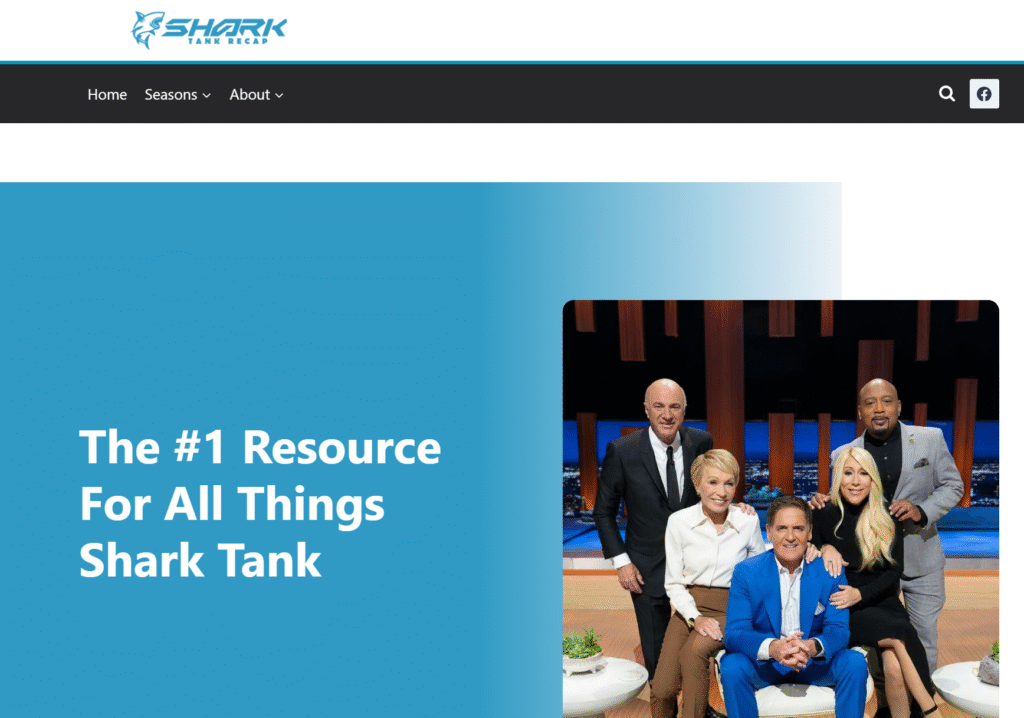
Ever finish watching your favorite show and immediately wonder what happened to that product, contestant, or pitch you just saw?
You’re not alone.
That exact craving for “what happens next” led one passionate fan to build Shark Tank Recap—a website now pulling in $7,000 per month without selling a single product, managing inventory, or dealing with customer service.
Just content. Smart monetization. And a whole lot of strategic thinking.
Here’s what makes this case study fascinating:
Most people think you need to create the next viral platform or revolutionary app to make real money online. But Shark Tank Recap proves you can build a legitimate income stream by simply being the best resource in your entertainment niche.
No fancy tech stack. No million-dollar funding rounds. Just WordPress, determination, and a playbook anyone can follow.
And that’s exactly what we’re breaking down today.
Ad 🎯 After studying 400+ business models, here’s what actually works for beginners…
Most “make money online” advice is garbage. Complex affiliate schemes. Dropshipping nightmares. Social media “influencing.”
We found something better: lead-generation funnels for manufacturers. Simple. Profitable. Fast results.
Our Max Incubator Phase 1 students are proof—they’re going from zero to their first $1,000 in 90 days with this exact model.
→ See the business idea that’s working for beginners this year
What Shark Tank Recap Actually Does (And Why It Works)
Shark Tank Recap isn’t trying to be ESPN or TMZ.
It’s laser-focused on one thing: serving the rabid Shark Tank fanbase with everything they could possibly want about the show.
We’re talking comprehensive episode breakdowns that let you relive every pitch, every deal, and every dramatic Kevin O’Leary shutdown. Product updates that answer the burning question: “Whatever happened to that company after they appeared on the show?” Entrepreneur interviews that give fans the behind-the-scenes access they crave. Company success stories that track the trajectory of Shark Tank businesses months and years after their TV moment.
Think of it as the unofficial bible for Shark Tank obsessives.
But here’s the genius part…
The site doesn’t create expensive video content or hire celebrity hosts. It sticks to text-based content that’s cheap to produce, easy to update, and SEO-friendly by design.
This keeps costs ridiculously low while maintaining the ability to publish consistently—which is the secret weapon of successful content sites.
The Revenue Model: Two Streams That Print Money
Let’s talk numbers.
Shark Tank Recap generates $7,000 monthly through two primary revenue channels, and understanding this dual-income approach is critical if you want to replicate this model.
Revenue Stream #1: Raptive Display Advertising
Shark Tank Recap partners with Raptive (formerly AdThrive), a premium ad management platform that handles all the technical heavy lifting of display advertising.
Here’s how it works in practice:
Visitors arrive on the site looking for Shark Tank content. Raptive serves them targeted ads based on their browsing behavior, interests, and demographics. The site earns money through impressions (views) and clicks on these ads. Raptive optimizes ad placements, tests different formats, and maximizes revenue per visitor.
The beautiful thing? This is entirely passive income.
Once the ads are set up, the site owner doesn’t need to do anything except create great content that attracts visitors. More traffic equals more ad impressions, which equals more revenue—it’s that simple.
According to data from Ezoic’s publisher earnings report, entertainment niche sites typically earn between $15-$40 RPM (revenue per thousand pageviews) depending on traffic quality and engagement.
Revenue Stream #2: Amazon Affiliate Commissions
Here’s where the model gets even smarter.
When products appear on Shark Tank, viewer interest spikes immediately. People want to buy that revolutionary kitchen gadget or innovative fitness product they just saw on TV.
Shark Tank Recap capitalizes on this purchase intent by including Amazon affiliate links to featured products throughout their content.
The flow looks like this:
Someone watches a Shark Tank episode featuring a cool product. They Google “[product name] Shark Tank” to learn more. They find Shark Tank Recap’s article about that product. They click the affiliate link to buy it on Amazon. The site earns a 1-4% commission on the purchase.
This might not sound like much per transaction, but it compounds beautifully when you’re covering hundreds of products across multiple seasons.
Plus, thanks to Amazon’s 24-hour cookie window, the site earns commissions on anything the visitor buys during that session—not just the Shark Tank product.
The Amazon Associates program reports that successful affiliate sites in the product review niche can generate $500-$3,000 monthly from affiliate commissions alone, depending on traffic volume and conversion rates.
Content Strategy: Why Fans Keep Coming Back
Want to know the real secret to Shark Tank Recap’s success?
It’s not about posting randomly whenever inspiration strikes. The site follows a methodical content strategy that turns casual visitors into devoted fans.
Episode Recaps: The Traffic Foundation
Every single Shark Tank episode gets a comprehensive recap published within hours of airing.
These recaps include pitch summaries, deal breakdowns, shark reactions, and outcome predictions. They’re detailed enough to satisfy hardcore fans but scannable enough for people who just want the highlights.
Why does this work so well?
Because people who missed the episode want to catch up. Fans who watched want to relive their favorite moments. And everyone wants to know if their gut reaction matched what actually happened.
This creates consistent, predictable traffic spikes around each episode—traffic that compounds over time as old recaps continue attracting searches months and years later.
Product Follow-Ups: The Long-Tail Goldmine
Here’s where the strategy gets brilliant…
Most Shark Tank coverage ends when the episode airs. But fans desperately want to know: did that company succeed? Did they go out of business? What happened after the deal (or rejection)?
Shark Tank Recap creates update articles for products and companies featured on the show, often publishing multiple updates as the company’s journey continues.
These articles rank incredibly well for long-tail searches like “what happened to [company name] after Shark Tank”—queries with clear purchase intent and low competition.
According to Ahrefs research on long-tail keywords, these specific, multi-word searches often convert 2.5x better than generic head terms while being significantly easier to rank for.
Exclusive Interviews: The Authority Builder
Shark Tank Recap occasionally lands interviews with entrepreneurs who appeared on the show.
These interviews serve multiple purposes. They position the site as a legitimate authority (not just another fan blog). They generate social shares when entrepreneurs promote the interview to their own audiences. They create unique content that can’t be found anywhere else. And they attract high-quality backlinks from business and entrepreneurship publications.
The result? Content that delivers value to readers while simultaneously boosting the site’s SEO authority and attracting new traffic sources.
SEO Tactics That Drive Free, Compound Traffic
Here’s where most entertainment blogs fail miserably…
They create great content, hit publish, and then wonder why nobody’s reading it.
Shark Tank Recap understands something fundamental: if people can’t find your content, it doesn’t matter how good it is.
Long-Tail Keyword Targeting
Instead of trying to rank for impossible terms like “Shark Tank” (dominated by ABC and major media outlets), the site targets specific long-tail keywords that actual fans search for.
Examples include “Scrub Daddy worth after Shark Tank,” “best Shark Tank products that failed,” “Mark Cuban biggest Shark Tank investments,” and hundreds of similar specific queries.
These keywords have three massive advantages. Lower competition means faster rankings. Higher intent means better conversions. And specificity means the traffic is exactly the audience you want.
Content Freshness and Updates
Google loves fresh content, and Shark Tank Recap exploits this ruthlessly.
Old articles get regularly updated with new information about company progress, updated sales figures, and recent developments. Episode recaps get expanded as more information becomes available. Product pages get refreshed with current pricing and availability.
This signals to search engines that the site is actively maintained and providing current, relevant information—factors that directly impact rankings.
Strategic Internal Linking
Every article on Shark Tank Recap links to related content using descriptive anchor text.
An episode recap might link to individual product pages for companies featured in that episode. Product pages link back to the original episode recap and to other similar products. Company update articles link to previous updates, creating a content timeline.
This internal linking structure helps visitors discover more content (increasing pageviews and ad revenue), helps search engines understand the site’s topical relationships, and distributes SEO authority throughout the site.
Technical SEO Fundamentals
Shark Tank Recap doesn’t skip the boring but essential technical stuff.
The site loads fast—critical for both user experience and search rankings. Mobile optimization is flawless, since most entertainment content gets consumed on phones. URL structure is clean and descriptive (sharktankrecap.com/scrub-daddy-update-2024). Images include descriptive alt text for accessibility and SEO. And meta descriptions are crafted to improve click-through rates from search results.
According to Semrush’s page speed analysis, sites that load in under 3 seconds see 70% lower bounce rates and significantly higher search rankings compared to slower competitors.
Earning Quality Backlinks
Here’s the part most people get wrong about backlinks…
You don’t need to spend thousands on link building campaigns or spam comment sections. You just need to be the best resource in your niche.
Shark Tank Recap earns natural backlinks from business blogs citing their company update data, entrepreneurs linking to their interview features, and news sites referencing their comprehensive episode coverage.
These authoritative backlinks signal to Google that the site is a trusted resource, which directly improves rankings for all content on the domain.
Building Community Through Email (The Hidden Moat)
Traffic from search engines is great until Google changes its algorithm.
Social media reach is wonderful until the platform tweaks its feed.
But you know what never changes? Your email list.
Shark Tank Recap treats email subscribers like gold, and for good reason—they represent the only audience the site truly owns.
The Email Subscription Strategy
The site offers multiple incentives to join the email list, and this is key.
Early access to episode recaps means subscribers get the scoop before content goes live publicly. Exclusive product discounts give subscribers tangible financial value beyond just content. Behind-the-scenes insights and entrepreneur interviews create content available nowhere else. And alerts about new deals and updates keep the brand top-of-mind.
But here’s the brilliant part…
Every email isn’t just valuable to the subscriber—it’s also valuable to the site. Each email sent drives traffic back to the website, generating more ad impressions and affiliate clicks. Engaged email subscribers spend more time on site and view more pages than random organic visitors. And loyal subscribers are more likely to share content, expanding reach organically.
Why Email Matters More Than Ever
Think about it this way…
If Google deindexes your site tomorrow, you lose all your search traffic. If Facebook bans your page, you lose all your social reach. But if you have 50,000 email subscribers, you can reach them anytime, for free, regardless of what any platform does.
According to Campaign Monitor’s email marketing benchmarks, media and publishing sites see average open rates of 21.3% and click rates of 2.8%—meaning even a modest email list can drive significant recurring traffic.
This makes email the most valuable asset for any content business, period.
The Massive Growth Opportunity Nobody’s Exploiting
Despite generating $7,000 monthly, Shark Tank Recap is leaving serious money on the table.
The biggest untapped opportunity? Social media engagement.
And I’m not talking about just posting links to blog articles—I’m talking about building a genuine social community around Shark Tank fandom.
Why Social Media Is Underutilized
Shark Tank fans are incredibly passionate and vocal.
They debate which entrepreneurs deserved deals. They critique the sharks’ decision-making. They share their favorite products with friends. And they love predicting which pitches will succeed or fail.
Yet Shark Tank Recap’s social presence is minimal—a massive missed opportunity considering how much free traffic and brand awareness social platforms can generate.
What Could Be Done Differently
Imagine if the site actively engaged on Instagram, Twitter, and Facebook with poll posts during episodes asking viewers to predict outcomes, live-tweeting reactions and commentary during Shark Tank episodes, behind-the-scenes content and entrepreneur spotlights, and user-generated content campaigns where fans share their favorite Shark Tank products.
Or running monthly contests where fans predict which entrepreneurs will get deals, with winners getting featured on the site or winning Shark Tank product giveaways.
These engagement tactics would drive massive social referral traffic, build brand awareness beyond search engines, create viral content opportunities that expand reach exponentially, and establish Shark Tank Recap as THE community hub for fans.
According to Hootsuite’s 2024 Social Trends Report, entertainment brands that actively engage with followers (rather than just broadcasting content) see 3-5x higher referral traffic and significantly improved brand recall.
The infrastructure is already there. The audience is hungry for this type of engagement. All that’s missing is consistent social execution.
Ad 🎯 Ready to put these strategies into action?
Theory is great, but execution is what drives growth. That’s where Max Business School™ comes in.
Inside, you’ll find step-by-step digital marketing courses (SEO, ads, email, social, content, and more) — taught by professionals, designed for beginners and business owners alike.
And the best part? It’s 100% free, online, and flexible.
→ Join Max Business School Today — Free
Your Blueprint for Entertainment Content Success
Ready to build your own entertainment content empire?
Here’s your step-by-step blueprint based on what Shark Tank Recap did right (and where they could improve).
Step 1: Choose Your Micro-Niche
Don’t try to cover all of entertainment—that’s how you fail.
Instead, pick one specific show, genre, or format and own it completely. Your options include reality TV shows (The Bachelor, Survivor, Big Brother), competition shows (The Voice, American Idol, MasterChef), streaming series (Ted Lasso, Stranger Things, The Crown), true crime documentaries, anime series, or sports teams and leagues.
The key is specificity. “Entertainment news” is too broad. “Bachelor Nation updates and spoilers” is perfect.
Step 2: Set Up Your Technical Foundation
You don’t need anything fancy to start.
Purchase a domain name ($12/year from Namecheap or Google Domains). Get hosting ($3-10/month from Hostinger, SiteGround, or Bluehost). Install WordPress (free and takes 5 minutes). Choose a fast, mobile-friendly theme like GeneratePress or Astra. Add essential plugins for SEO (Yoast or RankMath), caching (WP Rocket or LiteSpeed), and security (Wordfence).
Total startup cost? Under $100 for your first year.
Step 3: Create Your Content Calendar
Consistency beats perfection every single time.
Plan to publish episode recaps within 24 hours of airing, weekly product/character/team update articles, monthly interview features (reach out to subjects via social media or email), and seasonal roundups like “Top 10 moments” or “Best products of the year.”
Start with 2-3 articles per week minimum. This gives search engines fresh content to index and gives visitors reasons to return regularly.
Step 4: Master Long-Tail SEO
Use free tools like Google Keyword Planner, Ubersuggest, or Answer The Public to find specific questions people ask about your niche.
Target keywords with 100-1,000 monthly searches (low competition), include your main keyword in the title, URL, and first paragraph, write comprehensive answers (1,500+ words) that cover the topic thoroughly, and use descriptive subheadings (H2, H3) that include related keywords.
Remember, you’re not competing with major media outlets. You’re targeting the specific, detailed questions they ignore.
Step 5: Build Your Email List From Day One
Don’t wait until you have traffic—start collecting emails immediately.
Use a free email service like MailChimp (free up to 500 subscribers) or ConvertKit (free up to 1,000 subscribers). Offer exclusive content, early access, or weekly roundups as incentives to subscribe. Add opt-in forms to your sidebar, end of articles, and as pop-ups (use sparingly). And send valuable emails consistently—weekly newsletters work well for entertainment content.
Your email list will become your most valuable asset over time.
Step 6: Monetize Strategically
You’ll need significant traffic before premium ad networks like Raptive accept you (usually 100,000+ monthly pageviews).
Start with Google AdSense (lower earnings but no traffic requirement). Join relevant affiliate programs like Amazon Associates, ShareASale, or CJ Affiliate. Look for niche-specific opportunities like streaming service affiliate programs or merchandise partnerships.
As your traffic grows, you can upgrade to better-paying ad networks and negotiate direct sponsorships.
Step 7: Expand to Social Media
This is where Shark Tank Recap could improve—don’t make the same mistake.
Choose 1-2 social platforms where your audience already hangs out. Post consistently (at least once daily) with engaging content beyond just blog links. Interact with followers, respond to comments, and build genuine community. Use platform-specific content formats like Instagram Stories, Twitter threads, or TikTok videos.
Social media won’t make you money directly, but it’ll amplify your reach and drive traffic that generates ad and affiliate revenue.
Key Takeaways: What You Need to Remember
Let’s distill everything down to the essentials.
If you’re serious about building an entertainment content site, these are the non-negotiables you can’t afford to ignore.
Niche selection is everything. Shark Tank Recap works because it serves one specific audience obsessively well. Don’t dilute your focus by trying to cover too much. Find your micro-niche—one show, one genre, one format—and become the absolute best resource for that audience. Depth beats breadth every single time.
SEO isn’t optional, it’s foundational. The most beautiful content in the world means nothing if nobody can find it. Target long-tail keywords with clear search intent. Optimize your technical performance (speed, mobile, structure). Update content regularly to stay fresh. Build internal links to distribute authority. And create content so good that authoritative sites naturally link to you.
Email is your insurance policy. Search algorithm changes can tank your traffic overnight. Social platforms can ban your account without warning. But your email list is yours forever. Start building it on day one, even if you only have 100 visitors monthly. Offer genuine value to subscribers. Send consistent, valuable emails. And treat your list like the asset it is—because it might become your lifeline someday.
User experience directly impacts revenue. Shark Tank Recap prioritizes fast loading and mobile optimization for good reason. If your site is slow or difficult to navigate, visitors bounce immediately. That means fewer pageviews, lower ad revenue, and zero affiliate conversions. Invest in speed, simplicity, and mobile-friendliness from the start.
Diversified income beats single revenue streams. Display ads provide predictable baseline income. Affiliate links capture purchase intent. Email sponsorships can add another layer as you grow. Don’t rely on any single monetization method—build multiple streams so one bad month doesn’t destroy your business.
Social media is the growth multiplier most sites ignore. Shark Tank Recap’s biggest missed opportunity is not building an engaged social community. Don’t make the same mistake. Pick 1-2 platforms where your audience lives and commit to genuine engagement, not just link dropping.
The Reality Check: What It Actually Takes
Let’s be brutally honest about what building this type of business requires.
Because the $7,000 monthly revenue sounds great, but there’s work involved that most people conveniently ignore.
Time Investment
Shark Tank Recap didn’t become a $7,000/month business overnight.
You’re looking at 6-12 months of consistent publishing before you see meaningful traffic. Expect to spend 10-20 hours weekly creating content, especially in the beginning. You’ll need to publish multiple articles per week to build momentum. And you’ll face weeks where your traffic doesn’t grow and you question everything.
This isn’t passive income—at least not initially. It’s active content creation that eventually becomes more passive as your library grows and compounds.
Skills Required
You don’t need to be a technical genius, but you do need baseline competency in a few areas.
Writing clearly and engagingly (you’re creating content people actually want to read). Basic SEO understanding (keyword research, on-page optimization, technical fundamentals). WordPress basics (publishing content, managing plugins, basic troubleshooting). Email marketing fundamentals (growing your list, creating valuable emails). And basic image editing (creating featured images, optimizing photos for web).
The good news? Every single one of these skills can be learned for free on YouTube and through blog tutorials.
Monetization Timeline
Here’s the painful truth about revenue…
Months 1-3: You’ll make essentially nothing. Maybe $50-100 from Amazon Associates if you’re lucky. Months 4-6: You might hit $200-500 monthly as traffic builds. Months 7-12: Expect $500-2,000 monthly if you’re executing well. Year 2+: This is when $5,000-10,000+ monthly becomes realistic with consistent effort.
Anyone promising faster results is either lying or got incredibly lucky. Content sites are long-term plays that compound beautifully—but they require patience.
The Competitive Landscape
You’re not entering a vacuum.
Entertainment content is competitive, and understanding the landscape helps you position strategically.
Your Direct Competitors
Sites like Reality Blurred dominate reality TV coverage. TVLine and Deadline own general TV news. Entertainment Weekly covers everything entertainment broadly.
But notice what they don’t do well…
They’re generalists trying to cover too much ground. They don’t go deep on individual shows or products. They focus on breaking news rather than helpful resources. And they’re massive operations that can’t pivot quickly to serve niche audiences.
That’s your opening.
Your Unfair Advantages
As a solo creator or small team, you have advantages these massive sites can’t replicate.
You can go incredibly deep on your specific niche. You can publish faster and more frequently on your topic. You can engage directly with your community in ways big brands can’t. You can pivot strategy in days rather than months. And you can serve underserved niches that don’t make sense for large publications.
Your size isn’t a weakness—it’s your secret weapon if you use it correctly.
Common Mistakes That Kill Entertainment Sites
Learn from others’ failures so you don’t repeat them.
Mistake #1: Covering Too Much, Too Soon
New site owners try to cover every show, movie, and celebrity. They spread themselves impossibly thin, creating mediocre content about everything instead of excellent content about one thing.
The fix? Pick ONE niche and dominate it completely before expanding.
Mistake #2: Ignoring SEO Entirely
They write what they want without considering what people actually search for. They skip keyword research, ignore technical optimization, and wonder why nobody finds their content.
The fix? Learn basic SEO fundamentals and apply them to every piece of content you publish.
Mistake #3: Inconsistent Publishing
They publish three articles one week, then nothing for a month. Search engines reward consistency, and audiences forget about sites that disappear randomly.
The fix? Create a realistic publishing schedule you can maintain long-term, even if it’s just once weekly.
Mistake #4: Monetizing Too Late (Or Too Early)
Some wait until they have massive traffic before adding any monetization. Others plaster their site with ads from day one, creating a terrible user experience that kills growth.
The fix? Start with Amazon Associates from day one (it doesn’t hurt user experience). Add display ads once you hit 25,000+ monthly pageviews.
Mistake #5: Not Building an Email List
They rely entirely on search and social traffic without capturing any audience they own. Then algorithm changes devastate their traffic overnight.
The fix? Add email opt-in forms to your site on day one and start building that asset immediately.
Your Next Steps
Theory is useless without action.
So here’s exactly what to do in the next 7 days if you’re serious about building an entertainment content site.
Day 1: Choose Your Niche
Spend today researching and selecting your specific entertainment micro-niche. Ask yourself these questions: What entertainment content am I genuinely passionate about? What shows/topics do I already follow obsessively? Where can I provide value that existing sites don’t? Is there consistent search volume for this content?
Write down your niche decision and the specific audience you’re serving.
Day 2: Research the Competition
Find the top 5 sites covering your niche. Analyze what they do well and where they fall short. Look for content gaps you can fill. Study their monetization methods. And identify their weaknesses you can exploit.
Create a simple competitive analysis document noting opportunities.
Day 3: Set Up Your Site
Purchase your domain name (pick something memorable and brandable). Buy hosting and install WordPress. Choose a fast theme. Install essential plugins for SEO, caching, and security. And create your About page explaining what your site offers.
Your site doesn’t need to be perfect—it just needs to exist.
Day 4: Plan Your Content Calendar
Brainstorm 20-30 article ideas around your niche. Use keyword research tools to validate search volume. Organize ideas by priority (what to publish first). And create a realistic publishing schedule you can maintain.
Having a content pipeline removes the “what should I write about” anxiety.
Day 5: Write Your First Article
Pick your highest-priority topic and write a comprehensive article. Target a specific long-tail keyword. Include personal insights and examples. Format for easy scanning with subheadings and short paragraphs. Add relevant images. And optimize for SEO basics.
Publish it even if it feels imperfect—you can always improve later.
Day 6: Set Up Email Collection
Sign up for a free email service provider. Create your first email opt-in incentive. Add subscription forms to your site. And write a welcome email sequence for new subscribers.
Start building your list from the moment you launch.
Day 7: Join Affiliate Programs
Apply to Amazon Associates. Research niche-specific affiliate programs. Join relevant affiliate networks like ShareASale. And add your first affiliate links to your published content.
Monetization should start on day one—even if earnings start slow.
The Bottom Line
Building an entertainment content site that generates $7,000 monthly isn’t easy.
It requires consistent effort, strategic thinking, and patience to let compound growth work its magic.
But here’s what makes it worth pursuing…
You’re building an asset that generates income 24/7. You’re creating something that can scale without trading hours for dollars. You’re establishing expertise in a topic you genuinely care about. And you’re building equity that could eventually be sold for 3-5x annual revenue.
Shark Tank Recap proves the model works.
The question isn’t whether it’s possible—it’s whether you’re willing to put in the consistent work required to make it happen.
Sites like The Pioneer Woman started as simple food blogs and now generate millions annually. Wait But Why grew from one person’s writing into a sustainable business. And countless niche entertainment sites quietly generate $5,000-20,000 monthly for their owners.
The opportunity is there.
Your move.