
How to Start a Game Hosting Service for $40K Annual Revenue (Even If You’re Not a Tech Wizard)
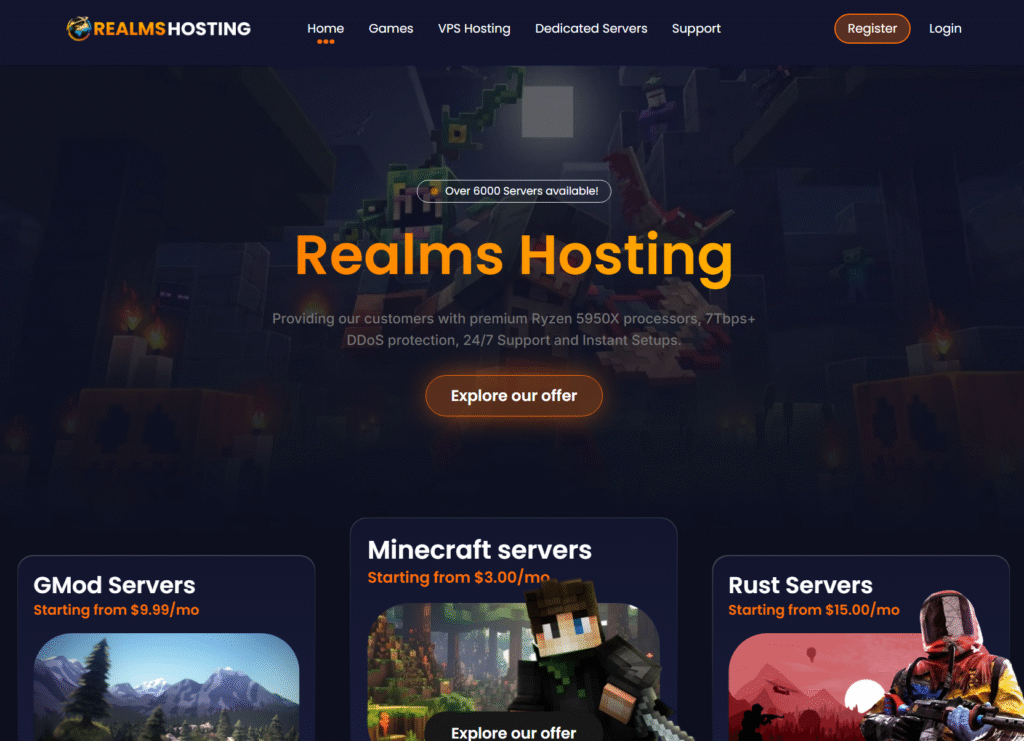
Lily was sick of it.
The lag. The crashes. The constant server downtime that ruined her gaming sessions right when things got intense. And don’t even get her started on the security threats that made online gaming feel like navigating a minefield.
She wasn’t just frustrated—she was furious enough to do something about it.
So she did what any rational person would do when faced with a problem: she built the solution herself and started charging other gamers for it.
That decision to launch Realms Hosting turned her gaming frustration into a $40,000 annual business. Not by inventing some revolutionary technology or securing venture capital funding, but by simply providing what every gamer desperately wants: servers that actually work.
Here’s the thing most people miss about the game hosting industry…
It’s not about having the fanciest technology or the biggest infrastructure. It’s about understanding what gamers need, delivering it reliably, and making the entire experience so smooth that they’d be crazy to go anywhere else.
Let me show you exactly how Realms Hosting captured this market, what separates successful game hosting providers from failures, and why this opportunity is bigger now than it’s ever been.
Ad 🎯 After studying 400+ business models, here’s what actually works for beginners…
Most “make money online” advice is garbage. Complex affiliate schemes. Dropshipping nightmares. Social media “influencing.”
We found something better: lead-generation funnels for manufacturers. Simple. Profitable. Fast results.
Our Max Incubator Phase 1 students are proof—they’re going from zero to their first $1,000 in 90 days with this exact model.
→ See the business idea that’s working for beginners this year
Why Game Hosting Prints Money (When You Actually Understand Gamers)
Picture this: there are billions of gamers worldwide, and millions of them want to host their own servers for games like Minecraft, ARK, Rust, and countless others. They want control. They want customization. They want to play with friends without corporate limitations.
But here’s the problem…
Setting up and maintaining a game server yourself is a nightmare. You need technical knowledge, reliable hardware, constant monitoring, security protection, and the patience of a saint when things inevitably break.
Most gamers just want to play. They don’t want to become server administrators.
That gap—between wanting a private server and being willing to manage one—represents pure opportunity. According to Research and Markets, the global game server hosting market is experiencing steady growth as online gaming continues exploding in popularity worldwide.
The gaming industry alone generates over $150 billion annually, and a significant chunk of that involves players seeking better hosting solutions for multiplayer experiences. When mainstream hosting companies treat gamers as an afterthought, specialized providers like Realms Hosting swoop in and capture market share.
Lily understood something crucial: gamers will pay premium prices for servers that don’t suck. And by “don’t suck,” I mean servers that deliver lag-free gameplay, protect against DDoS attacks (malicious attempts to crash servers), provide instant setup, and offer 24/7 support when problems arise.
That’s not revolutionary technology. That’s just basic competence in a market flooded with incompetence.
Inside Realms Hosting: The $40K Blueprint
Let’s crack open the business model and see exactly how this generates consistent revenue.
Tiered Pricing That Captures Every Customer Segment
Realms Hosting doesn’t offer one generic “game server” package. They’ve created multiple hosting tiers designed for different customer needs and budgets:
Basic Plans – Perfect for small friend groups wanting to host a private Minecraft server with 10-15 players
Standard Plans – Designed for growing communities with 20-50 active players needing more resources
Premium Plans – Built for large communities and serious server operators managing 100+ concurrent players
Each tier offers different specifications: RAM allocation, CPU power, storage space, player slots, and additional features like automated backups and modding support.
This tiered approach is brilliant because it captures customers at every price point. The teenager wanting to play Minecraft with five friends? They’re buying the $10/month basic plan. The serious community manager running a popular Rust server? They’re dropping $50-100 monthly on premium hosting.
The Add-On Revenue Stream
Beyond base hosting packages, Realms Hosting offers optional upgrades and add-ons: extra RAM for resource-intensive mods and plugins, additional backup slots, priority support queues, dedicated IP addresses, and enhanced DDoS protection tiers.
These add-ons serve two purposes. First, they increase average transaction value—customers spending $20/month might add $5-10 in extras. Second, they allow customization without forcing everyone into expensive plans they don’t need.
It’s the classic “base price + extras” model that airlines perfected, applied to game hosting.
Competitive Pricing That Doesn’t Race to the Bottom
Here’s where many hosting providers fail: they slash prices to unsustainable levels trying to compete, then can’t afford quality infrastructure or support. Realms Hosting takes a different approach.
Their pricing is competitive but not the cheapest. They position themselves as the “Goldilocks” option—not budget basement hosting that crashes constantly, but not enterprise pricing either. Just right for gamers who value reliability without emptying their bank accounts.
This pricing psychology is critical. When hosting costs $3/month, gamers assume it’s garbage (and they’re usually right). When it costs $100/month, most casual players can’t justify it. But $15-30 monthly? That’s the sweet spot where price signals quality without triggering sticker shock.
What Realms Hosting Absolutely Crushed
Lily didn’t just launch a hosting company and hope for the best. Several strategic decisions separated Realms Hosting from the hundreds of competitors vying for the same customers.
Service Delivery That Actually Works
This sounds obvious, but you’d be shocked how many hosting providers fail at the basics. Realms Hosting obsesses over three core elements:
They guarantee exceptional server performance with minimal lag, using enterprise-grade hardware and optimized network routing. Nothing kills a gaming experience faster than rubber-banding across the map or watching everything freeze during crucial moments.
They provide comprehensive DDoS protection to keep servers online even when malicious actors try to take them down. DDoS attacks are rampant in gaming communities (usually salty players trying to crash servers), so protection isn’t optional—it’s mandatory.
They offer a user-friendly game panel that makes server management accessible even for non-technical users. You shouldn’t need a computer science degree to install a mod or adjust server settings.
These might seem like table stakes, but in an industry where “good enough” is the norm, excellence stands out dramatically.
Laser-Focused Targeting on Gamers
Rather than being a generic hosting company that happens to offer game servers, Realms Hosting positioned itself specifically for the gaming community from day one.
This focus allows them to speak the language gamers understand, showcase popular game support prominently (Minecraft, ARK, Rust, Valheim, etc.), integrate with gaming platforms and communities, and provide support staff who actually understand gaming-specific issues.
When a Minecraft server operator has a plugin conflict, they don’t want to explain what Minecraft is to a confused support rep. They want someone who immediately understands the problem and knows how to fix it.
Specialization creates trust. Trust creates customers. Customers create revenue.
Social Proof That Converts Skeptics
Realms Hosting prominently displays positive reviews and testimonials throughout their website, particularly highlighting their Trustpilot ratings where satisfied customers rave about their service.
These testimonials serve as powerful social proof. When potential customers see hundreds of positive reviews from other gamers, their skepticism melts. “If it worked for them, it’ll probably work for me.”
According to BrightLocal’s consumer review survey, 79% of consumers trust online reviews as much as personal recommendations. For a relatively unknown hosting provider competing against established brands, reviews become the great equalizer.
Conversion Rate Optimization That Actually Converts
Realms Hosting implements several smart tactics to turn website visitors into paying customers:
They use strategic pop-up discounts offering first-time customer deals, creating urgency and incentivizing immediate action rather than “I’ll think about it and never return.”
They prominently display Trustpilot ratings on key pages, reassuring visitors at critical decision points in the buying journey.
They employ clear, benefit-focused messaging throughout the site—not technical jargon about server specs, but language focused on what gamers actually care about: “Lag-Free Gaming,” “24/7 Support,” “Instant Setup.”
These conversion optimization tactics might seem small individually, but collectively they can increase conversion rates by 50-200%. That’s the difference between mediocre revenue and thriving business.
The Critical Gaps (Where $80K Hides)
Now here’s where things get really interesting. Despite generating solid $40K annually, Realms Hosting is leaving potentially double that revenue on the table. I’m talking about relatively straightforward improvements that could dramatically boost growth.
The SEO Blind Spot
According to SEO analysis tools, Realms Hosting has surprisingly weak organic search visibility. For a business where potential customers are constantly Googling terms like “best Minecraft server hosting” and “cheap Rust server hosting,” this is leaving massive money on the table.

The fix? Implement comprehensive SEO strategy including keyword research to identify what potential customers are actually searching for, on-page optimization with strategic keyword placement in titles, headers, and content, content marketing through blog posts answering common hosting questions, and link building to establish authority in the hosting niche.
The game hosting niche has thousands of monthly searches with strong commercial intent. Every organic ranking improvement directly translates to reduced customer acquisition costs and increased revenue.
The Paid Advertising Absence
Even more surprising: Realms Hosting isn’t running paid advertising campaigns. No Google Ads. No social media advertising. No display ads on gaming forums and websites.
This is bonkers considering the potential ROI. Game hosting has clear customer lifetime value—customers who stay for 12 months at $25/month represent $300 in revenue. That means you can afford $50-100 customer acquisition costs and still maintain healthy margins.
Strategic paid advertising could include Google Ads campaigns targeting high-intent searches like “Minecraft hosting” and “ARK server hosting,” Facebook and Instagram ads targeting gaming interest audiences, Reddit advertising in relevant gaming subreddits, and display advertising on gaming forums and websites where potential customers congregate.
According to WordStream’s industry benchmarks, hosting services see average conversion rates of 2-5% on paid search. With proper targeting and optimization, paid advertising could easily double monthly customer acquisition.
The Referral Program That Doesn’t Exist
Gamers talk to other gamers. Communities recommend hosting providers constantly. Yet Realms Hosting doesn’t have a formal referral or affiliate program incentivizing this word-of-mouth.
Imagine offering existing customers $5 credit for every friend they refer who purchases hosting. Or creating an affiliate program where gaming YouTubers and streamers earn 20% recurring commission for promoting Realms Hosting to their audiences.
Companies like DigitalOcean and Vultr have built massive businesses partially through aggressive referral programs. The economics work beautifully—you’re essentially paying for customers only after they’ve paid you.
Ad 🎯 Ready to put these strategies into action?
Theory is great, but execution is what drives growth. That’s where Max Business School™ comes in.
Inside, you’ll find step-by-step digital marketing courses (SEO, ads, email, social, content, and more) — taught by professionals, designed for beginners and business owners alike.
And the best part? It’s 100% free, online, and flexible.
→ Join Max Business School Today — Free
The Skills Required (More Accessible Than You Think)
Let’s demystify this. Starting a game hosting business doesn’t require a computer science degree or infrastructure engineering experience. Here’s what you actually need:
You need basic understanding of game servers and how they work (learnable through online resources). You need customer service skills and patience to support gamers with varying technical knowledge. You need business fundamentals like pricing, positioning, and customer acquisition. And you need willingness to learn and adapt as gaming trends evolve.
What you DON’T need: To build infrastructure from scratch (reseller hosting exists). Advanced programming skills. Existing gaming industry connections. Massive startup capital.
Most successful hosting providers start by reselling server resources from companies like OVH or Hetzner, who provide the actual hardware and network infrastructure. You handle customer acquisition, support, and branding while they handle the technical backbone.
This dramatically lowers the barrier to entry. You can launch with $500-2000 initial investment rather than $50,000+ building your own data center.
Getting Started: The Realistic Path
If this business model intrigues you, here’s how you’d actually build it from the ground up:
Research the game hosting market thoroughly, identifying which games have active communities needing hosting, what competitors charge, and where gaps exist in service quality or specific game support.
Choose your niche within game hosting—maybe you specialize in Minecraft mods, or you focus on survival games like ARK and Rust, or you target specific geographic regions with localized support.
Partner with an infrastructure provider for reseller hosting, allowing you to offer services without building your own data center. Many providers offer white-label solutions where you can brand everything as your own.
Build a clean, conversion-optimized website clearly explaining your services, pricing, and differentiators. Use WordPress with hosting-specific themes to get started quickly and affordably.
Set up customer support systems including ticketing, live chat, and Discord channels where gamers expect support to happen.
Launch with a few core game offerings rather than trying to support everything. Better to excel at hosting three games than mediocrely host twenty.
Acquire your first customers through targeted outreach in gaming communities, offering launch discounts or free trials to build initial testimonials and reviews.
Systematize everything as you grow so you can eventually hire support staff and scale beyond your personal capacity.
Why This Works in 2025 (And Beyond)
Some business models are fads. This isn’t one of them.
Online gaming continues growing globally, with emerging markets in Asia, Latin America, and Africa driving massive expansion. According to Newzoo’s Global Games Market Report, there are over 3 billion gamers worldwide, and that number increases annually.
More gamers means more private server demand. More server demand means more hosting opportunities.
The shift toward community-driven gaming experiences (as opposed to solely corporate-controlled games) favors private server hosting. Games like Minecraft, Valheim, and Rust thrive because players can create custom experiences on their own servers.
This isn’t going away. If anything, it’s accelerating.
The Uncomfortable Truth Nobody Mentions
Here’s what the “start a hosting business” gurus won’t tell you: the business model is straightforward, but execution is exhausting.
Servers go down at 3 AM. Customers complain about issues outside your control. DDoS attacks happen on weekends. Technical problems require immediate attention regardless of your personal schedule.
Lily’s $40K annual revenue didn’t come from copying a blueprint and kicking back. It came from answering support tickets promptly, maintaining server reliability obsessively, and continuously improving service quality.
The opportunity is real. The revenue is real. The 24/7 operational demands are also real.
Your Next Move
If you’re seriously considering this, stop waiting for perfect timing or perfect plans.
Start learning about game servers by hosting one yourself—join a reseller program or rent a cheap server and experiment. Join gaming communities to understand what players actually complain about with current hosting providers. Research infrastructure providers who offer white-label hosting solutions. Map out your target niche and competitive positioning. Build a minimum viable website and test messaging with potential customers.
The gamers who’ll become your customers are out there right now, frustrated with their current hosting providers, searching for alternatives that actually deliver what’s promised.
The only question is whether you’ll be the one providing that alternative.