
How a Finance Blog Earns $20,000 Monthly Providing Financial Guidance
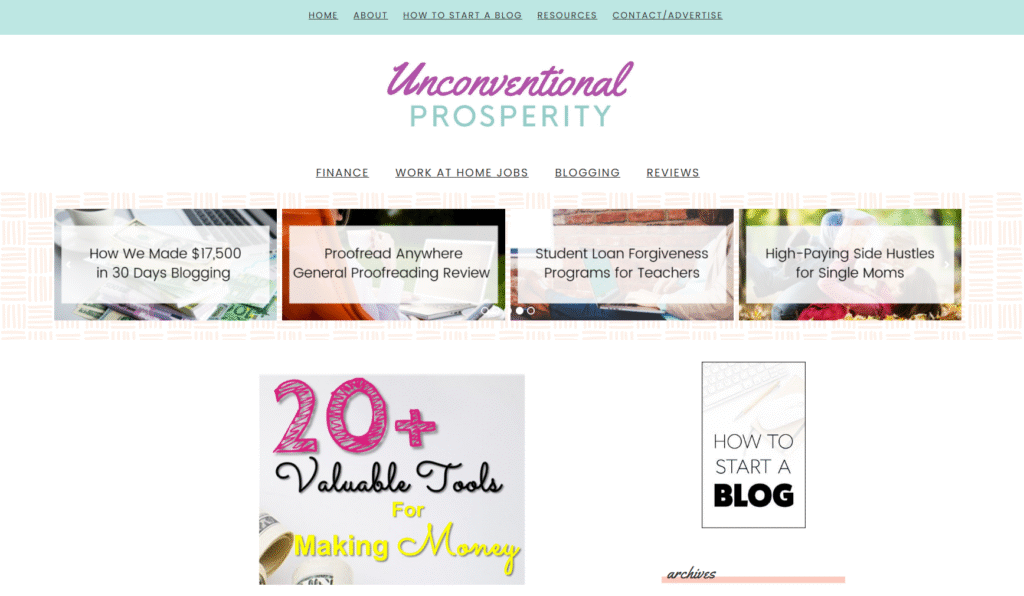
Let me tell you about someone making twenty thousand dollars a month who you’ve probably never heard of.
No massive Instagram following. No bestselling book. Not even their real name attached to the business.
Just a finance blog called Unconventional Prosperity that’s quietly banking serious money by solving one deceptively simple problem: helping people figure out how to actually make money online without falling for get-rich-quick nonsense.
The anonymous founder has cracked a code that most finance bloggers miss entirely.
They’re not selling courses about their “proven system.” They’re not pitching investment newsletters. They’re creating genuinely useful content and letting the revenue streams flow naturally from providing actual value.
Radical concept, right?
Ad 🎯 After studying 400+ business models, here’s what actually works for beginners…
Most “make money online” advice is garbage. Complex affiliate schemes. Dropshipping nightmares. Social media “influencing.”
We found something better: lead-generation funnels for manufacturers. Simple. Profitable. Fast results.
Our Max Incubator Phase 1 students are proof—they’re going from zero to their first $1,000 in 90 days with this exact model.
→ See the business idea that’s working for beginners this year
The 78% Solution Most Bloggers Ignore
Here’s where things get interesting.
Unconventional Prosperity generates 78% of its revenue from affiliate marketing. Not display ads. Not sponsored posts. Affiliate partnerships.
This reveals something crucial about their strategy: they’re not optimizing for pageviews (which drives ad revenue) but for trust and conversions (which drives affiliate commissions).
Think about the difference.
A pageview-focused blog stuffs keywords, creates thin content targeting high-traffic searches, and plasters the page with ads. More eyeballs equal more money. The content quality? Secondary consideration at best.
An affiliate-focused blog builds genuine relationships. When readers trust your recommendations, they click through and purchase. One highly engaged reader who trusts you is worth fifty casual browsers who bounce after ten seconds.
The anonymous founder of Unconventional Prosperity understands this distinction at a molecular level.
Their content includes in-depth guides, personal case studies, and honest assessments of different money-making strategies. They’re not throwing spaghetti at the wall—they’re curating specific recommendations for specific situations. “Here’s what worked for me when I was starting out” carries infinitely more weight than “Top 10 Ways to Make Money Online (Number 7 Will Shock You!).”
According to research by Authority Hacker, affiliate-focused sites can generate 3-5x more revenue per visitor compared to purely ad-supported sites when trust and targeting are properly executed.
The Direct Advertising Play That’s Hiding In Plain Sight
Beyond affiliate commissions, Unconventional Prosperity offers direct advertising packages to businesses.
This is the move that separates professionals from amateurs.
Instead of relying solely on ad networks (which pay pennies), they sell direct advertising space to companies targeting their specific audience. The website displays quantitative metrics—traffic volume, audience demographics, engagement stats—to convince potential advertisers of the partnership value.
The application process is straightforward and professional. Interested advertisers can easily find contact information. No mysterious web forms that disappear into the void. No waiting weeks for responses. Just clear pathways for business partnerships.
This approach unlocks higher CPMs (cost per thousand impressions) because advertisers pay premium rates to reach qualified, engaged audiences. A fitness supplement company will pay far more to advertise on a health-focused blog than through a general ad network, because the targeting is precise and the audience is receptive.
Smart blogs create media kits showcasing their stats, audience demographics, and case studies from previous partnerships. Sites like Mediavine and AdThrive require 50,000+ monthly sessions before accepting publishers, but direct advertising partnerships can start at much lower traffic levels when you’ve built the right audience.
What They’re Doing Right (That Most Finance Bloggers Butcher)
The anonymous founder has established something rare in online business: genuine authority.
Four years of focused expertise speaks volumes. They haven’t jumped from niche to niche chasing trends. They haven’t pivoted to crypto during bull markets then pivoted away during crashes. They’ve stayed laser-focused on helping specific people solve specific financial challenges.
This consistency builds compounding credibility. When someone’s been writing about passive income strategies since 2018, they’ve survived market changes, economic shifts, and trend cycles. Their advice isn’t theoretical—it’s battle-tested.
The blog specializes in earning passive income through blogging, course creation, and digital products. Notice the specificity? They’re not covering “all things money.” They’re addressing the exact pain points of their target reader: someone who wants to build online income while working a day job.
The SEO strategy is working beautifully.
Looking at organic traffic metrics, the blog shows gradual upward growth over time. No viral spikes that disappear. No algorithm-punished drops. Just steady, sustainable traffic increases from ranking for relevant keywords and providing valuable commentary on trending topics.
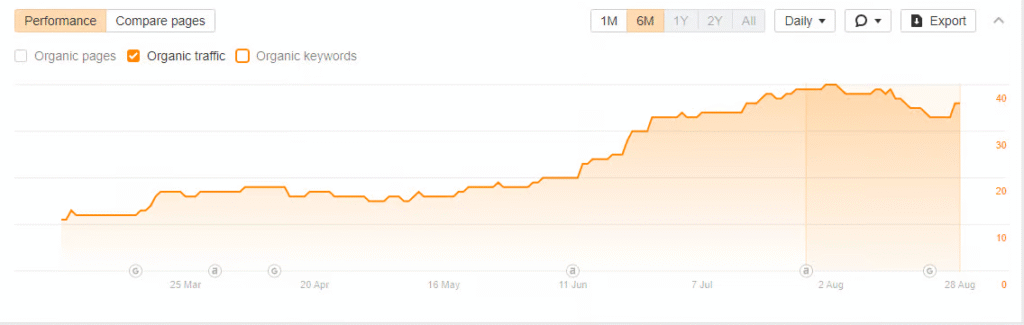
This is the holy grail: compound growth from older content continuing to rank while new content builds on the authority foundation.
The blog ranks highly for specific long-tail keywords related to blogging income, course creation, and passive income generation. Someone searching “how to monetize a blog with low traffic” or “creating profitable online courses as a beginner” finds Unconventional Prosperity in the results.
Finance blogs targeting specific niches typically see 40-60% higher engagement rates compared to general personal finance sites, because the content speaks directly to reader needs rather than trying to be everything to everyone.
The Coaching Angle That Changes Everything
Here’s a fascinating piece many people miss: Unconventional Prosperity coaches aspiring bloggers on building five-figure monthly incomes from their own blogs.
Think about the genius of this model.
They’re not just writing about strategies—they’re implementing them successfully and then teaching others to replicate the results. This creates a perfect credibility loop:
Successful implementation → Teaching others → Establishing expertise → Attracting more coaching clients → Generating additional revenue streams → Funding more experimentation → More successful strategies to teach
This transforms the blog from a content platform into a comprehensive business ecosystem. The free content attracts readers. The proven results convert readers into coaching clients. The coaching revenue funds better content creation. The cycle reinforces itself.
Smart bloggers in every niche follow this pattern. The free content serves as both value delivery and lead generation for premium services.
Where Unconventional Prosperity Is Leaving Money On The Table
Despite the impressive $20,000 monthly income, there are glaring opportunities for growth.
Call-To-Action buttons are practically invisible.
This drives me slightly crazy. Great content deserves great CTAs. Yet many posts lack any clear next step. No prominent “Start Your Blog Today” buttons. No eye-catching “Download the Free Guide” prompts. No strategic placement of course enrollment opportunities.
Effective CTA buttons use contrasting colors, action-oriented copy, and strategic placement. They should stand out from the page design while feeling native to the content. A/B testing typically shows 20-30% conversion increases from properly optimized CTAs versus generic links.
The psychology matters here. Even readers who loved the content need gentle guidance toward the next step. Without clear CTAs, you’re hoping they’ll remember to bookmark the site, navigate to the courses page, and enroll on their own. Hope isn’t a strategy.
Multiple income streams are missing entirely.
The blog relies heavily on affiliate marketing and some advertising. But what about:
Digital products beyond courses? Notion templates for blog planning. Spreadsheet calculators for income tracking. Swipe files of successful affiliate pitches.
Premium memberships? A $29/month community with live Q&A sessions, private forums, and exclusive content.
Done-for-you services? Blog audits. Monetization strategy sessions. Affiliate partnership negotiations.
Physical products or partnerships? Every finance blogger’s audience eventually wants recommended tools, planners, or resources.
Diversification isn’t just about safety—it’s about serving different segments of your audience. Some people prefer DIY solutions (digital products). Others want community (memberships). Still others need hands-on help (services).
Income diversification research shows blogs with 3-5 revenue streams generate 40-80% more total revenue than single-stream sites, because each stream captures different audience segments.
The trust-building loop is incomplete.
More services create more touchpoints with the audience. Each positive interaction deepens the relationship. A reader might start with free content, purchase a $27 template, join the $29/month membership, then invest in a $497 course.
This ascension model moves people up the value ladder while generating revenue at every step.
Ad 🎯 Ready to put these strategies into action?
Theory is great, but execution is what drives growth. That’s where Max Business School™ comes in.
Inside, you’ll find step-by-step digital marketing courses (SEO, ads, email, social, content, and more) — taught by professionals, designed for beginners and business owners alike.
And the best part? It’s 100% free, online, and flexible.
→ Join Max Business School Today — Free
The Anonymous Founder Paradox
Here’s something worth examining: the blog founder remains anonymous.
This is unusual for high-earning blogs, especially in the personal finance space where personal stories and transparency typically drive connection.
Yet it hasn’t hurt the business.
This reveals an important truth: content quality and usefulness can overcome the lack of personal branding. Readers care more about whether the advice works than about seeing the advisor’s face.
That said, there’s likely untapped potential here. Personal stories create emotional connections. Faces build trust. Vulnerability establishes authenticity.
Consider how dramatically the blog could grow by adding:
Personal income reports showing real numbers from implementing the strategies Behind-the-scenes looks at content creation and business building
Video content showing the person behind the advice Case studies featuring real readers who succeeded using the blog’s methods
The anonymous approach works, but adding personal elements could accelerate growth significantly.
The SEO Foundation That Makes Everything Else Possible
Traffic is the lifeblood of any content business. Unconventional Prosperity gets this right.
The blog relies primarily on organic search traffic rather than social media or paid advertising. This creates sustainable, predictable traffic that compounds over time. Each piece of content continues working months or years after publication.
The keyword strategy focuses on monetizable search terms. Someone searching “best affiliate programs for new bloggers” has commercial intent. They’re closer to taking action than someone searching “what is affiliate marketing.”
The content structure supports SEO fundamentals:
- Comprehensive articles targeting specific keywords
- Proper heading hierarchy for readability and SEO
- Internal linking between related posts
- Regular content updates to maintain relevance
- Mobile-responsive design for user experience
Studies show 70-80% of users ignore paid ads and focus on organic search results, making organic traffic the most valuable long-term acquisition channel.
The Monetization Sophistication Most Bloggers Never Reach
Here’s what separates Unconventional Prosperity from thousands of struggling finance blogs: strategic revenue alignment.
They’re not monetizing through random tactics. Each revenue stream supports the others:
Affiliate marketing generates commissions from recommending tools readers need Direct advertising showcases relevant services to the target audience
Coaching creates premium income from engaged readers The blog content supports all three by building authority and trust
This creates a flywheel effect where success in one area fuels the others.
Compare this to typical blogs that slap up AdSense ads, throw in random affiliate links, and wonder why income stays flat. Monetization requires strategy, not just tactics.
What You Need To Build Something Similar
Essential skills:
- Writing ability (doesn’t need to be Pulitzer-worthy, just clear and useful)
- Basic SEO knowledge (keyword research, on-page optimization)
- Understanding of your niche (genuine expertise or deep interest)
- Consistency (weekly publishing schedule minimum)
- Analytics interpretation (understanding what’s working)
You don’t need:
- A massive budget (WordPress hosting starts under $10/month)
- Advanced technical skills (most tasks require clicking, not coding)
- Existing audience (built through consistent content creation)
- Full-time availability (many successful bloggers started with 5-10 hours weekly)
Time expectations: Most finance bloggers see minimal income in months 0-6. Months 6-12 typically generate $100-500/month if consistent. Months 12-24 is when things start compounding, with $1,000-3,000/month possible. The $20,000/month level usually takes 2-4 years of focused effort.
These timelines assume consistent quality content, smart SEO, and avoiding major mistakes.
The Bottom Line That Actually Matters
Unconventional Prosperity proves you can build substantial income through finance blogging without showing your face, selling courses about selling courses, or relying on viral social media content.
The model is straightforward: Create genuinely useful content. Optimize for search engines. Build trust through consistency and quality. Monetize through aligned revenue streams. Improve based on data.
The execution? That’s where most people stumble.
Building to $20,000 monthly requires hundreds of articles, thousands of hours, and relentless commitment to providing value. There’s no shortcut, no hack, no secret strategy.
But the path is proven and replicable.
If you can write clearly, understand your audience’s problems, and stick with it long enough for compound growth to work its magic, the finance blogging space offers legitimate opportunities for building substantial income.
The question isn’t whether it’s possible. Unconventional Prosperity and hundreds of similar blogs prove it is.
The question is whether you’re willing to put in the work.
Key Takeaways:
- Affiliate marketing can generate 70-80% of revenue when trust and targeting align
- Direct advertising partnerships unlock higher rates than ad networks
- Niche focus builds authority faster than broad coverage
- Organic search traffic creates sustainable, compound growth
- Multiple revenue streams serve different audience segments and increase total income
- Personal branding accelerates growth but isn’t absolutely required
- CTAs and conversion optimization matter as much as traffic generation
The tools exist. The proven model is documented. The only question left: will you build it?