
How a Grooming Tools E-Commerce Store Makes $10,000 Monthly
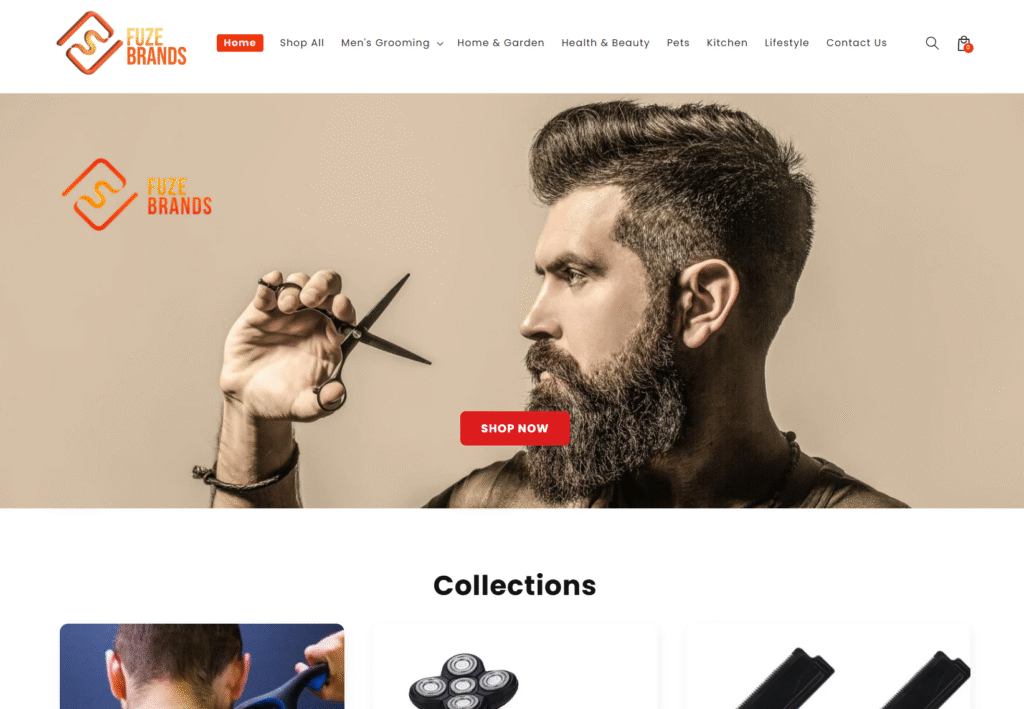
Picture this: you’re scrolling through an online store looking for a body groomer, and suddenly you’re staring at a vegetable spiralizer.
Weird, right?
Welcome to FuzeBrands, an e-commerce store that’s pulling in $10,000 monthly profit by ignoring conventional wisdom about niche focus.
They started selling shaving tools and personal grooming products. Nothing revolutionary there—plenty of stores do that.
But here’s where things get delightfully strange: they also sell kitchen gadgets and gardening equipment.
On paper, this diversification looks like a recipe for disaster. Every e-commerce guru will tell you to niche down, specialize, and dominate one category.
Yet FuzeBrands is thriving. Why?
Because they’ve figured out something more important than product category coherence: exceptional customer experience trumps conventional strategy every single time.
Ad 🎯 After studying 400+ business models, here’s what actually works for beginners…
Most “make money online” advice is garbage. Complex affiliate schemes. Dropshipping nightmares. Social media “influencing.”
We found something better: lead-generation funnels for manufacturers. Simple. Profitable. Fast results.
Our Max Incubator Phase 1 students are proof—they’re going from zero to their first $1,000 in 90 days with this exact model.
→ See the business idea that’s working for beginners this year
The Product Mix That Shouldn’t Work (But Totally Does)
At the core, FuzeBrands specializes in grooming essentials for both men and women.
Their bestsellers include the Balla™ Men’s Intimate Body Groomer Razor and the Magic Crystal Hair Remover. These solve specific, sometimes awkward problems people have trouble discussing in person. “I need to groom…certain areas…but I’m scared of nicking myself” becomes an Amazon search rather than a CVS conversation.
E-commerce thrives on solving embarrassing problems discreetly.
But then you’ve got the kitchen gadgets tucked between the body groomers. Mandoline slicers next to nose hair trimmers. Garden pruning shears near back shavers.
The average marketing consultant would have a stroke looking at this product mix.
Yet there’s method in the madness. These seemingly random products share important characteristics:
- Problem-solving oriented (not luxury or aspirational)
- Demonstrable value through features
- Reviews and social proof matter significantly
- Practical rather than emotional purchases
Someone buying a specialized grooming tool and someone buying an innovative kitchen gadget have similar purchase psychology. They’re both practical problem-solvers willing to try new solutions.
The direct-to-consumer market for personal care and grooming products is projected to reach $133 billion by 2026, with increasing demand for specialized grooming solutions driving growth.
The Customer Experience Foundation That Changes Everything
Most e-commerce stores treat website performance like an afterthought.
They obsess over product photos, write elaborate descriptions, and nail their social media presence. Then they launch on a $5/month hosting plan that loads slower than dial-up internet.
FuzeBrands flipped that script.
Their website doesn’t just look good—it’s fast. Lightning fast. The kind of fast where you click and the page is already loaded before your brain registers the action.

This matters more than most store owners realize. Google research shows 53% of mobile users abandon sites that take longer than three seconds to load. You could have the perfect product at the perfect price, but if your site’s sluggish, half your potential customers vanish before seeing your offer.
FuzeBrands clearly invested in proper hosting, image optimization, and clean code. The result? Smooth shopping experiences that don’t give customers reasons to bounce.
Reviews on every product page serve as social proof and decision-making assistance. Potential buyers aren’t just reading marketing copy—they’re hearing from real customers who’ve already tested the product.
This builds trust exponentially faster than any amount of persuasive copywriting.
Think about your own shopping behavior. When was the last time you bought something online without checking reviews first? The review section has become the most valuable real estate on product pages.
The Chat Feature Nobody Uses (Except Winners)
Here’s a feature most e-commerce stores either skip or half-ass: integrated chat support.
FuzeBrands nailed it.
The chat feature isn’t buried three clicks deep. It’s readily accessible throughout the shopping journey. Got a question about whether the body groomer works on sensitive skin? Ask. Wondering about shipping times to Canada? Ask. Confused about which product solves your specific problem? Ask.
This transforms the cold, impersonal online shopping experience into something resembling actual customer service.
The psychology is powerful. When shoppers know they can get instant answers, purchase confidence increases. That little chat bubble reduces perceived risk—”If something goes wrong, there’s a real person who can help me.”
Live chat can increase conversion rates by 20% or more while reducing cart abandonment. The best part? Modern chat tools can handle multiple conversations simultaneously and integrate with chatbots for common questions, making this scalable for growing businesses.
The Service Stack That Seals Deals
FuzeBrands doesn’t just sell products—they sell peace of mind wrapped in convenience.
Three-month guarantee eliminates purchase risk. You’re not just hoping the product works—you know you can return it if it doesn’t. This is particularly important for grooming products where results vary by individual.
Free shipping removes a major friction point in online purchases. Cart abandonment studies consistently show that unexpected shipping costs are the #1 reason people don’t complete purchases. Eliminating that friction means more completed sales.
Next-day dispatch appeals to impatient modern consumers who’ve been trained by Amazon Prime to expect speed. Even if the actual delivery takes a week, knowing the product ships immediately creates positive momentum.
These services cost money, obviously. But they’re investments in conversion rate optimization that pay dividends through increased sales volume.
Consider the math: if free shipping costs you $5 per order but increases conversion rate by 15%, that’s potentially hundreds of additional sales monthly. The shipping cost is offset by volume increases.
The Sales Strategies That Make Browsing Addictive
FuzeBrands runs strategic promotional campaigns that create urgency without feeling desperate.
Flash sales on specific products. Seasonal discounts. Bundle offers. Limited-time percentage-off promotions.
This keeps the store feeling dynamic rather than static. Returning visitors find new reasons to purchase rather than seeing the same products at the same prices.
But here’s the clever part: cart value incentives.
“Spend $75 and get a free product!” This single strategy accomplishes multiple objectives:
Increases average order value by encouraging customers to add items Creates perceived value through the free product
Moves lower-margin inventory as the “free” items Builds goodwill and positive associations with the brand
Gamification in e-commerce works because humans love achieving goals and unlocking rewards.
Customers who were planning to spend $50 suddenly find themselves adding a $25 item to qualify for the free product. The psychology is irresistible—why leave free value on the table when you’re already buying?
Research shows that tiered rewards systems can increase average order values by 25-40%, making this one of the highest-ROI strategies available to e-commerce stores.
The Organic Traffic Problem Nobody’s Talking About
Here’s where FuzeBrands hits a speed bump.
Their organic search traffic has declined over the past year. For an e-commerce store, this is like watching your main highway slowly crumble while you’re trying to drive more customers to your location.
Organic traffic represents the most valuable visitors—people actively searching for solutions to problems your products solve. They arrive with intent, not just curiosity. They convert at higher rates than social media traffic or paid advertising clicks.
So what happened?
Several factors could be at play:
Algorithm updates from Google might have shifted rankings. Google made significant changes to product search results in recent years, favoring larger retailers and marketplaces in many queries.
Increased competition in the grooming tools space means more stores fighting for the same keywords. What worked two years ago requires more sophisticated strategies today.
Content decay happens when product pages and supporting content become outdated. Stale content loses rankings over time as fresher, more comprehensive resources emerge.
Technical SEO issues like broken links, slow-loading pages, or mobile usability problems can gradually erode rankings.
The solution? A comprehensive SEO audit followed by systematic improvements.
They need to identify which keywords they’ve lost rankings for, analyze why competitors are outranking them, and develop content that provides superior value. This might mean creating detailed buying guides, comparison articles, how-to videos, and educational resources around grooming and personal care.
E-commerce sites that maintain active blogs generate 67% more leads than those without, because educational content captures searches throughout the buying journey, not just at the final purchase decision.
The Cross-Selling Opportunity Sitting Right There
Walk into any successful retail store and you’ll notice strategic product placement.

Razors next to shaving cream. Batteries next to electronics. Chips next to salsa.
FuzeBrands has the perfect opportunity to implement this digitally through cross-selling and upselling, yet it’s largely untapped.
Cross-selling means showing complementary products alongside the main purchase. Someone buying the Balla™ Body Groomer should see recommendations for grooming powder, replacement blades, or a storage case. The products genuinely enhance the primary purchase while increasing order value.
The implementation is straightforward:
- “Frequently bought together” sections on product pages
- “Complete your grooming routine” bundles
- Post-purchase email sequences suggesting complementary items
- Smart recommendations based on cart contents
Upselling presents upgraded versions of products customers are considering. Looking at the basic body groomer? Here’s the premium model with additional features, longer battery life, and superior performance.
The psychology works because the customer has already decided to purchase. You’re not convincing them they need a grooming tool—you’re simply presenting a better version of what they’re already buying.
Amazon attributes up to 35% of its revenue to cross-selling and upselling, with their recommendation engine being one of the most sophisticated in e-commerce. FuzeBrands doesn’t need Amazon’s complexity—even basic implementations generate significant revenue increases.
Imagine this scenario:
Customer adds a $39 body groomer to cart. The page displays:
- “Customers who bought this also purchased…” showing grooming powder ($12) and a cleaning brush ($8)
- “Upgrade to premium model” showing a $59 version with better features
- “Complete grooming kit” bundle offering the groomer, powder, brush, and travel case for $69 (saving $20)
That single customer journey could increase from $39 to $69+ through strategic product presentation.
The Partnership Strategy That’s Begging To Be Implemented
FuzeBrands has established expertise in grooming products. That credibility opens doors for strategic partnerships that could dramatically expand revenue.
Complementary product partnerships with brands in adjacent categories make perfect sense. Partner with premium shaving cream manufacturers, skincare brands, or wellness companies. Create dedicated sections showcasing these partner products, earning affiliate commissions or wholesale margins.
This isn’t random diversification—it’s strategic expansion into categories your existing customers already purchase.
Someone buying a body groomer is likely interested in:
- Pre-shave oils and preparations
- Post-shave balms and moisturizers
- Grooming accessories and storage
- Skincare products for sensitive areas
- Hygiene and wellness items
Partner with established brands in these categories rather than developing products from scratch. Curate selections that meet FuzeBrands’ quality standards, then feature them prominently.
The implementation options:
Option A: Create a separate “Grooming Essentials” section featuring partner products. This keeps the core store focused while offering expanded selections.
Option B: Integrate partner products into existing categories, treating them as natural extensions of the current catalog.
Either approach works. The key is maintaining quality standards and ensuring partnerships align with brand values.
Strategic brand partnerships can increase revenue by 15-30% while sharing marketing costs and expanding customer reach through cross-promotion.
The Content Marketing Void That’s Costing Sales
Here’s what’s missing: educational content.
FuzeBrands has a catalog of grooming products but virtually no content explaining how to use them effectively, addressing common concerns, or educating customers about grooming best practices.
This represents a massive missed opportunity.
Educational content serves multiple purposes:
SEO value: Articles ranking for questions like “how to prevent razor burn on sensitive skin” or “best practices for body grooming” capture searches from people earlier in the buying journey.
Trust building: Demonstrating expertise through helpful content establishes the brand as an authority, not just another online store.
Conversion assistance: Customers who understand how to use products properly are more likely to have positive experiences and become repeat buyers.
Email marketing fuel: Educational content gives you reasons to email subscribers beyond “buy our stuff.”
Imagine a FuzeBrands blog covering:
- Grooming techniques for different body areas
- How to choose the right grooming tools for your skin type
- Common grooming mistakes and how to avoid them
- Seasonal grooming tips and routines
- Product care and maintenance guides
Each article becomes a potential entry point for new customers while serving existing ones.
The beauty and personal care industry sees average content marketing ROI of $6 for every $1 spent, with educational content consistently outperforming purely promotional material.
The Email Strategy That’s Barely Scratching The Surface
Most e-commerce stores treat email marketing like an afterthought.
They collect addresses, send occasional promotional blasts, and wonder why open rates languish around 8%.
FuzeBrands has the foundation—they’re collecting emails—but there’s so much untapped potential.
Abandoned cart sequences should be automatic. Someone adds a product to cart but doesn’t complete the purchase? Send a series of emails:
- Email 1 (1 hour later): Friendly reminder about items in cart
- Email 2 (24 hours later): Address common objections, showcase reviews
- Email 3 (72 hours later): Limited-time discount to encourage completion
This single sequence typically recovers 10-15% of abandoned carts, representing thousands in otherwise lost revenue.
Post-purchase sequences turn one-time buyers into repeat customers:
- Immediate: Order confirmation and shipping details
- 3 days later: Shipping update and usage tips
- 1 week later: “How’s it working?” check-in with support resources
- 2 weeks later: Complementary product recommendations
- 1 month later: Reorder reminder for consumables or accessories
Segmented campaigns based on purchase history allow for personalized marketing. Someone who bought a body groomer shouldn’t receive the same emails as someone who bought kitchen gadgets.
The beauty of e-commerce email marketing is that it’s largely automated. Set up the sequences once, and they work continuously, nurturing customers and driving repeat purchases.
The Social Proof Goldmine Hiding In Plain Sight
FuzeBrands features customer reviews on product pages. Good start.
But they’re missing opportunities to leverage this social proof across the entire customer journey.
Homepage testimonials showcasing glowing reviews and customer results create immediate trust for first-time visitors.
Video testimonials from satisfied customers add authenticity that written reviews can’t match. Seeing a real person describe their experience carries exponentially more weight than reading text.
Before-and-after content works particularly well for grooming products. Customer-submitted photos showing results create powerful social proof (with proper permissions, obviously).
User-generated content campaigns encourage customers to share their experiences on social media with a branded hashtag. Feature the best submissions on the website and social channels, creating a virtuous cycle of engagement.
Trust badges and certifications near checkout buttons reduce purchase anxiety. Security certifications, money-back guarantees, and payment logos all contribute to perceived safety.
Displaying customer reviews can increase conversion rates by 270%, with video testimonials performing even better. Yet most stores barely scratch the surface of leveraging this powerful asset.
The Mobile Experience That Can’t Be Ignored
Over 60% of e-commerce traffic now comes from mobile devices. For many stores, that number exceeds 70%.
FuzeBrands’ mobile experience needs to be absolutely flawless. Not “pretty good” or “acceptable.” Flawless.
This means:
- Lightning-fast load times on cellular connections
- Touch-friendly navigation and buttons
- Simple checkout process optimized for small screens
- Mobile-specific images sized appropriately
- Text readable without zooming
- Forms that work with mobile keyboards
The mobile shopping experience should feel native to the device, not like a desktop site squeezed onto a smaller screen.
Mobile optimization can improve conversion rates by 160% according to conversion optimization research, making this one of the highest-impact improvements available.
The Inventory Expansion Question Worth Asking
Should FuzeBrands double down on grooming products or continue diversifying into unrelated categories?
There’s no definitively correct answer, but here’s the strategic framework:
Doubling down advantages:
- Clearer brand identity and positioning
- More efficient marketing targeting
- Deeper expertise and authority in one space
- Better SEO performance for focused keywords
- Easier inventory management
- Stronger vendor relationships
Diversification advantages:
- Multiple revenue streams reduce dependency
- Seasonal balance (one category slows, another thrives)
- More touchpoints with customers
- Broader email list value
- Cross-category bundle opportunities
My take? The current diversification works because the products share similar customer psychology and purchase patterns. But there’s a ceiling.
The smartest move might be strategic: dominate the grooming category while maintaining select complementary categories that serve the same customer base. Think “personal care and practical solutions for everyday life” rather than “grooming tools plus random stuff we found.”
This gives clarity while maintaining flexibility.
Ad 🎯 Ready to put these strategies into action?
Theory is great, but execution is what drives growth. That’s where Max Business School™ comes in.
Inside, you’ll find step-by-step digital marketing courses (SEO, ads, email, social, content, and more) — taught by professionals, designed for beginners and business owners alike.
And the best part? It’s 100% free, online, and flexible.
→ Join Max Business School Today — Free
Skills You Need To Build Something Similar
Building a $10,000/month e-commerce store requires specific capabilities:
Essential skills:
- Product research and sourcing (finding reliable suppliers)
- Basic website management (Shopify, WooCommerce, etc.)
- Customer service fundamentals (responding helpfully and quickly)
- Inventory management basics (tracking stock, reordering)
- Digital marketing foundations (email, SEO, paid ads)
- Photography or design sense (for product presentation)
You don’t need:
- Manufacturing capabilities (dropshipping and wholesale eliminate this)
- Massive startup capital (many stores launch with $2,000-5,000)
- Advanced technical skills (platforms handle most complexity)
- Retail space (that’s the whole point of e-commerce)
Time investment: Expect 20-40 hours weekly during the first 6 months setting up systems, sourcing products, and establishing processes. After that, many owners reduce to 10-20 hours weekly maintaining operations while focusing on growth.
Financial reality: Most e-commerce stores operate on 20-40% gross margins. FuzeBrands earning $10,000 profit monthly likely generates $30,000-50,000 in revenue. Getting there typically takes 1-2 years of consistent effort, testing, and optimization.
The Competitive Landscape That’s Only Getting Tougher
The grooming and personal care e-commerce space faces increasing competition.
Amazon dominates general searches. Specialized brands like Manscaped have captured specific segments with strong branding and aggressive marketing. Subscription services offer convenience. Big-box retailers have improved their online presence.
FuzeBrands succeeds by occupying a different position: practical solutions with exceptional service at competitive prices.
They’re not trying to be the premium luxury brand. They’re not the cheapest option. They’re the reliable, customer-focused choice that solves problems without drama.
This positioning works, but it requires constant reinforcement through:
- Consistent product quality
- Responsive customer service
- Competitive pricing without racing to the bottom
- Strategic differentiation through service and experience
The global men’s grooming market alone is expected to grow at 6.5% annually through 2027, indicating sustained opportunity despite competition. Success comes from execution, not just market selection.
The Bottom Line On Building E-Commerce Income
FuzeBrands demonstrates that e-commerce success doesn’t require revolutionary products or massive marketing budgets.
It requires:
- Solving real problems with quality products
- Creating exceptional customer experiences
- Optimizing every step of the buying journey
- Building trust through service and transparency
- Adapting based on data and customer feedback
The $10,000 monthly profit proves the model works. The growth opportunities—improved SEO, cross-selling, partnerships, content marketing—show there’s room for substantial expansion.
E-commerce isn’t easy. It’s competitive, demanding, and filled with operational challenges. But it’s also one of the most accessible paths to building significant online income.
You don’t need permission, credentials, or connections. You need products people want, a platform that works, and relentless focus on customer satisfaction.
The tools exist. The platforms are proven. The market is growing.
Key Takeaways:
- Website performance and speed directly impact conversion rates and revenue
- Customer service features like live chat reduce purchase friction significantly
- Service guarantees and free shipping eliminate major objections
- Cart value incentives increase average order size through psychological triggers
- SEO and organic traffic require ongoing attention and optimization
- Cross-selling and upselling can increase revenue 20-35% with minimal additional cost
- Strategic partnerships expand offerings without inventory risk
- Email marketing automation drives repeat purchases with minimal ongoing effort
The question isn’t whether you can build a profitable e-commerce store. FuzeBrands and thousands of others prove you can. The question is whether you’ll commit to the work required to make it happen.