
How to Build a $150K Travel Blog in One Year (Complete Blueprint)
Want to know what it feels like to watch your business lose 90% of its revenue overnight?
Jill Loeffler does.
One day she’s running a thriving San Francisco travel blog. The next, COVID-19 hits and the world stops traveling. Her traffic plummeted. Her income evaporated. Twenty years of exploring her favorite city suddenly felt… pointless.
Most people would have given up right there.
Jill didn’t.
Instead, she used the pandemic downtime to completely rebuild her approach. She optimized content that wasn’t ranking. She built a community when tourism died. She doubled down on SEO while everyone else panicked.
The result?
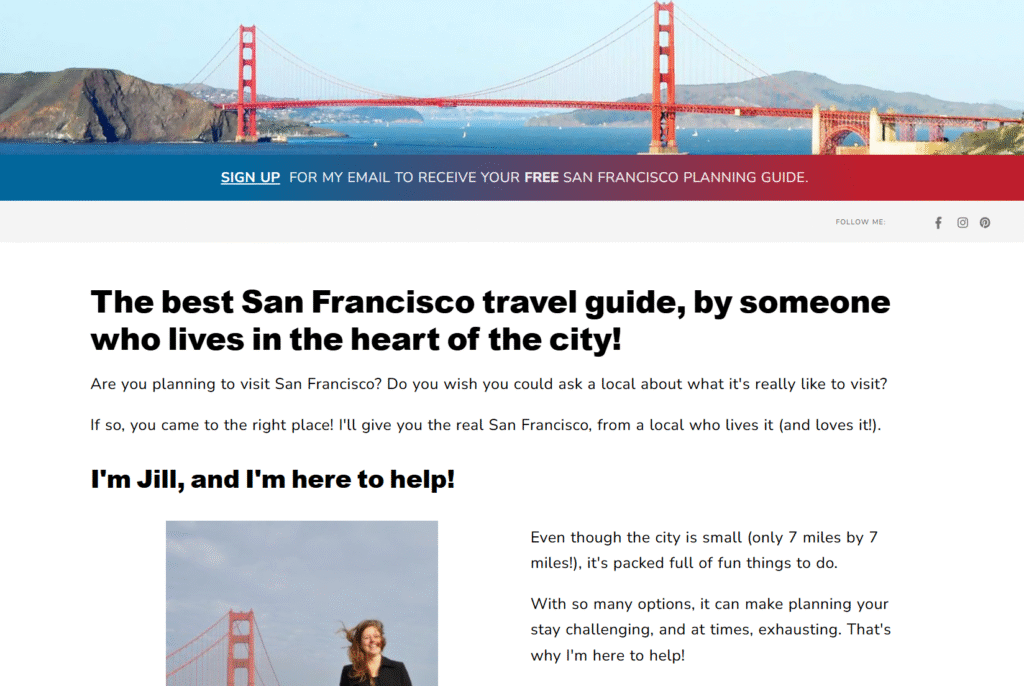
Her website SFTourismTips not only recovered—it exploded. She went from near-zero earnings in 2020 to over $150,000 annually by 2022. That’s more than she made before the pandemic.
And here’s the wild part: she did it with a hyper-focused niche. Not “travel blogging” in general. Not even “California travel.” Just one city. San Francisco.
Let me show you exactly how she pulled it off.
Ad 🎯 After studying 400+ business models, here’s what actually works for beginners…
Most “make money online” advice is garbage. Complex affiliate schemes. Dropshipping nightmares. Social media “influencing.”
We found something better: lead-generation funnels for manufacturers. Simple. Profitable. Fast results.
Our Max Incubator Phase 1 students are proof—they’re going from zero to their first $1,000 in 90 days with this exact model.
→ See the business idea that’s working for beginners this year
The Corporate Refugee Who Chose One City Over the Entire World
For over two decades, Jill explored San Francisco like it was her job.
Because eventually, it became her job.
After years in corporate America, she craved freedom more than security. She knew San Francisco inside and out—the hidden staircases, the best viewpoints tourists never find, which neighborhoods feel safe at night, where locals actually eat.
So she started documenting everything.
Not as a hobby. As a business.
SFTourismTips became her escape route from cubicle life. She built it methodically, answering questions tourists actually asked. Where should I stay? What tours are worth the money? Is Fisherman’s Wharf really that touristy? How do I navigate the city without a car?
The site gained traction. Built authority. Started earning steady income through affiliate commissions and display ads.
Then March 2020 happened.
Tourism stopped. Her traffic dropped 90%. Revenue basically disappeared. She’d just left her corporate job to focus on the blog full-time, and suddenly the rug got yanked out from under her.
Here’s where most people quit. Jill saw an opportunity instead.
How a Dead Website Became a $150K Money Machine
When travel stopped, Jill had two choices: panic or optimize.
She chose optimization.
While the world stayed home, she went to work on her site’s foundation. She analyzed every underperforming page. Updated outdated information. Improved content that wasn’t ranking in the top ten search results. Added relevant keywords tourists actually searched for.
The technical stuff that most bloggers ignore because it’s boring? She made it her full-time job.
By the time travel resumed, her site was a well-oiled machine ready to capture the pent-up demand. Now SFTourismTips pulls over 200,000 visitors monthly and generates $150,000+ annually through two primary revenue streams:
Affiliate partnerships drive significant income. Jill recommends tours, attractions, and services through platforms like GetYourGuide, Viator, Ticketmaster, and StubHub. When readers book through her links, she earns a commission. The genius? She only recommends experiences she genuinely believes enhance a San Francisco visit. That authenticity converts browsers into bookers.
Display advertising through Mediavine provides consistent baseline revenue. Mediavine handles all the technical optimization—ad placement, format, targeting. Jill just creates great content and lets the ads work in the background. With 200K+ monthly visitors, those impressions add up fast.
The beauty of this model? It compounds. More traffic means more affiliate clicks and more ad impressions. Better content attracts more backlinks, which boost SEO, which drives more traffic. The flywheel effect.
And she even scored a backlink from the New York Times. Not bad for a one-woman operation focused on a single city.
The Five Strategies That Turned Disaster Into $150K Success
Jill didn’t just survive the pandemic. She used it as a forcing function to implement strategies that most travel bloggers talk about but never execute:
Content optimization became her obsession. She systematically reviewed every page on her site. Anything not ranking on page one of Google got a complete overhaul. She updated outdated information, added relevant keywords, improved readability, and enhanced user experience. Now she ranks for long-tail keywords like “San Francisco live music venues,” “SF weekend events,” and “is San Francisco safe to visit”—questions tourists actually type into Google.

Community building replaced traditional marketing. When you can’t rely on search traffic alone, you need owned audiences. Jill created a dedicated Facebook group where travelers ask questions, share experiences, and get personalized recommendations. This direct communication channel provides invaluable insights into what her audience actually wants to know. Plus, engaged community members become repeat visitors and natural promoters of her content.
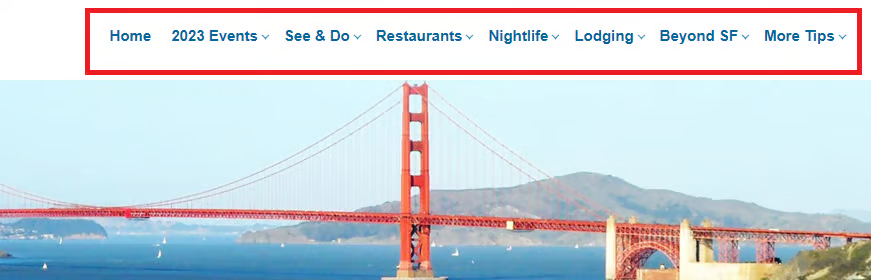
User-centered design made navigation effortless. Travel planning is stressful enough without fighting a confusing website. Jill organized content into clear categories: Events, Restaurants, Nightlife, Transportation, FAQ. Visitors find what they need in seconds. No hunting through endless blog archives. Simple navigation increases time on site, reduces bounce rates, and improves conversion rates on affiliate links.
Strategic content marketing extends her reach. Jill doesn’t just publish content and hope people find it. She actively promotes through her Facebook community and email newsletter. Clear call-to-action buttons prompt visitors to join the email list in exchange for free planning guides. Those subscribers become a captive audience for new content, special deals, and personalized recommendations. Email provides direct access unaffected by algorithm changes.
SEO fundamentals compound over time. While competitors chased viral content and social media trends, Jill focused on sustainable organic growth. She targets keywords with commercial intent—searches that indicate someone’s ready to book. “Best San Francisco tours” converts better than “pretty San Francisco photos.” That strategic keyword targeting combined with high-quality content drives qualified traffic that actually converts.
The pattern emerges clearly: build something genuinely useful, optimize for search, nurture community, monetize strategically. Nothing fancy. Just fundamentals executed consistently.
The Untapped Opportunities Hiding in Plain Sight
Even at $150K annually, SFTourismTips leaves money on the table. Several growth opportunities remain unexplored:
Video content could unlock massive traffic. YouTube is the second-largest search engine globally. TikTok has over a billion monthly users. According to research from Google, travelers spend more time watching travel videos on YouTube than ever before—using them as primary inspiration sources. Yet Jill hasn’t built a presence on either platform. She could create walking tours, neighborhood guides, restaurant reviews, and travel tips. Each video becomes another search-optimized asset driving traffic back to her site.
Personal branding would deepen audience connection. Right now the site feels somewhat anonymous. But Jill has spent over 20 years exploring San Francisco. That expertise deserves a face and voice. Sharing personal experiences, favorite hidden spots, and insider knowledge would differentiate her content from generic travel guides. People connect with people, not faceless websites. Building a personal brand would increase trust, engagement, and ultimately conversions.
Social platform expansion could multiply reach. The site has solid Facebook and Pinterest presences but ignores Twitter and TikTok entirely. Twitter’s real-time nature perfect for sharing event updates, last-minute deals, and engaging with potential visitors planning trips. TikTok’s short-form video format ideal for quick tips, hidden gems, and attention-grabbing content that drives profile visits.
Strategic collaborations would accelerate growth. Jill could partner with other travel bloggers for content exchanges and backlinks. She could collaborate with San Francisco hotels, tour operators, and attractions for exclusive experiences and affiliate deals. She could appear on travel podcasts and contribute guest posts to major travel publications. Each collaboration extends reach and builds authority.
These aren’t criticisms. They’re growth levers. Even without pulling them, she’s already at $150K. Implementing just one or two could push revenue significantly higher.
Ad 🎯 Ready to put these strategies into action?
Theory is great, but execution is what drives growth. That’s where Max Business School™ comes in.
Inside, you’ll find step-by-step digital marketing courses (SEO, ads, email, social, content, and more) — taught by professionals, designed for beginners and business owners alike.
And the best part? It’s 100% free, online, and flexible.
→ Join Max Business School Today — Free
The Learning Moment: Hyper-Niching Beats Broad Every Time
Here’s what separates successful travel blogs from the thousands that never earn a dollar:
Specificity.
“Travel blog” is too broad. So is “USA travel blog.” Even “California travel blog” faces massive competition.
But “San Francisco travel guide”? That’s specific enough to own.
Jill doesn’t compete with every travel blogger on the planet. She competes only in the San Francisco space. That focused positioning allows her to:
- Develop deeper expertise than generalist competitors
- Target keywords with less competition but strong commercial intent
- Build relationships with local businesses for affiliate partnerships
- Create genuinely useful content instead of surface-level fluff
- Establish authority that generalist sites can’t match
When someone searches “things to do in San Francisco,” they want detailed, local insights—not generic advice that applies to any city. Jill provides exactly what searchers want, so Google rewards her with high rankings.
The counterintuitive truth? Narrowing your focus expands your opportunities.
A mediocre general travel blog reaches nobody. An excellent San Francisco travel guide reaches everyone planning a San Francisco trip. That’s a much more valuable audience with higher conversion potential.
This principle applies beyond travel. Hyper-niching works in virtually every content business. The riches are in the niches, as the saying goes.
Your Blueprint: Building a Six-Figure Travel Blog
Ready to create your own location-based travel site? Here’s the realistic path forward:
Start with honest self-assessment. Can you commit to this for three to five years? Travel blogging isn’t passive income that materializes overnight. It’s a real business requiring consistent effort. If you’re already building something else, don’t split your attention. Apply these principles to your existing project instead. But if you’re ready for a fresh start, pick a destination you genuinely love and know intimately.
Choose your specific location and audience. Don’t pick a city just because it’s popular. Pick one you’ve actually experienced deeply. Tourism competition in places like Paris or New York is fierce. Consider mid-tier destinations with strong tourism but less content saturation. Research what people actually search for about your chosen location using tools like Ahrefs. Look for questions that existing resources don’t answer well.
Build your technical foundation properly. Get reliable hosting, register a memorable domain name, and install WordPress. Choose a clean, mobile-responsive theme that showcases photography well while maintaining fast load times. Organize content into logical categories that match how travelers actually plan trips—where to stay, what to do, where to eat, how to get around.
Create comprehensive, genuinely useful content. Don’t write fluff pieces. Answer specific questions tourists actually ask. Instead of “Top 10 Things to Do in [City]” for the thousandth time, write “Where to Watch Sunrise in [City] Without Tourist Crowds” or “How to Spend a Rainy Day in [City].” Specific, helpful content outperforms generic listicles every time.
Optimize for search from day one. Research keywords before writing content. Use them naturally in titles, headers, and throughout the text. Add descriptive alt text to images. Build internal links between related posts. Earn backlinks by creating genuinely valuable resources other sites want to reference. SEO isn’t manipulation—it’s making your helpful content discoverable.
Build community alongside content. Start an email list immediately. Offer a free planning guide or itinerary in exchange for signups. Consider creating a Facebook group where travelers can ask questions and share experiences. These owned audiences provide direct communication channels and valuable insights into what content your audience wants most.
Monetize strategically once you have traffic. Don’t plaster ads on a brand-new site—focus on content creation first. Once you’re getting consistent traffic (aim for 25,000+ monthly sessions), apply for Mediavine or similar premium ad networks. Join relevant affiliate programs for tour operators, hotels, travel insurance, and booking platforms. Promote only products and services you genuinely recommend.
Skills required? Basic WordPress management, content writing, fundamental SEO, email marketing, and social media basics. All learnable through free resources and practice. No technical genius necessary.
The timeline? Expect 12-18 months before seeing meaningful income. Another 12-24 months to potentially reach full-time income replacement. Jill spent years building authority before COVID hit. The pandemic just accelerated growth that was already happening.
What This Really Means For You
Jill Loeffler proved that hyper-focused content sites can generate serious income even in supposedly “saturated” niches.
She didn’t need:
- Millions of social media followers
- Viral content or lucky breaks
- A massive team or huge investment
- Coverage of hundreds of destinations
She needed:
- Deep expertise in one specific location
- Consistent, genuinely helpful content
- Solid SEO fundamentals executed properly
- Community building and email marketing
- Multiple revenue streams working together
- Patience to build something sustainable
The opportunity exists in countless destinations worldwide. Cities, regions, even specific neighborhoods or types of travel experiences. Food tourism in a particular city. Adventure travel in a specific region. Digital nomad guides for individual countries.
The question isn’t whether location-based travel sites still work. They do. The question is whether you’re willing to commit to one place, serve your audience exceptionally well, and build systematically over years rather than months.
Because here’s what nobody tells you about overnight successes:
They usually took years of invisible work.
Jill spent two decades exploring San Francisco before starting her blog. She built authority slowly. Then when crisis hit, she had the expertise and determination to not just survive but thrive.
That’s the real lesson hiding in her story.
Success isn’t about getting lucky. It’s about building something genuinely valuable, optimizing relentlessly, and refusing to quit when things get hard.
Jill faced a 90% traffic drop and kept going.
Most people wouldn’t.
That’s exactly why most people don’t build six-figure content businesses.