
How a Dormant Sewing Blog Still Earns $2,000 Monthly Through Smart Integration
Here’s a truth that’ll make workaholics rethink everything:
A sewing blog that’s barely been touched in years still generates $2,000+ monthly on autopilot.
No daily posting. No constant social media hustle. No frantic content creation treadmill.
Just smart initial setup, strategic affiliate partnerships, and clever blog-to-e-commerce integration that continues working long after active effort stopped.
Meet Sew Some Stuff—Javeriya’s “bag-making addiction” turned into passive income machine that proves content truly can work for you while you sleep.
Her approach? Create genuinely helpful sewing tutorials, integrate affiliate recommendations naturally, add a built-in online store, and let compounding traffic do the heavy lifting.
Let me break down exactly how this works.
Ad 🎯 After studying 400+ business models, here’s what actually works for beginners…
Most “make money online” advice is garbage. Complex affiliate schemes. Dropshipping nightmares. Social media “influencing.”
We found something better: lead-generation funnels for manufacturers. Simple. Profitable. Fast results.
Our Max Incubator Phase 1 students are proof—they’re going from zero to their first $1,000 in 90 days with this exact model.
→ See the business idea that’s working for beginners this year
The Accidental Passive Income Model
Sew Some Stuff wasn’t designed as a passive income case study.
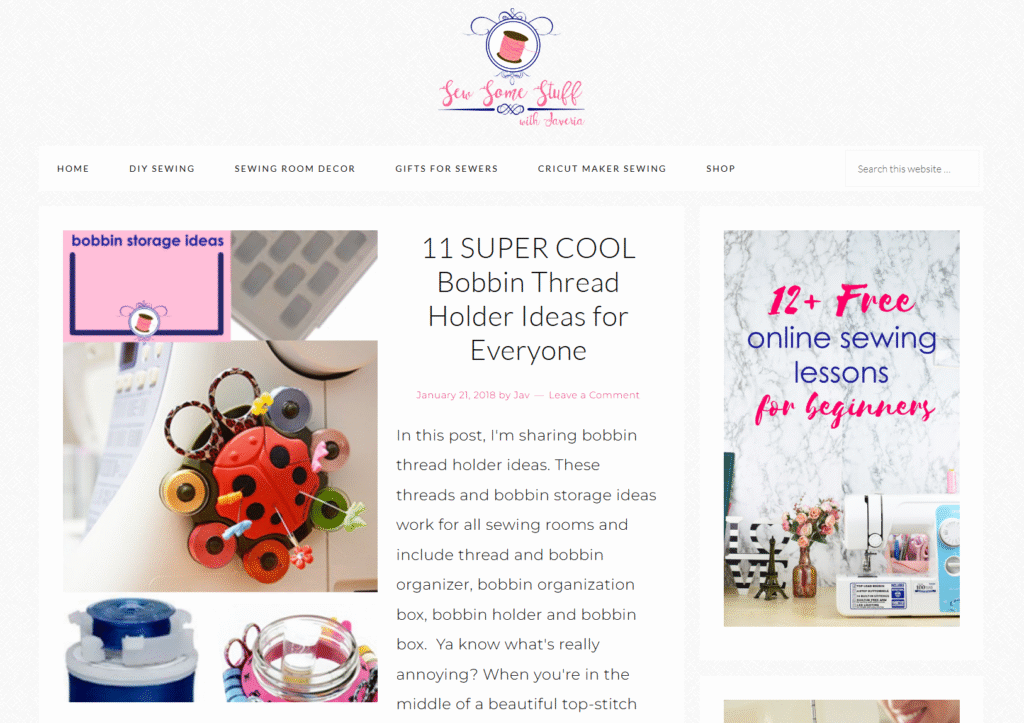
Javeriya, a science student with a serious bag-making hobby, created the blog to share her sewing passion. Tutorials on practical sewing techniques. Step-by-step guides for creating useful items. Tips for turning sewing skills into income.
The content resonated. People searching for sewing help found her clear, visual tutorials more helpful than vague Pinterest instructions or complicated pattern books.
Traffic built gradually through SEO as posts ranked for long-tail sewing keywords. Affiliate partnerships with sewing supply companies generated commissions when readers purchased recommended products.
Then Javeriya added a built-in e-commerce store selling branded merchandise—t-shirts, mugs, phone covers, and craft items related to sewing.
Here’s where it gets interesting: even after the blog went dormant with minimal new content or active promotion, it continued generating $2,000+ monthly.
Why? The foundational content remained evergreen. People still search for “how to sew a tote bag” or “beginner sewing projects” constantly. Those tutorials still rank. Visitors still click affiliate links. The store still processes orders.
According to HubSpot’s Evergreen Content Study, high-quality evergreen posts continue driving 75%+ of their total traffic years after publication.
This is passive income in its truest form—content working 24/7 generating revenue without active effort.
The Dual-Revenue Engine
Sew Some Stuff generates consistent monthly income through two complementary streams requiring minimal ongoing maintenance.
Affiliate Marketing provides the primary revenue source. Javeriya partners with major sewing supply brands, carefully curating product recommendations that align with her content and audience needs.
When readers click affiliate links embedded in tutorials and make purchases during the cookie period, commissions flow automatically.
This works because the recommendations are genuinely helpful rather than desperate product pushes. Someone reading “How to Make a Zippered Pouch” needs zippers, fabric, and interfacing. Affiliate links to quality supplies feel like helpful suggestions rather than advertisements.
According to Authority Hacker’s Affiliate Research, niche hobby sites see higher conversion rates than broad-topic sites because audiences actively seek product recommendations from trusted sources.
Display Advertising adds passive revenue. Partnerships with ad networks like Google AdSense or Mediavine generate income based on page views.
The blog averaged $416 monthly from ads alone according to the last published income report—modest but completely passive once implemented.
With solid monthly traffic even during dormancy, ads generate consistent income requiring zero active management.
Built-In E-Commerce Store provides the third revenue stream. Rather than sending traffic to external shops, Sew Some Stuff features an integrated store selling branded merchandise and craft items.
T-shirts with sewing-related designs, mugs with clever crafting quotes, phone covers, and handmade items all generate sales from existing traffic.
The built-in approach keeps visitors on-site rather than sending them elsewhere, increasing conversion rates. According to BigCommerce’s Integration Data, integrated blog-to-store setups convert 2-3x higher than external linking.
What Sew Some Stuff Got Right
Several strategic decisions created the passive income foundation that continues generating revenue during dormancy.
Specialization in Trending Niche established clear authority. Instead of covering all crafts broadly, Javeriya focused specifically on practical sewing and bag-making.
This specialization attracted targeted audiences actively seeking these exact skills rather than casual craft browsers.
The most popular posts teach sewing basics—foundational knowledge that remains relevant regardless of trends. These evergreen tutorials continue ranking and attracting beginners year after year.
Built-In Store Integration eliminated friction between content consumption and product purchase. Visitors reading tutorials can browse related products without leaving the site.
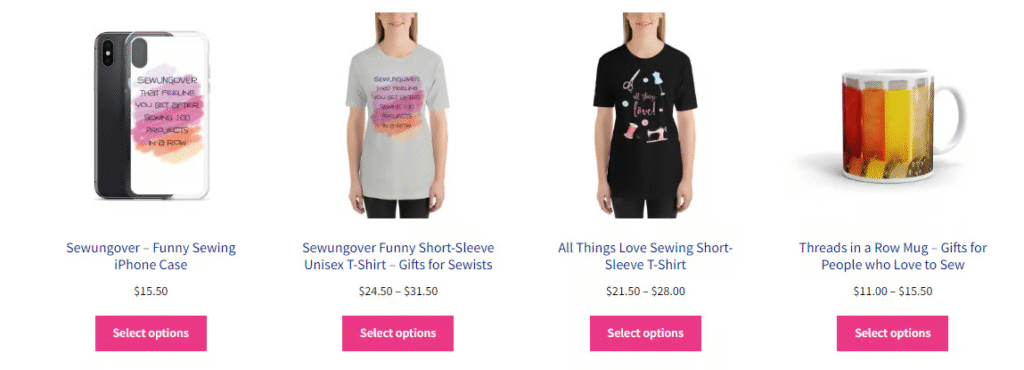
The store features ongoing promotions and coupon opportunities prominently displayed in headers, catching visitor attention and encouraging purchases.
This strategic integration turns content readers into potential customers seamlessly. According to Shopify’s Commerce Research, content-integrated stores see 45% higher average order values than standalone e-commerce sites.
Professional Website Appearance built trust immediately. Clean design, clear navigation, quality tutorials with helpful images and videos—everything communicated expertise and value.
This professionalism makes affiliate recommendations more credible. Visitors trust product suggestions from sites that appear professionally managed.
Video and Visual Tutorials addressed learning style preferences. Some people learn from written instructions. Others need visual demonstration. Providing both formats captured wider audiences.
The multimedia approach also improves SEO through video search rankings and increases time-on-site metrics that boost overall search authority.
The Critical Missed Opportunities
Here’s what’s fascinating: despite dormancy, Sew Some Stuff could easily 2-3x revenue through relatively simple optimizations.
Regular Content Updates are Completely Absent. The site hasn’t published new content or updated existing posts in years. This dormancy is killing potential growth.
Old posts need refreshing to maintain search rankings. Google favors recently updated content over stale material. Simply updating publication dates, adding new images, refining instructions, and updating affiliate links would restore lost search visibility.
According to Ahrefs’ Content Decay Study, regularly updating old posts can restore 60-200% of lost organic traffic within months.
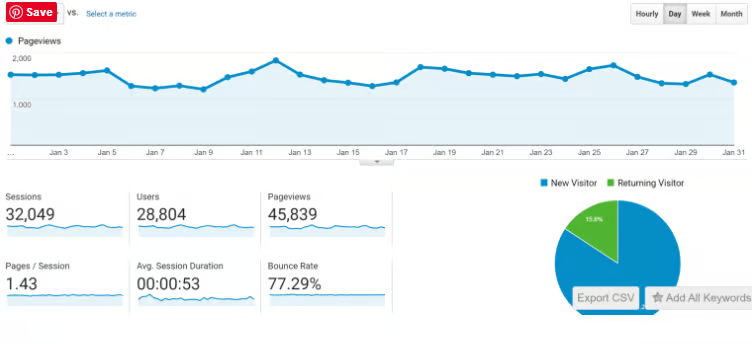
The site’s traffic data shows dramatic decline from previous peaks—purely because Google assumes abandoned sites provide less value than actively maintained ones.
Product Diversity Remains Limited. The store sells branded merchandise (shirts, mugs) and basic craft items but could expand dramatically.
Imagine selling actual sewing patterns designed by Javeriya, digital tutorials as paid products, sewing supply kits for specific projects, or curated bundles making it easy for beginners to start.
These product expansions would target the exact demographic already visiting—people interested in sewing who trust Javeriya’s expertise.
Promotional Content Missing. Despite having an e-commerce store, very few blog posts actually promote products or discuss them. Strategic product-focused content would drive store sales higher.
Posts like “My Favorite Sewing Tools and Why,” “Best Beginner Sewing Machines Under $200,” or “Essential Supplies for Bag Making” would naturally promote store products while providing value.
Social Media Promotion Nonexistent. With zero active social media presence, all traffic comes from search. Adding Pinterest, Instagram, or TikTok would multiply reach exponentially.
Sewing and crafting content thrives on visual platforms. Quick tutorials, finished project showcases, and behind-the-scenes making videos would attract massive audiences.
According to Hootsuite’s Platform Data, craft and DIY content sees 4x higher engagement rates than general lifestyle content on visual platforms.
Ad 🎯 Ready to put these strategies into action?
Theory is great, but execution is what drives growth. That’s where Max Business School™ comes in.
Inside, you’ll find step-by-step digital marketing courses (SEO, ads, email, social, content, and more) — taught by professionals, designed for beginners and business owners alike.
And the best part? It’s 100% free, online, and flexible.
→ Join Max Business School Today — Free
The Skills You Need to Build This
Let’s talk about what creating a passive sewing blog-ecommerce hybrid actually requires.
Craft Expertise in Your Niche provides the foundation. Javeriya’s bag-making skills and sewing knowledge give her credibility and content ideas.
You need genuine skill in your chosen craft—sewing, knitting, woodworking, jewelry making, whatever. Without authentic expertise, content feels hollow and fails to help.
Tutorial Creation Skills transform knowledge into teachable content. Breaking complex processes into clear steps, explaining techniques simply, and creating helpful visuals determines teaching effectiveness.
Photography and Video Basics make tutorials actually useful. Craft content demands clear visual demonstration. You don’t need professional equipment—smartphone cameras work fine—but understanding lighting, framing, and editing matters.
Tools like Canva for graphics and iMovie or CapCut for video editing make professional results accessible.
E-Commerce Setup Knowledge enables store integration. Understanding platforms like WooCommerce, Shopify, or BigCommerce, setting up payment processing, managing inventory basics, and handling shipping creates functional stores.
SEO Fundamentals drive the organic traffic making passive income possible. Keyword research for craft topics, on-page optimization, and backlink basics determine whether content gets found.
What Getting Started Actually Looks Like
Here’s the reality of building a craft blog with e-commerce integration:
Choose Your Specific Craft Niche. Javeriya focuses on practical sewing and bag-making—what will yours be? Knitting? Woodworking? Jewelry making? Soap crafting? Embroidery?
Specificity beats breadth. Better to own one craft category than spread thin across many.
Create 20-30 Comprehensive Tutorials before worrying about store setup. Focus on genuinely helpful content targeting beginner and intermediate skill levels.
These foundation posts establish expertise and start building search traffic.
Join Relevant Affiliate Programs for craft supplies. Amazon Associates provides easy entry. Add specialty programs from major craft retailers like Joann, Michaels, or niche suppliers in your category.
Set Up Built-In Store once you have traffic. Don’t launch stores before audiences exist. Start with print-on-demand services like Printful or Printify requiring zero inventory.
Sell branded merchandise featuring your blog name or clever craft-related designs.
Optimize for Pinterest Early. Craft content thrives on Pinterest where millions actively seek project ideas. Create vertical graphics for every tutorial.
Document Everything Through Photos/Video as you work on projects. This behind-the-scenes content becomes tutorial raw material.
The Passive Income Reality
Here’s what makes Sew Some Stuff’s story so compelling:
Passive income is real, but it requires substantial upfront work. Javeriya created dozens of quality tutorials before revenue materialized. She set up affiliate partnerships, integrated a store, and optimized for search.
That foundation—built over months or years—now generates $2,000+ monthly with minimal ongoing effort.
This is the passive income dream: content working perpetually after creation. But it only works if initial quality is high enough to keep ranking and helping people years later.
According to Mediavine’s Passive Income Study, bloggers achieving true passive income spent average 2-3 years building content libraries before revenue sustained without active effort.
The timeline is longer than gurus claim. But the result—income flowing regardless of current effort—makes the wait worthwhile.
The Bottom Line
Sew Some Stuff proves craft expertise can become passive income through strategic blog-to-e-commerce integration.
Javeriya didn’t need thousands of social media followers or viral fame. She needed genuine sewing skills, commitment to creating helpful tutorials, smart affiliate partnerships, and integrated store setup.
The craft content market remains viable. According to Association for Creative Industries data, the craft industry generates $44 billion annually in the U.S. alone, with millions actively seeking tutorials and supplies.
The question isn’t whether the model works—Sew Some Stuff’s dormant $2,000 monthly proves it does. The question is whether you have craft expertise worth teaching and commitment to create quality content that continues working after active effort stops.
If you do, you just saw exactly how a science student’s bag-making addiction became passive income through smart integration.