
How to Build a Travel Blog Earning $21K Monthly Through Affiliate Income
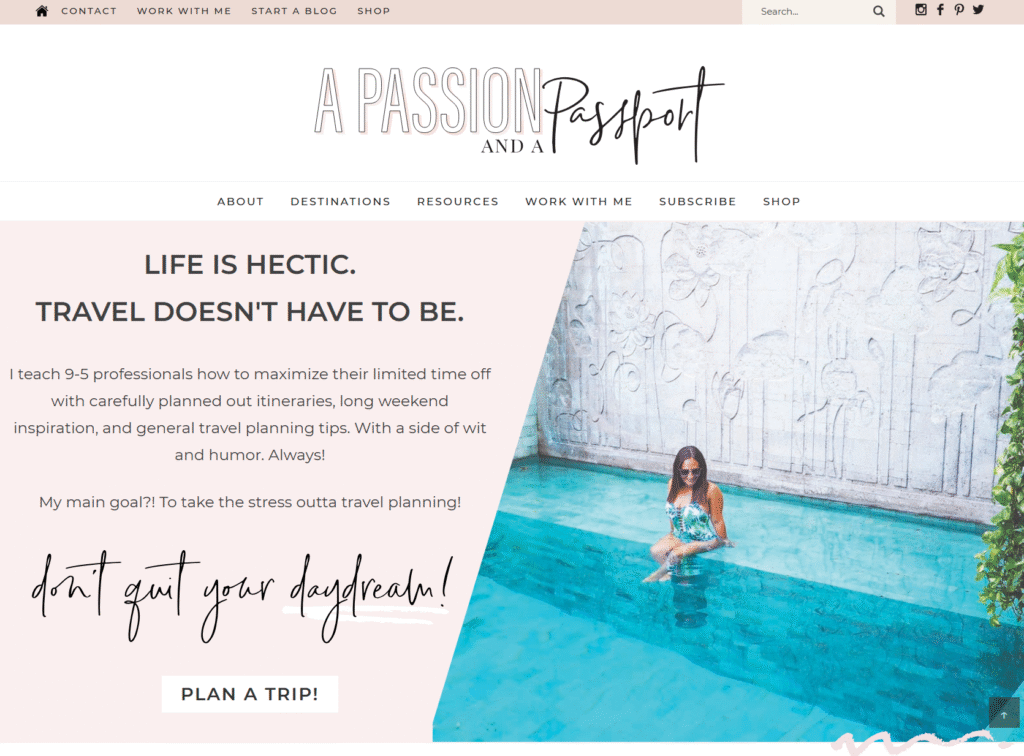
Jessica Kay was stuck in a cubicle dreaming about Bali.
Sound familiar?
But instead of just booking a two-week vacation and returning to the grind, she turned that wanderlust into a $21,000 monthly business that pays her to explore the world while teaching others to do the same.
Her blog, A Passport and A Passion, isn’t about posting pretty sunset photos on Instagram hoping brands notice. It’s a strategic income machine built on affiliate partnerships, digital products, and content that actually helps people escape their 9-to-5.
Here’s the twist that makes this interesting.
Jessica still has a full-time job she’s passionate about. This isn’t a “quit everything and travel the world” story. It’s proof you can build substantial side income through travel blogging without burning your life down first.
Ad 🎯 After studying 400+ business models, here’s what actually works for beginners…
Most “make money online” advice is garbage. Complex affiliate schemes. Dropshipping nightmares. Social media “influencing.”
We found something better: lead-generation funnels for manufacturers. Simple. Profitable. Fast results.
Our Max Incubator Phase 1 students are proof—they’re going from zero to their first $1,000 in 90 days with this exact model.
→ See the business idea that’s working for beginners this year
The Revenue Model That Funds Permanent Wanderlust
A Passport and A Passion generates $21,000 monthly through a diversified approach that most travel bloggers completely miss.
Affiliate Marketing with Hotels and Tours provides the bulk of the income. When readers book accommodations or experiences through Jessica’s recommendations, she earns commissions. Unlike random affiliate links scattered throughout posts, she partners strategically with brands that align with her audience’s actual needs.
This isn’t about shilling the most expensive hotels.
It’s about recommending places she’s actually stayed, tours she’s genuinely taken, and experiences that delivered value. That authenticity converts browsers into buyers because readers trust she’s not just chasing commissions.
Digital Product Sales through her shop page include travel essentials—cameras, tripod stands, portable bags, hair accessories. These aren’t arbitrary recommendations. They’re items she uses and swears by, which makes them easy to promote naturally within content.
Course Affiliate Marketing adds another income layer. Jessica promotes Making Sense of Affiliate Marketing, a popular blogging course, earning commissions when her readers enroll. It’s genius because her audience (aspiring travel bloggers) perfectly matches the course’s target market.
BlueHost Partnerships round out the affiliate strategy. Every new blogger needs hosting, and Jessica captures that demand by teaching people how to start their own travel blogs while monetizing through hosting referrals.
The revenue breakdown shows something crucial: multiple income streams mean stability when one channel underperforms.
What Makes This Travel Blog Actually Work
Most travel blogs die a quiet death after three months.
They post gorgeous photos. They write about “Top 10 Things to Do in Paris.” They wonder why nobody reads their content.
Jessica’s approach differs fundamentally. She teaches aspiring bloggers how to turn their passion into income while documenting her own adventures. That dual focus creates two distinct audiences—travelers seeking destination advice and entrepreneurs wanting to monetize their wanderlust.
The content strategy balances inspiration with education. You’ll find destination guides alongside tutorials on starting a travel blog, making money online, and escaping the corporate grind. This variety attracts different reader types while establishing authority across multiple topics.

Her authentic personality shines through the content. She’s not pretending travel is always Instagram-perfect. She shares real experiences, including the challenges, which builds trust far more effectively than curated highlight reels.
The website design uses soft colors and relaxing imagery that immediately signals “travel” without overwhelming visitors. Though the layout gets slightly crowded with varied fonts and colors, the overall aesthetic fits the niche.
Strategic partnerships with hotels and tour companies provide exclusive deals and discounts for readers. This creates a win-win-win situation: readers save money, partners gain customers, and Jessica earns commissions.
The Missing Pieces That Could Double Revenue
Even at $21,000 monthly, there’s massive room for growth.
Paid advertising is essentially nonexistent. While organic traffic through SEO works, paid ads on Facebook, Instagram, and Google could immediately spike conversions and page views. Most successful travel bloggers spend 10-20% of revenue on paid advertising to accelerate growth.
Think about it like this: If Jessica invested $2,000 monthly in targeted ads reaching people actively searching for “how to start a travel blog” or “make money while traveling,” she could potentially double her audience within six months.
Social media interlinking needs serious improvement. Her Instagram profile doesn’t effectively drive traffic back to the blog. In the travel blogging space, Instagram serves as a discovery engine that feeds the monetization machine (the blog).
Competitors like The Blonde Abroad and Nomadic Matt excel at using Instagram to tease blog content, driving followers to their websites where the actual monetization happens.
Email marketing appears underutilized. Building a substantial email list allows direct communication with the most engaged audience members. These subscribers convert at 10-20x higher rates than random website visitors because they’ve already raised their hand showing interest.
Ad 🎯 Ready to put these strategies into action?
Theory is great, but execution is what drives growth. That’s where Max Business School™ comes in.
Inside, you’ll find step-by-step digital marketing courses (SEO, ads, email, social, content, and more) — taught by professionals, designed for beginners and business owners alike.
And the best part? It’s 100% free, online, and flexible.
→ Join Max Business School Today — Free
What You Actually Need to Start a Travel Blog
Let’s demolish some myths about starting a profitable travel blog.
You don’t need to visit 50 countries before launching. You don’t need a $3,000 camera. You definitely don’t need to quit your job on day one.
Essential Skills:
- Writing clearly about destinations and experiences
- Basic photography (smartphone works fine initially)
- SEO fundamentals to rank in Google
- Affiliate marketing strategy
- Consistency to publish regularly for 12-18 months
Required Tools:
- WordPress website with Bluehost or similar hosting ($5-15/month)
- Domain name ($15/year)
- Email marketing platform like ConvertKit or Mailchimp
- SEO tool such as Ubersuggest or Ahrefs (starts at $30/month)
- Canva for graphics (free or $13/month)
The Reality Timeline: Jessica built A Passport and A Passion while maintaining full-time employment. The first year generated minimal income—maybe a few hundred dollars. Year two brought it to $2,000-$5,000 monthly as traffic compounded. By year three, affiliate partnerships and course promotions pushed revenue past $20,000 monthly.
This isn’t a “quit your job in three months” scheme. It’s a legitimate business model that requires patience, consistency, and strategic thinking.
The Strategic Genius Hidden in Plain Sight
Jessica’s approach works because she solves two problems simultaneously.
For travelers, she provides destination guides, money-saving tips, and authentic recommendations. For aspiring bloggers, she offers a roadmap showing how she turned passion into profit.
That dual positioning means she’s not competing with every travel blogger on the planet. She’s carved out a specific niche: travel bloggers who want to monetize.
The affiliate marketing strategy focuses on recurring partnerships rather than one-off promotions. Hotels and tour companies want ongoing relationships with bloggers who consistently send customers. Jessica built those relationships by proving she could drive bookings.
Product recommendations integrated naturally into content perform better than obvious promotional posts. When she writes about packing for a two-week Southeast Asia trip and mentions her favorite portable bag, it doesn’t feel like an ad—it feels like helpful advice.
The course affiliate strategy demonstrates sophisticated business thinking. Instead of creating her own course (massive time investment), she promotes an existing, proven course to an audience that perfectly matches its target market. She earns commissions without the headache of course creation, support, or maintenance.
The Bottom Line on Travel Blog Profits
The travel blogging industry is saturated with gorgeous Instagram feeds and generic destination guides.
Jessica Kay wins by teaching people how to make money while satisfying wanderlust. She’s not just another travel blogger—she’s a business strategist who happens to travel.
The model works because demand is evergreen. People will always want to travel, and a growing segment wants to get paid for it. Affiliate partnerships with hotels and tour companies provide commission opportunities that scale with audience growth.
You don’t need to choose between stable income and travel dreams. You can build a business that funds both—but only if you approach it strategically rather than just posting pretty pictures and hoping for sponsorships.
Jessica’s cubicle daydreams became a $21,000 monthly reality because she understood something crucial: people don’t just want to see beautiful destinations. They want to know how to get there affordably and, ideally, how to get paid while doing it.
Sometimes the best businesses come from solving your own problems first.