
How to Earn $2K Monthly with Trading Software ($24K Yearly)
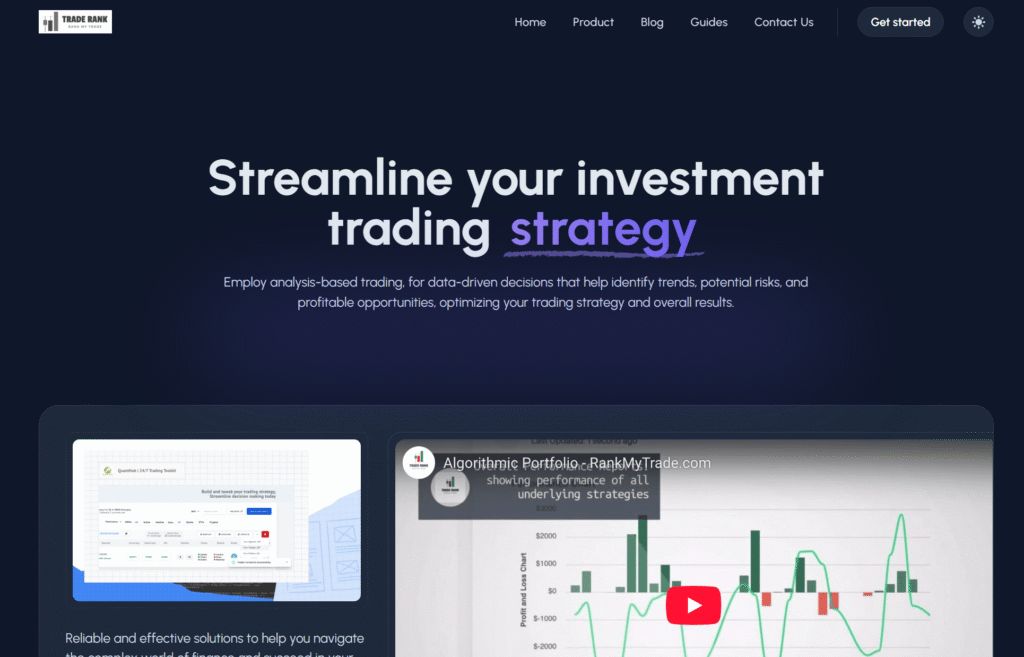
Here’s a business making $2,000 a month by solving a problem most people don’t even know exists.
It’s not selling stocks or investment advice. It’s selling software that helps traders build and test their strategies without knowing how to code.
Twenty-four thousand dollars a year might not sound life-changing compared to the crochet and food blog businesses we’ve discussed, but here’s what makes this interesting: the profit margins on software are ridiculous, and this appears to be a very early-stage business with massive growth potential.
Let me show you how this works.
Ad 🎯 After studying 400+ business models, here’s what actually works for beginners…
Most “make money online” advice is garbage. Complex affiliate schemes. Dropshipping nightmares. Social media “influencing.”
We found something better: lead-generation funnels for manufacturers. Simple. Profitable. Fast results.
Our Max Incubator Phase 1 students are proof—they’re going from zero to their first $1,000 in 90 days with this exact model.
→ See the business idea that’s working for beginners this year
The Product That Actually Solves Something
Most trading software is either too simple (just charts and basic indicators) or too complex (requires programming knowledge to do anything useful). This business found the gap between those extremes.
The Strategy Builder That Doesn’t Need Code
The core product is a strategy builder that lets traders automate their trading approaches without writing any code.
Think about what that means. A trader wants to test the hypothesis: “What if I buy when the 50-day moving average crosses above the 200-day moving average, but only if trading volume is above average?”
Normally you’d need to know Python or another programming language, write the code yourself, debug it, and hope it works. Or pay thousands for someone to build it for you.
This platform lets you build that strategy by clicking buttons and selecting from menus. No coding. No technical knowledge. Just logical thinking about your strategy.
The market for this is traders who know what they want to test but don’t have the technical skills to implement it. That’s a surprisingly large group—millions of people trade stocks, but only a tiny fraction can code.
Technical Analysis and Portfolio Optimization
Beyond strategy building, the platform offers technical analysis tools and portfolio optimization features. These are the kinds of things professional traders use, made accessible to regular investors.
The fintech space is filled with tools promising to make you rich. Most are garbage. What makes this platform notable is it’s not promising returns—it’s offering tools. “Here’s better data and automation. What you do with it is up to you.”
That’s a healthier value proposition than “use our AI to get rich quick,” which is what half the fintech startups are selling.
The Pricing Strategy
Smart pricing can make or break a software business. This platform uses tiered pricing for different customer types.
Individual self-directed traders get one pricing tier. Professional and commercial investors get different tiers with more features and presumably higher prices.
This is textbook good SaaS (Software as a Service) pricing strategy. Start with a lower tier to capture individual users and prove value. Upsell to professional tiers where the real money is. Enterprise and institutional customers pay significantly more but also demand more features and support.
The beauty of software pricing is you can often charge professional users 10x what you charge hobbyists for essentially the same product with some extra features. They’re paying for the value it brings their business, not the cost of delivering it.
What This Business Does Exceptionally Well
Let’s talk about why this operation works despite being relatively small and early-stage.
A Product That Stands Out
In a sea of trading platforms, this one differentiates itself through accessibility. It’s not trying to be everything to everyone—it’s specifically solving the “I want to automate my strategy but can’t code” problem.
Product differentiation in crowded markets is everything. If you’re just another generic option, you’re competing purely on price or brand recognition (which you don’t have as a startup). But if you solve a specific problem uniquely well, you can charge premium prices to a smaller, more targeted audience.
The comprehensive feature set—strategy building, analysis tools, optimization—means users don’t need multiple platforms. Everything lives in one ecosystem, which increases switching costs (once someone builds their strategies in your platform, moving to a competitor means rebuilding everything).
User Experience That Doesn’t Overwhelm
Go to most trading platforms and you’re greeted with seventeen screens of charts, data, blinking numbers, and interface complexity that makes you feel like you’re flying a 747.
This platform prioritizes simplicity. Clean interface. Clear navigation. Dark mode option (which traders love for staring at screens all day). Straightforward messaging about what the product does.
User experience isn’t just about looking pretty—it’s about reducing friction. Every confusing element is a potential bounce. Every unclear message is a lost conversion. When you’re selling B2C software, ease of use often matters more than feature depth.
The homepage communicates value quickly without walls of text. The menu structure makes finding features obvious. The toggle for light/dark modes shows attention to user preferences.
These seem like small details, but small details compound into “this platform just feels better to use than competitors.”
Lead Generation Through Free Demos
The email capture strategy is smart: offer a demo in exchange for an email address.
This works because trading software is something people want to test before buying. The demo reduces perceived risk (“I can see if this works for me before paying”) while giving the business a qualified lead to nurture.
Free trials and demos are standard in SaaS for good reason—they work. Conversion rates for free trial users are dramatically higher than cold sales because people have experienced the value firsthand.
Once someone’s email is captured, the business can send educational content, feature highlights, case studies, and offers over time. Not everyone converts immediately, but some convert weeks or months later when they’re ready.
Where This Business Leaves Money on the Table
For a two-thousand-dollar-a-month business, there are obvious growth opportunities not being pursued.
Educational Content Could Drive Massive Traffic
The platform has the foundation for a content strategy but isn’t executing it. Trading education is one of the most searched topics on the internet. Terms like “how to build a trading strategy” or “technical analysis for beginners” get millions of monthly searches.
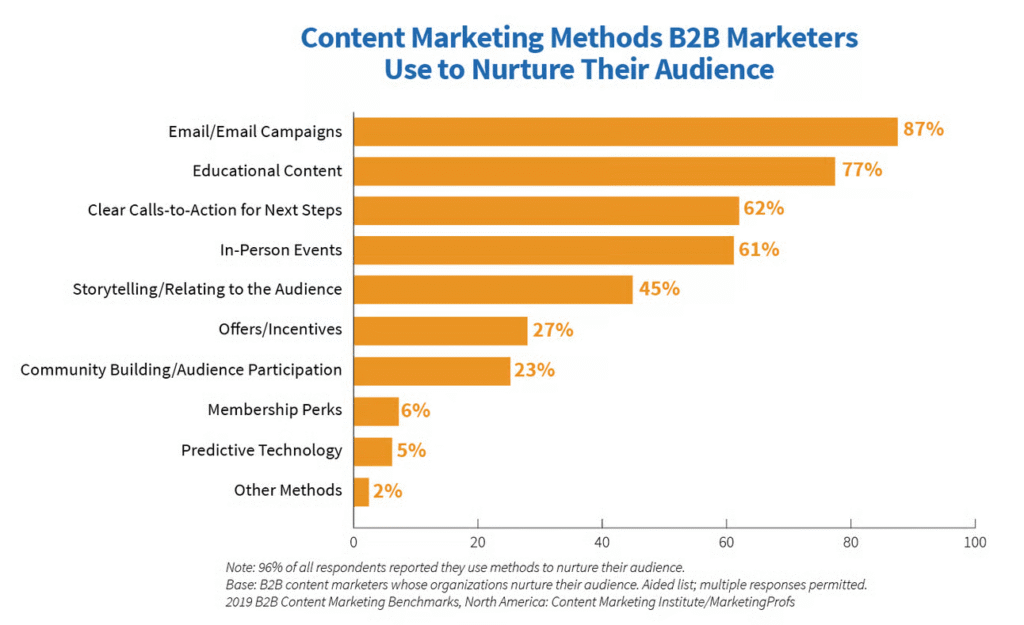
Creating an extensive library of tutorials, articles, and webinars would serve two purposes:
First, SEO traffic. Rank for trading-related keywords and you’re capturing people already interested in trading who might become customers.
Second, authority building. When your content teaches people effectively, they trust you. Trust leads to purchases.
Look at what Investopedia or TradingView have done with educational content. They dominate search results for trading terms, which funnels users to their platforms.
Social Trading Community
Trading is inherently social. People want to discuss strategies, share results (the profitable ones, anyway), and learn from others.
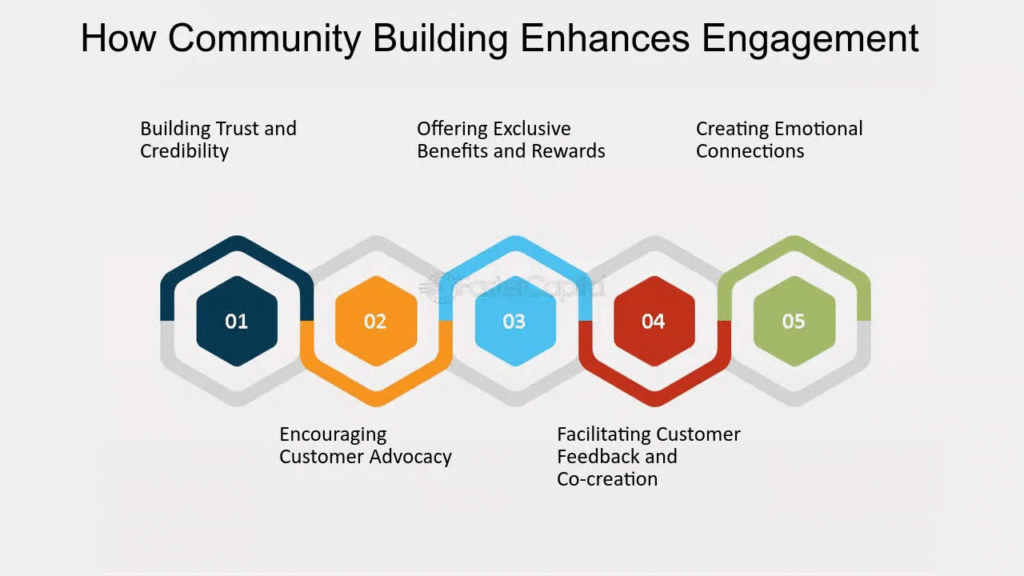
A built-in social trading feature where users could share strategies, follow successful traders, or even mirror trades (copying what others do) would increase engagement dramatically.
When users spend more time on your platform interacting with community features, they’re more likely to remain customers. Plus, community features create network effects—the platform becomes more valuable as more people use it, which attracts even more users.
eToro built much of its growth on social trading features. There’s no reason a strategy-building platform couldn’t incorporate similar elements.
SEO and Social Media Are MIA
The online presence for this business is essentially nonexistent. Search for related keywords and this platform doesn’t appear. Check social media and there’s minimal activity.
For a software business, that’s leaving growth on the table. Basic SEO tactics—keyword research, optimized content, backlink building—would drive organic traffic. Social media marketing, particularly on LinkedIn and Twitter where finance professionals congregate, would increase brand awareness.
Even modest paid advertising campaigns on Google or Facebook targeting traders and investors could scale revenue quickly while the lifetime value of customers is being proven.
Ad 🎯 Ready to put these strategies into action?
Theory is great, but execution is what drives growth. That’s where Max Business School™ comes in.
Inside, you’ll find step-by-step digital marketing courses (SEO, ads, email, social, content, and more) — taught by professionals, designed for beginners and business owners alike.
And the best part? It’s 100% free, online, and flexible.
→ Join Max Business School Today — Free
The Business Behind the Platform
Time to reveal the actual business: RankMyTrade.com.
The team behind it understands the trading industry and built a tool addressing real pain points. They’re taking a data-driven approach, combining analytics with technology to help traders make better decisions.
What’s notable is they’re not promising results—they’re providing tools. In an industry full of scams and get-rich-quick schemes, that’s refreshing.
The platform is still young, which explains the relatively modest revenue. But the foundation is solid: a differentiated product, clear value proposition, and scalable business model.
Your Key Lessons
Let’s extract the universally applicable insights from this case study:
Solve a specific problem really well rather than trying to be everything to everyone. “Trading platform” is too broad. “No-code strategy builder for traders” is focused enough to dominate.
User experience directly impacts conversion rates. If your product is confusing or ugly, people won’t use it regardless of how powerful it is.
Lead generation compounds. Every email captured is a potential future customer, even if they don’t convert immediately.
Educational content builds authority and traffic. Teaching people related to your product brings qualified leads who already value your expertise.
Community features increase retention. Users who interact with others on your platform are less likely to leave.
SEO and paid advertising aren’t optional for digital products. If people can’t find you, it doesn’t matter how good your product is.
What You’d Need to Build This
Let’s be realistic about starting a trading software business like this.
You need technical skills—either software development experience yourself or the budget to hire developers. Building financial software isn’t like spinning up a WordPress blog. It requires actual engineering.
You also need domain knowledge in trading and finance. You don’t need to be a Wall Street veteran, but you must understand trading concepts well enough to build tools traders actually want.
Then comes the regulatory awareness. Financial software exists in a regulated environment. You need to understand compliance requirements, data security standards, and legal considerations around financial advice (even when you’re technically just providing tools, not advice).
The skill stack includes product development, UX/UI design, some understanding of financial markets, marketing and SEO, and customer support capabilities.
The honest truth? This type of business has higher barriers to entry than crochet patterns or food blogging. That’s both bad news (harder to start) and good news (less competition once you’re established).
Most software businesses fail not because the product is bad but because distribution is hard. Building software is the easy part. Getting people to know it exists, trust it, and pay for it is the challenge.
But if you can crack that combination—good product, good marketing, growing user base—software businesses scale beautifully. The cost to serve customer number 10,000 is basically the same as serving customer number 10, which means profit margins increase dramatically as you grow.
At $2K monthly, this business is proving the concept works. With proper SEO, content marketing, and product improvements, there’s no reason it couldn’t scale to $20K or $200K monthly within a few years.
The foundation is there. The opportunity is clear. Now it’s about execution.