
How to Earn $6K Monthly with Arabic Calligraphy Jewelry ($72K Yearly)

Katie Miranda turned Arabic calligraphy into a six-thousand-dollar-per-month jewelry business.
Not by targeting mainstream fashion trends or competing with major jewelry brands. By creating something deeply meaningful that connects people with Arabic and Islamic cultural heritage through wearable art.
This is the story of how passion for social justice, artistic talent, and smart business strategy combined into a profitable venture that’s about much more than just making money.
Let me walk you through how she built it.
Ad 🎯 After studying 400+ business models, here’s what actually works for beginners…
Most “make money online” advice is garbage. Complex affiliate schemes. Dropshipping nightmares. Social media “influencing.”
We found something better: lead-generation funnels for manufacturers. Simple. Profitable. Fast results.
Our Max Incubator Phase 1 students are proof—they’re going from zero to their first $1,000 in 90 days with this exact model.
→ See the business idea that’s working for beginners this year
The Origin Story That Shaped Everything
In 2005, Katie visited Palestine and witnessed struggles that changed her perspective on how art could create impact.
She wasn’t content being a spectator to injustice. She wanted to do something meaningful with her artistic skills to make a difference.
Katie had become skilled at Arabic calligraphy—the beautiful, flowing script that’s both language and art form. She saw opportunity to create jewelry showcasing this stunning artistic tradition while building bridges between cultures.
The idea was simple but powerful: create sterling silver jewelry featuring Arabic calligraphy and Islamic designs that would be beautiful, meaningful, and introduce people to a rich cultural tradition they might not otherwise encounter.
Starting was difficult. Building online businesses wasn’t Katie’s background. Finding the right audience for unique cultural jewelry required learning marketing from scratch while simultaneously creating products and managing operations.
But she persisted through the challenges, working relentlessly to turn her vision into reality.
The Product Line That Tells Stories
Katie’s jewelry isn’t just accessories—each piece carries meaning and cultural significance.
Sterling Silver with Arabic Calligraphy
The original product line focused on sterling silver pieces featuring Arabic calligraphy and Islamic geometric designs.
Arabic calligraphy is inherently beautiful. The flowing script and intricate designs are visually striking even to people who don’t read Arabic. Combined with quality sterling silver, the result is jewelry that’s both artistic and wearable.
Each design often incorporates meaningful words or phrases in Arabic—words related to peace, love, faith, or cultural concepts. For Arabic speakers and those connected to the culture, wearing these pieces is deeply personal expression of identity and values.
For others, the jewelry represents appreciation for the artistic tradition and cultural connection even without Arabic language ability.
The jewelry market for cultural heritage has grown as people increasingly value authentic artistic traditions over mass-produced fashion jewelry. There’s willingness to pay premium prices for pieces with genuine cultural significance and artistic merit.
Strategic Product Expansion
Katie smartly expanded beyond just jewelry into complementary products: clothing with Arabic-inspired designs, mugs, fine art prints, puzzles, and other items.
This diversification serves multiple purposes. It broadens appeal to customers who want cultural connection but maybe aren’t jewelry buyers. It increases average order value when customers purchase multiple related items. It makes the brand feel more comprehensive rather than single-category limited.
The expansion remained true to the original cultural theme rather than randomly adding unrelated products. Everything connects back to celebrating and sharing Arabic and Islamic artistic heritage.
Expansion also provides gift-giving options at different price points. Not everyone can afford or wants sterling silver jewelry, but they might buy mugs or puzzles as gifts or personal items.
The Business Model That Actually Works
Six thousand monthly comes from e-commerce sales, but the positioning and strategy behind those sales matters enormously.
Direct-to-Consumer Through Own Website
Selling through her own website rather than exclusively through marketplaces like Etsy gives Katie control over brand presentation, customer relationships, and profit margins.
Marketplace fees can consume 10-20% of revenue. Selling directly keeps more money while building direct customer relationships through email collection and repeat purchase opportunities.
The e-commerce jewelry market has matured significantly. Customers are comfortable buying jewelry online when quality photography, detailed descriptions, and strong return policies reduce risk.
Katie’s site showcases products beautifully with clear photos showing details, comprehensive descriptions explaining cultural significance, and prominent calls-to-action making purchasing straightforward.
Wholesale Opportunities for Scaling
Offering wholesale options allows gift shops, museum stores, and boutiques to carry the products.
Wholesale typically means lower per-unit margins but higher volume and reduced marketing burden. Retailers do the customer acquisition and selling—Katie just fulfills larger orders to fewer customers.
Wholesale also builds brand recognition as products appear in physical locations. Someone discovering the jewelry in a museum gift shop might later purchase directly from the website, providing both the wholesale sale and eventual direct customer.
Museum and cultural center gift shops are particularly good fit for this product line. Visitors already interested in culture and art are ideal customers for cultural jewelry and products.
Leveraging Press and Media Attention
Being featured in Vogue and Al Jazeera provided enormous credibility and visibility boosts.
Major media features act as third-party validation. When prestigious publications highlight your work, it signals to potential customers that this is legitimate, noteworthy, and worth attention.
Each feature drives traffic spikes as readers discover the products. Some become customers immediately. Others bookmark for later. All of it builds awareness that compounds over time.
The cross-cultural appeal helps media interest. Western fashion publications appreciate the artistic beauty. Middle Eastern media appreciates authentic cultural representation. Both angles generate coverage.
What Katie’s Business Does Exceptionally Well
Six thousand monthly from cultural jewelry requires executing several things correctly.
Authentic Niche Positioning
The business isn’t trying to be everything to everyone. It’s specifically about Arabic and Islamic cultural heritage expressed through artistic jewelry and products.
This clear positioning attracts the right customers: people connected to the culture, those interested in cultural appreciation, gift buyers seeking meaningful presents, and anyone valuing authentic artistic traditions.
Clear positioning also makes marketing more efficient. You’re not wasting effort on broad audiences unlikely to care. You’re targeting people predisposed to appreciate exactly what you offer.
The authenticity matters enormously. Katie’s not exploiting culture for profit—she’s genuinely celebrating and sharing it with respect and knowledge. That authenticity shows through in product design, messaging, and brand values.
Customers aren’t just buying jewelry—they’re supporting a mission of cultural bridge-building and peace. That emotional connection creates loyalty beyond transactional relationships.
Strategic Media Coverage Building Credibility
The Vogue and Al Jazeera features weren’t accidents—they’re results of strategic outreach and compelling story.
Katie’s background combining art, social justice, and cultural appreciation makes for interesting storytelling. Media loves narratives about purpose-driven businesses doing good while succeeding commercially.
Each media appearance provides content for the website. “As featured in Vogue” badges displayed prominently build instant credibility with new visitors who might otherwise be skeptical of an unfamiliar brand.
The diverse media sources (fashion publications, news networks, cultural media) demonstrate broad appeal across different audience segments. This isn’t niche in a limiting way—it’s niche in a focused way that actually reaches diverse groups.
Product Photography and Presentation
The jewelry is photographed beautifully, showing details clearly while conveying the artistic quality and cultural significance.
For e-commerce jewelry, photography quality directly impacts conversion rates. Customers can’t touch or try on products, so images must communicate quality, size, details, and how pieces look when worn.
Multiple angles, close-ups of calligraphy details, and photos showing jewelry on models help customers visualize purchases. Detailed product descriptions explaining cultural meanings and design elements add value beyond just showing pretty pictures.
The website design uses prominent calls-to-action making the path to purchase obvious. Clear “Shop Now” buttons, well-organized product categories, and streamlined checkout reduce friction throughout the buying journey.
Customer Reviews Building Social Proof
Displaying customer reviews prominently helps overcome skepticism about buying jewelry from unfamiliar brands.
Reviews provide unbiased opinions from real customers about quality, sizing, shipping, and overall satisfaction. Positive reviews reassure potential buyers that others had good experiences.
For cultural products specifically, reviews from people within the culture confirming respectful, authentic representation are particularly valuable. They validate that this isn’t cultural appropriation or exploitation.
The review strategy also provides user-generated content and insights into what customers value most, which informs product development and marketing messaging.
Where This Business Could Level Up
At $6K monthly, there’s clear room to scale with some strategic improvements.
Blog SEO Desperately Needs Attention
The blog exists but organic traffic is only 172 visits monthly. That’s shockingly low and represents massive missed opportunity.
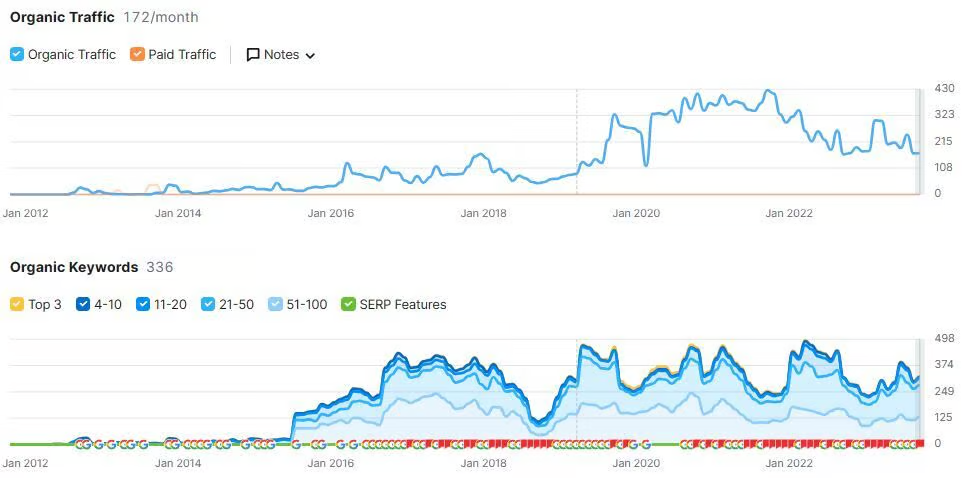
People constantly search for information about Arabic calligraphy, Islamic art, jewelry meaning, cultural traditions, gift ideas, and related topics. Creating comprehensive content targeting those searches would drive consistent free traffic.
Content ideas practically write themselves: “Meaning of Common Arabic Calligraphy Phrases,” “Guide to Arabic Calligraphy Styles,” “Cultural Significance of Islamic Geometric Designs,” “How to Choose Meaningful Arabic Jewelry,” “History of Arabic Calligraphy Art.”
Each article targets specific searches while naturally incorporating products. Someone learning about calligraphy styles discovers jewelry featuring those styles. Someone researching meaningful gifts finds specific product recommendations.
Regular blog updates with quality content optimized for relevant keywords would dramatically increase organic visibility over 6-12 months. The cultural jewelry and art market has substantial search volume waiting to be captured.
Email Marketing Strategy Needs Overhaul
The email opt-in form sits buried at the bottom of the website where almost nobody sees it.
Email lists are goldmines for e-commerce because they enable direct marketing without paying platforms for access. Someone on your list can be marketed to repeatedly at minimal cost.
Moving the opt-in to prominent position with compelling incentive would dramatically increase capture rates. Offer new subscribers 10% off first purchase, or exclusive access to new designs, or educational content about Arabic calligraphy.
Exit-intent popups capture visitors before they leave. “Before you go, join our community and get 10% off” converts people who found the site interesting but weren’t quite ready to purchase.
Email sequences nurture subscribers: welcome series introducing the brand story, educational content about cultural significance, seasonal promotions, new product launches, customer stories. Regular valuable emails keep the brand top-of-mind.
For jewelry and cultural products, email marketing is especially effective because purchases are often gift-driven or emotion-driven rather than immediate need. Someone visits in January, joins the email list, sees Mother’s Day email in May, and buys. That customer acquisition happens because email maintained the connection.
Social Media Presence Could Multiply Reach
Cultural and artistic jewelry is inherently visual and shareable, yet social media seems underutilized.
Instagram is perfect for this business. Beautiful product photos, calligraphy close-ups, customer photos wearing pieces, behind-the-scenes design process, educational content about cultural meanings—all perform well visually.
Short videos showing jewelry details, explaining calligraphy meanings, or demonstrating how pieces are made create engaging content that builds connection beyond just product promotion.
Pinterest works excellently for jewelry because people use it specifically for browsing and saving ideas. Someone pinning jewelry for later often returns months later when actually shopping for gifts or personal purchases.
TikTok’s educational content performs surprisingly well. Short videos explaining Arabic phrases, showing calligraphy art, or telling stories behind designs could reach entirely new audiences, especially younger demographics.
Consistent social media presence builds community around the brand. Customers and culture enthusiasts interact, share their own connections to the designs, and become brand advocates organically.
Potential for Cultural Workshops and Education
Expanding into workshops teaching Arabic calligraphy or cultural appreciation could add revenue streams while deepening brand mission.
Virtual or in-person workshops create experiences beyond physical products. People pay for learning opportunities, especially when taught by genuine experts sharing culturally significant traditions.
Educational content also positions Katie as authority rather than just retailer. Authority builds trust, which drives sales while serving the broader mission of cultural understanding.
Workshops create community among participants who might otherwise be isolated customers. Community members become loyal advocates spreading word-of-mouth and driving organic growth.
Ad 🎯 Ready to put these strategies into action?
Theory is great, but execution is what drives growth. That’s where Max Business School™ comes in.
Inside, you’ll find step-by-step digital marketing courses (SEO, ads, email, social, content, and more) — taught by professionals, designed for beginners and business owners alike.
And the best part? It’s 100% free, online, and flexible.
→ Join Max Business School Today — Free
The Founder’s Journey and Vision
Katie Miranda’s story is fundamentally about using business as vehicle for positive impact.
She didn’t start asking “what can I sell for profit?” She started asking “how can I use my skills to make a difference?” The business model emerged from that purpose-driven foundation.
That authentic motivation shows through everything. The product quality, the respectful cultural representation, the educational content, the peace-focused messaging—none of it feels like marketing gimmick. It’s genuine expression of values.
Katie’s artistic talent provides the foundation, but her willingness to learn business skills made it sustainable. Many artists struggle commercially because they resist learning marketing, operations, and strategy. Katie embraced those disciplines while maintaining artistic integrity.
The business success (from startup struggles to $6K monthly and media features) demonstrates that purpose and profit aren’t mutually exclusive. You can build profitable businesses while staying true to values and making positive impact.
Her team composition—people from diverse backgrounds united by shared mission—reflects commitment to authentic cultural representation rather than one person’s interpretation.
Your Essential Lessons
Extract the universally applicable insights from this jewelry business:
Niche cultural positioning creates defensible market space. Trying to compete in generic jewelry is impossible for small businesses. Specializing in cultural artistic traditions creates unique positioning.
Authenticity matters more than marketing polish. Genuine passion and respect for cultural traditions resonates more powerfully than slick marketing campaigns lacking substance.
Media features provide enormous credibility boosts. Being featured in respected publications accelerates trust-building that would otherwise take years.
Product expansion should serve existing customers. Adding clothing and home goods works because the same people buying cultural jewelry want related cultural products.
Wholesale creates scaling opportunities. Direct-to-consumer provides margins, but wholesale adds volume and physical presence in strategic locations.
Mission-driven businesses build loyal communities. Customers who connect with your values become advocates beyond just repeat purchasers.
Blog content drives long-term organic traffic. Educational content about cultural topics attracts ongoing searches while establishing authority.
Email lists provide sustainable customer relationships. Direct communication independent of platforms or algorithms ensures lasting connection with customers.
Social media amplifies reach for visual products. Beautiful, meaningful jewelry practically begs to be shared visually across social platforms.
What You’d Need to Launch This
Let’s be realistic about starting a cultural jewelry business or similar venture.
You need genuine knowledge and respect for the culture you’re representing. Katie’s Arabic calligraphy skills and cultural understanding aren’t superficial—they’re deep and authentic. Without that, you risk cultural appropriation or disrespectful representation.
The skill stack includes artistic design ability, jewelry production knowledge or manufacturing partnerships, e-commerce platform management, product photography, storytelling and copywriting, basic SEO for content marketing, and customer service capabilities.
Starting capital varies significantly. If you’re creating jewelry yourself: $2,000-5,000 for materials, tools, and initial inventory. If working with manufacturers: $5,000-15,000 for minimums, website, photography, and initial marketing.
Manufacturing partnerships require research finding producers who can execute your designs with quality standards meeting your vision. The jewelry manufacturing process has many suppliers, but vetting quality and reliability is crucial.
Here’s the honest assessment: cultural jewelry works when you have authentic connection to the culture, artistic skill to create beautiful designs, and respect to represent traditions appropriately without exploitation.
Generic jewelry businesses struggle because competition is brutal and differentiation is difficult. Cultural positioning creates uniqueness that’s hard to replicate.
The key challenges are finding your audience (the people who will appreciate and value your specific cultural focus), maintaining quality as you scale, and balancing commercial success with cultural respect and authenticity.
Katie Miranda proves the model works. From difficult beginnings to $6K monthly with major media features demonstrates that combining artistic talent, cultural knowledge, authentic passion, and strategic business execution creates sustainable, meaningful businesses.
With improved blog SEO and email marketing, $10K-15K monthly is absolutely achievable within 12-18 months. The product quality and brand positioning are solid—it’s just about reaching more of the substantial audience already looking for exactly what she offers.
The Broader Implications
This case study matters beyond just jewelry business mechanics. It demonstrates how businesses can serve purposes larger than profit while remaining commercially viable.
Katie’s mission of cultural bridge-building through artistic jewelry shows that commerce and social good aren’t opposing forces. Business provides the structure and resources to amplify impact that pure activism alone might not achieve.
The cultural appreciation angle is particularly relevant in increasingly globalized world. People hunger for authentic cultural connections, meaningful products with stories, and ways to express values through purchasing choices.
Businesses that tap into those desires while respecting cultural origins create loyal customers and positive impact simultaneously. That’s the definition of sustainable success.
For anyone considering businesses in cultural spaces: approach with genuine respect, learn deeply before representing, partner with community members when possible, and ensure your commercial success benefits rather than exploits the culture you’re celebrating.
Katie’s success shows it’s possible to build thriving businesses while staying true to values, respecting cultural heritage, and using commerce as force for connection rather than just transaction.
The opportunity exists across countless cultural traditions and artistic forms waiting for respectful, talented entrepreneurs to share them with wider audiences. The question is whether you have the authentic passion and cultural respect to do it right.