
How to Grow a Personal Blog to $100K+ Monthly Revenue (Real Case Study Breakdown)
Melyssa Griffin was grading papers when she had the thought.
The same thought millions of people have every Sunday evening as the weekend dies and Monday morning looms: “There has to be a better way to make a living.”
But here’s where her story diverges from the typical daydream.
She actually did something about it.
Today, Melyssa runs a personal development blog that generates over six figures monthly. Not annually—monthly. We’re talking about the kind of money that makes your old high school guidance counselor question every piece of career advice they ever gave.
And she did it without venture capital, without a trust fund, without some revolutionary technology. Just a blog, strategic thinking, and a willingness to treat content creation like the serious business it can become.
I’m going to walk you through exactly how she built this machine, where the money actually comes from, what she did brilliantly, where she left money on the table, and most importantly—how you can replicate this model in your own niche.
Because here’s the truth most blogging “gurus” won’t tell you: the difference between blogs that make beer money and blogs that replace six-figure salaries isn’t talent or luck.
It’s understanding the business model.
Ad 🎯 After studying 400+ business models, here’s what actually works for beginners…
Most “make money online” advice is garbage. Complex affiliate schemes. Dropshipping nightmares. Social media “influencing.”
We found something better: lead-generation funnels for manufacturers. Simple. Profitable. Fast results.
Our Max Incubator Phase 1 students are proof—they’re going from zero to their first $1,000 in 90 days with this exact model.
→ See the business idea that’s working for beginners this year
The Revenue Architecture: Where $100K Monthly Actually Comes From
Let’s pull back the curtain on the money.
Most beginning bloggers think income comes from slapping some ads on a website and calling it a day. They’re not entirely wrong—just catastrophically incomplete in their thinking.
Melyssa built a revenue fortress with multiple reinforced walls. If one income stream has a slow month, three others pick up the slack. This isn’t accidental diversification. It’s intentional business architecture.
The Flagship: Blog to Biz Hive Course
Her primary revenue driver is an e-course called Blog to Biz Hive (BBH). This isn’t some thrown-together Udemy course teaching basic blogging concepts. It’s a comprehensive program that walks students through every step of building a profitable blog from absolute zero to consistent income.
The pricing strategy here reveals sophistication most bloggers miss entirely.
She offers three distinct payment tiers. Not just “buy this course for $997″—but rather a carefully constructed ladder that meets customers wherever they are financially and psychologically.
Think about the brilliance of this approach. Someone who’s nervous about investing in online education can dip their toe in at the lower tier. Someone who’s serious and ready to commit can grab the premium package with all the bells and whistles. Someone in between gets the Goldilocks option.
Each tier has a one-time payment option OR a payment plan.
This single decision eliminates one of the biggest objections in the buying process: “I can’t afford to pay this much right now.” Payment plans transform a $2,000 barrier into a $200 monthly decision. Psychologically, these are entirely different conversations happening in a prospect’s mind.
The online course industry is projected to reach $840 billion by 2030, and Melyssa positioned herself early in this gold rush. But she didn’t stop with one course.
She created multiple blogging-related programs, each targeting different pain points in the blogger journey. Advanced SEO training. Email marketing mastery. Course creation itself. Each program feeds into and complements the others, creating a natural progression for students.
This is the Netflix model applied to education—keep people in your ecosystem by continually offering the next valuable thing they need.
The Passive Heavy-Hitter: Affiliate Marketing
Here’s where things get interesting.
In one month—just one—Melyssa generated $25,572 from affiliate marketing alone.
Let me put that in perspective. That’s more than the median annual income in many countries. That’s a comfortable middle-class salary in most U.S. cities. And it’s the passive income component of her business.
But here’s what separates her approach from the sleazy affiliate marketers who make everyone’s skin crawl:
She promotes high-commission service providers that she actually uses and recommends. The affiliate links are woven naturally throughout her blog content and course materials. No obnoxious pop-ups. No desperate “BUY NOW OR THE PRICE GOES UP” countdown timers. No fake scarcity.
Just genuine recommendations embedded in genuinely helpful content.
This is where most bloggers screw up affiliate marketing. They slap links everywhere like they’re marking territory, hoping something converts. Melyssa understood that affiliate revenue is a byproduct of trust and relevance.
When you’ve taught someone how to build a WordPress site through your free content, and then you recommend a specific hosting provider with an affiliate link, that recommendation carries weight. You’ve already provided value. The affiliate link feels like helpful guidance, not a sales pitch.
The platforms she partners with typically pay recurring commissions—meaning she gets paid monthly as long as her referrals remain customers. This creates compounding revenue. Every piece of evergreen content with embedded affiliate links becomes a 24/7 sales representative working on her behalf.
What Makes This Blog Print Money While Most Struggle
Let’s talk about competitive advantages, because understanding these is where you extract the real lessons.
Website Design That Doesn’t Suck (And Why That Matters More Than You Think)
Users form first impressions of websites in 0.05 seconds.
Read that again. Fifty milliseconds. That’s faster than you can consciously process what you’re seeing.
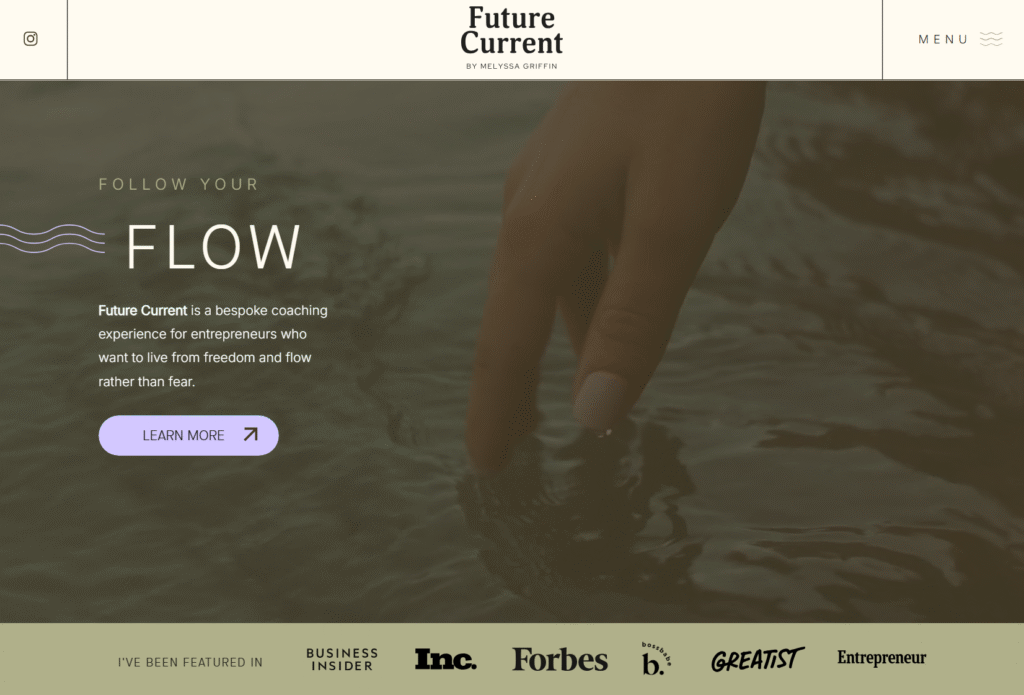
Melyssa’s website hits you with warm, complementary colors that create instant psychological comfort. Modern, stylish design elements that signal professionalism without being sterile. High-quality photography—not stock photos of diverse business people shaking hands in conference rooms, but real images of her that create authentic connection.
The fonts are uniform throughout. Topics and subtopics are clearly layered and organized. The navigation is intuitive, not a maze requiring a PhD to figure out where anything is.
Here’s why this matters: every design decision either builds or erodes trust.
A beautiful website doesn’t guarantee success. But an ugly, confusing, or amateurish website guarantees failure. You’re asking people to spend hundreds or thousands of dollars on your courses. They’re subconsciously assessing whether you’re legitimate or whether they’ll never see that money again.
Your website design is your storefront. Would you walk into a run-down shop with broken signs and dirty windows to buy expensive items? Neither will your potential customers.
The Podcast Multiplication Strategy
Every two weeks, Melyssa releases a podcast episode interviewing successful entrepreneurs about their journeys.
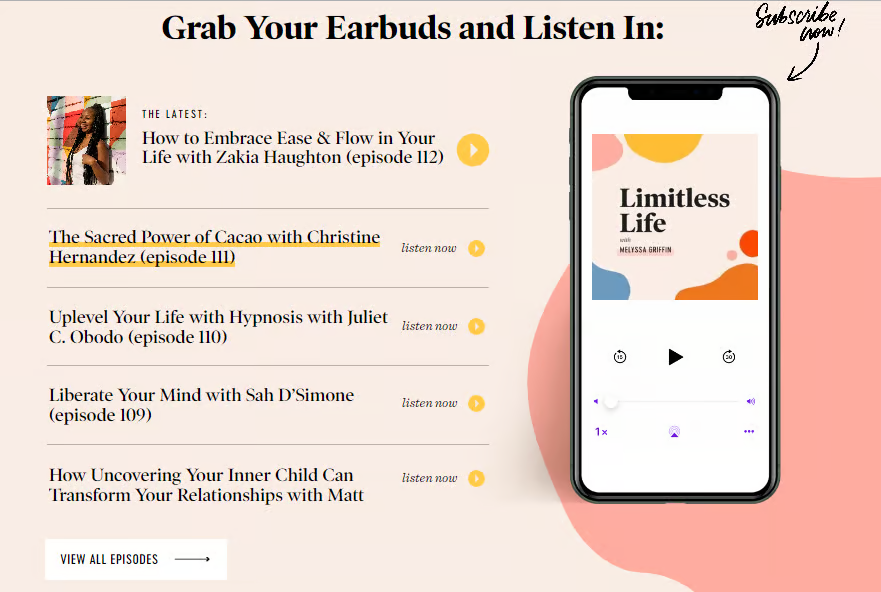
On the surface, this seems like just another content channel. But look deeper and you’ll see multiplicative strategy.
Each podcast episode creates:
- Audio content for podcast platforms
- Video content for YouTube
- Blog post transcriptions and summaries
- Email newsletter content
- Social media snippets and quotes
- Relationship capital with the interviewed guest
- Access to the guest’s audience when they share the episode
One recording session produces content across six different channels. That’s efficiency that would make a Toyota manufacturing plant jealous.
But the real genius is in audience psychology.
Podcast listeners develop parasocial relationships with hosts. They hear your voice in their ears during commutes, workouts, mundane tasks. You become a trusted companion. This intimacy accelerates the know-like-trust factor that every marketing funnel requires.
When podcast listeners decide to invest in education, they’re far more likely to choose the person they’ve been listening to for months versus some random course creator they’ve never heard of.
The podcast also provides social proof at scale. Each guest testimonial becomes marketing material. “I was featured on Melyssa Griffin’s podcast” becomes a credibility marker the guest uses, further extending reach.
Paid Advertising That Actually Works (Because Most Doesn’t)
Here’s where Melyssa separates herself from the “just create great content and the audience will come” crowd.
She invested heavily in Facebook and Pinterest advertising.
Not dabbled. Not “tried it once and gave up when it didn’t work immediately.” Invested heavily with strategic campaign optimization.
The average cost per click on Facebook ads varies by industry, but for education and training it typically ranges from $1-3. That means for every 100 clicks at $2 CPC, she’s spending $200.
But if even two of those 100 people convert to her $2,000 course, that’s a 20X return on ad spend.
This is where most bloggers chicken out. They see the money going out and panic before the revenue comes in. Melyssa understood that paid traffic is buying customers, not renting attention.
Her ad campaigns targeted cold traffic—people who had never heard of her—and converted them into course students, email subscribers, and podcast listeners. She turned strangers into customers through strategic ad creative and optimized landing pages.
Pinterest advertising is particularly brilliant for her niche. The platform’s users are predominantly women interested in self-improvement, entrepreneurship, and lifestyle optimization—exactly her target demographic. Pinterest also has a longer content lifespan than Facebook, with pins continuing to drive traffic months after posting.
The combination of platforms meant she wasn’t dependent on any single advertising channel’s algorithm changes or policy updates.
The Website Architecture: How Everything Fits Together
Let me walk you through the actual user journey, because understanding this flow is critical if you want to replicate the model.
Discovery Phase: Someone searches “how to start a profitable blog” on Google. Melyssa’s SEO-optimized content appears in results. They click through and land on a comprehensive guide.
Value Delivery: The blog post actually helps them. It’s not a 300-word fluff piece that says “create good content and be consistent.” It’s a 2,500-word tactical breakdown with specific steps, examples, and resources.
Email Capture: At strategic points in the content, there are opt-in offers for additional resources. “Want my complete checklist for launching a blog? Enter your email.” The value exchange is clear and fair.
Nurture Sequence: They enter an email funnel that continues providing value while introducing Melyssa’s paid offerings. Not aggressive pitching—strategic education that positions her courses as the natural next step.
Conversion: After receiving valuable free content and getting results, the prospect is primed to invest in the full course. The trust has been built. The value has been demonstrated. The conversion is natural.
Ascension: After completing one course, students are introduced to advanced programs. The relationship continues, lifetime customer value increases.
This isn’t accidental. This is a designed system.
The Glaring Weakness (And Your Competitive Advantage)
Even six-figure blogs have blind spots.
For all of Melyssa’s success, her SEO keyword strategy isn’t fully optimized. Using tools like Ahrefs, you can see opportunities to rank for high-volume, high-intent keywords that she’s missing.
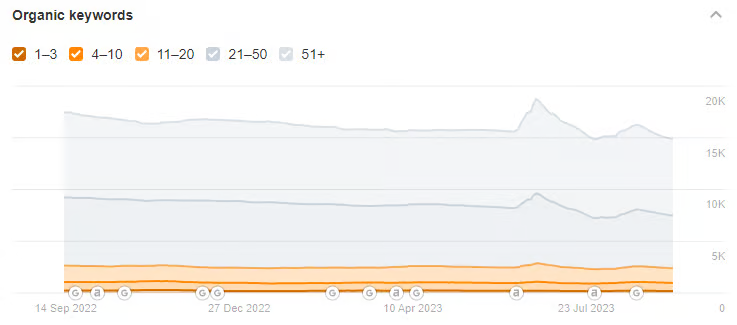
Her content is valuable, but it’s not strategically targeting the specific search terms that would multiply her organic traffic.
Here’s why this matters: organic traffic is free, targeted, and scalable. Every blog post that ranks for competitive keywords becomes a 24/7 lead generation machine.
The blogging industry includes over 600 million blogs worldwide, but most don’t understand SEO beyond “use keywords a few times.” This creates massive opportunity for anyone willing to do actual keyword research.
Melyssa’s content is better than 95% of what’s out there. But in the SEO game, “better” doesn’t automatically mean “higher ranking.” You need better content that’s also strategically optimized.
This is your opening. Build keyword research into your content creation process from day one. Every post should target specific search terms with clear search intent, optimal word count, proper header hierarchy, and internal linking structure.
Ad 🎯 Ready to put these strategies into action?
Theory is great, but execution is what drives growth. That’s where Max Business School™ comes in.
Inside, you’ll find step-by-step digital marketing courses (SEO, ads, email, social, content, and more) — taught by professionals, designed for beginners and business owners alike.
And the best part? It’s 100% free, online, and flexible.
→ Join Max Business School Today — Free
The Skills You Actually Need (No Bullshit Version)
Let’s cut through the typical “you can do anything you set your mind to” motivational nonsense and talk about what this really requires.
Content Creation Excellence
You need to produce material that’s genuinely valuable. Not “here’s my opinion on things.” Not “10 tips for productivity (that everyone’s heard before).”
You need to solve real problems with specific, actionable guidance.
This means:
- Deep research into your topic
- Understanding your audience’s actual pain points (not what you assume they are)
- Presenting information clearly and engagingly
- Creating content that people want to share because it actually helped them
If you can’t do this, everything else is irrelevant. Content is the foundation. Without it, you’re building a skyscraper on sand.
Email Marketing Fundamentals
Your email list is your business moat.
Social media platforms change algorithms overnight. Google updates can tank your traffic. But your email list? That’s yours. Forever.
You need to learn:
- Lead magnet creation that provides genuine value
- Email sequence writing that nurtures without annoying
- Segmentation strategies to send relevant content to specific subscribers
- Conversion optimization to turn subscribers into customers
The average ROI for email marketing is $36 for every dollar spent. Miss this, and you’re leaving ridiculous amounts of money on the table.
WordPress and Basic Tech
You need a professional website that works reliably and looks legitimate.
This doesn’t mean you need to become a developer. But you do need to understand:
- Domain registration and hosting
- WordPress installation and basic configuration
- Theme selection and customization
- Plugin management (without breaking your site)
- Basic troubleshooting
WordPress powers 43% of all websites on the internet. Learn it. It’s not optional.
Strategic Thinking Over Tactical Execution
Here’s where most people fail: they learn tactics without understanding strategy.
Melyssa didn’t just throw blog posts online and hope for the best. She understood:
- Customer lifetime value and ascension ladders
- Multiple revenue streams for business resilience
- Audience building before aggressive selling
- Creating systems instead of trading time for money
You can learn every tactic in the world, but without strategic thinking, you’re just busy—not profitable.
Why Personal Development Blogs Work (And Always Will)
Here’s something worth understanding about the niche Melyssa chose.
The self-improvement market is projected to reach $67 billion globally by 2030. It’s not shrinking. It’s expanding.
Why? Because the fundamental human desire to improve never goes away.
Economic downturns, algorithm changes, platform shifts—none of it kills the market for helping people become better versions of themselves.
This is why “boring” niches can be goldmines. Everyone wants to blog about travel and lifestyle. The competition is crushing. But project management? Accounting software? Niche compliance regulations? Far less competition with audiences equally willing to pay.
Melyssa found her angle (personal development for entrepreneurs and bloggers), went deep instead of broad, and became the go-to resource in that specific space.
The Bottom Line
Melyssa Griffin’s blog generating $100K+ monthly isn’t a lottery win or lucky accident.
It’s the result of understanding business fundamentals, creating genuine value, building multiple revenue streams, and treating blogging like the serious business it can be.
Your path doesn’t need to look identical to hers. Your niche will be different. Your products might vary. Your audience will have distinct characteristics.
But the framework works across industries:
Create genuinely valuable content. Build trust with your audience. Develop multiple revenue streams. Use both organic and paid traffic. Design systems that scale without requiring every hour of your time.
The opportunity is real. The blueprint is proven.
The only question is whether you’re willing to do the work.