
How to Launch a Freezer Cooking Blog That Makes $10K/Month
Two friends. $180 total investment. One wildly specific niche.
And somehow, they turned that into a blog generating over $10,000 monthly.
No, they didn’t win the algorithm lottery. They didn’t go viral with a TikTok dance. They didn’t have insider connections or a trust fund.
They just understood something most food bloggers completely miss: sometimes the riches really are in the niches.
Today we’re dissecting how Thriving Home Blog went from “hey, let’s try this blogging thing” to a legitimate business that supports two families.
And before you think “but freezer cooking is so specific,” well… that’s exactly the point.
Ad 🎯 After studying 400+ business models, here’s what actually works for beginners…
Most “make money online” advice is garbage. Complex affiliate schemes. Dropshipping nightmares. Social media “influencing.”
We found something better: lead-generation funnels for manufacturers. Simple. Profitable. Fast results.
Our Max Incubator Phase 1 students are proof—they’re going from zero to their first $1,000 in 90 days with this exact model.
→ See the business idea that’s working for beginners this year
Meet Rachel and Polly: The Women Behind Thriving Home
Rachel Tiemeyer started as an English teacher before discovering her passion for food blogging in 2008. After almost two decades in ministry, she’s now based in Columbia, Missouri, sharing recipes and family wisdom.
Polly Conner was on track to become a school counselor, also started blogging in 2008, and resides in Columbia as well. She brings DIY and parenting perspectives to the blog’s content.
In 2011, these two entrepreneurial spirits each pooled $90 (yes, ninety dollars) to birth Thriving Home Blog.
By 2013? They were pulling in $1,000-$2,000 monthly from Google AdSense and Amazon affiliates alone.
The blog’s freezer cooking content struck a chord with readers desperate for practical meal prep solutions. Because here’s the thing about freezer meals: they solve a real, painful problem for busy families.
That’s not just content. That’s a solution.
How Thriving Home Blog Makes Over $10K Monthly
Let’s crack open their revenue streams like a frozen dinner (sorry, had to).
Display Advertising Revenue
As you browse their site, you’ll notice tasteful display ads that contribute to the financial pot. Every click, every impression adds up.
With over 100,000 monthly organic visitors, even modest ad rates generate substantial income. And unlike some food blogs that blast you with intrusive ads, Thriving Home keeps it reasonable—which probably helps their traffic keep coming back.
Affiliate Marketing That Feels Natural
Rachel and Polly recommend products and services related to freezer cooking, meal prep, and kitchen organization.
The key difference? They’re recommending things they’ve actually used to make freezer meals. Containers that actually work. Kitchen tools that don’t break. Meal planning apps that actually help.
When readers trust your recommendations and make purchases through your affiliate links, you earn commissions. Simple, ethical, effective.
Physical Cookbooks (The Tangible Touch)
In addition to digital content, Thriving Home publishes physical cookbooks. These curated collections transform their best recipes into something readers can hold, gift, and keep in their kitchen.
Physical products in the digital age might seem counterintuitive, but cookbook lovers are real, devoted, and willing to pay. Each sale adds another revenue stream that doesn’t rely on algorithms or ad rates.
What Thriving Home Blog Absolutely Nails
Success isn’t random. Let’s examine what Rachel and Polly got right from the start.
Website That Actually Works
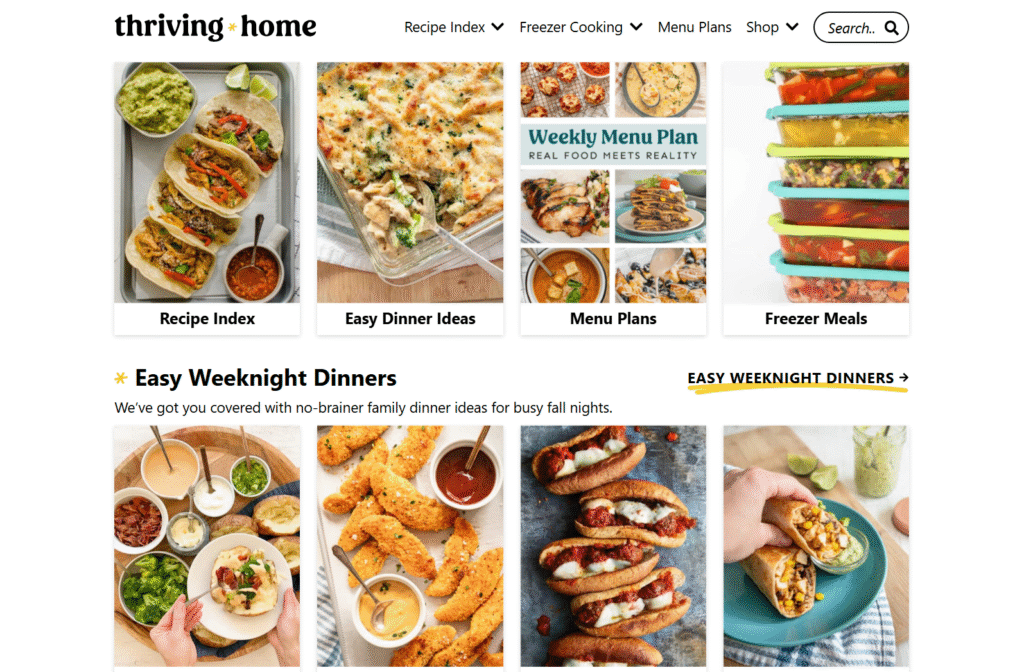
Step into their digital kitchen and you’ll find clean design, intuitive navigation, and lightning-fast load times.
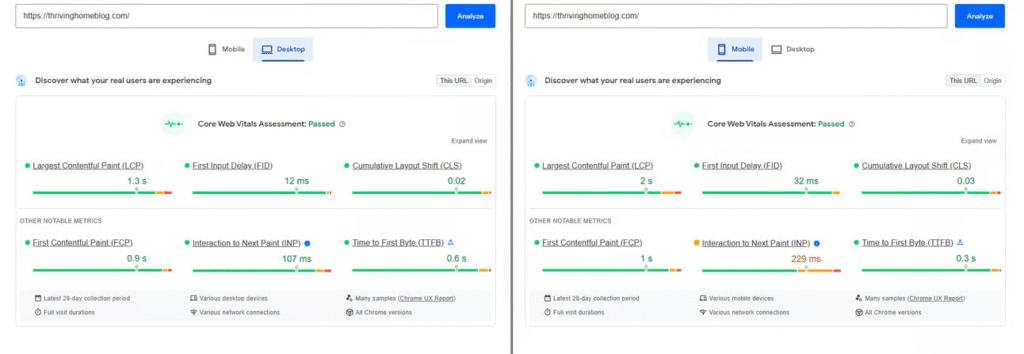
They pass Google’s speed tests for both desktop and mobile, which isn’t just nice to have—it directly impacts search rankings and user experience. Slow sites lose visitors and money. Fast sites keep both.
The interface prioritizes function over flash. You can find recipes easily, categories make sense, and nothing gets in the way of the actual content. Revolutionary? No. Effective? Absolutely.
Driving 100,000+ Monthly Organic Visitors
With over 100,000 organic visitors monthly, Thriving Home’s SEO strategy clearly works.
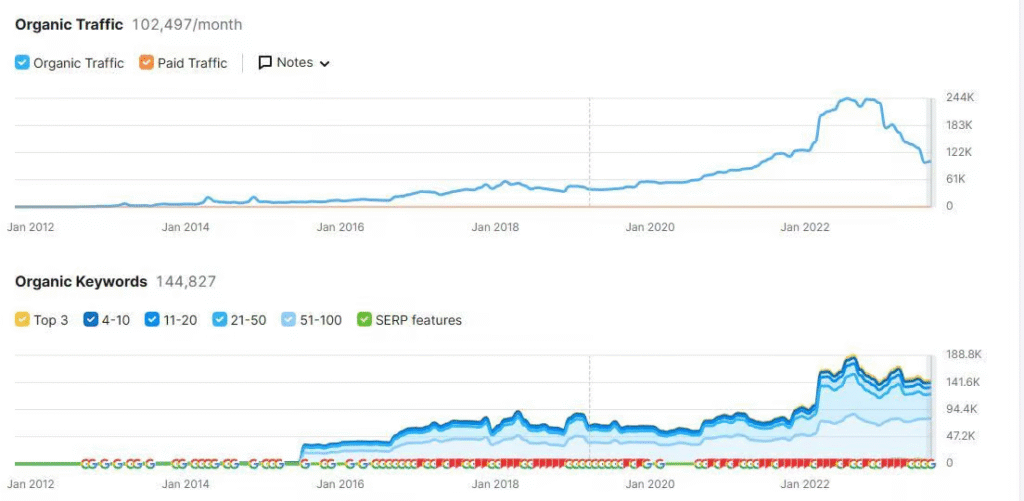
Their approach? Target long-tail keywords with moderate ranking difficulty. Instead of fighting for “dinner recipes” (impossible), they go after “make ahead freezer meals for new moms” or “freezer friendly breakfast burritos.”
These longer, more specific phrases have less competition and attract people with clear intent. Someone searching for freezer meal prep isn’t just browsing—they’re planning. That’s the difference between traffic and valuable traffic.
Giving Away Value Like It’s Going Out of Style
Thriving Home doesn’t gate everything behind email signups or paywalls. They freely share recipes, tips, and resources because they understand a crucial principle: generosity builds authority.
When you help people without immediately asking for something in return, you build trust. And trust is the foundation of every successful blog-based business.
Their free content is genuinely useful, not just teaser material designed to make you want the “real” stuff. That authenticity resonates.
Social Media Strategy That Fits The Niche
Thriving Home isn’t trying to be everywhere. They focus heavily on Pinterest—and for food bloggers, that’s genius.
Pinterest users are actively planning meals, seeking recipes, and ready to save ideas for later. They’re not passively scrolling; they’re intentionally searching.
The blog’s impressive Pinterest following and monthly view count prove this strategy works. They’ve also embraced video content, making recipes come alive in a format that resonates with visual learners.
The Power of Niching Down
Here’s where most food bloggers go wrong: they try to be everything to everyone.
“I’ll do recipes for breakfast, lunch, dinner, desserts, appetizers, drinks, international cuisine, diet-specific meals, and…”
Stop.
Rachel and Polly focused specifically on freezer cooking. One niche. One audience. One clear value proposition.
This narrow focus made them the obvious go-to authority for freezer meal enthusiasts. When someone needs freezer cooking advice, they find Thriving Home. That specificity is a feature, not a bug.
The meal prep industry continues growing as busy families seek practical solutions, and Thriving Home positioned itself perfectly to capture this audience.
Where Thriving Home Could Expand
Even successful blogs have untapped potential. Here are two opportunities Rachel and Polly could explore.
Subscription Model for Premium Content
Imagine a membership tier offering exclusive recipes, meal planning templates, shopping lists, and maybe even live Q&A sessions.

Subscription models create recurring revenue—the holy grail of online business. Instead of relying solely on ad revenue and one-time purchases, subscriptions provide predictable monthly income.
For dedicated freezer cooking enthusiasts, paying $9-19 monthly for premium access could be an easy yes.
Limited Edition Products and Collaborations
Create buzz with limited-edition products: seasonal recipe collections, specialty kitchen tools, or collaborations with kitchenware brands.
Exclusivity drives sales. “Available for just two weeks!” or “Only 500 copies printed!” creates urgency that regular products don’t have.
These limited runs could become anticipated events that their community looks forward to, adding an element of excitement beyond regular content.
Ad 🎯 Ready to put these strategies into action?
Theory is great, but execution is what drives growth. That’s where Max Business School™ comes in.
Inside, you’ll find step-by-step digital marketing courses (SEO, ads, email, social, content, and more) — taught by professionals, designed for beginners and business owners alike.
And the best part? It’s 100% free, online, and flexible.
→ Join Max Business School Today — Free
The Real Takeaways (That Apply Beyond Food Blogs)
Let’s extract the universal lessons from Thriving Home’s success.
Speed and User Experience Matter – Your website needs to be fast and intuitive. Beautiful but clunky loses to simple but functional every single time.
Target the Right Traffic, Not Just More Traffic – Long-tail keywords might bring less volume, but they bring more qualified visitors who actually convert.
Give Value Without Strings Attached – Free resources build authority and trust faster than any sales pitch. Be generous with your expertise.
Master Visual Platforms For Visual Niches – If your content is visual (food, home decor, fashion, travel), Pinterest isn’t optional. It’s essential.
Niche Down Until It Feels Scary – General food blog? You’re nobody. Freezer cooking blog? You’re an authority. Specificity wins.
Subscription Models Create Stability – One-time sales are great. Recurring revenue is better. Consider how to create ongoing value.
Exclusivity Drives Excitement – Limited edition offerings create buzz and urgency that regular products can’t match.
The Skills You’ll Need to Replicate This
Want to build your own profitable food blog? Here’s the honest skills inventory:
Recipe Development – Creating recipes that actually work and taste good. Test them multiple times. Get feedback. Perfect them.
Food Photography – Your photos don’t need to be magazine-quality, but they need to be appetizing. Smartphone cameras can work if you understand lighting and composition.
SEO Fundamentals – Keyword research, on-page optimization, understanding search intent. This is how you get organic traffic without paying for ads.
Content Writing – Writing recipes clearly, creating helpful blog posts, telling stories that connect with readers. Food blogging has specific conventions worth learning.
Social Media Consistency – Particularly Pinterest and Instagram for food content. Regular posting, engaging with followers, staying current with platform changes.
Basic Website Management – WordPress skills, plugin management, site speed optimization. You don’t need to be a developer, but you can’t be afraid of technology either.
Email Marketing – Building and nurturing an email list. Writing newsletters people actually want to read. Creating lead magnets that capture subscribers.
Starting Your Own Freezer Cooking Blog (Or Similar Niche)
Let’s talk practical steps if you’re serious about this.
Choose Your Specific Niche – Not just “food blog.” What specific angle? Freezer cooking? Instant Pot meals? Budget dinner recipes? Gluten-free baking? Get specific.
Set Up Your Platform – WordPress on reliable hosting. Clean, fast theme. Essential plugins for recipes, SEO, and social sharing.
Create Your First 25 Recipes – Not your only recipes. Your best ones. Test them thoroughly. Photograph them well. Write clear instructions.
Optimize Every Post for SEO – Research keywords before writing. Use them naturally in titles, headers, and content. Write for humans, optimize for robots.
Build Your Pinterest Presence – Create a business account. Design attractive pins. Post consistently. Join relevant group boards.
Start Your Email List Immediately – Offer a free recipe ebook or meal planning template. Every visitor is a potential subscriber.
Engage With Your Community – Respond to comments. Answer questions. Build relationships. Your community becomes your biggest asset.
Monetize Strategically – Start with affiliate links and ads. Add products (cookbooks, courses) as you grow. Consider subscriptions later.
The Bottom Line
Thriving Home Blog proves that you don’t need a massive budget, insider connections, or years of professional culinary training to build a profitable food blog.
You need genuine expertise in a specific niche, consistency in execution, strategic focus on what works (hello, Pinterest), and patience for the long game.
Rachel and Polly chose freezer cooking—a narrow niche that most food bloggers ignored—and became the obvious authority. That specificity, combined with generosity in sharing value and smart monetization, created sustainable income.
The food blogging industry continues growing, with readers hungry for practical solutions to everyday meal challenges.
Could you build the next $10K/month food blog?
If you’ve got a specific niche you understand deeply, a willingness to create genuinely helpful content, and patience to grow steadily over years rather than weeks, absolutely.
The question is: what’s your freezer cooking equivalent?
What specific problem can you solve so well that you become the obvious answer?
Find that. Then start cooking.