
How to Sell iPhone Accessories Making $1,900/Month Profit
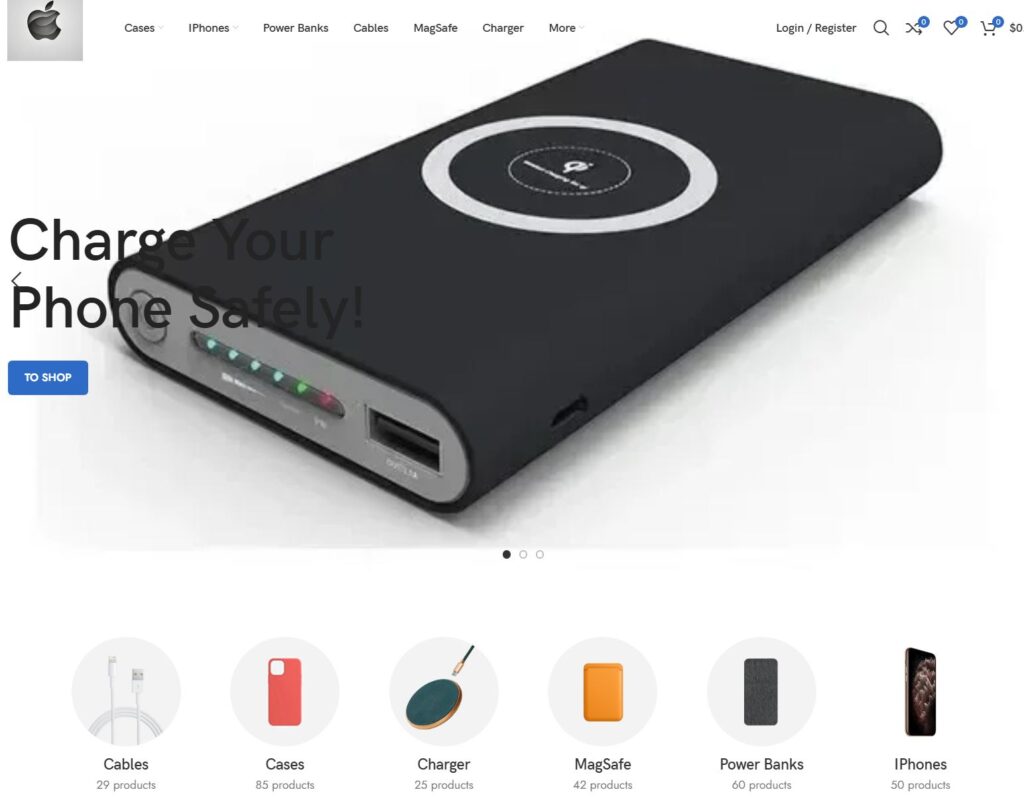
Ever notice how iPhone users constantly buy new cases, chargers, and accessories?
That exact observation led one entrepreneur to build The Trend Center—an iPhone accessories e-commerce store now generating $1,900 monthly profit through strategic product selection and customer-focused policies.
No proprietary products. No massive marketing budget. Just curated iPhone accessories, smart promotions, and policies that reduce purchase hesitation.
Here’s what makes this case study fascinating…
Most people assume the smartphone accessories market is too competitive or saturated for new players to succeed. But The Trend Center proves you can carve out profitable space by combining comprehensive product selection with customer assurance policies that build trust in a skeptical market.
The founder recognized that iPhone users represent a massive, constantly replenishing customer base—every new iPhone model creates fresh demand for compatible accessories.
When he realized straightforward e-commerce with the right positioning could capture this recurring demand, opportunity emerged.
And that’s what we’re dissecting today: how focusing on one device ecosystem transformed into a consistent four-figure monthly profit business.
Ad 🎯 After studying 400+ business models, here’s what actually works for beginners…
Most “make money online” advice is garbage. Complex affiliate schemes. Dropshipping nightmares. Social media “influencing.”
We found something better: lead-generation funnels for manufacturers. Simple. Profitable. Fast results.
Our Max Incubator Phase 1 students are proof—they’re going from zero to their first $1,000 in 90 days with this exact model.
→ See the business idea that’s working for beginners this year
What The Trend Center Actually Sells (And Why iPhone Users Buy)
The Trend Center isn’t trying to sell all smartphone accessories or compete with Amazon’s entire catalog.
Instead, it carved out a specific position: the comprehensive source for iPhone accessories across all current models.
We’re talking about protective cases in various styles and materials, MagSafe chargers and accessories for newer iPhones, power banks for extended battery life, charging cables and adapters, screen protectors and camera lens protectors, and mounting solutions for cars and desks.
Think of it as the one-stop shop for iPhone owners who want quality accessories without wading through thousands of irrelevant products.
But here’s where the business model gets clever…
The Trend Center focuses exclusively on iPhone accessories rather than spreading across all smartphone brands. This specialization allows deeper product knowledge, clearer positioning in customer minds, and more focused marketing that doesn’t waste resources on irrelevant audiences.
The Revenue Model: E-Commerce Margins Plus Strategic Promotions
Let’s break down exactly how The Trend Center generates that $1,900 monthly profit.
Understanding this focused e-commerce model is critical if you want to replicate this success in other device accessory niches.
Product Margins on iPhone Accessories
The Trend Center earns profit through standard e-commerce margins on accessories.
Here’s how the economics typically work:
iPhone cases purchased wholesale at $3-8 sell retail at $15-35, generating $7-27 gross profit per unit. MagSafe chargers cost $8-15 wholesale and retail at $25-45, producing $10-30 margins. Power banks bought at $10-20 sell for $30-60, earning $15-40 per sale. And charging cables with $2-5 costs retail at $12-20, providing $7-15 profit.
The beauty of accessories? High perceived value relative to actual cost.
Customers will pay $25-35 for a stylish case that cost $5-8 wholesale because they’re protecting expensive phones worth $800-1,200+. This psychology allows healthy margins while remaining competitive.
With average order values around $40-60 and 40-60% gross margins typical for accessories, generating $1,900 monthly profit requires roughly $4,000-5,000 in monthly revenue after accounting for operating expenses.
According to Shopify’s e-commerce margin analysis, phone accessories typically offer 50-70% gross margins, among the highest in consumer electronics, due to low manufacturing costs and strong customer willingness to pay for device protection.
Strategic Promotions Driving Volume
The Trend Center uses promotions to increase order values and conversion rates.
“Buy One, Get 50% Off Second” promotions encourage customers to purchase multiple items. This increases average order value while moving inventory. The psychology is powerful—customers feel they’re getting a deal while the store still maintains healthy margins on discounted second items.
Time-limited offers create urgency that converts browsers into buyers. Seasonal promotions around iPhone launches capitalize on upgrade cycles when accessory demand peaks. And bundle deals combining complementary products (case + screen protector + charger) increase transaction sizes.
These promotions serve dual purposes—they drive immediate sales while training customers to return for future deals, creating repeat purchase patterns.
Inventory Management: The Balancing Act
Unlike dropshipping, The Trend Center maintains inventory for faster shipping and quality control.
This requires strategic inventory management. Stock bestselling items in multiple colors/styles while testing new products in smaller quantities. Monitor iPhone release cycles to prepare for new accessory demand. And clearance old inventory when new iPhone models make previous accessories obsolete.
Effective inventory management protects cash flow while ensuring popular items remain in stock during peak demand.
What The Trend Center Does Exceptionally Well
Generating $1,900 monthly profit in a competitive market doesn’t happen by accident.
The Trend Center implements several strategies that separate successful e-commerce stores from failed attempts.
Comprehensive Product Coverage Within Focused Niche
The store offers extensive selection of iPhone accessories without trying to cover all smartphones.
This focused breadth provides several advantages. iPhone users find everything they need in one place rather than visiting multiple stores. The comprehensive catalog positions the store as the go-to iPhone accessory destination. And focused expertise builds trust that generalist retailers can’t match.
When someone needs iPhone accessories, finding a store with 200+ iPhone-specific products feels more trustworthy than navigating Amazon’s millions of results across all devices.
Intuitive Website Organization
The Trend Center’s website makes finding specific products effortless.
Clear category navigation organized by product type (cases, chargers, cables, etc.). Filtering by iPhone model ensuring compatibility. Clean product pages with multiple images and specifications. And streamlined checkout reducing cart abandonment.
User experience directly impacts conversion rates—every friction point costs sales that better-designed sites capture.
According to Baymard Institute’s checkout optimization research, improving website usability and checkout flow can reduce cart abandonment by 35%, directly increasing revenue without additional traffic or marketing spend.
Customer Assurance Policies Building Trust
The Trend Center implements policies that reduce purchase hesitation.
30-day free returns eliminate risk from buying accessories sight unseen. Fast delivery (often 2-3 days) prevents the frustration of waiting weeks for products. Quality guarantees assure customers they’re not buying cheap knockoffs. And responsive customer service addresses concerns quickly.
These policies are particularly important for online accessory purchases where customers can’t physically examine products before buying.
When someone worries “what if this case doesn’t fit properly?” the 30-day return policy eliminates that objection, converting hesitation into purchases.
Research from Shopify on return policy psychology shows that generous return policies increase purchase conversion by 20-40% by reducing perceived risk, and contrary to fears, don’t result in proportionally higher return rates when products meet quality expectations.
Strategic Promotions Creating Purchase Urgency
The store regularly runs promotions that drive conversions without destroying margins.
Limited-time offers create urgency converting browsers into buyers. “Buy one, get 50% off second” promotions increase order values while maintaining profitability. Bundle deals encourage purchasing complete accessory sets. And seasonal campaigns around iPhone launches capitalize on natural demand spikes.
These promotions work because they provide genuine value to customers while strategically driving the business metrics that matter—average order value, conversion rate, and repeat purchase frequency.
Focus on iPhone Ecosystem Exclusively
Rather than spreading across all smartphone brands, The Trend Center serves only iPhone users.
This specialization delivers multiple advantages. Marketing targets one cohesive audience rather than fragmenting across incompatible devices. Product selection stays focused and manageable rather than sprawling across hundreds of device models. Brand positioning is clear—”we’re the iPhone accessories experts.” And inventory management is simplified by concentrating on one ecosystem.
In e-commerce, focused specialization often beats attempting to serve everyone.
The Massive Growth Opportunities Being Overlooked
Despite generating solid profit, The Trend Center could significantly increase revenue through strategic improvements.
The biggest untapped opportunities? Custom/exclusive products and influencer marketing.
Let me break down exactly how these could transform revenue trajectory.
Custom-Designed Exclusive Accessories
Currently, The Trend Center sells standard accessories available from multiple retailers.
That creates price competition and margin pressure.
Here’s the alternative: Develop custom-designed cases and accessories exclusive to The Trend Center. Partner with designers creating unique patterns, artwork, or functionality. Create limited-edition collections generating urgency and collectibility. And offer personalization options (custom text, photos, monograms) commanding premium pricing.
Exclusive products provide multiple advantages—they eliminate direct price comparison with competitors, they justify higher margins through uniqueness, they create brand differentiation in a commodity market, and they generate word-of-mouth as customers share their unique accessories.
According to McKinsey’s consumer goods research, private label and exclusive products typically command 20-40% price premiums over generic alternatives while generating 60-70% customer satisfaction increases due to perceived uniqueness.
Social Media and Influencer Partnerships
The Trend Center appears to have minimal social media presence.
That’s leaving enormous growth potential untapped. Partner with iPhone-focused influencers and YouTubers for product reviews and showcases. Build Instagram presence featuring lifestyle photography of accessories in use. Create TikTok content demonstrating products and running viral challenges. And develop user-generated content campaigns encouraging customers to share their accessory combinations.
Influencer marketing is particularly effective for visual products like phone accessories where demonstration and lifestyle context drive purchasing decisions far better than static product pages.
Just a few successful influencer partnerships could drive thousands of new customers at lower acquisition costs than traditional advertising.
Subscription Box Model for Recurring Revenue
The store operates entirely on one-time transactions.
But a subscription model could generate predictable recurring revenue. Monthly accessory box delivering curated items (new case design, charging cable, screen cleaner, etc.). Subscribers pay $25-35 monthly for $40-50 worth of products. This creates predictable revenue while introducing customers to products they might not discover otherwise.
Just 100 subscribers at $30 monthly generates $3,000 in predictable recurring revenue—potentially doubling the business’s current income.
Expanded Product Categories
While staying iPhone-focused, the store could expand into adjacent categories.
Apple Watch accessories serving the same customer base. AirPods cases and accessories. iPad accessories for the Apple ecosystem. And tech accessories like laptop sleeves and backpacks designed for Apple users.
These expansions leverage the existing iPhone customer base while increasing average order values as customers purchase across multiple product categories.
Improved Email Marketing and Retention
The store could capture emails more aggressively for retention marketing.
Offer discount codes in exchange for email signup. Send abandoned cart recovery emails converting hesitant browsers. Create post-purchase sequences requesting reviews and suggesting complementary products. And develop segmented campaigns based on iPhone model and purchase history.
Email marketing transforms one-time buyers into repeat customers, dramatically increasing customer lifetime value without proportional marketing spending.
Your Blueprint for Starting a Device Accessories Business
Ready to build your own focused e-commerce accessories business?
Here’s your step-by-step blueprint based on what The Trend Center did right—plus improvements that could accelerate growth.
Step 1: Choose Your Device Ecosystem
Don’t try to serve all devices—pick one popular ecosystem and dominate it.
Your options include iPhone accessories (proven model), Android flagship devices (Samsung, Google Pixel), gaming consoles (PlayStation, Xbox, Nintendo Switch), popular laptop brands (MacBook, Surface), or emerging devices (VR headsets, smart home hubs).
The key is choosing devices with large, engaged user bases who regularly purchase accessories and upgrades.
Step 2: Research Product Categories and Suppliers
Before investing, identify what accessories sell and where to source them.
Research bestselling accessories on Amazon for your chosen device. Identify reliable suppliers on Alibaba, AliExpress, or domestic wholesalers. Order samples evaluating quality before bulk purchasing. And compare pricing across suppliers ensuring competitive margins.
Validation prevents investing in wrong products or partnering with unreliable suppliers.
Step 3: Build Clean, Conversion-Focused Store
Your website must make buying effortless.
Choose e-commerce platforms like Shopify, WooCommerce, or BigCommerce. Select clean themes showcasing products beautifully. Organize categories logically by product type and device model. And ensure mobile optimization since much shopping happens on phones.
Professional, trustworthy design directly impacts conversion rates independent of traffic volume.
Step 4: Implement Trust-Building Policies
Reduce purchase hesitation through customer-friendly policies.
Offer 30-day returns reducing perceived risk. Provide fast shipping (3-5 days maximum). Display security badges and payment icons. And feature customer reviews building social proof.
These policies convert skeptical browsers into confident buyers.
Step 5: Start with Focused Product Selection
Don’t try to stock hundreds of SKUs immediately.
Launch with 30-50 bestselling accessories covering core categories. Test products in small quantities before bulk ordering. Monitor what sells best and reorder accordingly. And gradually expand based on customer feedback and sales data.
Starting focused allows testing demand without massive inventory investment.
Step 6: Develop Strategic Promotion Calendar
Plan promotions driving traffic and conversions throughout the year.
Launch promotions around device release cycles when accessory demand peaks. Create seasonal campaigns for holidays and shopping events. Run limited-time offers creating urgency. And develop “buy more, save more” structures increasing order values.
Strategic promotions drive revenue spikes while training customer purchase patterns.
Step 7: Build Multi-Channel Traffic Sources
Don’t rely solely on organic search or paid ads.
Develop Instagram showcasing products in lifestyle contexts. Create TikTok content demonstrating products and running challenges. Build Pinterest boards featuring accessory styles and combinations. And explore influencer partnerships reaching engaged device communities.
Multiple traffic sources provide growth and protect against single-channel dependency.
Step 8: Capture and Nurture Email Subscribers
Build owned audience independent of platform algorithms.
Offer discounts incentivizing email signup. Send abandoned cart emails recovering lost sales. Create post-purchase sequences encouraging reviews and repeat purchases. And develop segmented campaigns based on purchase history and device models.
Email marketing transforms one-time buyers into repeat customers maximizing lifetime value.
Step 9: Consider Custom or Exclusive Products
Once you’ve validated demand, differentiate with unique offerings.
Develop custom designs exclusive to your store. Partner with artists or designers creating limited editions. Offer personalization options commanding premium pricing. And create bundles not available elsewhere.
Exclusivity eliminates price comparison while building brand equity.
Key Takeaways: What You Need to Remember
Let’s distill everything down to the essentials.
If you’re serious about building a device accessories e-commerce business, these are the non-negotiables you can’t afford to ignore.
Focused specialization beats trying to serve everyone. Concentrating exclusively on one device ecosystem allows deeper expertise, clearer positioning, and more efficient operations than spreading across incompatible devices. Specialize completely rather than diluting resources.
Customer assurance policies directly impact conversion rates. Generous return policies, fast shipping, and quality guarantees reduce purchase hesitation that kills conversions. These policies pay for themselves through increased sales exceeding the cost of occasional returns.
Strategic promotions drive both volume and order values. Well-designed offers like “buy one, get 50% off second” increase transaction sizes while maintaining profitability. Regular promotions train customers to return rather than shop once and disappear.
User experience quality determines conversion rates. Clean, intuitive websites convert dramatically better than cluttered, confusing stores. Invest in professional design that guides customers naturally toward purchases.
Custom products eliminate commoditization. Standard accessories available everywhere force price competition and margin pressure. Exclusive designs command premium pricing while building brand differentiation that creates customer loyalty.
Influencer marketing reaches engaged device communities. Social media and influencer partnerships drive qualified traffic at lower costs than traditional advertising. Visual products like accessories benefit enormously from demonstration and lifestyle context.
Email marketing maximizes customer lifetime value. Repeat purchases from existing customers generate higher margins than constantly acquiring new customers. Email campaigns nurture relationships that increase total revenue per customer substantially.
The global smartphone accessories market exceeds $100 billion annually and continues growing as devices become more expensive and users seek protection and personalization. Companies like Caseology and Anker demonstrate the substantial market opportunity in serving device owners with quality accessories and strong brand positioning.
Your Turn to Build
Here’s the beautiful truth about device accessory businesses…
You don’t need proprietary technology or manufacturing facilities to build meaningful income. You need ability to curate quality products, create trustworthy shopping experiences, and commit to serving one device community exceptionally well.
The Trend Center started by recognizing iPhone users’ constant need for accessories. Today it generates $1,900 monthly profit through focused product selection and customer-friendly policies.
That same blueprint works for countless device ecosystems. Android flagships. Gaming consoles. Popular laptops. Smart home devices. The formula remains constant: pick one popular device with an engaged user base, offer comprehensive accessory selection, and build trust through policies that reduce purchase risk.
The question isn’t whether device accessory stores can generate solid profit.
The question is: which device community will you serve?
Your move.