
How This Keto Recipe Blog Generates $3K Monthly
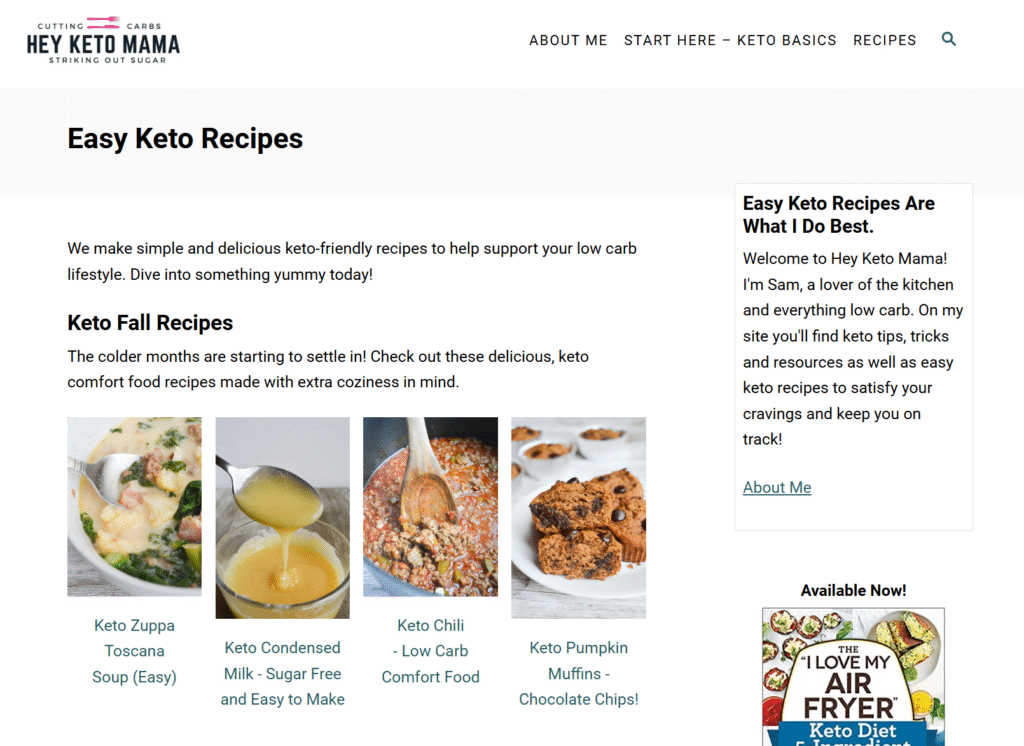
Sam was tired, hungry, and miserable.
It was December 2015, and she’d hit that breaking point most of us eventually reach—that moment when you look in the mirror and think, “Something has to change. Now.”
For Sam, a busy mom trying to be present for her family while feeling perpetually exhausted, the answer came in the form of a diet she’d never heard of before: keto.
What happened next is a masterclass in turning personal transformation into profit.
Within a few years, Sam’s experimentation with low-carb recipes evolved into Hey Keto Mama, a recipe blog now generating $3,000+ monthly through a diversified monetization strategy that most food bloggers never figure out.
Here’s the thing nobody tells you about food blogging: the recipes are almost irrelevant to your success. Sure, they need to be good, but thousands of blogs have great recipes and make exactly zero dollars.
The difference between a hobby blog and a profitable business? Strategy. Monetization. Systems.
Let me show you exactly how Sam built this, what’s working, and the surprising gaps that could easily double this income with a few smart adjustments.
Ad 🎯 After studying 400+ business models, here’s what actually works for beginners…
Most “make money online” advice is garbage. Complex affiliate schemes. Dropshipping nightmares. Social media “influencing.”
We found something better: lead-generation funnels for manufacturers. Simple. Profitable. Fast results.
Our Max Incubator Phase 1 students are proof—they’re going from zero to their first $1,000 in 90 days with this exact model.
→ See the business idea that’s working for beginners this year
Why Keto Is a Money-Printing Niche
Before we dive into Sam’s specific tactics, let’s talk about why she chose the right battleground.
The ketogenic diet market has exploded into a multi-billion dollar industry spanning supplements, packaged foods, books, courses, and—yes—recipe blogs. According to market research from Grand View Research, the global keto market was valued at over $15 billion in recent years and continues growing rapidly.
But here’s what makes it especially lucrative for content creators:
Keto followers are evangelical. When someone commits to keto, they’re all-in. They’re actively seeking new recipes, products, tips, and support. They join communities, buy cookbooks, invest in supplements, and click affiliate links like their life depends on it.
The niche has incredible product diversity. Unlike, say, a vegan blog where protein powder options are limited, keto dieters need kitchen gadgets, specialty ingredients, meal prep containers, supplements, cookbooks, courses—the list goes on. More product categories mean more affiliate opportunities.
Search volume remains massive and stable. According to Google Trends, keto-related searches maintain consistently high volume year-round, not just in January when New Year’s resolutions are fresh.
This isn’t a fad that’ll disappear next year. The ketogenic diet has been around since the 1920s (originally as a treatment for epilepsy) and has proven staying power in the mainstream wellness space.
Sam didn’t just stumble into a profitable niche. She landed on a goldmine.
How Hey Keto Mama Actually Makes Money
Let’s talk dollars and cents, because this is where most food bloggers completely miss the boat.
Affiliate Marketing: The Foundation
Hey Keto Mama participates in the Amazon Associates program, strategically linking to products throughout their recipe posts. When Sam shares a recipe for keto chocolate chip cookies, she’s not just giving you the ingredients list—she’s recommending the specific almond flour, erythritol sweetener, and chocolate chips she used, all with affiliate links.
When readers click through and purchase these items (or anything else during that Amazon session), Sam earns a commission. These commissions might seem small individually—maybe $1-3 per transaction—but they add up fast when you’re driving thousands of monthly visitors.
The beauty of Amazon’s program? People rarely buy only what you recommended. They add other items to their cart, and you earn commissions on those too. Someone comes for keto baking ingredients and leaves with a new blender, dog food, and a phone case? You get paid on all of it.
Display Advertising: The Passive Income Machine
After building sufficient traffic, Hey Keto Mama joined Mediavine—one of the top-tier ad networks for content creators. Mediavine requires 50,000 monthly sessions minimum, but once you’re in, they handle all ad placement optimization while you collect checks.
These display ads generate income based on page views and ad impressions. The more traffic you drive, the more you earn—completely passive once it’s set up.
For context, food blogs with Mediavine typically earn $15-40 per 1,000 page views (RPM), depending on season, niche, and user engagement. With Hey Keto Mama pulling 10,000+ monthly organic visitors according to SEO tools, you’re looking at substantial ad revenue.
Digital Products: The Highest-Margin Opportunity
This is where Sam really differentiated herself from amateur food bloggers. Rather than just giving recipes away for free, she compiled her best keto recipes into cookbooks and self-published them on Amazon.
These books generate royalties on every sale, and because they’re digital products, there’s zero cost per unit sold. Write it once, sell it forever. The profit margins on digital products typically exceed 90% after platform fees.
She also offers free resources (like macro calculators and recipe collections) in exchange for email sign-ups, building a list she can market to repeatedly. This email list becomes increasingly valuable as it grows, representing an audience she can reach without depending on Google or social media algorithms.
What Hey Keto Mama Absolutely Crushed
Sam didn’t just throw recipes online and hope for the best. Several strategic decisions set this blog up for success.
SEO Mastery That Drives 10K Monthly Organic Visitors
Hey Keto Mama understands something most food bloggers don’t: Google is your best friend if you speak its language.
The site is optimized for search engine visibility through strategic keyword targeting, earning featured snippets on Google for popular recipe searches, building a robust backlink profile through guest posting and collaborations, and creating content clusters around topics like “keto breakfast ideas” and “keto desserts.”
According to analysis from SEO tools, the blog ranks for thousands of keywords, many on the first page of Google. That’s not luck—that’s intentional SEO strategy.
Food bloggers who ignore SEO are essentially hoping random strangers stumble upon their site. Sam built a traffic machine that brings qualified visitors searching for exactly what she offers.
Content That Actually Serves Readers
Walk through Hey Keto Mama and you’ll notice something refreshing: the recipes are genuinely helpful, clearly written, and gorgeously photographed.
Too many food blogs bury the actual recipe beneath 2,000 words of unnecessary storytelling about their grandmother’s kitchen or their child’s soccer game. Hey Keto Mama respects readers’ time while still providing context and value.
Each recipe includes high-quality images (crucial for Pinterest and Google Image search), clear step-by-step instructions that even beginners can follow, nutritional information (especially important for keto followers tracking macros), and helpful tips and modifications for different dietary needs or preferences.
This isn’t just content—it’s genuinely useful information that keeps people coming back and sharing with friends.
User Experience That Doesn’t Suck
Have you visited a food blog recently? Many are nightmares of aggressive pop-ups, auto-playing videos, and layouts that make finding the actual recipe feel like an archeological dig.
Hey Keto Mama keeps it simple. Clean design that’s easy to navigate. Recipes organized by category (breakfast, dinner, desserts, etc.) so you can actually find what you’re looking for. Mobile-friendly layout because most recipe searches happen on phones. Fast-loading pages that don’t test your patience.
These might seem like basic requirements, but you’d be shocked how many blogs fail at this fundamentals. User experience directly impacts everything: time on site, bounce rates, conversion rates, and even SEO rankings.
Email List Building Through Value
Rather than just having a generic “subscribe to my newsletter” pop-up, Hey Keto Mama offers specific, valuable resources in exchange for email addresses. A free keto meal plan. A guide to calculating macros. A collection of 10-minute keto recipes.
This value-first approach converts dramatically better than asking people to “stay updated” with your blog. You’re not asking for something—you’re offering something worth trading their email address for.
That email list becomes one of the most valuable assets in the business, representing an audience Sam can communicate with directly, independent of algorithm changes or platform policies.
The Million-Dollar Gaps (Okay, Maybe $50K)
Here’s where things get interesting. Despite doing so much right, Hey Keto Mama is leaving significant revenue on the table with a few strategic blind spots.
The Missing Premium Membership
Food blogs have enormous potential for recurring revenue through membership models, but most never explore it. Imagine a $9.99/monthly premium tier offering exclusive benefits like weekly meal plans with automatic shopping lists, members-only recipes and early access to new content, virtual cooking classes or live Q&A sessions, exclusive Facebook or Discord community, downloadable recipe cards and meal prep guides, and priority email support for recipe questions.
Services like patreon and Memberful make this remarkably easy to implement. If Hey Keto Mama converted even 1% of their 10,000 monthly visitors into $9.99/month subscribers, that’s an additional $1,000 monthly recurring revenue.
The beautiful part? It’s highly predictable income. Unlike affiliate commissions that fluctuate with Amazon’s whims or ad revenue that crashes in December, subscription income provides stability and compounds as you add more members.
According to Statista’s research on subscription services, consumers are increasingly comfortable with subscription models, especially for services providing ongoing value. The keto community—already passionate and engaged—represents an ideal audience for this approach.
The Missing Mobile App
In 2025, the absence of a mobile app is a massive missed opportunity, especially for recipe content.
Think about how people actually use recipes: they’re in the kitchen, hands covered in almond flour, phone propped against the backsplash, trying to scroll with their elbow. A dedicated app solves this with offline recipe access (no internet required once downloaded), voice-controlled navigation through recipe steps, integrated shopping list that syncs across devices, push notifications for new recipes or meal planning reminders, and Apple Watch or Android Wear integration for hands-free cooking.
But here’s the real opportunity: apps create a direct relationship with users that bypasses Google, social media algorithms, and every other middleman. You control the platform and the communication.
Apps also open new revenue streams beyond what the website offers. In-app purchases for premium recipe collections. Sponsored content from keto-friendly brands. Featured product placements. Subscription tiers with app-exclusive features.
According to Sensor Tower’s analysis, recipe and meal planning apps consistently rank among the top-grossing lifestyle apps. The demand is proven—Sam just needs to capture it.
Platforms like Appypie and Appy Pie make app creation surprisingly accessible, even for non-developers. The initial investment might run $2,000-5,000 for a quality app, but the ROI potential dwarfs that cost.
The Untapped Course Opportunity
Sam has lived the keto transformation. She’s created hundreds of recipes. She understands the struggles, the confusion, the “what do I eat at restaurants?” panic that keto beginners face.
That experience is worth money. Real money.
A comprehensive “Keto Kickstart” course could easily command $97-197 and cover topics like understanding ketosis and how it works, meal planning strategies for busy families, dining out and social situations without breaking ketosis, keto on a budget with grocery shopping strategies, troubleshooting common problems like “keto flu,” and batch cooking and meal prep for the week ahead.
The online course market continues exploding, with platforms like Teachable, Thinkific, and Kajabi making it dead simple to create and sell courses. No technical expertise required.
If Hey Keto Mama sold just 10 courses monthly at $147 each, that’s an additional $1,470 in almost pure profit (95%+ margins after platform fees). Scale that to 50 courses monthly and you’re looking at $7,350—more than doubling current revenue.
The audience is already there. The trust is already established. The expertise is proven. The only missing piece is packaging it into a structured course format.
Ad 🎯 Ready to put these strategies into action?
Theory is great, but execution is what drives growth. That’s where Max Business School™ comes in.
Inside, you’ll find step-by-step digital marketing courses (SEO, ads, email, social, content, and more) — taught by professionals, designed for beginners and business owners alike.
And the best part? It’s 100% free, online, and flexible.
→ Join Max Business School Today — Free
The Skills Required (More Accessible Than You Think)
Let’s demystify this so you understand what you’d actually need to replicate Sam’s success.
You need basic cooking skills and recipe development (or willingness to learn and experiment). You need decent photography or smartphone skills to make food look appetizing. You need fundamental understanding of SEO and keyword research. You need consistency to publish content regularly. And you need basic website management skills using platforms like WordPress.
What you DON’T need: Professional chef credentials. Expensive camera equipment (modern smartphones work great). A nutrition degree or certification. Thousands of dollars in startup capital. A massive social media following.
Sam started as a mom who discovered keto and wanted to share her journey. The skills came from doing, not from formal training.
Getting Started: The Realistic Blueprint
If a keto recipe blog (or any food blog in a passionate niche) intrigues you, here’s the actual path forward:
Choose your specific niche within the food space. “Keto recipes” is good. “Keto recipes for busy moms” or “keto meals under 30 minutes” is better. Specificity helps you stand out.
Start a WordPress blog with a clean, mobile-friendly theme. Platforms like Bluehost or SiteGround offer one-click WordPress installation and cost under $10 monthly.
Create your first 20-30 recipes, focusing on quality over quantity. Each should include clear instructions, beautiful photos, and nutritional information.
Learn basic SEO through free resources like Moz’s Beginner Guide and optimize your content for search.
Join Amazon Associates and start adding affiliate links naturally within your content. Don’t be aggressive—just recommend products you actually use and believe in.
Apply for Mediavine once you hit 50,000 monthly sessions (this might take 6-12 months of consistent publishing). In the meantime, consider Ezoic which has lower traffic requirements.
Build your email list from day one with a simple lead magnet like “10 Easy Keto Dinners” or “Keto Grocery Shopping Guide.”
Stay consistent. This is non-negotiable. One mediocre recipe weekly beats occasional bursts of brilliant content.
Why Food Blogging Still Works in 2025
Some people claim food blogging is saturated or dead. Those people are wrong, and here’s why:
People still need to eat. They’re still searching Google for “easy keto dinner ideas” and “low-carb desserts that don’t taste like cardboard.” That fundamental demand isn’t disappearing.
In fact, it’s growing stronger. According to Google’s Year in Search, recipe-related queries remain consistently among the top searches globally. The pandemic permanently shifted home cooking habits, and people continue seeking new recipes and meal inspiration.
Yes, the space is competitive. But most food blogs are terrible. They ignore SEO, monetize poorly, provide mediocre content, and give up after six months. The bar is actually quite low for someone willing to execute consistently and strategically.
The opportunity isn’t in being the first or the biggest—it’s in being genuinely helpful and strategically monetized.
The Part Nobody Wants to Hear
Building a blog to $3K monthly doesn’t happen in 90 days. Sam’s journey took years of consistent content creation, recipe testing, photography, SEO optimization, and audience building.
Most people quit after three months when they’ve earned $47 total and feel like failures. That’s exactly why most people never build profitable blogs—they mistake slow initial progress for failure.
But here’s the thing about content marketing: it compounds exponentially, not linearly. Your 100th blog post generates more traffic than your first 50 combined. Your 200th post outperforms your first 100.
According to data from HubSpot, blogs with 51-100 posts get 48% more traffic than those with only 0-50 posts. Consistency compounds.
Sam’s story isn’t about shortcuts or hacks. It’s about showing up consistently, creating genuinely valuable content, monetizing strategically, and building something real over time.
The Uncomfortable Question You Need to Ask
Here’s what it really comes down to:
Are you willing to create 100+ recipes before seeing significant income? Can you handle posting weekly for 12-18 months before hitting substantial revenue? Will you keep going when your holiday recipe gets 17 views instead of 17,000?
Because that’s the real requirement. Not brilliance. Not luck. Not connections.
Just stubborn, relentless consistency in the face of slow initial progress.
The businesses that fail aren’t the ones with bad ideas—they’re the ones that quit before compounding takes effect.
Your Next Move
If you’re seriously considering this, stop researching and start cooking.
Pick your niche and test 10 recipes this month. Take photos that make food look irresistible (natural lighting by a window works wonders). Set up a basic WordPress blog this week. Write your first recipe post with keyword research and proper formatting. Join Amazon Associates and add your first affiliate links. Create a simple lead magnet and start building that email list.
Then do it again next week. And the week after. And the week after that.
Somewhere out there, thousands of people are searching for exactly what you could create. They’re frustrated with complicated recipes. They’re overwhelmed by conflicting nutrition advice. They need help.
Sam proved you don’t need special credentials or insider connections to build a profitable food blog. You just need a willingness to help people, consistency to show up repeatedly, and strategy to monetize effectively.
The recipes are just the beginning. The business is what happens when you execute consistently around them.
The only question that matters: will you still be creating content six months from now when most people have quit?
Because that’s when the real money starts showing up.