
How to Build a Paddle Board E-Commerce Store That Actually Makes Money
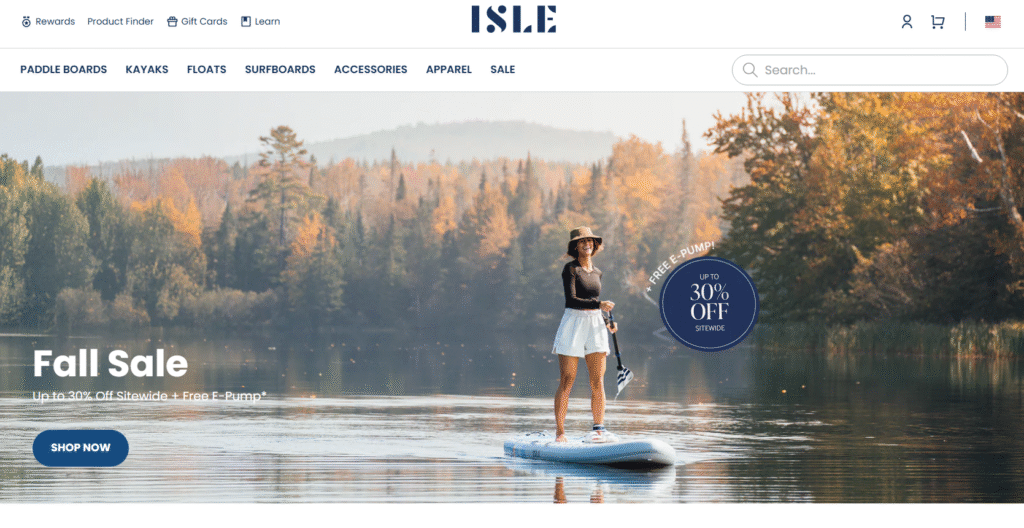
Ever stared at a paddle board on a lake and thought, “Someone’s getting rich off these things”?
You’re not wrong.
While you’re contemplating whether to buy one for yourself, someone else is contemplating their bank statements with a satisfied grin. The outdoor recreation industry is booming, and paddle boarding has exploded in popularity over the past decade.
But here’s the thing most people miss:
You don’t need to invent the next revolutionary water sport to cash in. You just need to understand what makes customers click “buy now” instead of “maybe later.”
Let me show you exactly how one paddle board company turned simple product selection into a steady income stream.
Ad 🎯 After studying 400+ business models, here’s what actually works for beginners…
Most “make money online” advice is garbage. Complex affiliate schemes. Dropshipping nightmares. Social media “influencing.”
We found something better: lead-generation funnels for manufacturers. Simple. Profitable. Fast results.
Our Max Incubator Phase 1 students are proof—they’re going from zero to their first $1,000 in 90 days with this exact model.
→ See the business idea that’s working for beginners this year
The Genius Behind Selling Water Sports Gear Online
Isle Surf and SUP didn’t reinvent the paddle board.
They did something smarter. They figured out that success in e-commerce isn’t about having the flashiest product—it’s about removing every possible reason for a customer to hesitate.
Think about it. When someone shops for a paddle board online, they’re already nervous. They can’t touch it, can’t test it, and they’re probably imagining themselves face-planting into the water like a graceful walrus.
So what did Isle do?
They built their entire business model around one core principle: make buying as frictionless as possible while offering legitimate quality.
Multiple Revenue Streams Keep the Cash Flowing
Here’s where it gets interesting.
Most people think you just throw some paddle boards on a website and pray. Isle took a different approach—they diversified their product catalog strategically.
Their primary revenue comes from paddle boards (obviously), but they’ve expanded into kayaks, surfboards, and floats. Smart move. Why? Because someone interested in paddle boarding is likely interested in other water activities too.
But the real money multiplier?
Accessories.
Paddles, bags, pumps, kayak foot braces, even UV-protective apparel. These aren’t afterthoughts—they’re profit boosters. Accessories in e-commerce typically have higher profit margins than primary products, and they increase average order value.
Think about it: someone just spent $800 on a paddle board. What’s another $150 for a premium paddle and a carrying bag?
Nothing. That’s what.
The Website Experience That Actually Converts
Let’s talk about the elephant in the room: most e-commerce websites are terrible.
They’re cluttered, confusing, and about as user-friendly as assembling IKEA furniture in the dark.
Isle’s website does the opposite. Clean tabs. Clear categories. A “shop-by-model” feature that doesn’t make you feel like you need a PhD to buy a paddle board.
But here’s the killer feature they implemented:
A product recommendation quiz.
Brilliant, right? First-time buyers don’t know what they need, so Isle asks them simple questions about experience level and usage plans. Boom—personalized product suggestions appear instantly.
This isn’t just customer service. It’s conversion optimization disguised as helpfulness. Interactive content like quizzes can increase engagement rates by 50% compared to static content.
Building Trust When You Can’t Touch the Product
Selling physical products online requires trust.
You’re asking someone to drop hundreds (sometimes thousands) of dollars on something they’ve only seen in photos. That’s a big ask—like asking someone to marry you after three text messages.
Isle tackles this head-on with:
Detailed product descriptions with star reviews and color combinations. Warranties on every product. Secure payment processing. Fast shipping guarantees.
Each of these elements chips away at customer hesitation. But more importantly, they position Isle as a professional operation, not some dropshipping scheme run from a college dorm room.
And let’s be honest—according to Baymard Institute, the average cart abandonment rate is nearly 70%. Every trust signal you add brings that number down.
Where Isle Could Level Up (And What You Can Learn)
No business is perfect. Even successful ones leave money on the table.
Isle’s biggest missed opportunity? Paid advertising.
They have a solid foundation with a good website and quality products, but they’re not aggressively pushing traffic. Facebook and Instagram ads are particularly effective for visual products like paddle boards.
Targeted campaigns focused on demographics (outdoor enthusiasts, fitness buffs, lake house owners) could dramatically increase their web traffic and sales.
The other area for improvement: website pop-ups.
They have one, but it’s not optimized. A well-designed pop-up offering a discount code or promoting email signups could capture leads who aren’t ready to buy yet. Strategic pop-ups can increase conversion rates by up to 40% when done right.

The key is making it eye-catching without being annoying. Think “helpful reminder” rather than “aggressive car salesman.”
Ad 🎯 Ready to put these strategies into action?
Theory is great, but execution is what drives growth. That’s where Max Business School™ comes in.
Inside, you’ll find step-by-step digital marketing courses (SEO, ads, email, social, content, and more) — taught by professionals, designed for beginners and business owners alike.
And the best part? It’s 100% free, online, and flexible.
→ Join Max Business School Today — Free
The Skills You Actually Need to Start
Let’s get practical.
What would it take for you to launch something similar?
First, you need basic e-commerce knowledge. Understanding platforms like Shopify or WooCommerce is essential. These aren’t complicated, but they require some learning.
Second, product sourcing and supplier relationships. You’ll need to find reliable manufacturers—whether you’re dropshipping, white-labeling, or holding inventory.
Third, digital marketing fundamentals. SEO, email marketing, and paid advertising aren’t optional anymore. You don’t need to be an expert, but you need to understand the basics.
Fourth, customer service systems. Quick responses to questions. Easy returns. Professional communication. This separates thriving businesses from failing ones.
The Big Takeaway: Success Is in the Details
Here’s what most people get wrong about e-commerce:
They think it’s about finding the perfect product. It’s not. It’s about executing the mundane things exceptionally well.
Isle succeeds because they’ve mastered the basics: good products, clear website navigation, trust-building guarantees, and product personalization.
Not sexy. Not revolutionary. But profitable.
If you’re thinking about starting an e-commerce business, forget about finding the next viral product. Instead, focus on creating an experience where customers feel confident clicking “buy.”
Remove friction. Build trust. Make the process easy.
Do that, and you won’t need the next revolutionary paddle board design.
You’ll just need a good product and smart execution.
And maybe a decent accountant for all those sales.