
How to Build Prayer and Meditation App Making $3 Million/Year
What if you could build a business that makes millions while helping people connect with their faith?
Sounds like an impossible dream, right?
Most entrepreneurs think they have to choose between purpose and profit. Between making a difference and making money. Between serving a mission and building a sustainable business.
But Hallow proves that’s a false choice—and they’re generating $3 million annually to back it up.
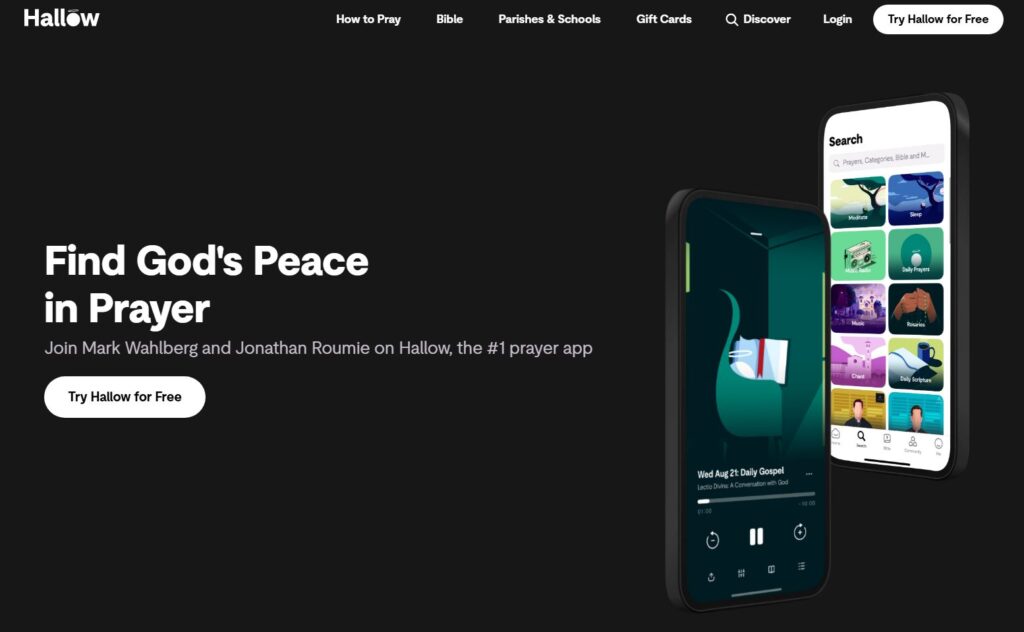
This isn’t just another meditation app trying to be the next Calm or Headspace. Hallow is a Christian prayer and meditation platform that blends ancient spiritual practices with modern technology, creating something genuinely unique in the wellness space.
Here’s what makes this story fascinating…
The founders didn’t try to serve everyone. They didn’t water down their message to appeal to the broadest possible audience. Instead, they went deep—creating a product specifically for Christians and Catholics seeking to deepen their prayer life and spiritual practice.
That focus allowed them to serve their community exceptionally well rather than being mediocre for everybody.
And the results speak volumes.
Hallow attracts 1.3 million monthly visitors, has become the most popular Christian prayer app available, and generates revenue that would make most app developers jealous.
They collaborated with prominent Christian figures like Mark Wahlberg and Fr. Mike Schmitz, making the experience personal and relatable. They built features that genuinely help people pray rather than just generic meditation timers.
Today, we’re breaking down exactly how Hallow built a multi-million dollar business while staying true to its spiritual mission—and how you can apply these principles to build your own faith-based or purpose-driven app.
Ad 🎯 After studying 400+ business models, here’s what actually works for beginners…
Most “make money online” advice is garbage. Complex affiliate schemes. Dropshipping nightmares. Social media “influencing.”
We found something better: lead-generation funnels for manufacturers. Simple. Profitable. Fast results.
Our Max Incubator Phase 1 students are proof—they’re going from zero to their first $1,000 in 90 days with this exact model.
→ See the business idea that’s working for beginners this year
What Hallow Actually Does (And Why It Works)
Hallow isn’t trying to be a secular mindfulness app with religious themes tacked on.
That would miss the point entirely.
Instead, it’s designed from the ground up specifically for Christians and Catholics who want to deepen their prayer life, explore scripture, and build consistent spiritual practices.
The app offers an extensive library of guided prayers, meditations, and reflections tailored to Christian and Catholic traditions. Whether someone wants to pray the Rosary, meditate on Bible verses, practice Lectio Divina, or listen to calming Bible stories before bed, Hallow provides content for every spiritual need.
But here’s where Hallow truly differentiates itself…
They collaborate with prominent figures in the Christian community—actors, theologians, priests, and religious leaders—to create content that feels personal and authentic rather than generic and corporate.
When you’re praying along with Mark Wahlberg or learning from Fr. Mike Schmitz, there’s an immediate connection and relatability that generic meditation apps can’t replicate.
This authenticity creates several competitive advantages.
It builds trust with users who want spiritual guidance rooted in their faith tradition. It creates content that resonates emotionally and spiritually, not just intellectually. It differentiates Hallow from secular meditation apps trying to serve everyone. And it generates social proof when recognizable figures endorse and use the platform.
The app also recognizes that prayer and meditation are community activities, not just individual practices. Seasonal challenges during Advent and Lent bring users together for shared spiritual journeys, strengthening engagement and creating a sense of belonging.
The Revenue Model: How $3 Million Annually Happens
Let’s talk about how Hallow turns spiritual impact into sustainable revenue.
The business model is elegantly designed to serve both business needs and user accessibility: a freemium approach with premium subscriptions and strategic merchandise sales.
Here’s how the economics work in practice.
New users get a 7-day free trial that provides full access to everything Hallow offers. This risk-free trial lets people experience the complete value before committing financially—critical for building trust around something as personal as faith practice.
After the trial, users can subscribe for $9.99 monthly or $69.99 annually (which works out to $5.83/month—a compelling discount for annual commitment).
Subscribers gain access to advanced meditation sessions that go deeper than basic offerings, customizable prayer experiences tailored to individual needs and preferences, seasonal community challenges that build connection and accountability, and unique voices from respected figures in the Christian community.
This pricing strategy is brilliant for several reasons…
The free trial removes the financial barrier to entry for curious users. The monthly option accommodates people who want flexibility without long-term commitment. The annual plan creates predictable recurring revenue while offering value to committed users. And the pricing remains accessible—under $10 monthly—for a service that genuinely impacts people’s spiritual lives.
According to Business of Apps’ subscription market research, meditation and wellness apps typically convert 2-5% of free trial users to paid subscribers, with retention rates of 60-70% after six months for engaged users.
But Hallow doesn’t stop at subscriptions.
They also operate an online merchandise store selling branded items that strengthen community identity. Prices range from $1.49 for stickers to $49.99 for hoodies, with most items in the $12-$20 range.
This merchandise serves multiple strategic purposes beyond just additional revenue. It creates visible brand ambassadors when people wear Hallow apparel. It strengthens community identity and belonging among users. It provides an affordable way for people to support Hallow without subscribing. And it generates supplementary income that diversifies revenue streams.
What Hallow Does Exceptionally Well
Want to know why Hallow dominates the Christian prayer app space while countless other faith-based apps languish in obscurity?
It’s not just about having good content. It’s about executing strategic principles that attract users, engage them deeply, and build a thriving community.
Dominating Organic Search Through SEO Excellence
Here’s a number that should make every app developer pay attention…
Hallow attracts approximately 1.3 million monthly visitors through effective search engine optimization.
That’s not paid advertising. That’s organic traffic from people actively searching for prayer and meditation resources—the highest-intent visitors possible.
Hallow achieves this through several SEO strategies that work in concert. They target keywords like “Catholic prayer app,” “Christian meditation,” “how to pray the Rosary,” and similar terms that people actually search. They maintain a valuable blog with articles about prayer practices, spiritual growth, and faith development. They’ve built authoritative backlinks from respected Catholic and Christian websites. And their technical SEO is flawless—fast loading, mobile-optimized, and properly structured.
According to Search Engine Journal’s traffic analysis, organic search traffic typically converts 8-10x better than paid advertising because visitors are actively seeking solutions rather than being interrupted by ads.
This organic traffic foundation creates sustainable, compound growth that doesn’t require continuously increasing advertising budgets.
Website Copy That Communicates Value Instantly
Hallow’s website doesn’t waste time with vague spiritual platitudes or confusing navigation.
Instead, it immediately communicates clear benefits that resonate with the target audience: deepen your prayer life with guided content, explore different prayer types and meditation styles, access unique features you won’t find elsewhere, and join a community of fellow believers on the same journey.
The site uses compelling visuals—eye-catching images, intuitive icons, and clean design—that make navigation effortless. Visitors can quickly understand what Hallow offers and whether it’s right for them.
This clarity serves critical conversion purposes.
It helps potential subscribers immediately see value rather than bouncing in confusion. It addresses common questions before they need to be asked. It builds confidence that the app will be easy to use and valuable. And it differentiates Hallow from generic meditation apps by highlighting faith-specific features.
When you’re asking people to invest time and money in their spiritual practice, crystal-clear value communication isn’t optional—it’s essential.
Unique Features That Create Genuine Value
Hallow doesn’t just offer generic meditation timers with Christian themes slapped on.
They’ve built genuinely unique features that serve specific spiritual needs.
The ability to pray alongside well-known figures like Mark Wahlberg and Fr. Mike Schmitz makes the experience feel special and personal. The gift card feature allows users to share the app with friends and family, expanding reach organically through personal recommendations. Customizable prayer experiences let users tailor content to their specific spiritual needs and preferences. Seasonal challenges during Advent and Lent create structured spiritual journeys with built-in accountability.
These aren’t gimmicks—they’re thoughtfully designed features that address real needs people have when trying to maintain consistent prayer practices.
Here’s the business impact…
Unique features create competitive differentiation that prevents commoditization. Users become emotionally invested in features they can’t find elsewhere. Gift cards turn satisfied users into growth engines through organic referrals. And seasonal challenges drive re-engagement with users who might have lapsed.
Features that genuinely help users achieve their goals become the foundation of sustainable growth.
Social Proof That Builds Immediate Trust
When someone is considering a prayer app, they’re making a deeply personal decision about their spiritual life.
They need reassurance that this isn’t just another app that will waste their time or exploit their faith.
Hallow addresses this through powerful social proof displayed prominently throughout their marketing. Testimonials from satisfied users sharing specific transformations in their prayer lives. Endorsements and features from trusted media outlets like Forbes. Logos of respected Christian organizations and leaders who use Hallow. Statistics about the size and engagement of the Hallow community.
This social proof serves multiple psychological functions in the conversion process.
It provides validation that the app actually works and delivers value. It reduces perceived risk by showing that others have successfully used Hallow. It creates aspirational positioning—users want to join a community of committed believers. And it builds trust through association with recognized names and organizations.
According to Northwestern University’s review research, displaying reviews and testimonials can increase conversion rates by up to 270% for products in the health and wellness category.
Social proof isn’t decoration—it’s conversion infrastructure.
Community Building Through Shared Experiences
Hallow understands something fundamental that many apps miss…
Faith is inherently communal, not just individual.
They foster community through seasonal challenges that bring users together for shared spiritual journeys. During Advent, thousands of users participate in daily prayer challenges together. During Lent, the community supports each other through 40 days of deeper spiritual practice.
These challenges create several powerful business effects.
They drive daily engagement during the challenge period, building habit formation. They create emotional connections between users who share the experience. They generate social media content as users share their participation. And they provide natural re-engagement opportunities for users who may have lapsed.
Community isn’t just nice to have—it’s a retention and engagement driver that directly impacts recurring revenue.
Email Marketing That Maintains Engagement
Hallow uses email marketing strategically to keep users engaged and connected.
Daily quote emails provide consistent value and remind users to open the app. Newsletters share new features, content, and community updates. Targeted campaigns re-engage inactive users with compelling reasons to return.
This email strategy serves multiple retention purposes that directly impact revenue.
It keeps Hallow top-of-mind so users remember to use the app regularly. It provides value beyond the app itself, strengthening the relationship. It drives users back to the app, improving engagement metrics. And it reduces churn by reminding inactive users why they subscribed.
According to Invespcro’s email effectiveness research, email marketing delivers $44 in ROI for every $1 spent—the highest ROI of any digital marketing channel.
The Growth Opportunity Waiting to Be Seized
Despite generating $3 million annually and dominating the Christian prayer app space, Hallow has one significant untapped opportunity.
Global Expansion Through Localization
Here’s the thing…
Christianity is a global faith with billions of practitioners worldwide—but Hallow is primarily optimized for English-speaking audiences.
This represents an enormous growth opportunity through strategic localization.
Creating versions of the app tailored for different regions would involve translating the entire app and content library into major languages (Spanish, Portuguese, French, Italian, Polish, etc.), adjusting content to match cultural practices and spiritual traditions in different regions, partnering with respected religious figures in each target market, and customizing seasonal challenges to match local liturgical calendars.
The impact of successful localization could be transformative.
It would open access to hundreds of millions of potential users currently underserved. It would establish Hallow as the global leader in Christian prayer apps. It would create multiple revenue streams denominated in different currencies. And it would deepen impact by serving diverse Christian communities worldwide.
According to Slator’s localization ROI research, businesses that invest in proper localization see 3-5x higher adoption rates in international markets compared to English-only offerings.
Localization isn’t just translation—it’s a strategic growth lever that could multiply Hallow’s revenue and impact several times over.
Ad 🎯 Ready to put these strategies into action?
Theory is great, but execution is what drives growth. That’s where Max Business School™ comes in.
Inside, you’ll find step-by-step digital marketing courses (SEO, ads, email, social, content, and more) — taught by professionals, designed for beginners and business owners alike.
And the best part? It’s 100% free, online, and flexible.
→ Join Max Business School Today — Free
Your Blueprint for Building a Faith-Based App Business
Ready to build your own faith-based or spiritually-focused app?
Here’s your step-by-step blueprint for creating a purpose-driven app that generates substantial revenue while genuinely serving your community.
Step 1: Define Your Specific Faith Community
Don’t try to create a generic spiritual app that serves everyone.
Pick a specific faith tradition where you can develop deep expertise and authentic content. Your options include Catholic prayer and devotional practices, Protestant Bible study and worship, Islamic prayer times and Quran study, Jewish prayer and Torah learning, or Buddhist meditation and mindfulness practices.
The key is authenticity and depth. Hallow works because it’s genuinely designed for Christians and Catholics, not a secular app with religious themes superficially added.
Step 2: Identify Core Spiritual Needs
What specific challenges does your faith community face in maintaining spiritual practices?
For Hallow’s audience, this includes difficulty maintaining consistent prayer habits, uncertainty about how to pray effectively, lack of accountability and community, and desire for guided spiritual content.
Understanding these specific needs allows you to build features that genuinely help rather than generic tools that look good in screenshots but don’t deliver real value.
Step 3: Build Your Minimum Viable Product
Your MVP should include core features that address primary spiritual needs.
For a prayer and meditation app, this means a library of guided prayers and meditations, progress tracking to build habits and accountability, community features for shared experiences, and customization options for personal preferences.
You can hire app developers through platforms like Toptal or Upwork ($15,000-$40,000 for an MVP with native iOS/Android apps), or start cheaper with no-code platforms like Glide or Adalo ($60-$100/month) to validate demand before investing in custom development.
Step 4: Partner With Respected Voices
Authenticity and credibility are everything in faith-based apps.
Identify respected figures in your faith community who would be willing to contribute content or endorsements. Reach out with a compelling vision for how the app will serve the community. Start with smaller partnerships and build toward more prominent collaborations. Feature these voices prominently in your marketing to build immediate trust.
Hallow’s partnerships with Mark Wahlberg and Fr. Mike Schmitz provide instant credibility and differentiation—replicate this strategy in your specific faith tradition.
Step 5: Implement Freemium Pricing
Follow Hallow’s proven freemium approach.
Offer a generous free trial (7-14 days) with full access to everything. Provide a free tier with limited but valuable content for people who can’t afford subscriptions. Create paid subscriptions ($7-15/month) that unlock premium content and features. Offer annual plans at significant discounts to encourage longer commitments.
The free trial is essential—people need to experience value before committing money to something as personal as spiritual practice.
Step 6: Build Your SEO Foundation
Organic search will become your most valuable acquisition channel.
Research keywords your faith community searches when seeking spiritual resources. Create helpful blog content about prayer practices, spiritual growth, and faith development. Optimize technical SEO for fast loading and mobile excellence. Build backlinks by creating valuable content that respected faith-based websites naturally want to reference.
Hallow’s 1.3 million monthly organic visitors didn’t happen by accident—they invested heavily in SEO from the beginning.
Step 7: Foster Community Through Shared Experiences
Don’t treat your app as just a content delivery platform.
Create seasonal challenges aligned with your faith tradition’s liturgical calendar or spiritual observances. Build forums or chat features where users can support each other. Highlight user testimonials and transformation stories. Encourage users to share their spiritual journey progress.
Community creates emotional investment and switching costs that improve retention dramatically.
Step 8: Implement Email Marketing
Email is your direct line to users outside the app.
Send daily inspirational quotes or spiritual reflections that provide value. Share newsletters with new features, content, and community highlights. Create re-engagement campaigns for inactive users. Segment your list to send personalized content based on user interests and engagement.
Email keeps your app top-of-mind and drives consistent re-engagement.
Step 9: Consider Merchandise Revenue
Branded merchandise can supplement subscription revenue while building community identity.
Start with simple items like stickers, mugs, and t-shirts featuring your app’s branding or inspirational messages. Use print-on-demand services like Printful or Printify to avoid inventory risk. Price items accessibly ($10-30 range) to maximize adoption. Feature user-generated content of people using your merchandise.
Merchandise won’t make you rich, but it diversifies revenue and strengthens brand visibility.
Key Takeaways: What You Need to Remember
Let’s distill everything into the essentials you can’t afford to forget.
Serve one faith community exceptionally well. Hallow succeeds because it’s genuinely designed for Christians and Catholics rather than trying to be everything to everyone. Deep focus allows authentic content and features that truly serve your community.
SEO is your best long-term growth engine. Hallow’s 1.3 million monthly organic visitors provide sustainable, high-intent traffic that converts well and costs nothing per visitor. Investing in SEO from day one compounds over time.
Partner with respected voices for instant credibility. Collaborations with recognized figures in your faith community provide immediate trust and differentiation that’s impossible to achieve through advertising alone.
Community drives engagement and retention. Seasonal challenges and shared experiences create emotional connections that keep users engaged long-term. Faith is inherently communal—build features that reflect this.
Free trials remove barriers to trying something personal. People need to experience the value of your app before committing money to something as intimate as their spiritual practice. Generous trials convert better than restrictive ones.
Email marketing maintains relationships beyond the app. Daily quotes and newsletters keep your brand top-of-mind and drive consistent re-engagement with lapsed users.
Global localization offers massive growth potential. Your faith tradition likely has practitioners worldwide speaking different languages. Strategic localization can multiply your addressable market several times over.
Hallow’s success proves you can build a multi-million dollar business while staying true to spiritual mission and genuinely serving your faith community.
The wellness and meditation app market is enormous. According to Grand View Research’s meditation market analysis, the global meditation market is expected to reach $9 billion by 2027.
Within this massive market, faith-based apps occupy a unique position—serving communities with specific spiritual needs that generic meditation apps can’t address.
Your Turn to Build
Here’s the beautiful truth about faith-based apps like Hallow…
You don’t need to choose between making an impact and making money. When you solve real spiritual needs for a specific faith community, you can build a profitable business that genuinely helps people deepen their practice.
Hallow proved this blueprint works. They focused deeply on serving Christians and Catholics, partnered with respected voices for credibility, built features that genuinely help with prayer practices, and executed solid business fundamentals.
That same approach works for any faith tradition. Catholic devotions. Protestant worship. Islamic prayer. Jewish study. Buddhist meditation. The formula remains constant: understand your community’s specific spiritual needs, build authentic solutions, and execute business fundamentals that create sustainable growth.
The question isn’t whether faith-based apps can be profitable businesses.
The question is: which faith community will you serve exceptionally well?
Your move.