
How to Earn $20k Monthly with Product Review Blogging

Most people think product review blogs died with the rise of YouTube influencers.
Louida Martin would laugh at that assumption.
She launched Product Review Mom in 2012 as a simple hobby—documenting her experiences with products she was buying anyway. Today, that hobby generates $20,000 monthly, has been featured in publications like Dr. Oz and The Good Life, and has partnered with brands like Disney, Nintendo, and Nickelodeon.
That’s $240,000 annually from sharing honest opinions about products.
No film crew. No expensive video equipment. Just strategic content creation, smart SEO, and a commitment to genuine, helpful reviews that people actually trust.
Here’s the thing that makes this model particularly attractive: once you understand the formula, you can apply it to virtually any product category. Beauty products, tech gadgets, parenting gear, outdoor equipment—the mechanics remain the same.
Let me show you exactly how Louida built this business (and how you could build something similar in whatever niche interests you).
Ad 🎯 After studying 400+ business models, here’s what actually works for beginners…
Most “make money online” advice is garbage. Complex affiliate schemes. Dropshipping nightmares. Social media “influencing.”
We found something better: lead-generation funnels for manufacturers. Simple. Profitable. Fast results.
Our Max Incubator Phase 1 students are proof—they’re going from zero to their first $1,000 in 90 days with this exact model.
→ See the business idea that’s working for beginners this year
The Business Model That Turns Opinions Into Income
Let’s start with the fundamental economics of product review blogging.
You’re not manufacturing products. You’re not holding inventory. You’re not dealing with shipping or customer service. You’re simply evaluating products that exist in the marketplace, sharing honest opinions, and getting paid when readers make informed purchasing decisions.
The beauty of this model? The products already exist. Companies are already marketing them. People are already searching for reviews before buying. You’re just positioning yourself as the trusted voice that helps people make better decisions.
Product Review Mom generates approximately $20,000 monthly through three primary revenue streams:
Affiliate marketing represents the largest income portion. When readers click affiliate links in reviews and purchase products, Louida earns commissions ranging from 4% to 50% depending on the product and affiliate program. These commissions compound as her content library grows—old reviews continue generating income months or years after publication.
Display advertising through networks like Google AdSense monetizes traffic without requiring readers to purchase anything. Every page view generates small amounts of revenue. With 15,000+ monthly organic visitors, those small amounts add up significantly.
Sponsored content from brands that want exposure to her audience. Companies pay fees for dedicated reviews, mentions in gift guides, or feature placements. As her authority and traffic grew, sponsored opportunities became more frequent and better compensated.
This three-stream approach creates remarkable stability. Even if affiliate income dips one month, display ads and sponsored posts continue generating revenue. The diversification protects against algorithm changes, market fluctuations, or seasonal shopping patterns.
Why the “Mom” Angle Makes This Work
Here’s what separates Product Review Mom from the ten thousand other generic review sites: specific positioning targeting a defined audience.
“Product review blog” is impossibly broad. Who’s the audience? What products? What perspective? Generic positioning gets lost in the noise of massive sites like Wirecutter and CRTQ that dominate broad review categories.
But “Product Review Mom”? That’s specific.
Immediately, you know the perspective (a mother), the likely product focus (family-oriented purchases), and the voice you’ll encounter (relatable, practical, focused on value and quality).
This positioning delivers multiple strategic advantages that generic review sites can never match:
Content direction becomes obvious. What should she review? Products mothers actually buy—beauty items, parenting gear, family travel services, kids’ entertainment, household products. No existential crisis about what to cover next; just review things relevant to mothers’ lives.
SEO targeting gets easier. Instead of competing for impossibly difficult keywords like “best headphones,” she targets long-tail searches like “best wireless headphones for moms on the go” or “family-friendly travel strollers review.” These specific searches have less competition and higher purchase intent.
Audience trust builds faster. Mothers reading reviews from another mother feel instant connection. The reviewer understands their priorities, constraints, and decision-making criteria in ways a general tech blogger never could.
Sponsored opportunities align naturally. Brands targeting mothers know exactly whether Product Review Mom fits their marketing strategy. This clarity makes partnership negotiations faster and more productive.
The lesson here isn’t to copy the “mom” angle—it’s to recognize that specific positioning always beats generic attempts to serve everyone. Whether you focus on reviews for college students, outdoor enthusiasts, budget-conscious shoppers, or senior citizens, the specificity makes everything easier.
The SEO Strategy That Drives 15,000 Monthly Visitors
Let’s talk about the engine that makes this entire business work: organic search traffic.

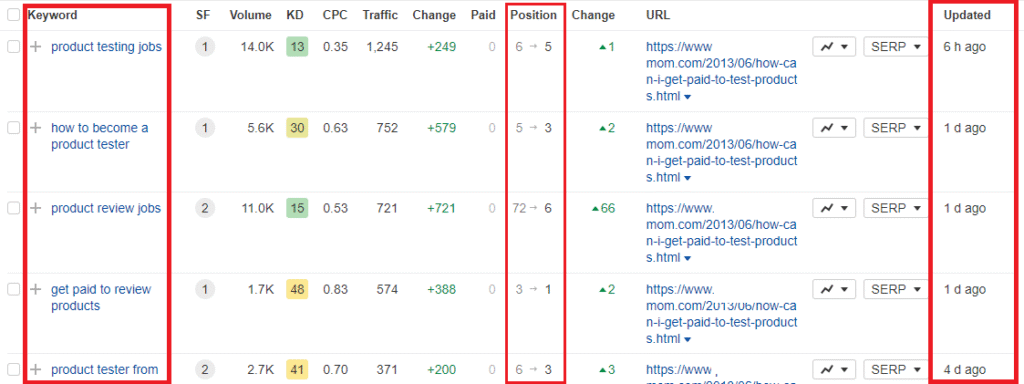
Product Review Mom attracts approximately 15,000-16,000 monthly visitors through Google search results. This isn’t accidental luck—it’s systematic SEO execution over years.
According to analysis from Ahrefs, the site demonstrates strong SEO fundamentals across multiple areas:
Strategic keyword targeting focusing on long-tail, low-to-medium difficulty keywords. Instead of trying to rank for impossibly competitive terms like “best beauty products,” the site targets specific searches like “honest review of [specific product name]” or “is [product] worth buying for families.”
These longer, more specific searches have three massive advantages: less competition makes ranking achievable, searchers using specific queries are closer to purchase decisions, and matching exact search intent improves conversion rates dramatically.
Quality backlink profile showing links from reputable publications. Being featured in outlets like Dr. Oz and The Good Life isn’t just prestige—those backlinks signal authority to search engines, improving rankings across the entire site.
Optimized on-page elements including title tags, meta descriptions, header tags, and content structure. Each review is crafted not just for human readers but for search engine crawlers that determine rankings.
Mobile optimization ensuring the site works perfectly on smartphones and tablets. Since most product research now happens on mobile devices, this isn’t optional—it’s critical for both SEO rankings and user experience.
Regular content updates with fresh reviews published consistently. Search engines favor sites that demonstrate ongoing activity and relevance. A review blog that hasn’t published in six months signals abandonment; consistent publishing signals authority.
The compounding effect of good SEO is what makes review blogs such attractive businesses. A single well-optimized review can rank in Google for years, generating traffic and affiliate commissions long after the initial work is complete.
Think about the economics: spend four hours researching and writing a comprehensive product review. Publish it, build a few backlinks, and optimize on-page elements. That review now works 24/7 for years, potentially earning hundreds or thousands of dollars over its lifetime.
That’s the definition of passive income—work done once that pays repeatedly.
The Content Quality Approach That Builds Trust
Here’s where most product review blogs fail: they prioritize quantity over quality, churning out thin, generic reviews that barely skim product features without providing genuine insights.
Readers can smell this approach from a mile away. If your review could have been written by someone who never touched the product—just cobbled together from manufacturer specs and other reviews—nobody trusts it.
Product Review Mom takes the opposite approach: genuine, detailed reviews based on actual product testing.
The content strategy emphasizes several quality markers that build credibility:
Personal testing and experience. Louida actually uses the products she reviews, sharing specific observations, photos showing products in real contexts, and honest assessments of both strengths and weaknesses. This authenticity is impossible to fake and readers recognize it immediately.
Comprehensive coverage. Reviews don’t just regurgitate features listed on product pages. They address practical questions: How does this perform in everyday use? Does it live up to marketing claims? Who would benefit most from this product? What are legitimate alternatives?
Regular updates. As products change, firmware updates roll out, or better alternatives emerge, existing reviews get updated. This maintains accuracy and signals to both readers and search engines that the content stays relevant.
Transparent disclosure. The site prominently displays affiliate relationship disclosures and sponsored content labels. This transparency actually builds trust rather than undermining it—readers appreciate knowing when commercial relationships exist while valuing the honest opinions shared despite those relationships.
Varied review formats. Some products get detailed standalone reviews. Others appear in comparison guides or gift guide roundups. The format matches the content type, making information more accessible and useful.
The commitment to quality over quantity explains how the site competes successfully despite the crowded review space. Many review sites publish dozens of mediocre reviews weekly. Product Review Mom publishes fewer reviews but makes each one substantially more valuable.
Quality content also performs better in SEO over time. Google’s algorithms increasingly prioritize expertise, authoritativeness, and trustworthiness (E-A-T). Thin affiliate content gets filtered out; comprehensive, genuine reviews get rewarded with higher rankings and more traffic.
The User Experience That Converts Visitors Into Buyers
Traffic means nothing if it doesn’t convert into revenue.
Product Review Mom generates $20,000 monthly not just because it attracts 15,000 visitors, but because the site is designed to convert those visitors into affiliate clicks, ad impressions, and engaged readers.
The user experience strategy includes several elements that maximize conversion potential:
Clean, uncluttered design with clear sections and intuitive navigation. Visitors can quickly find relevant reviews without fighting confusing menus or wading through design bloat. The easier you make it for people to find what they need, the more likely they stay and engage.
Prominent search functionality allowing visitors to quickly locate reviews for specific products or categories. Someone searching for a particular review shouldn’t need to browse randomly hoping to stumble across it.
Mobile-optimized layout ensuring the site works perfectly on smartphones. Since most people research products on phones while shopping or commuting, mobile optimization directly impacts conversion rates.
Visually distinct affiliate links displayed in different colors so they stand out without being obnoxious. This transparency actually improves click-through rates—readers know these are the “buy” links and can find them easily when ready to purchase.
Strategic ad placement through Google AdSense that generates revenue without destroying user experience. Ads are present but not overwhelming, maintaining the balance between monetization and readability.
Fast loading times ensuring visitors don’t bounce because pages take forever to load. Page speed impacts both SEO rankings and user experience—nobody waits around for slow sites when alternatives are one click away.
The conversion optimization philosophy seems to be “remove every possible barrier between reader interest and action.” Interested in a product after reading the review? The affiliate link is prominently displayed. Want to explore related products? Navigation makes that effortless. Need more information? Content provides comprehensive details.
This user-centric approach pays dividends in conversion rates. It’s not about tricking people into clicking links—it’s about making it easy for people who genuinely want to buy to complete that action.
The Credibility Strategy That Separates Signal From Noise
Let’s address the elephant in the room: the internet is drowning in fake reviews.
Paid testimonials. Manufactured rankings. Reviews written by people who never touched the products. The credibility problem in product reviews is massive, which is why establishing genuine trustworthiness creates such powerful competitive advantage.
Product Review Mom builds credibility through multiple strategic elements:
Personal branding and transparency. Louida’s profile and photos are prominently featured throughout the site. She’s not hiding behind a faceless brand—she’s putting her personal reputation behind every review. This accountability matters enormously to skeptical readers.
Feature placements in reputable publications. Being featured in outlets like Dr. Oz and The Good Life serves as third-party validation. These placements are prominently displayed on the site, leveraging external credibility to reinforce internal authority.
Brand partnerships with major companies. Working with Disney, Nintendo, and Nickelodeon signals that established brands trust her reviews enough to partner with her. This association transfers credibility.
Honest, balanced reviews that acknowledge both strengths and weaknesses. The willingness to point out product flaws actually strengthens trust—readers know reviews aren’t just disguised advertisements.
Clear affiliate and sponsored content disclosures. Transparency about commercial relationships, far from undermining trust, actually enhances it. Readers appreciate knowing when financial incentives exist, and honest disclosure signals integrity.
Active community engagement. Louida responds to comments on blog posts, engages with readers on social media, and fosters genuine conversations. This accessibility humanizes the brand and builds personal connections with the audience.
The credibility strategy recognizes a fundamental truth: in a market flooded with questionable reviews, trustworthiness is the scarcest resource. Build genuine credibility, and readers actively seek out your opinions before making purchases.
This trust translates directly into revenue. When someone trusts your reviews, they’re far more likely to click affiliate links, try recommended products, and return for future purchase decisions.
The Marketing Strategy That Amplifies Reach
Great content sitting on a website nobody visits generates exactly zero income.
Product Review Mom combines strong SEO (which we’ve covered) with active marketing across multiple channels to drive traffic and build audience:
Social media presence across platforms where the target audience spends time. Regular posting on Facebook, Instagram, and Pinterest shares new reviews, engages with followers, and drives traffic back to the site.
Email marketing building a subscriber list that receives updates about new reviews, gift guides, exclusive deals, and valuable content. Email subscribers represent the most engaged audience segment—people who proactively opted in to hear from you convert at much higher rates than cold traffic.
Brand partnerships and collaborations that provide exposure to new audiences. When Louida partners with major brands for sponsored content, those brands often promote the collaboration to their audiences, introducing Product Review Mom to thousands of potential new readers.
Strategic content timing aligning reviews with shopping seasons and trends. Publishing gift guides before holidays, back-to-school product reviews in summer, and timely reviews of newly launched products catches searchers when purchase intent is highest.
The marketing approach recognizes that SEO alone, while powerful, shouldn’t be the only traffic source. Diversifying across social media, email, and partnerships creates multiple paths for audience discovery and reduces dependence on Google algorithm changes.
The Massive Opportunities Still Untapped
Even at $20,000 monthly revenue, Product Review Mom has obvious growth potential requiring relatively straightforward execution:
Video content represents the biggest missed opportunity. The YouTube channel exists but shows minimal activity and almost no subscribers. This is baffling because product reviews translate perfectly to video format—unboxing, demonstration, comparison testing, all work better in video than text.
Creating video versions of top-performing written reviews could tap into YouTube’s massive search traffic while building an entirely new audience segment. Many people prefer watching reviews over reading them, and video content often ranks in both YouTube and Google search results.
Lead magnets and email list building need strengthening. According to the analysis, current calls-to-action and lead capture methods are bland and uninviting. Offering compelling freebies—buying guides, product comparison charts, exclusive discount codes—in exchange for email addresses could dramatically grow the subscriber base.

A larger email list means more opportunities to promote new reviews, share affiliate offers, and generate consistent traffic to the site. Email marketing typically converts at 3-10x higher rates than cold traffic.
Social media engagement could be amplified significantly. While the social accounts exist and post regularly, engagement levels suggest room for growth. Running contests and giveaways (like the example from StripBoutique mentioned in the analysis), creating shareable content formats, and collaborating with other influencers could expand social reach exponentially.
Partnership opportunities with brands for exclusive discounts and promo codes would increase both reader value and conversion rates. People love feeling like they’re getting special deals, and exclusive offers create urgency that drives purchases.
None of these opportunities require revolutionary ideas—just consistent execution on proven strategies. The foundation is solid; it’s about amplifying what already works and filling obvious gaps in the current strategy.
Ad 🎯 Ready to put these strategies into action?
Theory is great, but execution is what drives growth. That’s where Max Business School™ comes in.
Inside, you’ll find step-by-step digital marketing courses (SEO, ads, email, social, content, and more) — taught by professionals, designed for beginners and business owners alike.
And the best part? It’s 100% free, online, and flexible.
→ Join Max Business School Today — Free
What You Can Learn From This Success
Let’s extract the universally applicable lessons:
Specific positioning beats generic breadth. “Product reviews” is too broad. “Product reviews for [specific audience]” creates clarity, reduces competition, and improves marketing effectiveness. Find your specific angle.
Quality trumps quantity in content creation. Publishing five genuine, comprehensive reviews monthly outperforms publishing twenty thin, generic reviews. Google rewards quality; readers trust depth.
SEO is your passive income engine. Master keyword research, on-page optimization, and strategic content creation. Each well-optimized piece of content works for years, generating traffic and revenue long after publication.
Credibility is your most valuable asset. In a market drowning in fake reviews, genuine trustworthiness creates insurmountable competitive advantage. Protect your reputation ruthlessly.
User experience directly impacts revenue. Clean design, fast loading, mobile optimization, clear navigation—these aren’t luxuries, they’re conversion fundamentals. Remove every barrier between interest and action.
Diversify revenue streams. Affiliate marketing, display ads, and sponsored content each protect against downturns in the others. Never rely entirely on one income source.
Transparency builds rather than undermines trust. Clearly disclosing affiliate relationships and sponsored content signals integrity. Readers appreciate honesty and reward it with loyalty.
Active marketing amplifies organic growth. SEO provides the foundation, but social media, email marketing, and strategic partnerships accelerate growth and reduce dependence on search algorithms.
The product review model works across virtually any niche—technology, outdoor gear, kitchen equipment, fashion, books, financial products. The mechanics remain constant: create genuine reviews, optimize for search, build trust, monetize through affiliates and advertising.
The Skills That Determine Success
Building a six-figure review blog requires developing three core competencies:
Content creation and product evaluation skills: You need to test products thoroughly, identify meaningful strengths and weaknesses, and communicate observations clearly. Superficial reviews that anyone could write don’t build authority or trust.
SEO and digital marketing knowledge: Understanding keyword research, on-page optimization, link building, and content strategy determines whether your reviews get discovered. Great reviews that nobody finds earn zero dollars.
Monetization and conversion optimization: Knowing how to effectively integrate affiliate links, optimize ad placements, and convert traffic into revenue separates profitable blogs from hobby sites. Technical competence in these areas directly impacts income.
None of these skills are innate—they’re learned through practice, study, and iteration. The successful review bloggers are those who continuously improve across all three areas rather than excelling at one while neglecting others.
Industry Context: Why Review Blogging Still Works
Despite proclamations that video killed written reviews, the data tells a different story.
People still search for written product reviews constantly, with millions of monthly searches for review-related keywords. While video content has grown, written reviews remain essential for detailed comparisons, quick reference, and situations where watching videos is impractical.
The key market dynamics working in your favor:
E-commerce continues explosive growth. More products sold online means more people researching purchases before buying. Every new product category or emerging brand creates review opportunities.
Trust in traditional advertising has collapsed. People know ads are biased. They seek third-party reviews from sources they trust before making purchases. This creates sustained demand for genuine review content.
Affiliate marketing remains highly profitable. Commission rates vary by product category, but successful review sites regularly earn 20-40% of revenue through affiliate partnerships. As e-commerce grows, affiliate opportunities expand.
Looking at successful examples, sites like The Wirecutter (acquired by The New York Times for over $30 million) demonstrate the massive value in authoritative product reviews.
The market hasn’t become saturated—it’s become more sophisticated. Success now requires better positioning, higher quality content, and stronger SEO execution than a decade ago. But for those willing to do the work, the financial rewards remain substantial.
The Bottom Line: Your Review Empire Playbook
Louida Martin’s success with Product Review Mom proves that passionate, consistent creators can build substantial income through product reviews.
She started with a simple hobby—sharing opinions about products she was buying anyway. Through strategic positioning, quality content, and smart monetization, that hobby evolved into a business generating $240,000 annually.
$20,000 monthly didn’t happen accidentally. It came from years of publishing honest reviews, optimizing for search, building credibility, and staying consistent even when early traffic was minimal and income nonexistent.
Could you replicate her exact business? Probably not—the family-focused lifestyle review space has established players now. But could you apply her fundamental strategies to build a profitable review blog in a different product category? Absolutely.
The formula is proven: Choose a specific product niche you understand and care about. Create comprehensive, genuine reviews based on actual product testing. Optimize ruthlessly for SEO to capture organic search traffic. Build credibility through transparency and consistent quality. Monetize through affiliate partnerships and display advertising. Market strategically across multiple channels.
Most people fail at review blogging because they create thin content chasing quick commissions, ignore SEO fundamentals, or quit when results don’t materialize within months. The six-figure review bloggers are simply those who refused to quit—who kept publishing quality reviews, refining their SEO, and building authority even when traffic was embarrassingly low.
So the question isn’t whether product review blogging works. The question is whether you’re willing to do the work required to make it work for you.
The path to $20,000 monthly exists. It’s just paved with hundreds of detailed reviews, thousands of hours of product testing, relentless SEO optimization, and the persistence to keep publishing when nobody’s reading yet.
Your move.