
How to Build a $600K Sticker Business Selling Planner Stickers (Complete Blueprint)
Most people think stickers are child’s play.
A frivolous product that belongs in elementary school craft bins and nowhere near serious business conversations.
Then someone quietly builds a $600,000-per-year empire selling them online.
Here’s what makes this even more remarkable: she’s not manufacturing complex products in overseas factories or managing massive inventory. She’s creating digital designs, leveraging print-on-demand services, and teaching others to do the same—all while building a devoted community of over 5,000 students.
The sticker industry is booming, with the global market expected to reach $57.4 billion by 2030 according to industry research. But this case study isn’t about riding a trend—it’s about building a sustainable, multi-revenue-stream business in a niche most people dismiss as too small or too saturated.
Let me show you exactly how she did it, and more importantly, how you can replicate this model in your own creative niche.
Ad 🎯 After studying 400+ business models, here’s what actually works for beginners…
Most “make money online” advice is garbage. Complex affiliate schemes. Dropshipping nightmares. Social media “influencing.”
We found something better: lead-generation funnels for manufacturers. Simple. Profitable. Fast results.
Our Max Incubator Phase 1 students are proof—they’re going from zero to their first $1,000 in 90 days with this exact model.
→ See the business idea that’s working for beginners this year
The Three-Headed Revenue Monster That Changes Everything
Here’s where most Etsy sellers get it wrong:
They build their entire business on a single income source—product sales—then wonder why they’re stuck on the hamster wheel of constant production just to pay the bills.
This sticker entrepreneur took a completely different approach. Instead of just selling stickers, she built three distinct revenue streams that feed and amplify each other:
The Product Foundation: Etsy Sticker Sales
The core business revolves around PaperPlannerClub, a 5-star rated Etsy shop offering planner stickers across multiple categories. We’re talking decorative stickers, functional planning stickers, holiday-themed designs, and specialized collections for different planning styles.
But here’s the strategic brilliance: Etsy handles payment processing, provides built-in traffic from millions of monthly shoppers searching for handmade items, and delivers an audience already primed to buy from independent creators. You’re not starting from zero trying to convince people to visit an unknown website—you’re tapping into existing buyer behavior.
The shop doesn’t compete on being the cheapest. Instead, it competes on design quality, variety, and the reputation built through thousands of satisfied customers. This allows for healthy profit margins that sustain the business rather than racing to the bottom on price.
The Education Layer: Teaching Others to Create
This is where things get interesting.
The business offers an “8-Step Plan to Sticker Shop Success”—a comprehensive guide teaching aspiring entrepreneurs how to start and grow their own sticker businesses. Think about the multiplication effect here: every student who succeeds becomes a success story that attracts more students, while the creator earns income from teaching rather than just making.
Additionally, there’s a full course on sticker creation itself. People pay to learn design techniques, software skills, production methods, and business strategies from someone who’s already generating six figures doing exactly what they want to learn.
This educational component serves multiple purposes. It generates revenue that’s less dependent on product inventory or production time. It positions the creator as an authority figure—the go-to expert in the planner sticker space. And it builds a pipeline of engaged community members who become both students and customers.
The Membership Model: Recurring Revenue Through Templates
The third revenue stream comes from a paid membership offering pre-made sticker templates. Members pay a recurring fee for access to professional templates they can customize and use in their own projects or businesses.
This is passive income in action.
Create the template library once, then earn monthly recurring revenue as members access those resources. The beauty of digital products is that they scale infinitely—whether you have 10 members or 10,000, the delivery cost remains essentially the same.
Plus, membership models create predictable revenue. Instead of wondering if you’ll make sales this month, you have a baseline of recurring subscriptions that provide financial stability and make business planning significantly easier.
Why This Business Succeeds When Others Fail
Success leaves clues. And this sticker business drops breadcrumbs all over the internet.
Strategic Platform Selection That Actually Makes Sense
Choosing Etsy as the primary sales platform was deliberate, not accidental.
Etsy specifically attracts buyers looking for handmade, unique, and creative products. They’re not comparison shopping for the lowest price on mass-produced goods—they’re seeking distinctive items from independent artists and crafters. This audience alignment means higher conversion rates and better profit margins than trying to compete on Amazon where price wars dominate.
The platform handles technical infrastructure (payment processing, checkout, security) that would otherwise require significant investment. It provides seller tools, analytics, and support systems designed specifically for creative entrepreneurs. And perhaps most importantly, it delivers built-in traffic from millions of monthly active buyers searching specifically for products like planner stickers.
Starting on Etsy is like opening a shop inside a busy mall rather than on an empty street corner. You’re paying rent (in the form of listing fees and transaction percentages), but you’re gaining access to foot traffic that would cost far more to generate independently.
The Free Resource Magnet That Builds Trust
Most businesses hoard their knowledge, afraid of giving away too much for free.
This business does the opposite.
They offer free classes and a complete Sticker-Making Kit that anyone can access without paying a dime. This might seem counterintuitive—why give away what you could sell?
Here’s the psychology: people want to see your expertise before they invest money. Free resources allow potential customers to experience your teaching style, assess your knowledge, and determine if your methods work for them. The free content acts as an extended sales pitch that proves value rather than promising it.
Someone downloads the free kit, successfully creates their first sticker, feels accomplished, and thinks “If the free stuff is this good, the paid course must be incredible.” That’s when they become paying customers.
Plus, free resources generate massive word-of-mouth marketing. People share valuable free content far more readily than they recommend paid products, expanding your reach organically without advertising costs.
Niche Domination Through Category Diversification
The shop doesn’t offer ten sticker designs.
It offers hundreds across dozens of carefully curated categories: functional planning stickers, decorative elements, holiday collections, motivational quotes, habit trackers, budget planners, meal planning stickers, fitness tracking designs, and specialized collections for different planning systems.
This diversity serves multiple strategic purposes.
First, it captures different customer segments. Someone might not care about decorative florals but needs budget planning stickers. Someone else loves seasonal designs but never tracks habits. By offering extensive variety, you increase the chances of having something for everyone who visits your shop.
Second, it encourages repeat purchases. A customer who buys holiday stickers in December might return for functional planning stickers in January and budget trackers in February. Each category creates another touchpoint and purchase opportunity.
Third, it improves SEO and discoverability on Etsy. Each category and design targets different search terms, multiplying the number of ways people can find your shop organically.
The SEO Foundation That Drives Consistent Traffic
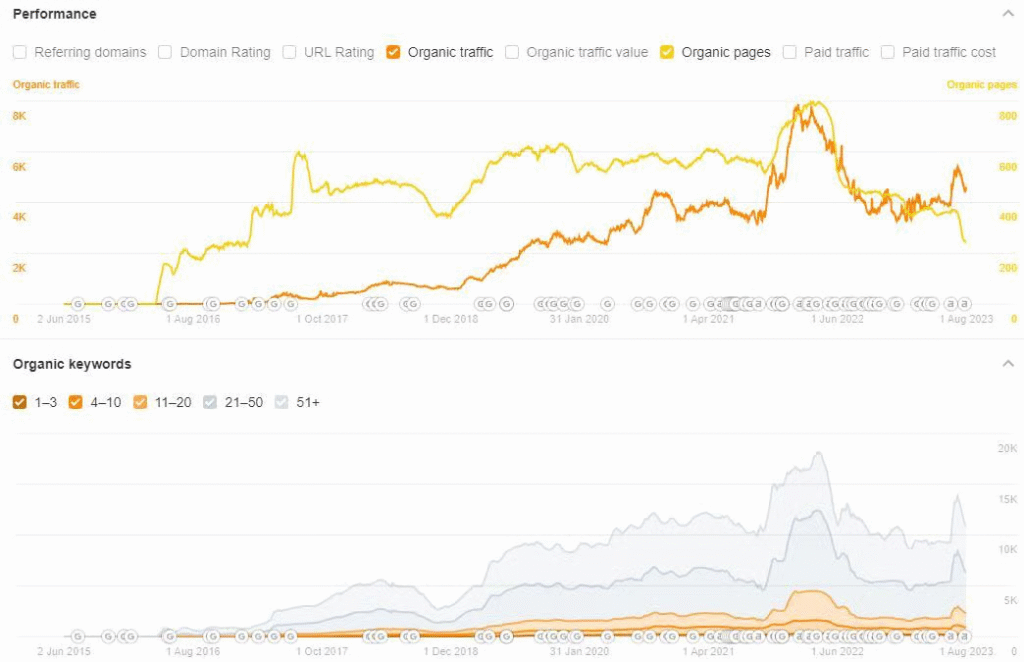
With 4,600 monthly organic visitors and targeting nearly 11,000 keywords, this business has built a solid search presence across three interconnected platforms: the Etsy shop, a content blog at LoveFromMim, and a personal brand website at MimJenkinson.
The interlinking strategy is brilliant.
Blog posts about planning tips link to specific sticker products in the Etsy shop. The personal brand website features student success stories that drive traffic to the educational courses. The Etsy shop profile links back to the blog and educational resources. This creates multiple entry points for potential customers while building domain authority that improves search rankings across all platforms.
Each piece of content targets specific long-tail keywords related to planning, sticker creation, or small business building. Someone searching “how to make planner stickers” finds the blog. Someone searching “functional planning stickers” finds the Etsy shop. Someone searching “start a sticker business” finds the courses.
This multi-platform approach captures traffic at different stages of the customer journey—from early research to ready-to-buy—and guides people through a natural progression toward purchasing something.
Industry Recognition That Compounds Credibility
The owner, Mim Jenkinson, earned the nickname “the planner sticker girl” within the planning and stationery community.
This kind of recognition doesn’t happen by accident.
It’s the result of consistent quality, active community participation, generous sharing of expertise, and genuine passion for the niche. When you become synonymous with your category—when people automatically think of you when they think of planner stickers—you’ve achieved something money can’t buy.
This recognition translates directly into business advantages. Media outlets reach out for interviews. Customers trust your products more readily. Students sign up for courses because you’re “the” expert. Brands approach you for collaborations. Your credibility creates opportunities that advertising could never generate.
The Community Fortress That Protects Your Business
The business maintains an active Facebook group where members connect, share planning strategies, showcase their sticker projects, access exclusive classes, and receive special offers.
This community serves as a moat protecting the business from competition.
When customers feel connected to a community—when they’ve made friends, received support, and found belonging—they don’t easily switch to competitors offering similar products at slightly lower prices. The emotional connection and community value far exceeds the functional product value.
The Facebook group also provides invaluable market research for free. Members discuss what products they want, what challenges they face, what features they’d pay for, and what’s missing from the market. This feedback loop ensures product development aligns with actual customer needs rather than assumptions.
Beyond Facebook, the business maintains strong presences on Instagram (showcasing finished products and inspiring creative ideas), YouTube (tutorial videos and behind-the-scenes content), and Pinterest (visual discovery that drives traffic). Each platform serves different purposes in the overall ecosystem, meeting customers where they already spend time.
Social Proof That Eliminates Purchase Hesitation
Customer testimonials and reviews are featured prominently across all platforms.
This isn’t vanity—it’s conversion optimization.
When potential customers see dozens or hundreds of five-star reviews describing positive experiences, successful outcomes, and quality products, their purchasing resistance crumbles. Social proof answers the fundamental question every buyer asks: “Will this actually work for me?”
The business actively encourages satisfied customers to leave reviews, share their results, and tell their stories. These testimonials then get repurposed across marketing materials, social media content, and sales pages, multiplying their impact far beyond the original review.
Revenue Diversification That Creates Business Stability
Beyond the core three revenue streams, the business explored additional monetization methods:
E-books providing in-depth guidance on specific aspects of sticker making or business building offer another digital product line with minimal ongoing costs once created. These work especially well for customers who want information but aren’t ready to commit to a full course.
Affiliate marketing partnerships with complementary brands—planning supplies, design software, business tools—generate commission income by recommending products the audience already needs. This adds value for customers (curated recommendations they trust) while generating additional revenue without creating new products.
A podcast covering personal development, business building, and planning strategies creates yet another touchpoint with the audience while establishing authority. The audio format allows busy people to consume content while commuting, exercising, or doing household tasks—times when they couldn’t engage with written or video content.
Conversion Rate Optimization That Turns Visitors Into Buyers
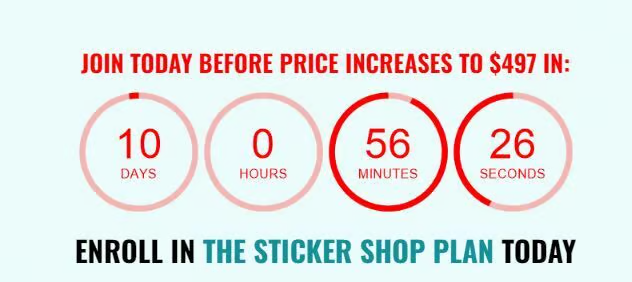
The websites employ strategic call-to-action buttons placed at decision points throughout the customer journey. Limited-time discounts create urgency. Clear navigation reduces friction. Fast loading speeds prevent abandonment. Mobile responsiveness ensures seamless experiences across devices.
These technical elements might seem boring, but they directly impact the bottom line.
A website converting at 3% generates three times more revenue than one converting at 1%, even with identical traffic levels. Small improvements in user experience, page speed, or checkout simplicity compound into significant revenue differences over time.
The business also strategically uses promotional discounts—not constant sales that train customers to never pay full price, but targeted offers during specific seasons, for new product launches, or to reward email subscribers. This generates urgency without devaluing the brand.
The Goldmine Opportunities Still Sitting on the Table
Despite generating $600,000 annually, this business has significant untapped growth potential:
Platform Expansion Beyond Etsy
While Etsy provides an excellent foundation, expanding to additional marketplaces could multiply reach without dramatically increasing workload. Amazon Handmade attracts different customer demographics with different buying behaviors. Shopify enables building an owned storefront without platform dependency, capturing email addresses and customer data that Etsy restricts.
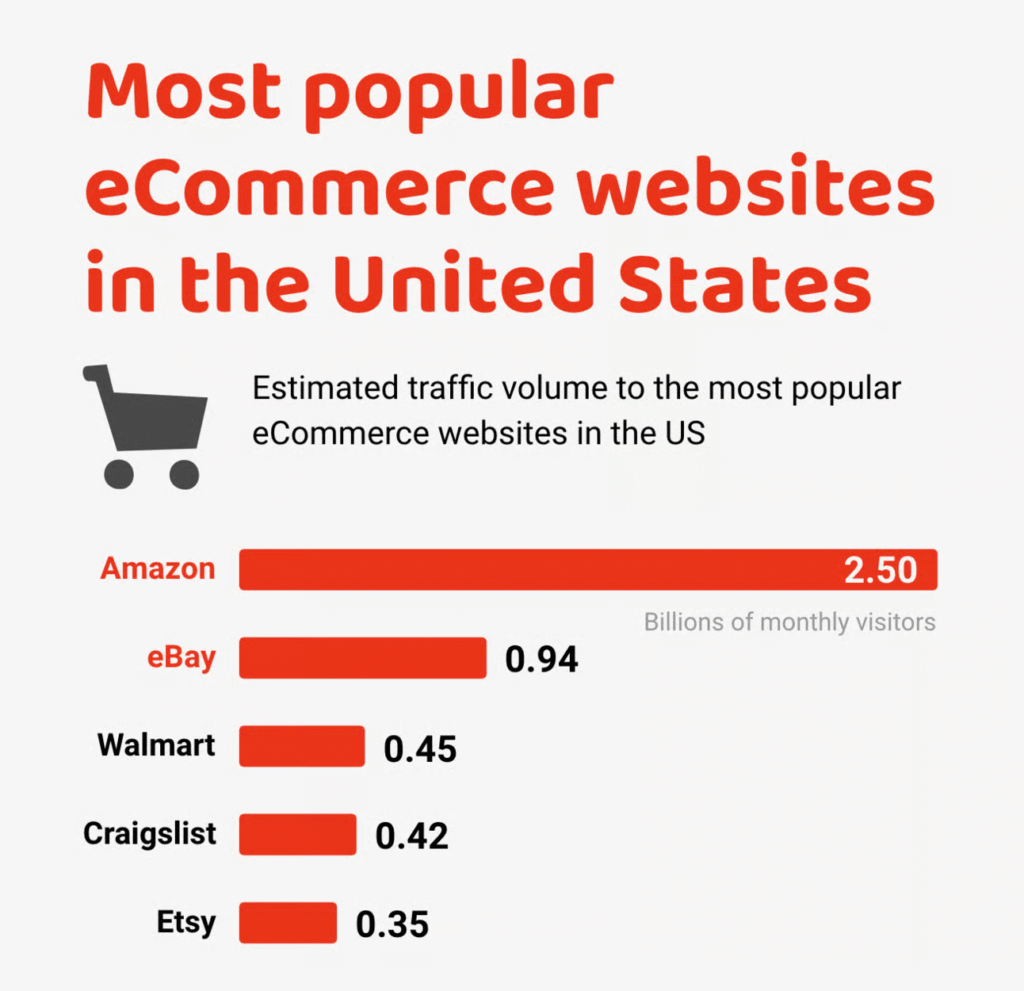
Some customers prefer certain platforms based on where they already shop, their rewards programs, or shipping preferences. Being present across multiple platforms captures sales you’d otherwise lose to competitors who are where your customers shop.
Custom and Personalized Sticker Services
Personalization represents a premium pricing opportunity. Customers will pay significantly more for stickers customized with their names, specific dates, personal branding colors, or unique designs that match their aesthetic preferences.
Offering custom sticker design services—whether for personal planning, small business branding, event planning, or special occasions—taps into a market segment willing to pay premium prices for exactly what they want rather than settling for generic options.
The workflow could be streamlined through design request forms, templated customization options, and clear pricing tiers based on complexity. This adds a high-margin service without completely changing the business model.
Loyalty Programs That Increase Customer Lifetime Value
Implementing a structured loyalty program rewards repeat customers, incentivizes larger purchases, and encourages referrals. Points for every purchase, exclusive access to new designs before public release, special birthday discounts, referral bonuses when friends make purchases—these programs increase both purchase frequency and average order value.

The data consistently shows that retaining existing customers costs far less than acquiring new ones. A loyalty program systematizes retention, turning one-time buyers into repeat customers and eventually brand advocates who market your business for free.
Ad 🎯 Ready to put these strategies into action?
Theory is great, but execution is what drives growth. That’s where Max Business School™ comes in.
Inside, you’ll find step-by-step digital marketing courses (SEO, ads, email, social, content, and more) — taught by professionals, designed for beginners and business owners alike.
And the best part? It’s 100% free, online, and flexible.
→ Join Max Business School Today — Free
The Creator Behind the Six-Figure Sticker Empire
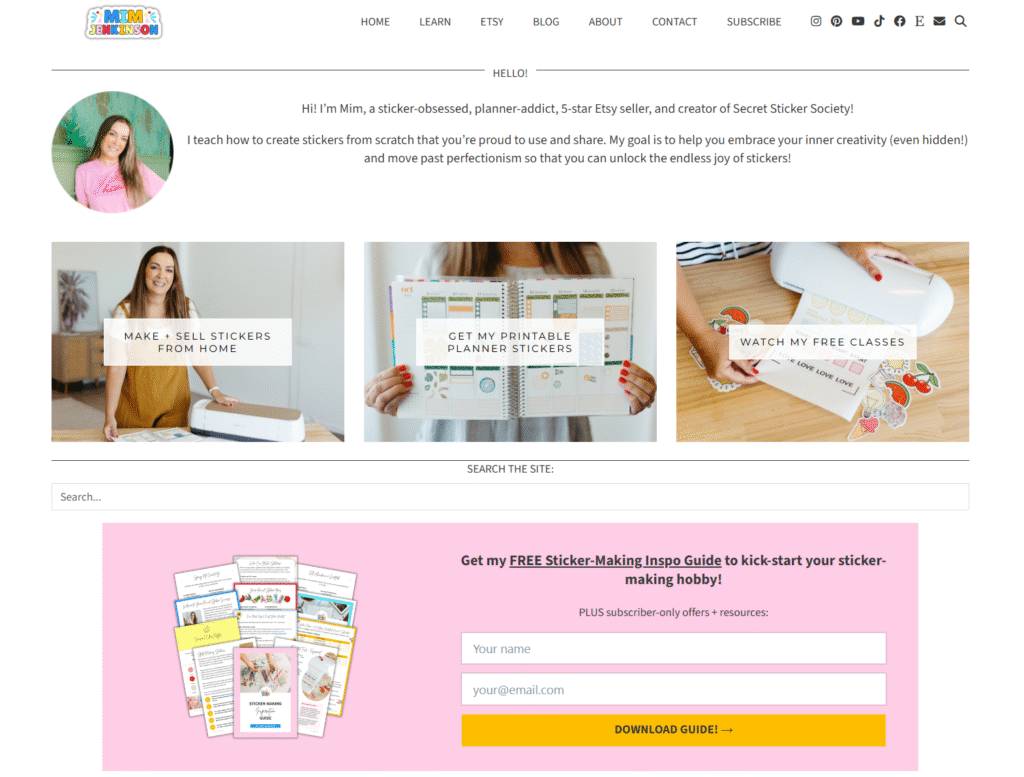
Now for the reveal: This thriving business belongs to Mim Jenkinson, affectionately known throughout the planning community as “the planner sticker girl.”
Mim didn’t start with business expertise or design training. She started with passion for planning and an entrepreneurial spirit willing to learn.
Her journey began with a simple desire to create stickers she wanted for her own planning. When she shared her designs online, others wanted them too. That spark of interest grew into a full-fledged business as she refined her designs, learned e-commerce fundamentals, and built systems to serve customers at scale.
What makes Mim’s story especially inspiring is her commitment to lifting others as she climbs. Rather than hoarding trade secrets, she’s helped over 5,000 people start their own sticker-making journeys through her courses and resources. This abundance mindset not only generates additional revenue but cements her reputation as a generous expert rather than a gatekeeping competitor.
Her multi-platform presence demonstrates the power of building a personal brand alongside your business. The products could theoretically be replicated by competitors, but Mim herself—her teaching style, her community, her expertise—cannot be copied.
The Universal Lessons That Transcend Stickers
Whether you care about stickers or not, the business principles here apply universally:
Platform strategy matters more than you think. Choosing where to sell impacts everything from customer expectations to profit margins. Etsy works brilliantly for handmade creative products but would be wrong for other business models. Your platform selection should align with your product type, target audience, and business goals.
Free resources build trust faster than advertising ever could. Giving away valuable knowledge positions you as an expert while allowing potential customers to experience your quality firsthand before spending money. This approach works across every industry and niche.
Multiple revenue streams create stability and scale. When one income source fluctuates, others compensate. Products generate sales revenue, courses create educational income, memberships provide recurring subscriptions, and affiliate marketing adds bonus commissions. Diversification protects your business.
Community building creates competitive advantages that price-focused competitors can never replicate. When customers feel connected to you and each other, they become fiercely loyal advocates who market your business through word-of-mouth. This organic growth costs nothing but attention and genuine care.
SEO and interlinking across multiple platforms compounds visibility over time. Each piece of content becomes a permanent asset working continuously to attract new customers. This creates a flywheel effect where each new post or page increases the value of all previous content.
Industry recognition through consistent quality and community participation opens doors that advertising cannot. Being known as the expert in your niche attracts opportunities, media attention, collaboration requests, and premium customers who specifically seek you out.
Education-based monetization allows you to earn from expertise rather than just time or products. Your knowledge becomes a scalable asset that generates income without direct correlation to hours worked or physical inventory limitations.
Your Roadmap to Replicating This Model
You don’t need to sell planner stickers specifically. This framework works for any creative product category: printable wall art, digital planners, enamel pins, patches, greeting cards, custom stationery, or dozens of other niches.
Here’s what actually matters:
Identify your passionate niche and validate market demand. You’ll spend years building this business, so choose something you genuinely care about. Use research tools like Ahrefs or Etsy’s own search bar to validate that people are actively searching for and buying products in your chosen category.
Look for niches with existing demand but opportunities for differentiation. The market doesn’t need another generic floral sticker shop—but it might need stickers specifically for bullet journal habit tracking, or minimalist planning systems, or planners for busy parents managing multiple kids’ schedules.
Start where your customers already shop. For handmade creative products, Etsy provides the easiest entry point. For print-on-demand designs, Redbubble or Society6 eliminate production complexity. For digital products, your own website via Shopify or WordPress with WooCommerce gives maximum control.
Don’t overthink the platform decision—just start selling somewhere, gather feedback, learn what works, and expand from there. Paralysis through analysis kills more businesses than wrong platform choices.
Create excellent products that solve real problems. Your stickers (or whatever you sell) should make someone’s life genuinely better. Functional planning stickers help people stay organized. Decorative designs bring joy to mundane tasks. Specialized collections serve specific needs that generic products ignore.
Quality matters far more than quantity in the early stages. Ten exceptional designs outperform one hundred mediocre ones. Focus on creating work you’re genuinely proud of, work that delights customers, work that earns five-star reviews and repeat purchases.
Build your audience through valuable free content. Start a blog, YouTube channel, Pinterest account, or Instagram presence where you share genuinely useful information related to your niche. Teach planning strategies if you sell planning stickers. Share design tutorials if you create printable art. Offer organizational tips if you sell productivity products.
This content serves multiple purposes: it drives SEO traffic to your shop, establishes your expertise, builds trust with potential customers, and creates touchpoints that keep your brand top-of-mind when people are ready to buy.
Develop your first educational product once you have experience worth teaching. After you’ve made your first hundred sales, helped dozens of customers, and learned what works, package that knowledge into a guide, course, or resource that helps others achieve similar success.
The educational component shouldn’t launch on day one—it should emerge naturally once you’ve built credibility and have genuine expertise to share. But once you reach that point, education becomes a high-margin revenue stream that scales beautifully.
Focus on building community, not just accumulating customers. Create spaces where your audience can connect—whether that’s a Facebook group, Discord server, email newsletter, or regular live streams. Engage genuinely, ask questions, provide support, celebrate member wins, and foster connections between members.
This community becomes your competitive moat. Customers might find similar products elsewhere, but they won’t find the relationships, support, and belonging they’ve developed in your community.
Implement basic SEO from the start. Research keywords before creating products or content. Optimize your Etsy listings with relevant search terms. Write blog posts targeting specific long-tail keywords. Build internal links between related content. Focus on creating genuinely useful content rather than keyword-stuffed garbage that no one wants to read.
SEO is a long game that compounds over time. Your effort today creates traffic months or years from now. Start early and stay consistent.
Track your metrics and iterate based on data. Use Etsy’s built-in analytics, Google Analytics for your website, and social media insights to understand what’s working. Which products sell best? What content drives the most traffic? Where do customers drop off in your purchase funnel?
Let data guide your decisions rather than assumptions or preferences. Double down on what works, eliminate what doesn’t, and continuously test improvements.
The Truth Nobody Wants to Hear
Building a $600,000 sticker business didn’t happen overnight.
It required years of consistent effort, thousands of designs created, hundreds of blog posts published, countless customer interactions, continuous learning, and unwavering commitment to quality and community.
Most people give up after six months when they’re not making six figures yet. That’s precisely why this opportunity exists—your willingness to persist when others quit is what separates success stories from abandoned Etsy shops.
The business model is proven. The strategies are documented. The platform infrastructure exists. The market demand is real.
The only question remaining: Will you commit to building it?
Start researching your niche this weekend. Analyze successful shops in that category. Identify three product ideas you could create better than what currently exists. Register your business name before someone else takes it.
The best time to start was three years ago. The second best time is right now.