
How to Earn $24k Monthly Teaching Moms Blogging
Here’s something most people miss about making money online:
The biggest opportunities aren’t in teaching everyone everything—they’re in teaching someone specific exactly what they need.
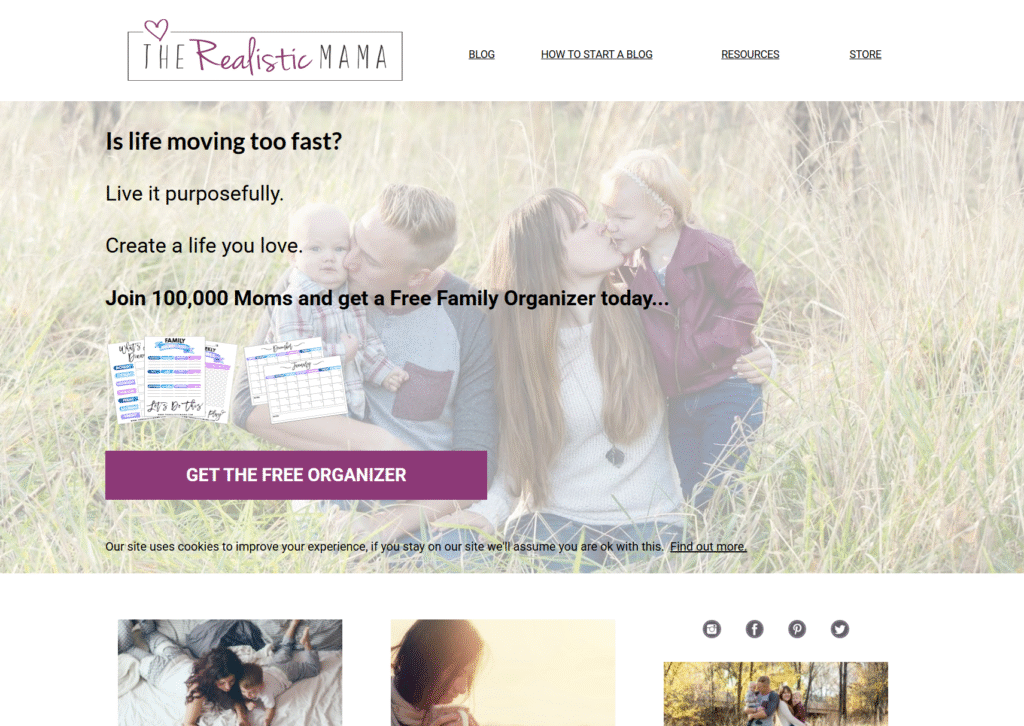
Alida figured this out when she launched The Realistic Mama. Instead of another generic “make money blogging” course competing with thousands of others, she focused exclusively on teaching mothers how to build blogging businesses that give them time with their kids.
Today, her business generates $24,000 monthly. That’s nearly $300,000 annually.
No massive team. No venture funding. Just laser-focused positioning, courses that deliver real results, and strategic affiliate partnerships that compound income month after month.
The beautiful part? She built this specifically to spend more time with her two children—then turned around and taught thousands of other mothers to do the same thing.
Here’s exactly how she did it (and how the model works for teaching any specific audience anything valuable).
Ad 🎯 After studying 400+ business models, here’s what actually works for beginners…
Most “make money online” advice is garbage. Complex affiliate schemes. Dropshipping nightmares. Social media “influencing.”
We found something better: lead-generation funnels for manufacturers. Simple. Profitable. Fast results.
Our Max Incubator Phase 1 students are proof—they’re going from zero to their first $1,000 in 90 days with this exact model.
→ See the business idea that’s working for beginners this year
The Business Model Built on Specific Pain Points
Most blogging educators make a fatal mistake: they try to appeal to everyone interested in making money online.
Students, retirees, corporate refugees, side hustlers, stay-at-home parents—they lump everyone together and wonder why their marketing feels generic and their conversion rates stay low.
Alida took the opposite approach with The Realistic Mama.
She identified one specific audience: mothers who want to earn income from home without sacrificing time with their children. Not just “work from home” opportunities—specifically blogging, because it offers flexibility that other business models don’t.
This positioning is absolutely brilliant.
Mothers face unique challenges that general blogging advice doesn’t address. How do you write blog posts with a toddler demanding attention? How do you schedule content when your days are unpredictable? How do you balance business growth with being present for your family?
Generic blogging courses ignore these questions. The Realistic Mama puts them front and center.
The revenue model combines three primary streams:
Blogging courses averaging $4,000 monthly in revenue. These beginner-friendly programs walk complete novices through launching and monetizing blogs, with specific strategies designed around the constraints and priorities mothers face.
Affiliate marketing representing the largest income portion, focused on tools essential for bloggers—Bluehost for web hosting, ConvertKit for email marketing, and other resources that students actually need to implement what they’re learning.
Digital products like eBooks and planners contributing smaller amounts currently but representing growth opportunities.
This diversification creates stability. Course sales might fluctuate month to month, but affiliate commissions from students who signed up months ago continue generating passive income.
Why the Hyper-Specific Target Market Changes Everything
Let’s talk about why focusing exclusively on mothers works better than targeting “anyone who wants to blog.”
When you speak to everyone, you connect with no one.
General blogging advice sounds like every other course out there: “Find your niche! Create valuable content! Be consistent!” It’s not wrong, but it’s not compelling enough to make someone pull out their credit card.
But when Alida says “I’ll show you how to build a blogging business that lets you stay home with your kids”—that hits differently for her target audience.
That’s not just about making money. That’s about identity, values, and the kind of life they want to create.
The specific positioning delivers multiple strategic advantages:
Marketing becomes dramatically easier. You know exactly where your audience hangs out (mom groups on Facebook, Pinterest, parenting forums), what they care about (flexibility, family time, financial contribution), and what objections they’ll have (“I don’t have time” being the biggest). This clarity makes every marketing dollar more effective.
Content practically writes itself. Instead of scrambling for blog post ideas, you simply address the questions your specific audience asks: “How to blog during nap time,” “Blogging topics for mom bloggers,” “How I make money blogging while homeschooling.” Each piece of content speaks directly to readers’ situations.
Word-of-mouth spreads faster. When someone finds a resource that perfectly addresses their unique situation, they tell everyone in similar circumstances. Mom bloggers refer other mom bloggers. Facebook groups become referral engines. The specificity makes the recommendation more credible.
Competition decreases dramatically. Sure, thousands of blogging courses exist. But how many specifically address the needs of mothers balancing business and childcare? The narrower your focus, the less direct competition you face.
This is why The Realistic Mama can charge premium prices and maintain steady enrollment despite the crowded “make money blogging” space. They’re not competing in that space—they’ve created their own category.
The Course Strategy That Prioritizes Beginner Success
Here’s where most online educators fail: they create courses for people who already understand the basics.

They assume students know what web hosting means, understand why email lists matter, or have heard of SEO. Then they’re confused when students get overwhelmed and don’t complete the program.
The Realistic Mama takes a radically different approach: extreme beginner-friendliness.
According to student testimonials, courses assume literally zero technical knowledge. No coding. No web design experience. No understanding of online business mechanics. If you can use email and browse websites, you can follow the courses.
This might sound like dumbing things down. It’s actually brilliant positioning for multiple reasons:
Most mothers interested in blogging are complete beginners. They’ve never built a website, never written for publication, never tried to make money online. Advanced courses intimidate them before they even start. Beginner-focused courses remove that barrier.
Simple execution leads to better results. When students can actually implement what they’re learning instead of getting stuck on technical hurdles, they see results faster. Results create testimonials. Testimonials drive more sales.
You capture the market at the beginning of their journey. Once someone succeeds with your beginner course, they’re more likely to buy your intermediate and advanced offerings as they grow. You’re building long-term customer relationships, not just making one-time sales.
The course structure reportedly walks students through each step of launching a blog:
Choosing profitable niches that align with personal interests. Setting up hosting and WordPress without technical headaches. Creating content that attracts readers and ranks in search engines. Building email lists from day one. Monetizing through affiliate marketing and other strategies.
Each module focuses on one specific outcome, with clear action steps and support for students who get stuck.
This systematic approach transforms intimidating projects into manageable tasks. Instead of “build a successful blog” (overwhelming), it’s “complete these 10 specific steps” (achievable).
The $4,000 monthly course revenue might not sound massive compared to huge course businesses pulling in six figures monthly. But remember—this is reliable, recurring income from a highly specific audience. As word spreads and more mothers discover the program, course revenue has clear room to scale.
The Affiliate Strategy Focused on Student Success Tools
Most bloggers approach affiliate marketing backwards.
They promote whatever pays the highest commission, regardless of whether their audience actually needs it. This short-term thinking damages trust and tanks conversion rates.
The Realistic Mama does something smarter: they exclusively promote tools that students genuinely need to succeed with blogging.
The primary affiliate partnerships focus on Bluehost (web hosting and domain provider) and ConvertKit (email marketing automation). These aren’t random recommendations—they’re essential infrastructure for anyone building a blog.
Think about the customer journey here:
Someone enrolls in The Realistic Mama’s blogging course. Early lessons explain why web hosting matters and how to choose the right provider. Naturally, the course recommends Bluehost because it’s beginner-friendly, affordable, and reliable.
The student clicks the affiliate link, signs up for hosting, and starts building their blog. The Realistic Mama earns an affiliate commission—but more importantly, the student gets a solution that actually works for their needs.
Later modules cover email marketing and building subscriber lists. Again, the course recommends ConvertKit as a beginner-friendly option with powerful automation features. Students who implement this strategy need email marketing software anyway, so the affiliate recommendation serves their interests while generating commission.
This alignment between student needs and affiliate offers is what makes the strategy work.
The affiliate income reportedly represents the largest revenue portion—likely because it compounds over time. Every new student who signs up for hosting or email marketing adds to monthly recurring commissions. As the student base grows, affiliate income grows automatically without requiring additional effort.
This creates the kind of passive income that justifies the “realistic mama” positioning. Once the courses are created and the affiliate partnerships established, new income flows from students taking action on recommendations—work that happens once but pays repeatedly.
The Lead Magnet Strategy That Builds Email Lists
Let’s talk about something The Realistic Mama does exceptionally well: giving away valuable free resources to capture email addresses.
The blog offers a free downloadable monthly planner designed specifically for their target audience. Before visitors can access the planner, an opt-in signup form appears requesting their email address and contact information.

This is email list building 101, but most people execute it poorly. What makes this approach work?
The free resource is genuinely valuable. It’s not a thin PDF thrown together in 20 minutes. It’s a functional planner that mothers can actually use to organize their lives. The quality signals that paid offerings will deliver even more value.
It solves an immediate problem. Mothers juggling kids, household responsibilities, and potentially blogging businesses need organization tools. The planner addresses a real pain point, making the trade (email address for planner) feel worthwhile.
The opt-in process is straightforward. No complicated multi-step funnels. Just name, email, download. Friction kills conversions; simplicity encourages them.
Why is email list building so critical for this business model?
Because email remains the highest-converting channel for course sales and affiliate promotions. Social media algorithms change constantly, limiting organic reach. Search traffic is valuable but unpredictable. Email? You control that channel completely.
Every person who downloads the planner enters a nurture sequence receiving helpful blogging tips, success stories from other students, and strategic promotions for courses and affiliate tools. Not everyone converts immediately, but the email list creates ongoing opportunities to build relationships and make offers.
Many successful course creators report that 80%+ of their sales come from email marketing rather than cold traffic. Building the list early—and consistently—determines long-term business growth.
The planner strategy also demonstrates expertise and teaching ability before asking for any financial commitment. Someone who finds the free planner helpful is much more likely to trust that paid courses deliver genuine value.
The Social Media and Webinar Strategy That Builds Authority
Here’s something The Realistic Mama understands that many educators miss: different audiences prefer different content formats.
Some people love reading blog posts. Others want video content. Some respond best to social media snippets. The most successful educators meet audiences where they already spend time.
The Realistic Mama maintains active presences on platforms popular with their target demographic—particularly Facebook, Instagram, and Pinterest. These aren’t randomly chosen; mothers spend substantial time on these platforms for community, inspiration, and practical advice.
The content strategy across these platforms focuses on providing genuine value rather than constant self-promotion. Blogging tips, time management strategies, work-from-home inspiration, success stories from students—content that helps mothers whether they ever buy a course or not.
This approach builds trust and positions Alida as a knowledgeable authority. When someone follows The Realistic Mama on Instagram for free blogging tips, they’re getting familiar with the teaching style and philosophy. If they like what they see, enrolling in a paid course feels like a natural next step.
The webinar component amplifies this authority-building strategy significantly.

Free webinars hosted by Alida teach viewers how to start blogging side businesses without technical or coding knowledge. These sessions deliver substantial value—attendees leave with actionable information they can implement immediately.
But webinars serve multiple strategic purposes beyond education:
They demonstrate teaching ability. Watching someone teach live gives prospects confidence that paid courses will be well-delivered and comprehensible. Poor teachers can hide behind written content; webinars expose quality (or lack thereof).
They create reciprocity. When someone receives an hour of valuable teaching for free, they feel inclined to reciprocate—often by purchasing the course promoted at the webinar’s end.
They qualify leads. Someone willing to dedicate an hour to a webinar about blogging is far more likely to purchase a course than someone who briefly skimmed a blog post. Webinar attendees are warmer leads.
They generate urgency. Webinars typically end with limited-time offers or bonuses for attendees who enroll during or immediately after the session. This urgency converts fence-sitters into customers.
The combination of consistent social media presence and strategic webinars creates a marketing ecosystem that constantly feeds new students into courses and introduces existing students to affiliate tools.
The Massive Opportunity Sitting Right There
Even at $24,000 monthly, The Realistic Mama has obvious growth potential that could substantially increase revenue with relatively minor adjustments.
Digital product sales are criminally underoptimized.
According to income reports, eBooks and planners account for only 2% of total monthly revenue. This is leaving serious money on the table.
The issue isn’t product quality—it’s promotion. Creating digital products is the easy part. Making people aware they exist and compelling them to purchase? That’s the hard part most creators neglect.
Simple fixes could dramatically improve digital product revenue:
Run strategic social media advertising campaigns targeting mothers interested in blogging and work-from-home opportunities. Even modest ad budgets on Facebook and Pinterest could introduce products to thousands of qualified prospects.
Partner with influencers in the mom blogger and work-from-home spaces for product reviews and endorsements. When someone with an engaged audience recommends your eBook, their followers trust that recommendation.
Recruit industry experts and established bloggers to review products, especially during launch periods. Third-party validation from credible sources carries more weight than self-promotion.
Create strategic product bundles that increase perceived value and average transaction size. Instead of selling a $17 eBook alone, bundle it with templates, checklists, and bonus resources for $37. The higher price point generates more revenue per sale.
Develop automated email sequences that promote digital products to list subscribers based on their interests and behaviors. Someone who downloads the free planner clearly likes organizational tools—they’re perfect prospects for paid planners.
The beautiful thing about digital products? Pure profit margin. Once created, each sale is nearly 100% profit. Doubling digital product revenue from 2% to 4% of total income would add roughly $500 monthly—$6,000 annually—with minimal additional effort.
If digital products could be optimized to represent even 10-15% of revenue, that’s an additional $2,000-3,000 monthly. Over a year? That’s $24,000-36,000 just from better promotion of products that already exist.
Ad 🎯 Ready to put these strategies into action?
Theory is great, but execution is what drives growth. That’s where Max Business School™ comes in.
Inside, you’ll find step-by-step digital marketing courses (SEO, ads, email, social, content, and more) — taught by professionals, designed for beginners and business owners alike.
And the best part? It’s 100% free, online, and flexible.
→ Join Max Business School Today — Free
What You Can Learn From This Success
Let’s extract the lessons worth stealing regardless of what niche you’re in:
Hyper-specific positioning beats broad appeal. Teaching “moms who want to blog” works better than teaching “people who want to make money online.” The narrower your focus, the more effectively you can market and the less direct competition you face.
Beginner-friendliness isn’t dumbing down—it’s smart business. Most people in any audience are beginners. Creating courses that assume zero prior knowledge expands your addressable market dramatically while reducing student frustration and increasing completion rates.
Align affiliate recommendations with student needs. Don’t promote random products for commissions. Recommend tools students genuinely need to succeed with what you’re teaching. This integrity builds trust and ironically increases affiliate income because recommendations convert better.
Email list building should start day one. Offer valuable free resources in exchange for email addresses. Email remains the highest-converting marketing channel—growing your list grows your business.
Multiple content formats reach different audience segments. Some people love reading; others prefer video; some respond best to social media. Meet your audience where they already spend time instead of forcing them to your preferred platform.
Webinars sell courses better than almost any other strategy. The combination of free value, live teaching demonstration, and limited-time offers converts remarkably well.
Digital products represent low-effort revenue—if you promote them. Creating products is half the battle. Strategic promotion through ads, partnerships, and automated sequences turns products into meaningful income streams.
The teaching-specific-audiences model works across virtually any skill or topic. Replace “moms who want to blog” with “retirees who want to write memoirs,” “corporate professionals who want to build coaching businesses,” or “creative freelancers who want passive income”—the fundamental strategy remains the same.
The Skills That Separate Teachers From Earners
Building a successful education business requires developing three critical competencies:
Teaching and communication skills: You need to explain complex concepts clearly, organize information logically, and engage students effectively. Great expertise means nothing if you can’t transfer that knowledge to others in ways they understand and can implement.
Marketing and audience building: Understanding how to attract your target audience, communicate value propositions, and convert prospects into customers determines whether your courses sell. Many expert teachers struggle because they can’t market effectively.
Product creation and business operations: Developing courses, managing student experiences, handling customer service, processing payments, creating marketing funnels—all of this requires operational thinking and systematic approach.
None of these skills are innate—they’re developed through practice, study, and iteration. The successful course creators are those who continuously improve across all three areas rather than excelling at one while neglecting others.
Industry Context: Why Teaching-Specific Audiences Works
The online education market continues massive growth, with projections showing substantial expansion over coming years.
But here’s what’s changed: the market has become more sophisticated. Generic courses on broad topics face intense competition. Success increasingly goes to educators who serve specific niches with tailored solutions.
This is exactly what The Realistic Mama does—instead of competing in the massive “blogging education” market, they dominate the much smaller “blogging education for mothers” category.
Looking at successful examples, educators like Smart Blogger and ProBlogger demonstrate the substantial revenue potential in blogging education. Some successful course creators generate millions annually by teaching specific skills to specific audiences.
The key market dynamics working in your favor:
People will always pay to learn valuable skills faster. Self-teaching through free resources takes years. Quality courses compress that timeline dramatically, making them worth the investment for motivated students.
Specific audiences are underserved. While generic courses exist for almost everything, specific audience segments often lack resources addressing their unique situations. Finding underserved niches creates opportunity.
Trust matters more than ever. Students are skeptical of get-rich-quick schemes and low-quality courses. Those who deliver genuine value, testimonials, and student success stories earn trust that translates to sales.
The teaching-specific-audiences model isn’t going away. If anything, it’s becoming more important as markets mature and students demand more personalized, relevant education.
The Bottom Line: Your Teaching Playbook
Alida’s success with The Realistic Mama proves you don’t need revolutionary ideas to build substantial income teaching others.
She identified a specific audience with clear needs, created courses addressing those needs, built trust through consistent free value, and monetized through courses and affiliate partnerships that genuinely help students succeed.
$24,000 monthly didn’t happen overnight. It came from months of content creation, course development, student support, and steady audience growth.
Could you replicate her exact business? Probably not—the mom blogger education space has competition now. But could you apply her strategies to teach a different specific audience something valuable? Absolutely.
The formula is proven: Pick a specific audience you understand deeply. Identify skills they need to learn. Create courses that transform complete beginners into competent practitioners. Build trust through free content and lead magnets. Recommend affiliate tools they need to implement what you’re teaching. Scale through webinars, strategic promotion, and word-of-mouth.
Most would-be educators fail because they try to teach everyone everything, create mediocre courses, or neglect marketing entirely. The six-figure course creators are those who picked a specific lane, delivered exceptional value, and stayed consistent through the slow early growth phase.
So the question isn’t whether teaching-specific audiences works. The question is whether you have expertise worth sharing and you’re willing to do the work required to package and market it effectively.
The path to $24,000 monthly exists. It’s just paved with dozens of free blog posts, hours of course content creation, hundreds of email subscribers built one at a time, and the persistence to keep teaching even when student numbers are small.
Your move.